
Sign up to save your podcasts
Or



She was already in the gown, IV in, ready to go. Dr. Sturm canceled the surgery anyway.
Dr. Angela Sturm, double board-certified facial plastic surgeon and founder of Aesthetic Specialists of Houston, shares one of the most important stories from her surgical career: the moment she stopped an operation that was technically ready to proceed because the patient was not. She walks through why the surgeon-patient relationship is never just a transaction, why body language and unspoken hesitation carry as much weight as anything on a consent form, and why a gut feeling, whether the patient's or the surgeon's, is always worth pausing for. The patient eventually returned, had her rhinoplasty in a much better headspace, and was thrilled with the result.
This episode is a guide for anyone preparing for surgery and feeling uncertain about what they are allowed to feel or say. Dr. Sturm is direct: it is never too late to speak up, reschedule, or ask harder questions. She explains what to look for in a surgeon's communication style during the consultation phase, how that dynamic only intensifies as surgery day approaches, and why emotional readiness belongs right alongside medical and physical readiness as a prerequisite. Listeners leave knowing exactly what a trustworthy surgical partnership looks and feels like before they ever step into an operating room.
Subscribe to Beauty Unveiled on Apple, Spotify, and YouTube.
Schedule a consult with Dr. Sturm HERE.
Follow Dr. Sturm on Facebook, Instagram, and TikTok!
Key Takeaways
1. Once a deposit is paid, a surgery date is set, and a consent is signed, many patients feel locked in. A good surgeon recognizes this dynamic and actively creates space for the patient to communicate doubt or hesitation at any point.
2. Body language, tone, and what a patient does not say matter as much as what they do say. Surgeons who pay attention to these signals and start the conversation protect their patients in ways that go beyond technical skill.
3. Gut feelings in medicine are taken seriously for a reason. When something feels wrong, the right move is always to hold off, because elective procedures can be rescheduled and emotional readiness cannot be rushed.
4. The surgeon-patient relationship in facial plastic surgery spans at least a year and often much longer. Feeling genuinely comfortable asking questions and being honest, even about fear, is a prerequisite for a good outcome.
5. Choosing a surgeon whose personality feels like a real match matters more than it might seem. If communication feels strained at the consultation stage, it will feel more strained as surgery day approaches and even harder in recovery.
Timestamped Overview
00:00 Dr. Sturm opens with the story of canceling a surgery that was already underway and why she would do it again
00:00:15 Why patients feel locked in after paying deposits and signing consents, and the mindset shift required to stay communicative
00:01:21 Reading body language, what patients do not say, and why a surgeon who pays attention changes the entire experience
00:02:10 The specific moment Dr. Sturm recognized a patient was not ready, asked the question, and stopped the procedure
00:02:50 How gut feelings work in medicine and why honoring them is considered a professional standard, not a hesitation
00:03:20 The comparison to walking away from a wedding: deposits, dress, guests, and all, when the inside feeling says stop
00:03:50 How the same patient returned, had surgery successfully, and was in a dramatically better place the second time
00:04:16 What to look for during consultations: how comfort asking questions early predicts how the relationship holds up under pressure
00:04:45 Why holding back during a consultation is a red flag worth examining before moving forward
00:05:00 Dr. Sturm's standard that every patient should arrive at surgery emotionally, physically, and medically ready
See omnystudio.com/listener for privacy information.
Dr. Sturm talks about what it really means to feel “ready” for cosmetic surgery. She explains the difference between normal pre-op nerves and deeper anxiety or misalignment that may signal it is not the right time. Drawing from real patient experiences, she outlines green flags, red flags, and a practical gut-check framework to help patients decide whether to proceed, pause, or postpone.
Subscribe to Beauty Unveiled on Apple, Spotify, and YouTube.
Schedule a consult with Dr. Sturm HERE.
Follow Dr. Sturm on Facebook, Instagram, and TikTok!
Key Takeaways
1. Last-minute nerves are extremely common, and most ready patients cycle between feeling excited and nervous, especially in the week before surgery and on the day itself.
2. A red flag is when worry overwhelms excitement, especially persistent thoughts like “what if I hate this” or “what if something goes wrong” that do not ease even after thoughtful discussion.
3. Major outside stressors such as breakups, job loss, or ongoing drama can drain emotional bandwidth, making it harder to tolerate bruising, swelling, and time away from normal routines during recovery.
4. Cosmetic surgery should not be done purely for an event or to fix deeper emotional pain, bullying, or family comments, because changing the face cannot resolve longstanding internal wounds.
5. It is always acceptable to postpone elective surgery, even on the day of, and patients should feel safe being honest with their surgeon about fears, pressure from others, and the need for more time.
Timestamped Overview
00:00 The core question: freaking out before surgery and whether that means you are not ready
00:00:05 Why last-minute nerves are extremely common and how to distinguish them from deeper misgivings
00:00:53 Typical emotional waves before surgery, from excitement to doubt and back again
00:01:17 Why cosmetic surgery decisions never exist in a vacuum and how life stress, kids, and work factor in
00:01:48 The emotional pattern of a well-prepared patient: excited and nervous at the same time, with clear reasons for wanting surgery
00:02:45 The patient profile that raises concern: almost all anxiety, little excitement, and persistent worry about bad outcomes
00:03:01 Guidance to pause and step back if “what if it is not right” is on repeat in the week before surgery
00:03:20 Why it is acceptable, and sometimes best, to delay for people who feel pressured or uncertain in their gut
00:03:42 How a negative mindset going into surgery often leads to obsessive worry over tiny asymmetries very early in healing
00:04:14 Examples of patients who were medically ready in pre-op but not emotionally ready, and how postponing helped
00:05:10 Reassurance that surgery can be rescheduled at any point before entering the operating room
00:05:16 Why stacking surgery on top of big life events can overwhelm emotional reserves and complicate healing
00:06:14 The importance of being in a good emotional place to recognize a technically successful result as a success
00:06:40 Why surgery should be part of a long-term plan for how you want to feel, not a rushed fix for a single date or event
00:07:58 Introduction of the 90-second gut check to clarify motivation and readiness
00:08:02 The first question: if no one else ever saw this change, would I still want it and be happy I did it
00:08:21 The second question: am I trying to fix my face or my life, and why surgery cannot heal deep emotional wounds
00:09:07 The third question: do I have the emotional bandwidth for weeks of swelling, bruising, and temporary lifestyle changes
00:09:46 Why that early recovery period is especially hard for anyone already carrying significant emotional strain
00:09:54 The importance of speaking honestly with the surgeon about fears and expectations instead of protecting their feelings
00:10:02 Why up-front conversations about perfection, realism, and possible outcomes are critical before proceeding
00:10:46 Reassurance that patients can and should request postponement if the timing feels wrong, regardless of deposits or dates
00:11:15 Clarifying that almost every cosmetic patient is nervous and why that is normal rather than a flaw
00:11:18 The reality that medical, emotional, and logistical factors all need to align for the best experience and outcome
00:12:11 Final normalization of feeling scared and the typical trajectory of emotions coalescing into one “ball” of nervous and excited on surgery day
See omnystudio.com/listener for privacy information.
How does experiencing your own surgery change the way you connect with your patients?
Not only has Dr. Sturm performed over a thousand surgeries, she, too, has had a rhinoplasty.
She discovered not only physical benefits, like better breathing and confidence, but also gained empathy for the emotional journey patients experience. Embracing imperfections and the ups and downs of healing became part of her insight.
Subscribe to Beauty Unveiled on Apple, Spotify, and YouTube.
Schedule a consult with Dr. Sturm HERE.
Follow Dr. Sturm on Facebook, Instagram, and TikTok!
Key Takeaways
1. Dr. Sturm shares that having undergone rhinoplasty herself gave her unique insight into the patient’s emotional and physical journey. Experiencing both roles helps her better understand and empathize with her patients.
2. She discusses how she didn't realize her own self-consciousness about her nose until after the surgery. The procedure improved her confidence and made her feel better about herself, highlighting the significant psychological benefits that can come from cosmetic surgery.
3. Dr. Sturm initially pursued surgery to address breathing difficulties caused by a deviated septum. The surgery dramatically improved her breathing, especially during exercise and sleep, underlining how rhinoplasty can bring life-changing functional benefits, not just cosmetic ones.
4. She emphasizes that it is normal to have mixed feelings, uncertainty, or anxiety after seeing post-surgery changes for the first time. The adjustment process is different for everyone, and support from loved ones can be crucial during this period. Over time, most people come to accept and appreciate their new appearance.
5. Dr. Sturm points out that no result is absolutely perfect—minor asymmetries or imperfections may remain. Learning to accept these and appreciate the overall improvement is important. It’s about loving yourself, being content with realistic outcomes, and not aiming for unattainable perfection.
See omnystudio.com/listener for privacy information.
Dr. Sturm offers a reality filter for anyone trying to decide what a “good nose” looks like in the age of edits, filters, and trending Instagram noses. She explains the two main aesthetics patients request, from ultra-cute “Barbie” noses to refined but natural noses that still feel like their own. Drawing on her surgical experience and even her own rhinoplasty journey, she walks through how to balance appearance, breathing, and long-term durability while making sure the nose fits a person’s face, features, and personality. Listeners learn how to use social media examples productively, what photos to bring to a consult, and how to communicate clearly with a surgeon so they do not end up with a copy-and-paste nose that does not feel like them.
Subscribe to Beauty Unveiled on Apple, Spotify, and YouTube.
Schedule a consult with Dr. Sturm HERE.
Follow Dr. Sturm on Facebook, Instagram, and TikTok!
Key Takeaways
1. Most patients arrive with strong ideas shaped by social media, often split between wanting a very small, scooped “Instagram nose” or a natural refinement of their existing nose, and very few fall in the middle.
2. The best rhinoplasty results fit the individual’s face, features, and personality, which is why imaging and multiple proposed outcomes are so important when deciding how much change is appropriate.
3. Social media can educate but also distort expectations, especially with on-table photos and early “reveal” videos that do not show swelling, healing time, or how a nose looks and functions years later.
4. A thoughtful rhinoplasty plan balances three priorities: harmony with the rest of the face, preservation of nasal breathing, and durability so the nose still looks intentional and stable 10 to 20 years after surgery.
5. The most helpful reference photos are of people whose skin thickness, facial structure, or ethnic features are similar, and it is crucial to identify what you like about each nose so your surgeon can translate that into a result that fits you rather than replicating the same nose for everyone.
Timestamped Overview
00:00 The core question: defining a “good nose” when photos are filtered and celebrities deny surgery
00:00:21 The two main camps of nose goals in consultation: tiny, scooped Instagram-style noses versus natural, refined versions of a patient’s own nose
00:01:04 Why any nose design must fit the person’s face, personality, and overall presence, and how imaging helps visualize options
00:01:35 How patients often bring Instagram examples of very small, cute noses, and what attracts them to that look
00:02:01 The alternative ideal: straight, less “perfect” noses that embrace subtle individuality and imperfections
00:02:20 Why perfectly “too perfect” noses can look unnatural and how true normal noses always have minor asymmetries
00:02:37 The importance of discussing breathing and long-term stability when someone wants a very small nose
00:03:18 How over-resection can weaken nasal structure, affect airflow, and create problems years after surgery
00:03:21 The double-edged nature of social media in surgery, showcasing both helpful education and extreme, on-table transformations
00:03:40 How patients bring examples of what they definitely do not want alongside images they love
00:03:53 Why patient screenshots of the surgeon’s own work are especially helpful, since they often involve similar skin thickness or width
00:04:24 Limitations of reveal videos that show day 5 or day 7 results, and why early swelling can mislead expectations
00:04:53 How timelines appear compressed online, from surgery to reveal to one-year photos, versus the real experience of a year-long healing process
00:05:18 The value and downside of highly informed patients, and the need to reshape expectations around timing and final results
00:05:47 The risk that viral outcomes may not be the right aesthetic or structural choice for a particular person
00:05:55 Dr. Sturm’s own rhinoplasty story and her desire for a straight, natural dorsum rather than a tiny Barbie nose
00:06:26 How seeing many rhinoplasties in training helped her communicate precisely what she wanted
00:06:59 A “reality filter” for nose surgery: balancing nose shape with eyes, lips, jawline, body, and personality
00:07:20 Using imaging to show multiple possible outcomes, including “too far,” so patients can calibrate what feels right
00:08:00 The hierarchy of priorities: function first for breathing, then aesthetics, then long-term durability over decades
00:08:40 Why durability has become a major focus, aiming for a nose that remains stable rather than drifting more upturned or extreme over time
00:09:27 Practical advice for bringing photos to consultation and choosing examples similar to your own anatomy
00:09:48 How Dr. Sturm asks what exactly a patient likes in each photo, such as slope, tip size, or rotation, to guide planning
00:10:20 Concerns about every nose starting to look the same on some social media feeds and what that reveals about a surgeon’s aesthetic
00:10:40 The issue with very high-volume, one-style practices and why that can be a plus or a mismatch depending on your goals
00:11:20 The importance of a nose that respects gender, ethnicity, background, and personality rather than copying a single trend
00:11:45 Final encouragement to maintain open communication with the surgeon about goals, limits, and what will truly work for you
See omnystudio.com/listener for privacy information.
In this episode Dr. Sturm explains why some people still look tired in photos and on video despite doing Botox, filler, peels, and lasers. She breaks facial aging into four key components: gravity, structural change, volume loss, and skin quality. Using clear, accessible language, she shows how treating only one layer allows the others to “tell on you.” Listeners learn a simple mirror exercise to identify which factors are driving their tired appearance and how to align that with the right mix of treatments over time.
Subscribe to Beauty Unveiled on Apple, Spotify, and YouTube.
Schedule a consult with Dr. Sturm HERE.
Follow Dr. Sturm on Facebook, Instagram, and TikTok!
Key Takeaways
1. A tired appearance usually comes from a combination of factors, including gravity, bone and structural changes, volume loss, and skin quality, rather than a single issue that one treatment can fix.
2. Bone resorption around the eyes and midface, along with weaker supporting tissues, allows the face to descend over time, which contributes to jowls, neck laxity, and deeper folds that show more prominently on camera.
3. Volume loss in the skin, fat, and deeper structures, not smoking alone, often causes vertical lines around the mouth and general hollowing in the cheeks, temples, and lower face.
4. Skin quality issues such as fine lines, rough texture, and brown spots, heavily influenced by sun exposure and genetics, interact with volume loss so that deflated skin wrinkles more visibly, like an empty grocery bag.
5. A simple mirror map helps separate whether the main problem is skin, volume, or descent, which makes it easier to know when lasers, fillers, skin tightening, or surgery will make the biggest difference, and to plan treatments intelligently over one to five years instead of just repeating what has been done before.
Timestamped Overview
00:00 The question of why someone still looks tired after Botox, filler, peels, and lasers
00:00:18 Overview of the main contributors to a tired look: structure, volume, skin quality, and eye-specific changes
00:00:34 Explaining the goal of unpacking each layer of aging and how to combine treatments for a refreshed look
00:00:47 Introduction to the four pillars of aging, beginning with gravity and visible descent in jowls and neck
00:01:00 How structural bony changes around the eyes and nerves reduce support and contribute to sagging
00:01:56 Discussion of volume loss in skin, fat, and even bone, and how faces naturally thin with more birthdays
00:02:26 The role of skin quality, including brown spots, fine lines, texture, and the “empty grocery bag” analogy
00:02:56 Why most people are a mix of gravity, structure, volume, and skin issues, and how package-based med spa approaches can miss this nuance
00:03:20 The problem with relying on more filler to lift the face and the issue of overfilled cheeks that do not fix jowls or folds
00:03:37 Introducing a mirror “map” exercise to understand which aging component is most dominant
00:03:44 How to evaluate skin quality first by looking for fine lines, discoloration, and rough texture
00:04:03 How to assess volume loss by checking cheek fullness, chin support, temples, and vertical lines around the mouth
00:04:26 Clarifying that “smoker’s lines” around the mouth are usually from volume loss, not smoking in most patients
00:04:46 How to evaluate descent by examining the jawline, neck, nasolabial folds, marionette lines, and overall laxity
00:05:09 Using this self-assessment to categorize yourself primarily as skin, structure/gravity, or volume, or a combination
00:05:19 How to use that insight in consultation to see whether a provider’s plan aligns with what you observe in the mirror
00:05:39 When volume replacement makes sense, when lasers make sense, and when descent suggests tightening or facelift instead of more filler
00:06:09 How to translate this understanding into a one- to five-year plan that may include Botox, lasers, and ultimately surgery for the lower face if needed
00:06:39 Encouragement to use this framework to make informed decisions so treatments look natural, targeted, and truly refreshing
See omnystudio.com/listener for privacy information.
Dr. Sturm has spent nearly two decades caring for patients, building relationships, and performing delicate surgeries where every millimeter matters.
Today, she shares what makes her field unique, how patient care extends far beyond the operating room, and why she believes getting to know people is at the heart of her work.
- The discipline required to succeed in plastic surgery
- The importance of detail and patient connection in facial procedures
- Stories that shape a surgeon’s view of care
Subscribe to Beauty Unveiled on Apple, Spotify, and YouTube.
Schedule a consult with Dr. Sturm HERE.
Follow Dr. Sturm on Facebook, Instagram, and TikTok!
Key Takeaways
1. Plastic surgery, especially facial plastic surgery, requires a specific kind of person—detail-oriented, patient, and driven. Those in the field thrive on precision, high-stakes outcomes, and have an intense dedication to their craft. Not everyone is suited for this specialty, as it demands both technical skill and a passion for helping others.
2. Success in facial plastic surgery depends on caring deeply about every millimeter. Small changes have a significant impact on appearance, particularly on the face, so surgeons in this field must be meticulous and attentive to even the tiniest detail.
3. Dr. Sturm emphasizes genuinely caring for patients, getting to know their stories, and developing strong, personal relationships. This personal investment in patient well-being is integral to her approach, making patients feel heard, valued, and deeply cared for—not just treated clinically.
4. A crucial part of professional development is identifying what one does best and delegating other tasks, as highlighted by Dr. Sturm referencing business advice. By focusing on core strengths, a practitioner can maximize both their impact and the quality of patient care.
5. Trust and impact in medicine go beyond technical skill; the greatest honor is when families and individuals view their physician as integral to their lives, even in challenging moments. Dr. Sturm’s story about being called by a patient’s family in a time of loss illustrates the deep, meaningful connections built through compassionate care.
See omnystudio.com/listener for privacy information.
Dr. Angela Sturm, double board-certified facial plastic surgeon and founder of Aesthetic Specialists of Houston, explains what truly sets a surgeon-led med spa apart from a standard experience. She walks through how her team selects devices, personalizes settings, and builds combination treatment plans that prioritize safety, results, and long-term outcomes. Using examples from daily practice, she highlights why expertise, collaboration, and surgical insight matter more than any single machine. Listeners get a practical checklist they can use to evaluate any med spa and a clear understanding of how they serve as a bridge between non-surgical care and future surgical options.
Subscribe to Beauty Unveiled on Apple, Spotify, and YouTube.
Schedule a consult with Dr. Sturm HERE.
Follow Dr. Sturm on Facebook, Instagram, and TikTok!
Key Takeaways
1. A med spa led by a facial plastic surgeon focuses on more than quick packages, building individualized plans that consider whether a patient is better served by injectables, devices, or even surgery in the future.
2. Device choice is intentional, with a focus on technology that can be used year-round in a sunny climate and on a wide range of skin types in a highly diverse city.
3. Energy settings, passes, and combinations are tailored to each person rather than kept conservatively low for everyone, which allows for meaningful results while still prioritizing safety.
4. Surgical awareness shapes treatment recommendations, especially for patients who plan facelifts or other procedures, so that radiofrequency and similar treatments do not compromise future surgical outcomes.
5. The right med spa asks about long-term goals, collaborates daily as a team, explains the need for series and adjustments, and has the skills and experience to manage both great results and any complications that may arise.
Timestamped Overview
00:00 The opening question about how Aesthetic Specialists of Houston differs from any other Houston med spa
00:00:10 Comparing a surgeon-led, team-based med spa model with package-driven med spas
00:00:20 How similar devices can deliver different results depending on training, experience, and treatment design
00:00:53 Why Aesthetic Specialists of Houston is built around long-term planning, honest candidacy conversations, and integrating injectables, RF, and lasers
00:01:23 The emphasis on investing in people, not just devices, and why skilled providers matter most
00:01:55 How devices are chosen for year-round use and across all skin types in a diverse, sunny city
00:02:37 Customizing energy, passes, and treatment combinations so each patient sees results that feel worth their time and investment
00:03:33 Planning around life events and future surgery, including when to avoid RF microneedling before a facelift
00:04:29 Why many patients are underwhelmed by past treatments and how proper series, education, and adjustments change outcomes
00:05:14 Patient stories of painful RF experiences elsewhere and how Esthetic Specialist focuses on comfort, numbing, and a better overall experience
00:05:47 A quick checklist for choosing a med spa, starting with on-site board-certified physician leadership and real involvement in planning
00:06:27 The importance of daily collaboration between injectors, nurses, laser techs, and the supervising surgeon
00:06:55 Understanding treatment implications for future procedures rather than delivering isolated, one-off services
00:07:24 Why non-surgical treatments must be respected as medical procedures with real risks and the need for providers prepared to manage them
00:08:07 What to expect in a first visit, from photos and priorities to building a year-long maintenance plan
00:08:57 Aesthetic Specialists of Houston as the bridge between being “not ready for surgery” and still wanting to look good a decade from now
00:09:40 How plans evolve over time as skin responds, and how flexibility across devices and techniques supports the best long-term results
See omnystudio.com/listener for privacy information.
Dr. Sturm explains how to approach prejuvenation with a long-term plan instead of endless maintenance. She outlines which treatments in your 20s and 30s support future options and which ones can create challenges if you later choose surgery. Drawing on her facelift experience in the operating room, she shares an age-based framework for Botox, microneedling, RF, lasers, and skin care. Listeners gain practical guidance on how to keep doors open for future procedures while still getting meaningful results now.
Subscribe to Beauty Unveiled on Apple, Spotify, and YouTube.
Schedule a consult with Dr. Sturm HERE.
Follow Dr. Sturm on Facebook, Instagram, and TikTok!
Key Takeaways
1. Prejuvenation is most effective when guided by strategy, with a focus on treatments that preserve future options rather than stacking procedures solely to delay surgery.
2. Botox and traditional microneedling are strong early tools because they improve lines and skin quality without creating scar tissue or altering long-term surgical plans once their effects resolve.
3. Heat-based devices such as RF microneedling and ultrasound tightening intentionally create scar tissue, which can make facelift dissection more difficult in some patients, so they should be chosen thoughtfully, especially if surgery is likely within the next several years.
4. Treatment priorities shift by decade: in the 20s and early 30s the emphasis is on skin health, SPF, and targeted Botox; in the 30s and 40s volume restoration, peels, and lasers become important; by the mid-40s and beyond the decision often becomes non-surgical tightening versus surgical lifting.
5. The most effective plans are personalized and collaborative, built by a team that considers age, anatomy, goals, and probable future surgery so that each step opens, rather than closes, doors over time.
Timestamped Overview
00:00 The core prejuvenation question and the idea of prevention versus endless maintenance
00:00:30 How the Esthetic Specialist team builds personalized plans that maximize current results while preserving future options
00:00:49 Early-career approach to delaying surgery and how improved techniques have shifted that mindset
00:01:33 Treatments in the 20s and 30s that enhance skin quality without creating long-term issues, including Botox and standard microneedling
00:03:07 How RF microneedling, ultrasound, and other heat-based tightening devices create scar tissue and may impact future facelifts
00:03:33 Real-world variation in how prior treatments affect facelift dissection and why collagen response and treatment aggressiveness matter
00:04:36 When to consider going straight to surgery instead of relying on non-surgical tightening for jowls and neck laxity
00:04:46 Age-based planning in the early 20s and 30s, with emphasis on skin care, barrier protection, SPF, and subtle, targeted Botox
00:05:42 How planning evolves in the 30s and 40s with lasers, fillers, Sculptra, peels, and central-face volume strategies that respect future facelift plans
00:07:05 The 40s and beyond, including when non-surgical tightening is reasonable and why 50 often becomes a “sweet spot” for surgery
00:07:47 How the team coordinates settings, combinations, and endpoints across providers instead of defaulting to generic packages
00:08:39 The guiding rule of thumb: choose treatments that keep doors open rather than limit options, and how this shapes long-term aesthetic planning
See omnystudio.com/listener for privacy information.
*This episode originally aired on April 28, 2025
What are the available options for changing the shape of your nose?
Dr. Angela Sturm, a facial plastic surgeon, delves into options for altering the nose's appearance. Non-surgical methods include liquid rhinoplasty, which uses hyaluronic acid fillers to refine the nose by smoothing bumps and lifting droopy tips. This procedure is simple, with minimal recovery time but requires an expert injector due to potential risks.
Alternatively, threads, resembling fishing wire, can be used to add volume and support. This method stimulates collagen production but may create scar tissue if surgery is pursued later. For those seeking permanent solutions, traditional rhinoplasty involves reshaping nose structures under general anesthesia.
Dr. Sturm emphasizes that rhinoplasty can be performed open or closed, using materials like donated rib for structural support. Revision rhinoplasty, a more complex procedure, addresses previous nose surgeries and involves careful consideration of scar tissue. Dr. Sturm underscores the importance of consulting experienced professionals and thoroughly understanding each option.
Subscribe to Beauty Unveiled on Apple, Spotify, and YouTube.
Schedule a consult with Dr. Sturm HERE.
Follow Dr. Sturm on Facebook, Instagram, and TikTok!
Key Takeaways
1. Liquid rhinoplasty utilizes fillers to subtly change the appearance of the nose, especially effective for minor adjustments such as smoothing bumps, lifting a droopy tip, or evening slight unevenness. It’s a less invasive option but comes with the risk of complications due to the nose's vascularity.
2. Due to the complexity and delicacy of nasal procedures, choosing a skilled and experienced professional, particularly a facial plastic surgeon, is crucial for both safety and success.
3. Both liquid rhinoplasty and thread lifts are non-permanent, offering temporary changes that provide an opportunity to trial modifications without committing to permanent surgery. They are also a step towards understanding what surgical results might achieve.
4. Rhinoplasty is a surgical option for more permanent and detailed nasal reshaping, conducted under general anesthesia with various methods and materials to achieve the desired appearance.
5. This is for individuals who have had prior rhinoplasty and seek further refinement. It's a complex procedure that requires a surgeon with specific expertise due to the altered anatomy and presence of scar tissue.
Timestamped Overview
00:00 Nose Filler: Risks and Longevity
06:16 Nose Surgery Prioritizing Comfort
08:32 Surgery Complications and Realistic Expectations
See omnystudio.com/listener for privacy information.
Dr. Lindsey Pennington shares how she built a focused facial rejuvenation practice, from non-linear training and constant skill refinement to managing complications with deep responsibility, while also working with her spouse and creating firm boundaries so she can be both an excellent surgeon and a present mom.
Connect with Dr. Pennington HERE.
Subscribe to Beauty Unveiled on Apple, Spotify, and YouTube.
Schedule a consult with Dr. Sturm HERE.
Follow Dr. Sturm on Facebook, Instagram, and TikTok!
Key Takeaways
1. A surgical career can evolve unexpectedly, with mentors and exposure gradually pulling you toward facial plastics and cosmetic work.
2. High-autonomy training and continual education give surgeons the confidence to narrow their practice to the procedures they love most.
3. Strong results come from replaying cases, studying other surgeons, and treating every complication as an opportunity to improve.
4. Deeply caring for patients is powerful but heavy, driving surgeons to show up through complications while making it harder to switch off at home.
5. Working with a spouse can be a major asset when you understand each other’s work styles and intentionally leave boss mode at the door.
6. Protecting family time requires proactive systems, like blocking school events early and setting nightly windows of undistracted presence.
7. Long-term sustainability as a cosmetic surgeon and parent depends on emotional boundaries and life design as much as technical skill.
Timestamped Overview
00:00 Introduction to Dr. Lindsey Pennington and her focus on facial rejuvenation, facelifts, and eyelids
01:31 Early interest in rural family medicine, discovering neck anatomy in the operating room, and realizing surgery could be her path
03:23 The impact of strong female mentors in ENT and the pediatric surgeon whose example pushed her into head and neck surgery
05:23 End-of-residency burnout, a pivotal conversation with her program director, and choosing to pursue fellowship anyway
06:53 Fellowship with high autonomy, trauma reconstruction, and first exposure to cosmetic private practice and injectables
08:22 Launching her own practice while pregnant, learning business basics from scratch, and facing the gap in business education during training
09:18 Growing with her patients from injections to surgery and gradually narrowing her work to the facial rejuvenation procedures she loves most
12:06 Choosing cadaver labs and visiting other surgeons over traditional vacations, and why that still feels like fun to her
13:12 Why no surgeon starts out amazing and how constant tweaking and evolution of technique lead to better outcomes over time
14:12 The double-edged sword of perfectionism, replaying cases mentally, and losing sleep over fine surgical details
17:14 Operating on other surgeons, handling complications personally, and seeing patients as often as needed until they are better
18:45 Viewing complications as gifts that bring remarkable patients and new skills rather than only stress
19:45 The emotional cost of taking patients home in her thoughts while trying to be fully present at dinner and kids’ activities
21:10 Setting a yearly intention and focusing on building structures that allow two uninterrupted evening hours with her children
21:50 Practical boundaries: clearing messages in the car, using staff as a buffer, and remaining reachable for true emergencies
23:18 Feeling surgically in a groove and shifting energy toward being both the safest surgeon and a more present mother
24:02 Navigating last-minute school events and the need to block important dates well in advance to reliably show up
25:02 Letting family help with field trips while planning so she can share those experiences directly in the future
25:44 Working with her spouse in the practice, the blessing-and-curse dynamic, and how their opposite work styles serve patients
26:16 Using a work style assessment to understand staff and partner personas and how misalignment predicts burnout
27:11 The one hole versus many holes metaphor that guides how she and her husband respect each other’s focus at work
28:57 Learning to turn off Dr. Pennington when she gets home and respond as mommy instead of an operating room boss
30:25 How her son is fascinated by the operating room while her daughter wants nothing to do with needles or blood
31:24 Closing reflections on seeing the world through her children’s eyes and inviting listeners to connect with her practice
See omnystudio.com/listener for privacy information.
From the publisher's feed
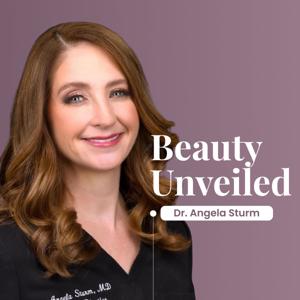
Beauty Unveiled, hosted by double board certified plastic surgeon Dr. Angela Sturm, takes listeners on a journey into the world of facial plastic surgery in Houston, Texas. Dr. Sturm's podcast explores the art of natural results, the emotional impact of plastic surgery, and empowering individuals to embrace their appearance.
Join Dr. Sturm as she shares her expertise and stories from the field, offering a unique perspective on the transformative power of aesthetic procedures.
Learn more about Dr. Sturm at drangelasturm.com.