
Sign up to save your podcasts
Or



Another podcast episode complete, and this time we also recorded a full-length video! At the time of writing it is taking around 10 hours to upload due to 1) it being 1 hour long, and 2) my wifi having dropped down to tortoise-like speeds over the last couple days. In this episode Todd and I focused mainly on why protein is king among the macronutrients. We also talked about weights and cardio, reps and sets, the right amount of beer required for optimal pub game skills, and we drank some Norwegian craft beers.
As we’ve mentioned before, there are three main macronutrients: Protein, Fat, and Carbohydrates. Of the three, protein is probably the most beneficial (though no diet would work without healthy doses of all three). But when you are looking to lose weight or build muscle you need lots of protein. Most people tend to wildly overestimate how much protein that they are actually consuming, with breakfast, lunch, and snacks usually containing little to no protein whatsoever. A study by Pennings et al in 2012 found that most people tended to eat almost all of their protein at dinner, so supplementing with whey protein at breakfast and lunch would be beneficial [1].
Protein can help you lose weight by increasing satiety and thermogenesis [2], protecting muscle whilst dieting [3], and helping you to build and repair muscles after a workout through protein synthesis [4]. To get the right amount for your body there is a simple way to work this out: Firstly work out what your body weight is in kg, then you want to get an estimate of your body fat percentage. I tend to recommend using picture comparison charts (such as the one on this website) but it really is difficult to get an accurate measurement without dissection! Anyway let’s assume that you are 100kg in weight and 25% body fat.
To estimate the correct amount of protein you would first need to work out your lean body mass, this is your total body weight WITHOUT your body fat. So 100kg minus 25% body fat, which equals 75kg. This is your lean body mass (LBM). According to Helms et al (2013) the correct amount of protein for a natural bodybuilder would be anywhere between 2.1 and 3.1g per kg of LBM [5]. As you are probably not a bodybuilder it would make sense to stay on the lower end of that, so let’s say you were to consume 2x your 75kg LBM in protein grams. This would be 150g.
As you can see there are many benefits and it is clear why protein is king when it comes to both dieting and when it comes to building muscle.
We actually received 3 questions from George in this podcast (my Sister’s fiance), the first of which was regarding whether high reps and low weights were preferable to low reps and heavy weights, or vice versa. This is a really good question, and the short answer is that it depends what your goals are. If you are training for hypertrophy (bigger muscles) then you can use a mix of rep ranges with weights to match. If you are training to get stronger then you would want to use low reps and heavy weights (but could throw in some back off sets using high reps too), and if you are training for fat loss, then medium to high reps with lighter weights is best.
George’s second question was regarding whether you should train weights first followed by cardio, cardio first and then weights, or whether it mattered at all. Just like the first question the answer relies on what your goals are. If you are training for muscle strength or hypertrophy then my advice would be to steer clear of combining the two completely, you’ll end up getting poor results. But if you are training for fat loss (which most people are) then combining both is a great idea. Whether you train weights first or cardio is down to personal preference, but if it were me I’d do cardio last. For two reasons 1) I want to get the best results in my lifts so would always prioritise them, and 2) I don’t want to sweat all over the bench press after a hard run!
If you’ve ever played pool or darts in a pub you might have noticed that something strange occurs after a couple of pints – you begin to play better! But why is this? Firstly, this does not apply to all sports – just ones that require good hand eye co-ordination, a smooth action (darts throw, pool shot, archery pull), and a slowed heart rate. In moderation alcohol can improve all of these, a study by Reilly & Scott (1993) found that having a blood alcohol content of 0.02% led to improved dart throwing, but a blood alcohol content of 0.05% led to impaired performance [6]. Blood Alcohol Content (BAC) of 0.02% is around 1-2 pints in where you are beginning to relax, whereas 0.05% is at the 2-3 pint mark. As you can see, it doesn’t take much to go from beneficial to harmful.
(Video of Bill Werbeniuk who used to drink 6 pints before a match)
Remember that alcohol can affect different people in different ways, a 50kg 18 year old girl who hasn’t eaten all day is going to get drunk quicker off a pint of beer than a 120kg man who has been drinking for 30 years and just ate a roast dinner. The answer to this question is there is a sweet spot, and that for the average male that would be 1-2 pints in. Considering the delayed reaction, I would advice having a beer, ordering a second then playing (while nursing that second pint). Larger men could add a pint to this equation, while smaller men and women could remove a pint.
This section is a little different today as we were reviewing a collection of Norwegian beers that were brought to us by Beer52.com a beer delivery company. They are in no way sponsoring me or anything like that BUT if you fancy giving them a go then hit up this link and you’ll get £12 off your order and I’ll get a free beer (Todd get’s nothing because it was my idea). I was insanely impressed by the beer selection from this company. I got 8 different beers from two breweries in Norway, Ægir Brewery and Amundsen Brewery.
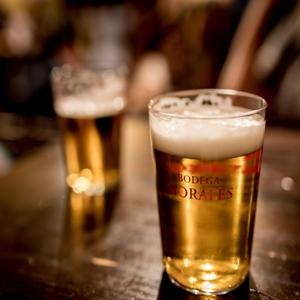
We tried four of the beers during the podcast (sharing one small can between us). There was the Ink & Dagger IPA (6.5%) from Amundsen, the Everyday Hero IPA (4.7%), the Barefoot Grapefruit Saison (4.7%), and the Littlebro IPA (4.7%) from Ægir Brewery. Of the four my favourite was a toss up between the Ink & Dagger IPA and the Everyday Hero IPA (pictured above). They were both absolutely fantastic beers, and I would happily drink them all day.
So that about wraps up this week’s episode, hopefully you now understand why protein is king, why sets and reps are determined by your goals, and why cardio after weights is best if you are looking for fat loss. In next weeks podcast we will be answering some frequently asked questions that I have heard a thousand times from many different clients (and strangers). This should be a lot of fun as some of the questions are fantastic, and some drive me crazy. Entertaining as hell! As always jump on our Instagram page, our Twitter page, and as ever our Beer N Biceps Facebook Group.
[1] Pennings, B., Groen, B., de Lange, A., Gijsen, A., Zorenc, A., Senden, J., van Loon, L. 2012. Amino acid absorption and subsequent muscle protein accretion following graded intakes of whey protein in elderly men. American Journal of Physiology – Endocrinology & Metabolism302(8): E992-E999
[2] Halton, T., Hu, F. 2004. The effects of high protein diets on thermogenesis, satiety and weight loss: a critical review. Journal of the American College of Nutrition23(5): 373-85
[3] Pasiakos, S., Cao, J., Margolis, L., Sauter, E., Whigham, L., McClung, J., Rood, J., Carbone, J., Combs Jr., G., Young, A. 2013. Effects of high-protein diets on fat-free mass and muscle protein synthesis following weight loss: A randomised controlled trial. The FASEB Journal 27(9): 3837-3847
[4] Tipton, K., Wolfe, R. 2001. Exercise, protein metabolism, and muscle growth. International Journal of Sport Nutrition & Exercise Metabolism11(1): 109-32
[5] Helms, E., Aragon, A., Fitschen, P. 2013. Evidence-based recommendations for natural bodybuilding contest preparation: nutrition and supplementation. Journal of the International Society of Sports Nutrition11(20)
P.S. If you are intrigued by the discussion about why protein is king then check out this article on everything protein that I wrote for this blog.
Hi guys and welcome to another episode of beer and biceps. This is episode 8 and in it we give you a complete myfitnesspal guide. We also discuss fat burners, Kirin Ichiban beer, and our favourite beer memories. Now I am not going to spend the rest of this article giving you an in-depth guide to using myfitnesspal, mainly because I have already completed a myfitnesspal pdf guide which you can download here: Getting to grips with My Fitness Pal
Check out the pdf above if you have no idea how to use it (or read my article on calorie counting), in this section we will look at how to get the most out of it. When you sign up for the website they give you the option of putting in all your information. Now for the first two weeks I wouldn’t even bother with that. Just log your daily calories and look at what your average is. Once you have done that you can use either this website or this website to discover what your calorie target should be (dependent on what your goals are – weight loss, maintenance, or gain).
You can then work out what your macronutrient count should be (use this article to work it out), then you should manually put this information into myfitnesspal (check that pdf out for exactly how to do this). Once you have your targets just consistently log in all your food for the next few weeks. Try to create some control. In the podcast I recommend eating the same breakfast each day (and adding a protein shake to it). This is 1) easier to manage 2) easier to log, and 3) means you can be more creative with other meals.
One of the more controversial debates in the fitness industry is over the use of fat burners. Seen by some as a miracle pill, and by others as a useless pill sold by snake oil salesmen. I as ever sit firmly on the fence on this subject. I acknowledge that there are a lot of scams, and garbage pills sold to the public. While also accepting that some fat burners can work, if used correctly. Ingredients such as caffeine, yohimbine, green tea extract, and capsaicin, can have a limited effect on your metabolism – and this can help to aid fat loss. You just need to be following a calorie controlled diet (see above) and exercising regularly. Fail to do either of these things, and your fat burner will have been a waste of money.
There’s not much point writing down our three memories, as the podcast covers them thoroughly. Instead I just wanted to talk about why this was such a great question. For many years while I was growing up beer was seen as fuel for a crazy night out, lad culture had made 12 pints of Stella seem like the right way to go for a drink. I loved this culture, and as a result I have many stories that I still cherish. Most of them being embarrassing as hell, but funny too.
I’m not sure whether the industry changed, or I changed (but I suspect both). But now going to the pub feels almost like a cultural experience. You purchase beers based on their interesting taste, your knowledge of the brewery, and perhaps based on the name/design of the packaging (this has led to some truly spectacular failures for me in the past – but I still do it occasionally). I know that this isn’t the case for everyone. I also know that my dad’s generation also had this culture to some extent. Beer festivals, The Campaign For Real Ale (CAMRA), Micheal Jackson’s guide to beer (no not that Michael Jackson), were all popular in the 80s and 90s but you have to admit that the rise of craft beer has definitely changed the beer drinking scene.
Now my memories of beer are based on where I was, the company I was with, the beer itself, and the history behind it. My memory was of going to Belgium and drinking a Blonde ale which was from a 200 year old recipe. We weree on the site of the Battle of Waterloo. If you had asked me my favourite beer memory 3 years ago, I might have talked about when myself and my mate Marc drank 17 pints in one day. Stayed up to watch a Joe Calzaghe match, and sang along to Total Eclipse of the Heart by Bonnie Tyler. Both are great memories, but I feel that the Belgium story represents my current approach to drinking.
Todd’s story brought me right back to being 17 and drinking underage. It was a very funny story – and I’m glad he edited out a lot of the embarrassing parts! His story represented another side of drinking, how the drinking culture is responsible for so many friendships at that age. I know that you can do this without alcohol, but it’s different. Going to a pub when half your mates are underage, the fear of walking into a Wetherspoons, going to an off licence because your mate can get served there etc … These stories are great to look back on, partly with embarrassment, and partly with nostalgia.
Our beer of the week was Kirin Ichiban, another Japanese beer. This is a pale lager which is 4.9% alcohol. I’ve drunk this in Japanese restaurants before and it is always stunning. But I was a little disappointed while drinking it during the podcast. It was still nice, a really refreshing beer. But it just didn’t bowl me over like it did in the restaurant. Partly this could be due to the setting. Where you are, what glass you are drinking out of, and what food you are eating/not eating, all make up part of the beer experience.
But it could also be the fact that the beer we were drinking is brewed in the UK. While the Japanese restaurant might have been importing directly from Japan. This makes a huge difference to how the beer turns out, as so much of beer is about the water used to make it.
In our next episode we are going to be talking all about protein. Why it is important, what are the benefits, why the huge interest in recent years, and how to get more of it into your diet. We’ll also be discussing any questions that you can throw our way, and drinking a mystery beer of Todd’s choice. Please comment below with any questions that you have. Remember we’re looking for guests to come on our podcast. So if you have anything that you want to talk about (and don’t mind coming round for a podcast/beer session) then message us.
As ever you can check us out on twitter, where we go by @beernbicepspod or you can check out instagram (where it is wall to wall beer pics) , or join our facebook group Beer N Biceps where we discuss everything, give first access to our articles/podcasts, and talk beer and fitness with anyone who’ll listen!
Hello again, another episode in our Beer N Biceps podcast, it’s amazing that we’ve got this far – we’ll soon be approaching our 500th download! As we have constantly pointed out, before we started this we’d have been happy with 100 (Hell, we threw a party when we did hit 100). We want to hit 1,000 before September, so you could say that we’re becoming ambitious. This episode is mainly focused on diet. We also discuss over training, and we talk about the Tring Brewery (which we visited on Saturday 22nd).
The main focus of this podcast was to help you separate a good diet from a bad one. A bad diet is focused on the short term, needlessly complicated, and overly restrictive. A good diet is realistic, inclusive, easy to follow, centred around protein, and utilises calorie counting, and a calorie deficit. In the podcast we identify 5 take home points, which are:
We also talked about the importance of weighing yourself, but I’m not going to ruin this 5 point plan by adding it in, so Todd put it in as point number 1.1. As ever, any questions regarding diet please get in contact with us. We love responding to people’s queries, and we are going into a lot of detail here so you should have many questions!
“Can you over train?” Was a question we received from one listener (also called Matt, because clearly his parents have amazing taste in names), and it’s a belter. Over training is definitely a real thing, and can affect people who train very regularly at a high level of intensity. If you are one of those people who lives in the gym, and has been training for months on end without rest, then you are likely to suffer from it. Over training can cause bad sleep, depression, poor recovery, and a dip in form. But how likely is it that a regular gym goer will suffer from it? Very unlikely would be my response.
You just aren’t training at a high enough intensity, you’re getting more than enough rest, and you aren’t training regularly enough to worry about it. If you are suffering from any of the symptoms mentioned above, then the most likely scenario is that your recovery is poor – rather than you are suffering from over training. Get some more sleep, eat some more protein, and take a day off from the gym. See how you feel.
Another listener, Mark asked whether Breakfast was the most important meal of the day or not. Another great question, with a fascinating answer. Try not to think of this as a conspiracy theory – because it is well documented, but the phrase “Breakfast is the most important meal of the day” was brought about by Edward Bernays trying to help sell bacon! In the podcast I wrongly attribute this to John Harvey Kellogg – but according to this article by the Guardian, he was the catalyst for making breakfast the way it is today.
Breakfast is not the most important meal of the day, and many people have managed to live their lives without suffering any consequences from never having eaten it as part of their diet. I subscribe to the belief that overall calorie intake is much more important than meal timing, in the same way that overall protein intake is more important than protein timing. On the other hand, it does seem to be marginally better to spread your protein out throughout the day rather than consume it all at once. A study by Mamerow et al (2014) found that spreading out your protein across three meals was more effective than having most of your protein at dinner (which is common) [1].
If you have always had breakfast then look for ways to improve it. Add some fruit or vegetables to it, add some form of protein, and as we discussed earlier, get some control over this meal. Keep it to the same 2-3 meals on rotation, rather than constantly changing what you have for breakfast. That will make it much easier to track, and to base your daily calories around. If you have never had breakfast then keep on going with that. It’s not necessary – unless the skipping of breakfast is causing you to overeat at lunch, or to snack too much during the morning.
A lot of our podcast was dominated by talk of our trip to Tring Brewery, and the reason for that was we had such a good time there. Tring brewery is situated in Hertfordshire, and is a medium sized brewery that sells almost exclusively to local pubs. You can also buy beers from their shop or alternatively you can buy them from the Beer Shop in Saint Albans, and in Hitchin.
Todd and myself went with our friends Sammy (of Craving Results fame) and her husband James, and all four of us had an amazing time. We took the tour with Sam Reed as our guide, a really knowledgeable and patient guy who told us everything we could wish to know about brewing, hops, the difference that water makes to brewing, and a thousand other interesting facts that I can’t remember due to drinking about 3 pints at 11:30am!
Afterwards we hung around in the shop and continued to try out the free beer on offer (for a £5 tour you really get your money’s worth), at this point I decided to buy some pretty decent beer glasses. Partly because it was James’ birthday and I wanted to get him something, and partly because I felt guilty about all the beer I was necking! I asked the guy behind the counter to help me, and he gave me so much information, he told me that the conversation might get a bit geeky – to which I responded that me and Todd do a beer podcast, you can’t out-geek us!
I learned a lot, and went back to drinking. When we were leaving we went to say goodbye, and Jared brought out a bottle of White IPA for us to drink (5.5%) for our podcast. Which was probably the best thing that has happened to us yet – we are but simple men. We reviewed it in our podcast (as promised) and luckily it was bloody delicious. The bottle was 2 litres and we’d finished it by the end. Quite flat but really flavourful, White IPA is one of those beers that you could sit down and have 6 of with absolutely no worries, and then stand up, walk outside, and get hit by that 5.5%!
If you are in the area, then I can’t recommend the Tring Brewery enough. You get an amazing tour, as much beer as you want to try (though don’t take the piss!), and you’re in the company of a group of people who a) know what they’re talking about when it comes to brewing and beer, and b) are genuinely passionate about it. The beer is really good too!
Due to Todd being away next week on holiday (terrible excuse – and I’d be a lot harder on him if I wasn’t also going on a stag do), we’ll be doing our next podcast early. This Friday to be exact. The subject will be “How to use Myfitnesspal effectively to manage your diet”. Something we touched on briefly in this episode, but can go into more detail. It will be taking a look at how to set it up properly, how to use it effectively, and ways to make the process as easy as possible. We’ll also be answering your questions (comment below) and reviewing a mystery beer – it’s Todd’s turn to pick, and I KNOW that he won’t pick one until 5 minutes before the episode is about to start!
[1] Mamerow, M., Mettler, J., English, K., Casperson, S., Arentson-Lantz, E., Sheffield-Moore, M., Layman, D., Paddon-Jones, D. 2014. Dietary Protein Distribution Positively Influences 24-h Muscle Protein Synthesis in Healthy Adults. The Journal of Nutrition 144(6): 876-880
Another episode of Beer N Biceps is up, and this time we’re talking about Delayed Onset Muscle Soreness – otherwise known as DOMS. This is the awful pain that you feel the day after a workout, we will be discussing what it is, why it is there, and what you can do to alleviate the symptoms. We also answer some fitness questions on Carbohydrates and Dr Doom (long story), and review a beer called Life & Death from Vocation Brewery.
I think the best description that I have seen for DOMS is: It’s like a hangover for your muscles. You train on a Monday, feel fine afterwards – maybe a bit tired, but then the next day your muscles are so painful that walking becomes a challenge. You can’t sit down or stand up properly, you can’t put a coat on … You get the idea. It can be very painful, and a major discomfort, but you’ll get through it, and once you have been training a couple weeks you’ll barely get any.
What DOMS is, is inflammation of the muscles. When you work out you are breaking down muscle fibres, and doing so can cause muscle damage. This sounds bad but it’s actually necessary for rebuilding muscle fibres so you can be stronger or have bigger muscles. DOMS is just your body reacting to the shock you’ve put it through. Contrary to what you’ve heard, there aren’t really any ways to get rid of DOMS, but you can alleviate the symptoms slightly.
The first “cure” that people mention are foam rollers, but in reality they don’t seem to have any effect on it. However, they have been shown to slightly reduce fatigue in the muscles after a workout [1] so you can see where people get confused. Foam rolling will not prevent DOMS but may remove some fatigue, so worth giving it a go. Drinking caffeine regularly for the 4-6 days after an intense workout seems to reduce pain and stiffness in the muscles, though this will probably only work for people who don’t habitually consume coffee (and therefore have a lower tolerance) [2].
You could also give Yoga a try, a light form of exercise that will help send blood and nutrients to the muscles, while also relaxing you. If your DOMS are particularly bad then this might be quite difficult to manage though. Then there’s the usual advice of get more sleep, eat more protein, and try walking some more. DOMS is a necessary part of fitness, but you should only have to deal with it for a couple of weeks. If you are getting it after every session and you’ve been training a while then you’re either training too hard (yes that is possible), or your recovery strategies are in need of improvement.
The first question we got was regarding carbohydrates, and whether you should remove them completely from your diet if you want to lose weight. As you can probably guess, no extreme dieting technique ever works long term. My advice would be to analyse your diet using a calorie/macro tracking app such as myfitnesspal, see what your carb total per day actually is, for some people it is very possible that their carb intake is too high, in which case lowering carbs would be a great idea. But don’t think of carbohydrates as some demon food that leads to weight gain, a gram of carbohydrates is 4 calories, while a gram of fat is 9 calories, so it’s not even the most calorie dense macronutrient!
This topic is basically an entire article (probably two or three) on its own, so I’ll leave it there and move onto question number two which was “Would you ever trust a man who’s name was Dr Victor Von Doom?”. A great question and one that divided Todd and myself immediately. I am of the opinion that no man should be judged by his name, and that doing so is against the law, whereas Todd seems to be of the opinion that in the case of someone literally named “Dr Doom” exceptions should be made. I’ve had a quick look up on wikipedia and it may be possible that Todd was right here. Boy is my face red!
This week’s beer was chosen by my girlfriend Lucy while in Asda. The design of the can is pretty magnificent, which is almost certainly why she chose it (she’s not a great beer fan). I used to be of the opinion that the greater the label art, the poorer the beer. But I’ve been proven wrong so many times now that I can no longer claim that. Life & Death is a very nice tasting beer, on the can it describes the taste as Fruit Salad, and I could totally see that, but with a hoppy aftertaste.
The brewery is in Hebden Bridge, Yorkshire and they also run a pub there (which I wouldn’t mind trying out – once I find out where this magical place called Yorkshire is). I’d definitely recommend this to any craft beer lovers. The beer itself is quite strong, coming in at 6.5% so I wouldn’t recommend it as a session beer – unless your sessions are incredibly intense! I’ll definitely be looking out for some of their other beers in the future.
In our next episode we will be talking about diets, what works, and what doesn’t work. This was slightly covered in this week’s podcast – but we’ll be going into even more detail, and hopefully I won’t be ranting for too long! I have no idea what beer we’ll be drinking because it’s Todd’s turn to choose, and he is impossible to predict! In the mean time come check out our instagram page, our twitter, our facebook group (which is the best thing ever if you like beer and fitness memes), or just send us a letter …. or beer …. in fact forget the letter!
Oh and any questions? Please write them in the comments, or message us through any of the social media channels we’ve mentioned …. seriously we love them! We managed to talk for 10 minutes about carbs and Fantastic Four villains, so the more questions we have, the better the podcasts are!
[1] Lininger, H., Schlegel, A., Harwell, L., Paulson, A., Braun, S., Sanders, W., Shippensburg, J. 2013. The Effects of Foam Rolling and Static Stretching on Flexibility and Acute Muscle Soreness. International Journal of Exercise Science: Conference Proceedings:9(1): Article 33.
[2] Hurley, C., Hatfield, D., Riebe, D. 2013. The effect of caffeine ingestion on delayed onset muscle soreness. Journal of Strength & Conditioning Research 27(11): 3101-9
Welcome back to another episode of Beer N Biceps, this week Todd and I spent time performing a training review, a look back at what we had done so far, and how it was going. We also answered some interesting questions regarding sleep, kale, abdominal exercises, and broccoli water. We reviewed a Kenyan beer called Tusker Beer, and did our first ever bar review: Munich Cricket Club in Victoria.
So we are now 2 weeks into training, which you might think is a little too soon to be doing a training review … and we won’t argue with you! But screw it, we’re doing one anyway. The overall goal of this training program is to create a sustainable lifestyle change. There’s no point in creating a program that you can’t follow, so we’re concentrating on easing ourselves into it, you might note that this is different to what most people do when they sign up. They go hell for leather, and have burned out by the 4 week mark. This strategy might work for many of you (going hell for leather, not the burned out part), but I know myself and I know Todd – It would not work for us.
We have managed 3 sessions in 2 weeks and we’re going for our fourth tonight (Tuesday 11th July). The session is a full body training program using high reps, based on the “Max Muscle Plan” by Brad Schoenfeld. We’ll be following it for the next few weeks, before lowering the reps slightly and increasing the weights. We have already started to adapt to the training program, and have increased the weight for almost every exercise. The only downside we’ve found is that the workout is taking way too long. We were there for nearly 2 hours in the last session, and that needs to drop for this program to be sustainable. We’re gonna try and shorten the workout tonight, which we decided as a direct result of performing a training review. Perhaps this is something that we should do more often?
After our training review we covered some questions that we’ve been getting from our listeners (thanks to every single person who has messaged us by the way). The first question we covered was the importance of sleep, something that I could talk all day about. Simply put, getting 8+ hours will help regulate appetite, increase testosterone and growth hormone levels, help you recover from exercise, and improve your mood and stress levels. If you are training hard the next day, then increasing sleep to 9-10 hours could be even more beneficial. It is for this reason that many professional sports teams have specially built sleeping rooms for their athletes.
Then we covered kale, which some see as a “super food” and others see as overrated. Personally I think that kale has a lot of benefits, it can block aromatase, it is very low calorie, and it is quite diverse as a food, it can be roasted, boiled, steamed, fried, and grilled. It’s also pretty damn cheap too! The next question concerned broccoli water, apparently people are saying that this is the latest health tonic. Like kale, broccoli is a cruciferous vegetable – meaning that it can block aromatase (keeping testosterone high, and lowering oestrogen).
So I’m sure there are some health benefits to drinking the water. BUT you’d get more benefits from eating the broccoli, and drinking the water sounds disgusting! My advice would be use it as stock to make gravy, and then freeze it. Face it, we all need more gravy in our lives.
Our final question was from someone who was feeling pain in their lower back when they performed bicycle crunches, my advice was the same advice I always give in this situation – go see a physio. This is not passing the buck on my part, it’s admitting that pain is not my speciality. Physios are fully capable of assessing your issue and correcting it. A good one can usually do so within 1-2 sessions (depending on the nature of the issue obviously). The exercise itself is fine, and I personally believe that ab crunches are also perfectly safe. But if you feel pain or discomfort while performing any exercise then firstly assess your technique, and if it’s not your technique, then get yourself checked out by a professional.
We’ve not really done any bar/pub reviews as it never occurred to us to do so, but on Saturday we went to a friend’s birthday in Victoria and the venue was pretty spectacular. I love German Beer, but would usually say that the whole Oompah band, standing on tables stuff is my idea of hell on earth. But the Munich Cricket Club got it exactly right. The venue was quite small and intimate, with really friendly staff, a nice bouncer (always a huge plus), and the band itself were fantastic.
The beer selection was a little bland compared to Katzenjammers (my favourite German bar in London) and I wish they had been a little more helpful to the “I hate beer crowd”. But their cocktail selection was very impressive (though there was a 30 minute wait for them) and there were still a few beers that I didn’t get to try.
On the whole both Todd and myself really rated this little gem of a pub, and would really recommend giving it a go. It’s a little expensive, but then it’s in central London so what do you expect? Great for birthdays, great for people who love German Beer and Oompah bands playing Oasis!
This week it was Todd’s choice, and he went for one of his favourite beers Tusker. It’s a Kenyan beer and you get it a lot in Indian restaurants, due to the historic ties between Kenya and British Indians. I do enjoy Tusker, but feel that it is best suited with a curry and some hot weather. It’s one of those beers that is perfect for certain situations such as that, but can be a little underwhelming as a stand alone beer. Let’s put it this way, I’d order it with a curry and be very happy with it, but I wouldn’t order it in a pub if I saw it.
Tusker has been around since 1923 when it was founded by George and Charles Hurst. When George was killed by an elephant, Charles decided to name the company Tusker (which is a common name for a male elephant in East Africa). The beer is a pale lager at a not particularly strong 4.2%, but personally I think that the lower alcohol percentage works in its favour.
So there you have it, you’ve had a training review, a bar review, and a beer review, all in one small episode! Not bad value for money really is it? In next week’s episode we will be looking at Delayed Onset Muscle Soreness, commonly known as DOMS. We’ll look at what causes it, how it can affect you, whether it is a good or bad sign, and how to reduce the pain of it.
Hello and welcome to episode 4 of the beer n biceps podcast, “Creating your perfect training plan”. Todd and I recorded this episode on Monday night – where we managed to screw up our facebook live, screw up our video recording, and screw up our initial podcast recording! It was a bit of a nightmare.
But, the true professionals that we are – managed to record the episode one more time. So you are really getting 200% effort for the same amount of content. In this episode we look at creating your perfect training plan, we answer a couple of questions, and we review the Erdinger Weissbier.
Also, as an extra treat for you guys – we have created a small supplementary YouTube video to accompany our podcast.
One thing that we discussed in the podcast was how to go about creating your perfect training plan, and whether chasing perfection was even worth it. The truth is that a well researched and perfectly designed training plan is going to deliver better, faster results than a poorly thought out training plan. It will also give much better results than no training program at all! However, to be successful you need to enter the gym.
One issue that seems to affect a lot of people is paralysis – not a physical paralysis, but a mental one. Where they spend so long trying to create the perfect training program that they actually don’t accomplish anything. It is always better to get started straight away when it comes to training and nutrition, even if your training plan isn’t perfect yet. Just take a look at this very podcast, Todd and I decided to create one, and within 3 days we had already recorded our first episode. It was only once we had started out that we put the effort into making a great plan to follow. We’re still learning now.
One of the questions that was put to us by Sam was whether diet or exercise was more important, I think that this is a really interesting question. In my opinion if you are talking about health then a calorie controlled diet that gets all the correct nutrients, and macros is superior to exercise. But in terms of body composition then exercise is marginally superior to diet. The fallacy that you can’t out train a bad diet has been continually disproved in gym across the country. There are many things that can affect your body composition – and diet is definitely one of them. But if you were to exercise to extreme levels then your diet would become less of an issue.
The true answer to this question is that you need a combination of both to achieve either full health or excellent body comp. Why put pressure on one aspect of training by ignoring the other? I’d also add that sleep could potentially trump both!
Now I’ve gone over what macronutrients are and what they do before so there’s not much point in me going into that all over again. But I can answer the question of how important it is to hit each macro. To manage this you need to have a calorie target, and I would put hitting your calorie target as much more important than hitting each individual macronutrient target. But then I would say that you should always try to hit protein, while fat should be kept within reason. Use carbohydrates as the macro that you can play around with to ensure you are hitting that calorie target.
This week it was my turn to pick a beer, and I went for one of my favourite, a wheat beer by Erdinger. It has been brewed by the Bavarian company since 1886 and has been run by the same family since 1949. When I first experienced this beer my initial reaction was one of pure loathing. I was too young for it really, and it joined the list of beers that I hated for years before finally loving (Sierra Nevada, Brewdog, Belgian Beers, most Craft beers), my taste buds matured, and my range of beers increased massively.
One issue that I have always had with this beer is pouring, which is why I was so pleased to learn the correct way of pouring one from Todd. The boy has skills, and I’ll be performing his method from now on: Wash glass with cold water, tilt glass, pour slowly until 80% of the beer is in the glass, swirl the remaining beer in the bottle to unsettle the sediment/yeast, and then pour onto the top. It made a huge difference to the taste, and to the makeup of this beer – usually I find that the head ends up taking up 50% of the glass!
Now that we have helped you with creating your perfect training plan we can turn our attention to a review of how Todd has been doing over the last few weeks. We will also be answering any questions that you have for us. Please contact us on our Twitter, Instagram, and Facebook pages, or just message us in the comments!
Hello again! Welcome to episode 3 of Beer N Biceps. In this week’s podcast Todd and I talk about choosing a gym. We briefly mention Todd’s new goals, and we discuss measurements. For about 45 seconds at the end of the podcast because we completely forgot! We also discuss our beer of the week. And have an unscheduled talk on our whiskey of the week (after Todd’s dad dropped off a whiskey mid-podcast).
When we had planned out the week’s podcast we had agreed that we should talk about why choosing a gym is an important step in your fitness journey. Without planning anything out I went into describing what you should and shouldn’t look for in your new gym. Before I realised that I was basically describing most gyms! Gyms should be expensive but not too expensive, they should be near your work or near your home, or somewhere between the two. They should have decent equipment, but not be too fancy. A good gym should have a young demographic, but an old demographic can also be good. You get the idea …. Just pick a gym!
I guess my complete uselessness at choosing a gym is centred around the fact that I have worked in 4 completely different gyms, and had a good experience in all of them. To get good results all you really need is friendly staff, access to some good weights, and your own motivation. Nothing else really matters.
This was a really interesting discussion point, because I have actually had many training partners in the past, some of them had trained with me for months on end, while others had trained with me for as little as one session. As with anything, the right gym partner for you will be different from the right gym partner for me. But from personal experience I can say that the worst gym partners have been
We also had a brief look at Todd’s needs for some new running shoes. In it I talked about the similarities in terms of benefits that most trainers offer. Whether it is a £400 set of Nikes or a £25 set of trainers from Sports Direct. So long as the shoes are comfortable you will run well in them. I mentioned a study by the US Army that found similarities in regular shoes and more fancy ones, which you can check out here.
After my controversial dislike of last week’s beers, it was refreshing to discover some new beer that I actually really liked. Longboard Island Lager is a smooth lager that reminded me of a french lager. It was a little plain tasting, but still very nice.
The brewery itself is situated in Hawaii and is called Kona Brewery. After the podcast we tried their Golden Ale called “Big Wave” and it was gorgeous, a real high quality beer. Both beers are perfect for drinking outside, and it was nice to finally have a taste of a beer that my friends have been raving about for quite a while.
The whisky we tried afterwards was a Welsh whisky from a company called Penderyn, neither of us are massive whisky fans but this was something special. Quite sweet and not too harsh. Reminded me a bit of a couple Irish whiskeys that I’ve had. But as I am even less of a whisky expert than I am a beer one, I’ll try to avoid comparisons. In case people give me a horrified look and say that it tastes nothing like an Irish whiskey.
This is where things get interesting. At the moment we are on 79 listens for our podcasts and we have decided that if/when we hit 100 listens we will be throwing a celebratory podcast. Which we will also be streaming live on Facebook. The subject will be “Creating a training program“ and in it we will talk about Todd’s new training program. We’ll be going through the process that I follow when creating brand new training programs. We’ll also, as ever, be drinking a new beer and discussing that.
Finally, our 100 listener podcast will be offering an awesome prize. To be in with a chance of winning it you will be asked to like, comment, and share the facebook live video. As ever please subscribe to our podcast (link at the top) and check out our facebook group, instagram, and twitter page (exclusively run by Todd) to get your fill of Beer and Bicep activities!
Hello again guys! Welcome to our second beer n biceps podcast, this week Todd and I looked at goal setting and how to use it effectively for your fitness and nutrition needs. We also briefly talked about the recent hot weather and how it can positively or negatively affect your diet and energy expenditure. We also review our beer of the week, which is Stone IPA (from the Stone Brewing microbrewery).
We were also joined by guest podcaster Rodney, who suffers the disadvantage of being an adorable dog but didn’t let this get in the way of him interrupting our podcast and being generally cute throughout.
During the podcast we decided to help Todd create both short and long term goals for himself, his long term goal is to look good in a suit at his wedding (hopefully some time in 2018). This is an admirable goal but over the coming weeks we will need to make it a bit more clear. So we will have to take measurements, scale weights, and look at estimating current body fat percentage. This way our long term goal will be a lot more specific.
We then looked at his short term goal, which is to sign up to a gym and to perform one session in it. This may seem quite unambitious but the reality is that when you’re approaching 30 years old you can’t just jump into a weights session after 3 years of inactivity and expect this to be consequence free. Instead you will be suffering from Delayed Onset Muscle Soreness for around 5-7 days! Or at least that’s what I suffered from after only taking 2 months off.
At the time of recording our second podcast Britain was in the midst of record June temperatures, so the glorious sunshine may have influenced our podcast discussion. Todd talked about how hot weather had helped to influence his diet, making healthier choices seem more appetising. While I agreed with him completely that this can be the case, I feel that this is dependant on the person’s individual mindset. If at the back of your mind you feel that you want to lose weight, then you will find it easier to eat healthier. If you don’t care then you may find the hot weather as a good excuse to eat more ice cream, or go crazy at multiple barbecues.
Hot weather can also influence your daily activity levels, again dependant on your mindset. Someone looking to lose weight may be more likely to go outside and play basketball, or go for a run. While someone who is uninterested in getting in shape would probably find themselves slumped in front of a fan doing absolutely bugger all (guilty).
Now that we have got all that goal setting information out of the way we can finally concentrate on what is important … beer!
Firstly I would like to make a small correction, in the podcast I say that Stone Brewing is a German company. It is in fact from San Diego, US. It was opened in 1996 and has since expanded to Richmond, Virginia and Berlin, Germany – so I wasn’t completely wrong! The fact is that I did not enjoy this beer, while Todd thought that it was okay. As I said in the podcast in terms of taste I didn’t enjoy the initial taste, I didn’t enjoy the taste while drinking it, and I didn’t enjoy the aftertaste! This is down to personal preference, and should not be seen as a criticism of Stone IPA. It’s a strong tasting and high alcohol (6.9%) beer, that people who love highly hopped and citrus flavoured beers, should enjoy.
It’s not like I have a particular problem with strong beers, I particularly enjoy Belgian beers and they all seem to start at 5% or more! But taste is such an important part of beer, and usually strong alcohol beers are also very strong tasting. Which is the case here. After the podcast we also tried a couple of beers from the LAM brewery in Kennington, check out the website if you’re interested in a very unusual set of beers. Again, these beers were not to my personal preference but Todd’s dad said the Pale Ale and wheat beers were excellent.
In podcast episode three we will be talking about choosing the right gym for you, taking measurements, the importance of before and after photos, and we’ll be discussing Todd’s new training program. We’ll also have a brand new beer for you to try. In the meantime you can join our facebook group Beer N Biceps, check out our brand new Twitter @beernbicepspod.
P.S. If you subscribe to our podcast on iTunes, please let us know and I will create a free training program for you to follow based on your personal circumstances. I usually charge £50-100 for this type of program, so please take advantage of it. Think of this as a goal setting exercise!
This is the first ever beer n biceps podcast created by myself and my good friend (and ex-client) Todd. Hopefully this will be the first of many weekly podcasts between the two of us, walking you through how we both approach training and leading a healthy lifestyle. You can listen to it here:
Matt: I’m a fitness and nutrition freelance writer, you can read my work here, here, and here. I mostly do ghostwriting jobs though, so am largely un-credited (means I get to pay rent though so I’m happy). I have a degree in Sports Science from London Metropolitan University, and have been a personal trainer for 7 years (until I quit in February to focus on my budding writing career). Myself and Todd run the Beer N Biceps facebook group, and train clients online through my online coaching program. I also LOVE beer and have written about it on many occasions. I once trained Todd for a Men’s Health Transformation Competition (we didn’t win) and that is why I started the Beer N Biceps Podcast with him.
Todd: Works in Finance and is getting married (at some point in the future) to the beautiful Charlotte. He has no background in fitness, however he was the subject of a pretty incredible 12 week transformation that we did together in 2012. During this process he went from a 25%+ body fat level, to around 15% (these are complete guesses based on memory), he also learned how to deadlift, squat, bench press, and many other exercises. He completely changed his diet, and as a result looked terrific.
Since then he has slowly returned to his former size – due to one of the mistakes in my training which we will be discussing throughout this podcast. Over the next few weeks we will be putting Todd through his paces and allowing you to follow him as he improves his fitness and drops some body fat. Todd is also a huge lover of beer, and the goal of the Beer N Biceps podcast is to show you that it is possible to live a healthy and fit life while still drinking good beer and leading a normal life.
There are a couple of reasons why we wanted to do this podcast, mostly vain ones (obviously). We feel that there are a lot of fitness podcasts out there that are produced by fitness experts (or at least people who believe themselves to be experts), and quite a few podcasts/ blogs/ YouTube vlogs that are created by amateurs. But how many of these things combine both fitness professionals and the man on the street? Hopefully none!
We want to promote the middle ground between those who don’t bother with fitness or nutrition, and those who feel that anything less than a six pack is a failure. There must be people out there who would like to look good, wear 30 inch waist jeans, and enjoy a bottle of beer or three on a Friday night?
Our final goal is an odd one for a nominally fitness-based podcast, we want to celebrate beer. We’ll be drinking a different beer each podcast, and promoting the lesser-known beers available. For instance this week we were drinking TEA by Hogs Back Brewery. The brewery is based in Surrey (Tongham) and has been around since 1992. TEA (Traditional English Ale) was their first ever beer and they now have a range of 4-5 beers available.
Todd picked this week’s beer, and was clearly a fan. He talks about his trip to the brewery, and mentions how good the tour is. Personally I found it a decent hoppy bitter, pretty decent. Could have been colder but that was our issue rather than anything to do with the beer itself. Incidentally, while we would say we know quite a bit about beers, don’t expect any serious tasting notes from us. We will rate our beers “good” or “despicable”, and it is completely based on our own preferences. It’s all about showcasing each other (and our listeners) beers that we enjoy*.
In the next podcast we will be looking at goal setting, and how to set targets that you can actually hit. We will also discuss a brand new beer (it’s my turn to pick and I have no idea what to go for). Remember we would absolutely LOVE your comments and critiques below. Also, if you have any questions then write them down and we will address them in next week’s podcast.
*It also helps us to fight any nerves about talking on a podcast!
From the publisher's feed