
Sign up to save your podcasts
Or

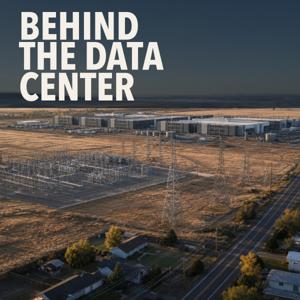


After seven episodes, one conclusion is clear: there is no single data-center future.
In the season finale of Behind the Data Center, we return to the conflicts that opened this story and test the biggest promises and fears against what we have learned about the machine, the buildout, the grid, communities, money, and technology.
Some projects may make sense. Others may not. The answer depends on place, timing, resource constraints, public terms, and who bears the risk when plans change.
We compare the choices now taking shape: faster development versus slower planning, private commitments versus public safeguards, local benefits versus cumulative impacts, and technological optimism versus the practical limits of land, power, water, and time.
This episode offers a framework for judging the next proposal, forecast, or headline. Ask what is being built, where the power will come from, how the costs are allocated, what the community receives, and what happens if the assumptions prove wrong.
The future is still being negotiated — project by project, grid by grid, and community by community.
After six episodes of accumulating constraints, we finally ask the optimistic question: can technology change the underlying resource equation?
In Episode 7 of Behind the Data Center, we examine the tools being asked to make AI infrastructure more efficient, more flexible, and less constrained by power, water, heat, and time.
That includes better chips, liquid cooling, new data-center designs, batteries, flexible computing, geothermal power, advanced nuclear, and transmission improvements. Each can matter. None is a magic switch.
We separate the genuine gains from the easy promises. Efficiency can reduce the energy needed for a unit of computation, but total demand can still rise. Batteries can bridge outages and smooth the grid, but they do not replace long-duration generation. Cooling can reduce water use in some settings while shifting tradeoffs elsewhere. And new power sources can help — on timelines that may not match the pace of the buildout.
The credible answer is a portfolio, not a miracle: improvements in efficiency, supply, and flexibility working together while the physical limits remain real.
A multibillion-dollar data-center announcement can sound straightforward — until you ask who owns the building, who rents the computing, who finances the infrastructure, who receives the tax break, and who is exposed if demand never arrives.
In Episode 6 of Behind the Data Center, we follow the money through the AI infrastructure boom: developers, cloud and technology companies, utilities, chipmakers, governments, lenders, and investors.
We unpack the contracts and incentives that turn a major campus into a financial system. Why does profit often migrate toward scarce land, power, and computing capacity? How do long-term leases, power agreements, tax incentives, and utility tariffs distribute both upside and risk?
The stakes extend beyond any one company. Public subsidies can reshape a local budget. Utility investments can affect ratepayers. A project delayed by power constraints can alter the economics of everyone around it. And when forecasts change, someone still has to carry the cost of infrastructure built for demand that may not fully arrive.
AI infrastructure is not just a race to build. It is a set of choices about who pays, who profits, and who is left holding the risk.
The same kind of data center can be welcomed in one community and fought bitterly in another. The difference is rarely just about the building.
In Episode 5 of Behind the Data Center, we put the neighbors at the center of the story. We examine the local bargain behind a major campus: tax revenue, construction work, permanent jobs, land use, traffic, noise, water, backup generators, and the infrastructure built around the site.
Those factors matter differently in different places. A project can promise meaningful benefits and still encounter deep opposition if residents feel the costs are concentrated, the impacts are cumulative, or the decisions were made without them.
We explore why trust and process can be as consequential as any technical detail. What information does a community receive? Who gets to ask questions? What happens when a project changes after the first announcement? And when does a development proposal earn — or lose — its social license to operate?
The question underneath the public hearing is simple: is this a fair bargain, and do the people living next to it have real agency in the answer?
A data-center developer can have land, financing, fiber, permits, and chips — and still be unable to build on schedule because the power is not there.
In Episode 4 of Behind the Data Center, we examine the electric grid as the AI boom’s central constraint. We follow the path from a developer’s request for power through utility planning, new generation, substations, transmission lines, and the interconnection process that determines whether a project can actually connect.
Why do some projects wait years? Why is a power request not the same as delivered electricity? And why can a forecast that is wrong in either direction leave a region with shortages — or costly infrastructure that someone still has to pay for?
We unpack the tradeoffs facing utilities, regulators, developers, and ratepayers as very large new loads arrive. The issue is not only whether the grid can grow. It is who funds that growth, who carries the risk, and what happens when the timetable for computing moves faster than the timetable for power.
Land, money, and chips are useless if electricity cannot arrive. This is what happens when AI infrastructure meets the grid.
AI infrastructure is being announced at an extraordinary scale. But an announcement is not the same thing as an operating data center.
In Episode 3 of Behind the Data Center, we map the physical buildout across established and emerging hubs — including Virginia, Texas, Ohio, Louisiana, and beyond — and separate the categories that are often blurred together: proposed, requested, contracted, under construction, and operating capacity.
That distinction matters. A project can be real in one sense and uncertain in another. It may have land but not power, a power request but not an interconnection agreement, a construction plan but not a finished campus.
We examine why geography is becoming destiny: where transmission, generation, water, land, labor, permitting, and local politics make a large data-center project more or less likely to happen. We also ask what the gap between headlines and built reality reveals about the AI boom.
The buildout is immense. The harder question is how much of it will actually arrive — where, when, and on whose infrastructure.
What is a data center, really? In Episode 2 of Behind the Data Center, we go inside the physical system behind the AI boom.
Follow the path from the utility grid to the computing equipment: substations, transformers, switchgear, uninterruptible power supplies, batteries, backup generators, server racks, networking, and the cooling systems that carry heat away.
The central idea is simple: electricity goes in, computation happens, heat comes out. But keeping that process running continuously — at enormous scale — requires layers of redundancy and engineering designed around failure.
We unpack why uptime matters, what happens when utility power disappears, why a battery is a bridge rather than a long-term power source, and how cooling, water, airflow, and networking determine what a campus can actually do.
Before we can understand the public fights over data centers, we have to understand the machine itself.
Data centers used to be easy to overlook: windowless buildings behind fences, quietly keeping cloud storage, streaming, and online services running. Now they are at the center of public fights across America.
In the first episode of Behind the Data Center, we ask why. Communities are weighing proposals that can involve massive campuses, substations, transmission lines, cooling systems, water infrastructure, backup generation, land, and billions of dollars in public and private investment.
The argument is not simply about computers. It is about what must be built around them — and how the costs, benefits, and risks of that buildout are shared.
We examine the questions behind the headlines: What does a gigawatt-scale project actually mean? Why are announced capacity, operational capacity, and real electricity use not the same thing? Why can a permitting process become a trust problem? And why has community acceptance become a development risk?
This is the beginning of a season about the physical systems beneath artificial intelligence — the land, power, water, money, and public choices that make the “cloud” possible.
From the publisher's feed