
Sign up to save your podcasts
Or

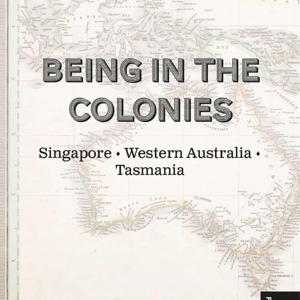


Being and cases for determinism and the theories of violence of Breazu and Deleuze. The cases against Collingwood and Eurocentrism led by Heidegger.
Warning: contains dry jokes. I am sure you can spot them.
Send us Fan Mail
Or read the book? Being in the Colonies
#ontology #warcrimes #colonialism #atrocity #violence #Heidegger #Nietzsche #Being
This reading begins the first chapter of the book by asking a range of questions about contemporary ideas of Being. It also seeks to justify the idea of Being pursued on the book of convenience pursued by violence. It frames the questions used as an inquiry throughout the book: who is enjoying convenience, who can sustain convenience through aggressive action, when did a group retreat from conflict to pursue survival instead and was the price of convenience too big for the exoneration of Fate?
Send us Fan Mail
Or read the book? Being in the Colonies
#ontology #warcrimes #colonialism #atrocity #violence #Heidegger #Nietzsche #Being
This episode concludes the reading of the introductory chapter. The exploration of convenience begins. Colonial Tasmania is depicted as a neurotic tussle against Palawa inhabitants who pursued their own idea of convenience and fought effectively for it. Western Australian settlers complained that there was too much red tape involved in the apprehension of Indigenous cattle thieves. Being is likened to membership of a gangster in-crowd. Polite and social until the moment violence is necessary.
Send us Fan Mail
Or read the book? Being in the Colonies
#ontology #warcrimes #colonialism #atrocity #violence #Heidegger #Nietzsche #Being
This episode briefly considers the challenge for making a reading of Being as a historical enterprise. Then we make our first assessment of the events after the fall of Singapore as a lesson in Being. It was a triumphal moment for the Japanese Imperial Army and then an excessive one. The question of whether Chinese survival without resistance constitutes Being is raised.
Send us Fan Mail
Or read the book? Being in the Colonies
#ontology #warcrimes #colonialism #atrocity #violence #Heidegger #Nietzsche #Being
This episode expands on the qualities of Being evident in a colonial context. It makes a case for a determinist reading of history turning on expected individual ontic force given limits by fate by those who holding presumptive Being. The question motivating the whole book is revealed: can a gross imbalance in the violence done to win Being in an ontic domain actually endanger it by leaving no source of comparison from a fellow striver. Thus, there is a tension. Absolutist acts of will destroy Being when a ruler does not respond to resistance proportionately.
Send us Fan Mail
Or read the book? Being in the Colonies
#ontology #warcrimes #colonialism #atrocity #violence #Heidegger #Nietzsche #Being
Can we imagine a fresh approach to Being? One not explicitly relying on ego/super ego/id, Dasein, Geist, anima, essence, sentient equivalence, psyche, for itself, spirit or soul? This episode contends for Being as a conscious pursuit of convenience through measured violence at the expense of others. I explain in order to and because I can as modes of ontic action in conscious pursuit of Being. Fate is introduced as a roadblock on Being for those who act in the mode of because I can too often.
There is brief analysis of the ancient Greek idea of #Phusis is presented: the spontaneous present moment where Being can occur. Consciousness acknowledges a sense of stimulus and a permission to act but does not initially give it a name. Being is spontaneous ontic enactment. It is either proportionate or impulsive in history's retrospect. Being is a temporary relationship to Convenience within the constraint of Fate. The discussion ends on the true meaning of eigentlichkeit not as authenticity but as properness to an individual. Excessive lack of ontic restraint is proper to no one.
#ontology #warcrimes #colonialism #atrocity #violence #Heidegger #Nietzsche #Being
https://substack.com/@rohee70?utm_source=share&utm_medium=android&r=7ggb33
Send us Fan Mail
Or read the book? Being in the Colonies
#ontology #warcrimes #colonialism #atrocity #violence #Heidegger #Nietzsche #Being
From the publisher's feed
In Being in the Colonies: Singapore, Western Australia & Tasmania philosopher Dr Rohan Price follows the ontological fortunes of three British possessions throughout key moments in their…
The formula applied across the empire is simple. Violence = freedom and convenience. Prevailing in convenience = Being. Proportional violence = operating within Fate and retaining Being. Excessive violence = a fall from Fate and a loss of Being. Resistance challenges convenience and can transform into Being, too.
To resist is great but to hold Being is Divine! Well, as close as we can get to divinity...
Rohan reads six pages of his new book per episode.
Like the podcast? Order the book: Being in the Colonies