
Sign up to save your podcasts
Or

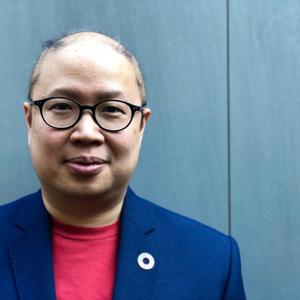


What if Europe falls behind in AI? Alex Petropoulos is Chief of Staff at Arq Foundation and co-author of Europe 2031, a speculative story about Europe's future in a world transformed by artificial intelligence.
We discuss why speculative fiction might change policy more effectively than conventional reports, whether AI computing power will become scarce or abundant, and how Europe can compete with the US and China while preserving its values.
We explore AI risks, scientific breakthroughs, what becomes scarce when intelligence is abundant, and why institutions need to become better at taking risks and measuring progress.
Along the way, we discuss what competitive Overwatch taught Alex about teamwork, how he thinks and writes with AI, and what an ordinary Tuesday in a better future might look like.
Episode page, links and full transcript:
https://www.thendobetter.com/arts/2026/10/18/alex-petropoulos-europe-2031-ai-power-and-the-future-we-actually-want
Contents:
00:00 Europe 2031 and the future of AI
04:01 Why speculative fiction works
10:53 European values and AI competition
20:09 Democracy, speed and institutional reform
25:24 AI catastrophic risks
29:52 Scientific breakthroughs and the limits of AI
36:53 Rethinking a European CERN for AI
43:01 ARIA and ambitious science
48:14 Bottlenecks and comparative advantage
50:40 Overwatch, teamwork and leadership
57:24 Writing and thinking with AI
01:01:22 Overrated / Underrated
01:06:24 A future worth wanting
When is the market genuinely irrational, and when have you simply failed to understand what the market understands?
Alex Edmans, Professor of Finance at London Business School and author of The Madness of Markets, joins me to talk about market psychology, stories, bubbles and what behavioural finance can actually teach investors.
Alex explains his research showing that stock markets tend to fall after a country is knocked out of the World Cup, even though a football result should have little effect on corporate profits. From there we ask what really counts as market “madness”, why collective beliefs can sustain the value of assets such as gold and crypto, and how markets can show both short-term momentum and longer-term reversal.
We also discuss why investors still struggle to value intangibles such as culture and employee satisfaction; how share prices can change corporate decisions rather than simply reflect them; and whether professional investors are actually less biased than everyone else.
Alex is candid about his own mistakes. He talks about a failed investment in a fitness start-up, the one-minute delay he put on his email outbox to counter his tendency to interpret messages negatively, and why he deliberately seeks out people and evidence that challenge what he already believes.
We also cover Neil Woodford, cognitive diversity, sustainability and ESG, misinformation, AI, deep work and Alex’s creative process.
At the heart of the conversation is a difficult investing question: if you think the market is wrong, what evidence would convince you that it is actually you who is wrong?
Contents
00:00 Meet Alex Edmans
00:35 When are markets really irrational?
01:29 Football results and investor sentiment
07:47 Stories, narratives and bubbles
12:33 Momentum, reversal and behavioural finance
16:17 Why markets misprice intangibles
24:07 How prices change real decisions
33:02 Are professional investors less biased?
39:55 Alex’s failed start-up investment
43:03 Rethinking sustainability
47:48 Overrated / Underrated
56:06 Social media and AI
01:00:06 Deep work and creativity
01:03:36 Final advice
Transcript, links and key takeaways:
www.thendobetter.com/investing/2026/9/18/alex-edmans-the-madness-of-markets-when-are-markets-really-irrational
Fuchsia Dunlop returns to the podcast to discuss Five Tastes: The Magic of Flavour in the Chinese Kitchen.
We explore how Chinese cooking thinks about taste, balance and texture: from běnwèi, the essential flavour of an ingredient, and xiānwèi, umami, to qīngdàn, the light, understated dishes that balance a meal.
Fuchsia explains why Sichuan food is about far more than heat, how cooks correct unwanted flavours in meat and fish, why soups and plain dishes matter, and how texture can be as important as flavour.
We also talk about cooking by smell, sound and instinct, fermented tofu, wood ear mushrooms, jellyfish, menu planning, and why steaming is still underrated in the West.
Plus: hot pot, tasting menus, air fryers, and why Chinese cooking is much more accessible than many people think.
Transcript: www.thendobetter.com/arts/2026/9/4/fuchsia-dunlop-five-tastes-chinese-flavour-and-the-art-of-balance
Contents:
00:00 Welcome Fuchsia Dunlop
00:30 The Five Tastes and Chinese ideas of flavour
03:53 Balance and layered flavour
06:44 Correcting fishy and meaty flavours
11:34 Xiānwèi, umami and savoury depth
15:08 Guàiwèi: harmony in “strange flavour”
20:21 When to showcase or transform an ingredient
23:40 Qīngdàn: the importance of quiet food
30:15 Why texture matters in Chinese cooking
36:29 How to build a Chinese meal at home
41:37 Creating new recipes and fermented tofu
45:14 Thirty years of food, travel and field notes
49:55 Learning to cook by smell, sight and sound
53:16 Hot pot, steaming and tasting menus: overrated or underrated?
59:37 Chinese cooking needn’t be intimidating
Photo credit: (c) Kristin Perers
Soumaya Keynes joins Ben Yeoh to discuss How to Win a Trade War, co-written with Chad Bown, and what countries should do when economic conflict can no longer be avoided. They explore the weakening of the WTO system, supply-chain vulnerabilities, strategic stockpiles, tariffs, China’s economic power and the return of industrial policy. Soumaya also explains why defence should come before attack, what “winning” might mean for a country such as the UK, and why governments may need to tolerate some failures when building strategic industries. The conversation then turns to obesity, gender and income, the wider effects of GLP-1 medicines, writing in the age of AI, and Soumaya’s unexpected second career as an economics singer-songwriter.
Highlights:
Transcript and video: https://www.thendobetter.com/investing/2026/7/14/soumaya-keynes-how-to-win-a-trade-war-tariffs-china-and-industrial-policy
Art historian and author Matt Lodder joins Ben Yeoh to explain why tattoo history is not a niche subject, but a way into art history, class, colonialism, gender, fashion, technology, archives, and the stories societies choose to preserve or forget.
Matt argues that tattoos have often been misunderstood because the historical record overrepresents people whose bodies were monitored: sailors, soldiers, prisoners and other surveilled groups. Meanwhile, tattooing among women, the middle classes, queer communities and “ordinary” people was often hidden under clothing, poorly documented, or preserved only in private archives.
The conversation moves from Matt’s childhood fascination with tattooing to the art-historical questions that animate his work. Rather than asking only whether tattoos are “art”, why people get tattooed, or what a tattoo “means”, Matt asks what tattoos reveal about style, taste, authorship, technology, reception and power.
They discuss myths around Captain Cook, the strange archival afterlives of tattooed skin, the invention of electric tattooing, Instagram’s acceleration of trends, AI-generated tattoo aesthetics, eye tattooing, and why museums still struggle to preserve an art form carried on living bodies.
It is a conversation about tattoos, but also about how culture gets remembered, flattened, misread and rediscovered.
Transcript: https://www.thendobetter.com/arts/2026/5/28/matt-lodder-on-tattoos-memory-and-the-history-written-on-skin
Takeaways:
Tattoo history is a way of reading wider human history, because tattoos sit at the intersection of image, body, identity, fashion, technology and social judgement.
Many tattoo myths persist because archives preserve the bodies of people who were surveilled, while more private or ordinary tattooing often left fewer records.
Matt pushes against the narrow question of whether tattoos are “art”, arguing that art history is more useful when it asks about style, authorship, taste and reception.
Tattooing was not simply “discovered” by Europeans through Captain Cook. That story reflects later colonial myth-making more than historical reality.
Instagram has not changed the basic fact that people copy visual culture, but it has radically accelerated the life cycle of tattoo trends.
AI tattoo imagery is technically influential, but Matt is sceptical of its aesthetics and ethics, especially when it shortcuts artistic authorship.
Matt’s practical advice: ask tattooed people who did the work, look at healed portfolios, choose artists by style, and do not treat people’s bodies as public property.
What if medicine could protect us against many respiratory viruses at once? In this episode of Ben Yeoh Chats, Ben speaks with Brian Wang, Programme Director at ARIA, the UK’s Advanced Research and Invention Agency. Brian leads ARIA’s Sustained Viral Resilience programme, which is exploring whether we can harness the innate immune system to create a new kind of preventive medicine.
Brian explains why most people think about immunity through antibodies, vaccines and the adaptive immune system, while the innate immune system is broader, faster and potentially better suited to broad-spectrum protection. The challenge is that innate immunity has historically been harder to understand and harder to engineer safely.
Ben and Brian discuss whether sustained innate immuno-prophylactics, or SIPs, could one day provide months of protection against flu, RSV, coronaviruses and future pandemic threats from a single dose. They also explore AI for biology, synthetic biology, pandemic preparedness after COVID, medical regulation, the UK science base, and ARIA’s model for funding high-risk research.
A conversation about innate immunity, preventive medicine, pandemic resilience, AI in biology, and how breakthroughs actually happen.
Link to transcript: https://www.thendobetter.com/investing/2026/5/8/brian-wang-on-innate-immunity-aria-and-a-new-kind-of-preventive-medicine
Contents
00:40 What we misunderstand about the immune system
02:04 Could one medicine protect against many viruses?
03:55 Innate versus adaptive immunity
06:18 Why innate immunity was overlooked
16:36 Breakthroughs in innate immunology
21:09 Why start with respiratory viruses?
25:47 How ARIA funds frontier science
29:27 Promising approaches to SIPs
34:13 AI for biology and its limits
38:15 Brian’s path to ARIA
39:16 Pandemic preparedness after COVID
44:03 Overrated / underrated
47:27 The UK science ecosystem
50:15 Medical regulation
53:31 GLP-1s and wider biomedical discovery
56:47 Upcoming ARIA calls
01:02:10 Advice for scientists and builders
Dan Wang joins Ben Yeoh for a conversation about culture, ambition, and what different societies choose to value.
They discuss why Silicon Valley can feel thinner-skinned and less culturally alive than it once did, why London remains rich in artistic life but struggles to build homes, infrastructure, and energy; and why China’s extraordinary physical capacity has come with tighter limits on cultural expression.
Along the way, they get into AI hype and real-world harms, censorship, food culture, neurodiversity in tech, opera, Shakespeare, theatre, writing craft, and Dan’s advice for ambitious young people.
Link to transcript and episode site: www.thendobetter.com/arts/2026/4/21/dan-wang-silicon-valley-culture-londons-building-crisis-and-chinas-cultural-squeeze
Chapters
00:00 Intro: Dan Wang and Breakneck
00:21 Why Tech Lacks Humour
02:09 Silicon Valley and the Arts
05:28 London Versus California
08:31 China, Censorship, and Culture
12:56 Food Culture in China and America
18:58 AI Hype, Doom, and Real Harms
23:04 Energy, Permitting, and AI Bottlenecks
30:58 Why Britain Struggles to Build
34:28 Neurodiversity in Silicon Valley
37:04 Cadets, Discipline, and Rule-Breaking
39:15 Philip Glass, Mozart, Verdi, and Wagner
42:04 The Most American Shakespeare
44:06 King Lear and Political Collapse
45:31 What Dan Learned From the Book Tour
48:09 Retyping Great Writers
52:56 Reading Plays Aloud
55:46 Why Arcadia Matters
58:29 Do Playwrights Write Differently?
01:01:38 Overrated, Underrated, Correctly Rated
01:08:00 Markets Versus Real Value
01:09:37 What Dan Is Reading Now
01:10:21 Advice for Your Twenties
01:13:24 Closing
Why are people having fewer children than they say they want? In this episode, writer and policy thinker Phoebe Arslanagić-Little joins me to discuss the UK fertility crisis and what she calls the “birth gap”: the gap between the number of children people say they want and the number they actually have. We talk about why this is not just about money, but a mix of culture, career timing, housing, childcare, social norms, and the feeling that you need to reach some elusive state of readiness before having children.
We also get into maternity pay, paternity leave, grandparents, childcare, state signals, dating apps, and what surprised Phoebe most about becoming a mother.
As she puts it, “I don’t really subscribe to any of the theories that say, oh, it’s this one thing. I think it genuinely is like a confluence of factors.” And on the role of government: “I think the state should very openly say there are people who want to have children. We think that’s great. We’d like to help them.”
Transcript: https://www.thendobetter.com/investing/2026/3/22/phoebe-arslanagi-little-on-fertility-family-policy-and-the-birth-gap
Contents:
00:00 Fertility Crisis Defined
01:25 Overpopulation Narrative Origins
03:22 Is the Birth Gap Real
04:59 Why People Delay Kids
06:41 Culture and Readiness Standards
09:51 Policy Levers to Boost Births
13:06 Making Birth Less Traumatic
15:13 Paternity Leave and Social Engineering
22:05 State Neutrality and Universal Benefits
27:36 Grandparents and Informal Childcare
31:24 Single Parents and China Lessons
34:52 Best Family Policy Levers
36:33 Childcare Costs and Incentives
38:31 Childcare Ratios Debate
40:21 Safety Versus Deregulation
41:33 Underrated Overrated Round
42:20 Food Fears and Animal Welfare
45:12 Astrology and Lab Meat
47:41 Pubs Alcohol and E Bikes
52:18 Dating Apps and Social Mixing
58:49 Writing Process and Motherhood
01:01:49 Projects Advice and Wrap Up
Salima Saxton on cancer, honesty, estrangement, and creative work in real life. Salima is Ben’s longtime friend, and they talk about her cancer diagnosis and what she calls an unexpected new “year of undoing”, a return to herself rather than a neat reinvention story.
“Be the sky, not the weather. The weather passes through.”
They discuss why the language of “brave” can feel wrong, why “What can I do?” often misses the mark, and what Salima means by being a “bad patient”.
The conversation turns to Salima’s Substack essay “Builder Dad” on estrangement and what outsiders routinely misunderstand.
“‘Blood is thicker than water’ is not advice I believe in.”
Salima also shares the hardest things to write in memoir: telling the whole truth, including the parts that do not flatter you.
The chat then touches on anti-heroine storytelling, friendship breakups, social media’s double edge, and what creative work looks like without romantic routines: write where you can, start small, “plod”, find mentors, and build community.
“There’s never a perfect moment. Start with something tiny and plod.”
A lighter finish includes an overrated/underrated game (champagne, dressing up, height, hustle culture, social media, coconut oil), Salima’s plan to audition again, and why dark humour matters when things get rough.
“A sense of humour is absolutely vital. You either laugh or you crack.”
Transcript and video: https://www.thendobetter.com/arts/2026/2/24/salima-saxton-cancer-bad-patient-honesty-estrangement-and-writing-without-waiting
Contents:
00:00 30-year friendship, Himalayas, coconut oil
01:23 Cancer diagnosis and a new “year of undoing”
03:41 Returning to the 18-year-old self
05:07 Illness clarifies relationships, energy is finite
07:29 Why “brave” and “What can I do?” can land badly
09:02 “Bad patient”: performing “good” on an overstretched NHS ward
13:05 Honest female voices, dissonance, anti-heroine truth
15:28 “Builder Dad”, estrangement, and searching for father figures
17:57 What people get wrong about estrangement and friendship breakups
21:29 Hypervigilance and the hidden inner life
23:31 The hardest memoir scene: dad’s death and anger at mum
26:15 Writing about mum: respect, friction, truth
29:44 Childhood contradictions: hippie roots, no heating, love of glamour
30:37 No perfect routine: writing around kids, work, real life
33:09 Ditch the artist romance: money, time, and the true cost
35:00 Tiny wins: one sentence still counts
36:49 Bed writing, socks, and self-trickery
38:06 Overrated/underrated game
41:31 Social media love/hate and quiet communities
43:59 2026 as the “year of saying yes”, auditions, dark humour
46:37 Advice to creatives: start small, “plod”, mentors, community
50:15 Long friendships and gratitude
Is walking around a fake bathroom really “immersive” theatre, or is a theme park the more honest art form?
Ben sits down with Simon Kane, writer and performer whose work spans Shunt’s devised theatre, BBC radio comedy (John Finnemore’s Souvenir Programme), and a lockdown project performing Shakespeare chronologically on YouTube. Simon unpacks what “immersive” should actually mean, why a seated audience isn’t a passive audience, and why “fun” is a serious artistic standard.
“If you’re making a space from scratch, why make a space that already exists?”
We also riff on Richard II as a story of celebrity collapse, the strange distance of voice work compared to stage acting, and how to stay creatively intentional when algorithms would rather you just hit Next.
Transcript: https://www.thendobetter.com/arts/2026/2/14/simon-kane-performing-shakespeare-on-youtube-immersive-theatre-and-why-fun-matters
We cover:
Story-first acting: unlocking Richard II by changing the character
Devised vs scripted: how Shunt builds worlds, and what audio comedy demands instead
The “immersive” fallacy: when you’re just walking around a set
Clowning, refusal, and the myth you must always say yes
Escaping autoplay: consuming culture on purpose
From the publisher's feed

2,445 Listeners

16,072 Listeners