
Sign up to save your podcasts
Or

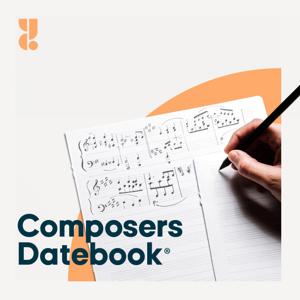

On today's date in 1958, Leonard Bernstein asked, “What does music mean?” He posed the question to an audience of kids assembled at Carnegie Hall for the first of his Young People’s Concerts — but since the concert was televised, it was a question he posed as well to a nationwide audience of all ages.
That 1958 concert opened with Rossini’s William Tell Overture — music that meant The Lone Ranger to TV audiences back then, or as Bernstein put it: “Cowboys, bandits, horses, the Wild West.”
But, Bernstein argued: “Music is never about anything. Music just is. Music is notes and sounds put together in such a way that we get pleasure out of listening to them, and that's all it is.” Bernstein then demonstrated how the same music could plausibly be the soundtrack to any number of different stories.
Bernstein concluded his first Young People’s Concert with Ravel’s La Valse and these comments: “Every once in a while we have feelings so deep and so special that we have no words for them. Music names them for us, only in notes instead of in words. It’s all in the way music moves and that movement can tell us more about the way we feel than a million words can.”
Giaocchino Rossini (1792-1868): William Tell Overture; New York Philharmonic; Leonard Bernstein, conductor; CBS/Sony 48226
Maurice Ravel (1875-1937): La Valse; New York Philharmonic; Pierre Boulez, conductor; CBS/Sony 45842
 View all episodes
 By American Public Media

4.7
176176 ratings
On today's date in 1958, Leonard Bernstein asked, “What does music mean?” He posed the question to an audience of kids assembled at Carnegie Hall for the first of his Young People’s Concerts — but since the concert was televised, it was a question he posed as well to a nationwide audience of all ages.
That 1958 concert opened with Rossini’s William Tell Overture — music that meant The Lone Ranger to TV audiences back then, or as Bernstein put it: “Cowboys, bandits, horses, the Wild West.”
But, Bernstein argued: “Music is never about anything. Music just is. Music is notes and sounds put together in such a way that we get pleasure out of listening to them, and that's all it is.” Bernstein then demonstrated how the same music could plausibly be the soundtrack to any number of different stories.
Bernstein concluded his first Young People’s Concert with Ravel’s La Valse and these comments: “Every once in a while we have feelings so deep and so special that we have no words for them. Music names them for us, only in notes instead of in words. It’s all in the way music moves and that movement can tell us more about the way we feel than a million words can.”
Giaocchino Rossini (1792-1868): William Tell Overture; New York Philharmonic; Leonard Bernstein, conductor; CBS/Sony 48226
Maurice Ravel (1875-1937): La Valse; New York Philharmonic; Pierre Boulez, conductor; CBS/Sony 45842

6,773 Listeners

38,915 Listeners

8,771 Listeners

9,202 Listeners

5,780 Listeners

927 Listeners

1,388 Listeners

1,287 Listeners
3,161 Listeners

1,975 Listeners
523 Listeners
183 Listeners
13,767 Listeners

3,083 Listeners

248 Listeners
28,135 Listeners

430 Listeners

5,470 Listeners
2,194 Listeners

14,142 Listeners
6,423 Listeners
2,515 Listeners
4,836 Listeners

574 Listeners
244 Listeners