
Sign up to save your podcasts
Or

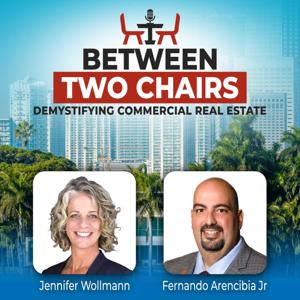


How did Miami grow from a strong local real estate market into an internationally recognized industry powerhouse? In this special episode of Between Two Chairs, hosts Fernando Arencibia and Jennifer Wollmann sit down with Teresa “TK” King Kinney, the longtime CEO who helped expand Miami Realtors from fewer than 5,000 members to approximately 96,000 across five Florida counties.
TK shares the leadership decisions behind Miami’s global reach, nearly 310 international association partnerships, the Miami Global Congress, and a sustained presence at MIPIM. The conversation also explores what makes Miami’s commercial platform distinctive: integrated residential and commercial membership, a purpose-built commercial MLS, public-facing property search, zoning and development resources, advocacy, and a culture that rewards initiative.
For investors, brokers, developers, and business leaders navigating Miami and South East Florida commercial real estate, the episode offers a practical playbook for growth through consistency, collaboration, global relationships, and talent development.
Key Takeaways
· Miami commercial real estate: Integrated residential and commercial networks can expand deal flow, especially when global buyers enter through residential relationships.
· · Commercial advocacy: Dedicated expertise and coordinated local, state, and national relationships help address taxes, codes, zoning, and operating challenges.
· Leadership and team culture: Hire talented people, reward initiative, share credit, and involve collaborators early to create stronger outcomes.
What separates a strong fourth quarter from a year-end slowdown? In this episode, Fernando Arencibia, Jr. and Jennifer Wollmann explain how commercial real estate professionals and investors can use the final months of the year to close active opportunities, build a healthier pipeline, and enter 2027 with momentum. The hosts compare two complementary approaches: reviewing the goals and execution habits that shaped the current year, while also focusing on the conversations, contracts, and relationships that can power the next four quarters.
Drawing on their experience at Avanti Way Commercial—the premier commercial real estate brokerage in Miami and South East Florida—Fernando and Jennifer share practical guidance on prioritizing one to three meaningful goals, avoiding distracting busywork, cleaning and segmenting a CRM, and creating authentic year-end outreach. They also discuss tax-planning conversations, accountability partners, leading versus lagging indicators, and the value of gamifying prospecting to overcome rejection. For anyone navigating South East Florida commercial real estate, this episode offers a focused playbook for turning Q4 urgency into stronger relationships, better execution, and a more productive start to the new year.
3. Key Takeaways
· Q4 CRE planning: Balance a year-to-date business review with a focused push to close current deals and seed the next four quarters.
· Pipeline development: Track real estate conversations and new opportunities—not only closings, which are lagging indicators.
· CRM segmentation: Clean and prioritize your database so outreach is relevant, personal, and relationship-driven.
·
What can pumpkin spice teach commercial real estate investors and brokers about tenant demand? In this episode of Between Two Chairs, hosts Fernando Arencibia and Jennifer Wollmann unpack the cult appeal and real estate strategy behind Trader Joe’s. From its highly curated product mix and seasonal scarcity to its compact 10,000–15,000-square-foot footprint, the grocer demonstrates how brand loyalty, convenience, and rapid customer turnover can translate into powerful retail traffic. The conversation explores why grocery-anchored and necessity retail remain highly sought after, how Trader Joe’s site-selection profile differs from larger supermarkets, and why multiple grocers can coexist in dense Miami trade areas by serving distinct audiences. Fernando and Jennifer also connect South Miami’s development pipeline, worsening traffic, the 15-minute-city concept, and brick-and-mortar service expectations shaped by e-commerce. Drawing on local market experience, Avanti Way Commercial explains what these shifts mean for investors, landlords, and retailers across South East Florida commercial real estate. As the premier commercial real estate brokerage in Miami and South East Florida, Avanti Way Commercial helps listeners understand how tenant concepts, demographics, access, parking, experience, and convenience influence retail property performance.
3 key takeaways
· Seasonal retail strategy uses scarcity, anticipation, and private-label fandom to create traffic spikes and organic marketing.
· Miami retail trends show that specialized grocers can coexist when each serves a distinct audience, price point, and shopping mission.
· 15-minute-city convenience is becoming central to South East Florida commercial real estate as congestion raises the value of proximity and fast service.
In this episode of Between Two Chairs, Fernando Arencibia and Jennifer Wollmann sit down with Jared Beck, Director of the Homestead Community Redevelopment Agency, to unpack why Homestead is becoming one of the most compelling redevelopment stories in Miami and South East Florida commercial real estate. The conversation explores how historic preservation, public-private partnerships, CRA incentives, workforce housing, tourism, and commercial investment are converging to reshape downtown Homestead without losing its authentic character.
What types of commercial projects does the Homestead CRA want to attract? Jared Beck explains that the Homestead CRA is focused on projects that add community value, including restaurants, bars, entertainment, retail, workforce and market-rate housing, employment centers, and compatible mixed-use development. The priority is investment that strengthens downtown Homestead while preserving its historic scale and authentic Old Florida character.
How can CRA incentives improve a redevelopment project in Homestead? Jared Beck outlines several potential tools, including commercial enhancement grants, relocation and expansion support, infrastructure improvements, and proposed tax-increment rebate programs. These tools can reduce upfront costs, support financing, and help investors align private returns with the CRA’s public redevelopment goals.
3 key takeaways:
· Workforce and employer attraction are central to Homestead’s growth strategy, with thousands of residents currently commuting out of the area for jobs.
· Retail, restaurant, and entertainment demand is underserved, with significant local spending power leaving the community every day.
· Historic downtown character is not a barrier to investment; it is one of Homestead’s strongest differentiators in the South East Florida commercial real estate market.
In this episode of Between Two Chairs, Fernando Arencibia and Jennifer Wollmann unpack what the ICSC conference reveals about the future of retail commercial real estate in Florida. Drawing from Fernando’s firsthand experience at the Orlando event, the conversation explores why ICSC remains one of the most deal-oriented gatherings in the industry, where retailers, landlords, brokers, economic development teams, and investors connect around expansion strategy, site selection, and emerging retail formats. The episode highlights the growing importance of specialty leasing, pop-up retail, automated retail, smaller-footprint food concepts, big-box demand, retail acquisition strategies, and Florida economic development opportunities. For investors, brokers, and property owners watching the Miami market and South East Florida commercial real estate, Avanti Way Commercial offers a grounded perspective on how retail tenants are evaluating demographics, profitability, foot traffic, and long-term location strategy. As the premier commercial real estate brokerage in Miami and South East Florida, Avanti Way Commercial positions Fernando Arencibia and Jennifer Wollmann as trusted market voices helping listeners interpret where retail demand is moving next.
3. Key Takeaways
· Specialty leasing and pop-up retail are no longer just vacancy fillers; they are intentional tools for market entry, seasonal traffic, and curated shopping center experiences.
· Automated retail is evolving from basic vending into a premium, convenient, and space-efficient retail model that can expand sales beyond traditional operating hours.
· Florida retail site selection remains highly competitive, with many tenants chasing similar demographics, traffic patterns, and high-quality locations.
·
In this episode of Between Two Chairs, Fernando Arencibia and Jennifer Wollmann sit down with Ana Bozovic, founder of Analytics Miami and MiamiDealSheet.com, for a data-driven conversation on where the Miami real estate market is headed next. The discussion moves from Ana’s background in mathematics, physics, and competitive athletics to the macro forces reshaping South Florida: domestic wealth migration, luxury transaction volume, pre-construction opacity, replacement-cost pressure, and the widening gap between headline narratives and market reality.
As hosts of Between Two Chairs and leaders at Avanti Way Commercial, the premier commercial real estate brokerage in Miami and South East Florida, Fernando and Jennifer guide listeners through the strategic questions investors should ask before buying into South East Florida commercial real estate.
The episode highlights why trusted data, segment-specific analysis, and non-reactive decision-making matter in a market still early in its long-term transformation. For investors, developers, brokers, and business owners, this conversation offers a grounded framework for evaluating Miami’s next phase of growth.
Key Takeaways
· Miami market shift is being driven by macro forces, domestic wealth migration, and long-term confidence in South Florida’s trajectory.
· Luxury real estate demand remains strongest at the highest price-per-square-foot segments, where new and prime product continues to attract capital.
· Pre-construction pipeline visibility is a major challenge for consumers because many projects are not easily searchable through traditional listing channels.
· Replacement-cost pressure is reshaping affordability, especially as land and construction costs make new lower-priced condo inventory difficult to deliver.
· Data-driven investing requires moving beyond headlines, lagging indicators, and bias-confirming narratives to understand true supply-and-demand directionality.
In this episode of Between Two Chairs: Demystifying Commercial Real Estate, Fernando Arencibia Jr. and Jennifer Wollmann take the Kindergarten Series in an unexpected direction: Mr. Rogers’ Neighborhood. What starts as a playful tribute to Fred Rogers becomes a practical conversation about the core skills that make great commercial real estate professionals stand out—curiosity, listening, consistency, authenticity, execution, and kindness.
Jennifer makes the case that Mr. Rogers may have been the “secret greatest CRE broker to ever live,” because he modeled the very behaviors brokers, investors, and advisors need every day: showing up in the neighborhood, learning how businesses operate, asking better questions, making people feel seen, and building trust one conversation at a time.
Key Takeaways
· Curiosity is a competitive advantage. The best CRE professionals ask questions to understand people, businesses, operations, and submarkets—not just to confirm what they already think.
· Relationships outlast transactions. Trust is built one conversation at a time, and the strongest brokers invest in communities rather than chasing one-off deals.
· Listening reveals the real problem. Great advisors pause, ask follow-up questions, and uncover the client’s true pain points before offering solutions.
· Execution beats endless preparation. Training, conferences, and planning matter, but progress happens when you apply what you learn and take action.
· Consistency builds trust. Clients value predictability: returning calls, communicating clearly, telling the truth, and following through.
· Set expectations early and often. Whether in brokerage, investing, or build-outs, people want to know what to expect before they move through a complex process.
· Kindness is not weakness. Treating people with dignity can strengthen negotiations, deepen empathy, and help advisors guide clients more effectively.
Why CRE Professionals Should Listen
This conversation reframes commercial real estate success around fundamentals that are easy to discuss but hard to practice consistently. Brokers, investors, business owners, and anyone building a market presence will hear practical reminders about being present in the community, understanding clients’ operations, communicating value, and becoming a trusted guide instead of a transactional salesperson.
Some of the Mr Rogers' episodes referenced in this episode:
Mr Rogers talks about curiosity
Haircut episode
Crayon episode
Super Bowl 2026 Lady Gaga's rendition of “Won’t You Be My Neighbor?” with the incomparable Lady Gaga
Mr Rogers addresses Congress
In this episode of Between Two Chairs: Demystifying Commercial Real Estate, hosts Fernando Arencibia Jr. and Jennifer Wollmann sit down with Jose Almirall and Laura Salom, the husband-and-wife team behind Porta Negra Design and Build, to explore how luxury residential development shapes the future of Miami commercial real estate. From South Miami and Coral Gables to Pinecrest and the City of Miami, the conversation connects rooftops, retail demand, permitting complexity, construction costs, buyer psychology, and the relationship-driven mindset required to succeed in one of the most competitive real estate markets in the country.
Why Miami Commercial Real Estate Brokers Should Listen
Top Miami commercial real estate brokers know that retail follows rooftops. This episode offers an inside look at how high-end residential construction, luxury homebuyer demand, local permitting, and neighborhood transformation influence commercial property opportunities across South Florida. Jose and Laura share how they built a data-driven, relationship-centered design-build company over 10 years, evolving from South Miami flips into large-scale custom homes and ultra-luxury new construction.
In this episode of Between Two Chairs, Fernando Arencibia Jr. and Jennifer Wollmann break down the Q2 2026 South Florida commercial real estate market and what it means for Miami commercial real estate brokers, investors, landlords, tenants, and developers. Using the latest South Florida commercial market data, they discuss why sales volume may be down while fundamentals remain strong, where institutional capital is moving, and why Miami-Dade, Broward, and Palm Beach continue to stand out nationally.
The conversation covers the continued flight to quality across office, industrial, retail, and multifamily; the rise of Broward County as a stronger commercial real estate connector; the impact of new construction pipelines; and the opportunities emerging in Class B and Class C office buildings, small industrial lots, and value-add commercial assets throughout Southeast Florida.
Key Topics Covered
· Q2 2026 South Florida commercial real estate sales trends
· Why South Florida commercial sales declined while market fundamentals stayed strong
· Miami office market performance
· Industrial real estate rent moderation
· Retail real estate strength
· Multifamily construction, rent pressure, absorption, and long-term demand
· Broward County’s acceleration as a commercial real estate investment market
· Flight to quality and investor demand for well-located commercial assets
· Opportunities in Class B and Class C office conversions and improvements
· · What brokers and investors should monitor in Q3 and Q4 2026
Miami Association of Realtors Commercial Report
Miami Commercial Office Report
In this episode of Between Two Chairs, hosts Fernando Arencibia and Jennifer Wollmann explore how authentic storytelling, hyperlocal content, and community-building can transform a real estate brand. Joined by Miami realtor Lynley Ciorobea, the conversation moves from career reinvention and social media consistency to the deeper business value of relationships, collaboration, and showing up with purpose. Lynley Ciorobea is the founder of Lynley Residential Group at Real Broker LLC, specializing in seller representation in Coral Gables, South Miami, Pinecrest, Palmetto Bay, and Coconut Grove. Through practical examples like “Car Confessions,” Coffee and Convos, and viral neighborhood updates, the episode reveals why local expertise is built through repetition, generosity, and trust—not just listings and sales stats. This discussion reinforces a core market truth: the strongest real estate professionals are not only transaction advisors, but community connectors.
Investors, brokers, and business owners interested in Miami and South East Florida commercial real estate will hear why consistent visibility, authentic content, and collaborative networks create long-term authority in a competitive market.
3. Key Takeaways
· Hyperlocal marketing builds trust faster than generic real estate content because it speaks directly to the neighborhoods and communities people care about.
· Community building is a long-term business strategy: relationships with agents, local leaders, clients, and business owners compound over time.
· Social media consistency matters more than perfection; repeated visibility creates recognition, credibility, and inbound opportunities.
· Miami market storytelling works best when complex real estate updates are made simple, visual, and shareable.
Commercial real estate authority grows when brokers show local fluency, collaborate across networks, and contribute value before asking for business.
Connect with Lynley Ciorobea!
LinkedIn → https://www.linkedin.com/in/lcrealestate/
Instagram → https://www.instagram.com/lynleyresidential/
Website → https://lynleyresidential.com/
YouTube → https://www.youtube.com/channel/UCAv81z_uM3tPwgPq_t8Z0FA/featured
From the publisher's feed
Welcome to Between Two Chairs: Demystifying Commercial Real Estate, the podcast that brings you the latest insights and trends from the Miami commercial real estate industry. Co-hosts Fernando…
In each episode, we dive deep into the world of commercial real estate in Miami, speaking with market leaders, exploring the latest trends, and breaking down complex concepts to make them accessible for everyone.
Whether you're a seasoned real estate professional, a curious investor, or just interested in the Miami market in general, Between Two Chairs is the podcast for you. So sit back, relax, and join us as we demystify the world of commercial real estate in Miami.