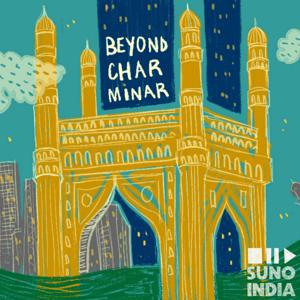
Beyond Charminar

Beyond Charminar

By Suno IndiaHistory
Download on the App Store

Beyond Charminar episodes

  • When old is real gold: How Mahboob Radio Service survived the test of time

    Gone are the days when owning a radio even registered in our minds. Over the years, as we moved from tape recorders, LED TVs, to finally smartphones, the physical manifestation of radio has been long forgotten. But not at Mahboob Radio Service, a shop that has been repairing radio running from around Indian independence.  

    Set up by Shaik Mahboob, the store has been fixing old radios for decades, and it has still not stopped. The two siblings who run the place continue to do what their father taught them. Truly stuck in time, Yunus Y. Lasania, speaks to one of the siblings to understand the history of the place, and how its owners manage to fix radios from generations ago in this day and age.   

    See sunoindia.in/privacy-policy for privacy information.

    36 min
  • Let's talk Dakhni Part 3

    One of the idiosyncrasies in Hyderabad is its language – Dakhni. Known as ‘Hyderabadi’, ‘Hyderabadi Hindi’ or even ‘Hyderabadi Urdu’, people in general, in Hyderabad and even the Deccan region, don’t actually know what it is called due to lack of awareness. Many in fact are even unaware that modern Urdu is in fact younger than Dakhni.

    Host Yunus Y. Lasania did a three-part mini-series on the history of Dakhni, and how the language has managed to remain as a spoken vernacular over the last few centuries, and even till today. 

    For the final part of the mini-series, Let’s talk Dakhni, host Yunus Lasania converses with Prof. Zaubiulla, a faculty member from Bangalore University’s Urdu department, who has in fact recently written a book on Dakhni sayings, called ‘Dakhni Muhavre’. Prof. Zaubiulla also reads out a few literary verses from well known historical poems to make the case for Dakhni as a separate language, and for it to not be seen as a dialect (as many wrongly assume it is)

    See sunoindia.in/privacy-policy for privacy information.

    28 min
  • Let's talk Dakhni Part 2

    One of the idiosyncrasies in Hyderabad is its language – Dakhni. Known as ‘Hyderabadi’, ‘Hyderabadi Hindi’ or even ‘Hyderabadi Urdu’, people in general, in Hyderabad and even the Deccan region, don’t actually know what it is called due to lack of awareness. Many in fact are even unaware that modern Urdu is in fact younger than Dakhni.

    Host Yunus Y. Lasania did a three-part mini-series on the history of Dakhni, and how the language has managed to remain as a spoken vernacular over the last few centuries, and even till today. For part 2 of the mini-series, Let’s talk Dakhni, Yunus and Karthik Nalli continue their conversation about Dakhni, and talk about how the language evolved through the 16th and 17th centuries in the Deccan states like Golconda and Bijapur.

    See sunoindia.in/privacy-policy for privacy information.

    30 min
  • Let's talk Dakhni Part 1

    One of the idiosyncrasies in Hyderabad is its language – Dakhni. Known as ‘Hyderabadi’, ‘Hyderabadi Hindi’ or even ‘Hyderabadi Urdu’, people in general, in Hyderabad and even the Deccan region, don’t actually know what it is called due to lack of awareness. Many in fact are even unaware that modern Urdu is in fact younger than Dakhni.

    Host Yunus Y. Lasania did a three-part mini-series on the history of Dakhni, and how the language has managed to remain as a spoken vernacular over the last few centuries, and even till today. In the first part of the mini-series, Yunus and Karthik Nalli speak about the evolution of Dakhni in the Deccan and how the language forms from the 14th century onwards under the Bahamani Empire which spans parts of Karnataka, Maharashtra and even the Telugu speaking regions of Telangana and Andhra Pradesh.

    See sunoindia.in/privacy-policy for privacy information.

    37 min
  • Hidden Treasures: Hyderabad's historic churches

    Most people identify Hyderabad as the "city of Nizams and Nawabs", but that's only one side of the story. While the city has a rich history on that front, there's another side to Hyderabad in terms of its colonial heritage as well.

    From having a church going back to 1813, to another having its service in Urdu, host Yunus Lasania talks to Suno India co-founder Rakesh Kamal and a very special guest in this episode, wherein they explore and talk about Hyderabad-Secunderabad's historic churches.

    See sunoindia.in/privacy-policy for privacy information.

    39 min
  • The Hyderabad that was- How the city transformed into a modern capital of the 20th Century
    The city of Hyderabad has witnessed many vicissitudes, but one of the most important ones was its transformation from a provincial capital into a modern metropolis during the reign of Osman Ali Khan, the last Nizam of the erstwhile Hyderabad state.  Continuing from their conversation from the previous episode, host Yunus Y. Lasania and journalist Serish Nanisetti (who discussed how and why Hyderabad was flooded due to heavy rains in October this year) are in conversation with Anant Maringanti who runs the Hyderabad Urban Lab (HUL), a multi-disciplinary research centre. Anant, who has done some of the most detailed research projects on Hyderabad’s urbanization through HUL, speaks about the lesser known aspects of the city’s development, historically, and puts it in perspective with Hyderabad’s current state.

    See sunoindia.in/privacy-policy for privacy information.

    45 min
  • Hyderabad Floods: Lessons from the past
    In 1908, Hyderabad witnessed its worst ever rainfall which resulted in The Musi river and other smaller lakes flooding the entire city and killing thousands of people. The city was made flood proof after that during the time of Mir Osman Ali Khan, the last Nizam.

    However, in spite of those fail-safes, the city was once again flooded this year as heavy rains lashed the city on Oct 13. One of the main reasons for it is the construction of homes on lake beds and inside full tank levels of water bodies. Journalists Yunus Y. Lasania and Serish Nanisetti (from The Hindu) who both cover and write about Hyderabad’s heritage extensively, discuss why a calamity transpired once again which resulted in thousands of people getting displaced again.

    See sunoindia.in/privacy-policy for privacy information.

    38 min
  • Osmania Hospital – Another heritage structure down the demolition road
    The state-run Osmania General Hospital has been serving people in Hyderabad for nearly a century, which today primarily includes providing health care to people from Telangana’s rural areas who cannot afford private hospitals. The Nizam-era structure, built during the reign of the last Nizam Mir Osman Ali Khan, has however been shut since 22 July, and is yet another heritage structure that may not survive.

    Shut since July after rain water flooded the OGH’s ground floor wards (this happened due to a choked sewer line below), the issue of OGH’s survival is yet another case in point wherein the government seems to be more interested in demolishing heritage structures, rather than preserving it.  Built in the Osmanian or Indo-sarcenic style of architecture in the first half the 20th century, it is one of Hyderabad’s most important buildings in terms of medical history. Ever since its closure, there have been calls to even demolish the hospital (it was never been closed in its history until now) We talk to Dr. Iqbal Javed, who has not only worked at OGH, but has also seen it since he childhood, to raise some crucial points about the issue.

    See sunoindia.in/privacy-policy for privacy information.

    30 min
  • A poignant tale of caste struggle
    The stories of Dalits in India and their role in different movements in India remains largely untold. In Telangana, the Communist Party of India-led peasant rebellion from 1946-51 was one of the social and political revolutions which changed the lives of those who were being oppressed by Jagirdars, i.e. the landlords. The region, then under the Nizam-led princely state of Hyderabad (which comprised Telangana, parts of Maharashtra and Karnataka), witnessed peasants rising in rebellion against the feudal landlords. Within that, Dalits were bound by 'vetti chakiri' (bonded slavery or labour) and were largely left out of the benefits. The fight was mainly between poor peasants and landlords.
    However, much before that, one Dalit man from Vangapalli in Karimnagar district decided that he would have a better future and left his village. Velukati Ramaswamy aka Velukati Baliah's decision to do so changed his life and his family's, who managed to get out of caste oppression by working for the railways in Hyderabad.
    In this episode host Yunus Lasania talks to Dalit writer YB Satyanarayana, in his book My Father Baliah details the hardships and humiliation that his people had suffered and how his father, who decided that he would educate his sons, managed to break free from caste barriers. It is one of the few books from Telangana which explains the Dalit angle in our society.

    See sunoindia.in/privacy-policy for privacy information.

    40 min
  • The Nizam-era banking scandal which shocked Hyderabad
    We all know of the Nizams and their wealth, especially of Osman Ali Khan, the last Nizam. He appeared on the cover of Time magazine in 1937 when he was the richest man in the world. But much before that, in the first half of the 19th century, the years that passed between the third Nizam Sikander Jah and fifth Nizam Afzal-ud-Dowla were not all rosy. The kings were forced to borrow money from a bank named Palmer and Company. The bank not only lent the Nizams money, but the entire episode turned Hyderabad into a debt-ridden state. In this episode of Beyond Charminar, Serish Nanisetti talks with the host, Yunus Lasania about a major banking scandal in 1800s which shook Hyderabad. In this scandal, the Nizams were forced to borrow a lot of money to maintain British troops and turned Hyderabad into a debt-ridden state. Listen to the full episode to know more.

    See sunoindia.in/privacy-policy for privacy information.

    26 min

About Beyond Charminar

From the publisher's feed

Picnic in Golconda fort, shopping in Charminar- just some of the many memories that every child growing up in Hyderabad makes. With grandiose forts & majestic monuments, these historical places are just some of the few symbols of Hyderabad. But even with 428 years of history, why is Hyderabad's rich history often ignored in textbooks? Why is there apathy and little interest in protecting these structures and the culture around it?

More shows like Beyond Charminar

Dear Pari by Suno India

Dear Pari

6 Listeners

Eshwari Stories for kids in Telugu by Suno India

Eshwari Stories for kids in Telugu

13 Listeners

Rare Lives by Suno India

Rare Lives

0 Listeners

The Suno India Show by Suno India

The Suno India Show

9 Listeners

Gasping For Breath by Suno India

Gasping For Breath

0 Listeners

Climate Emergency by Suno India

Climate Emergency

3 Listeners

Raah – A Career Podcast by Suno India

Raah – A Career Podcast

0 Listeners

Cyber Democracy by Suno India

Cyber Democracy

2 Listeners

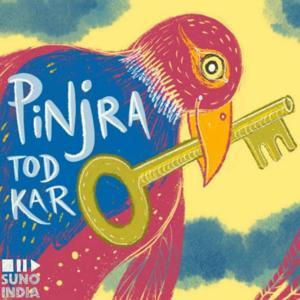
Pinjra Tod Kar by Suno India

Pinjra Tod Kar

1 Listeners

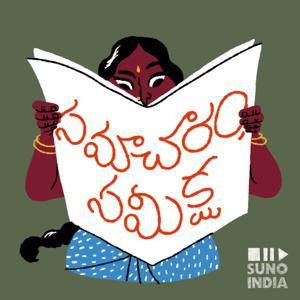
సమాచారం సమీక్ష - A Telugu News Podcast by Suno India

సమాచారం సమీక్ష - A Telugu News Podcast

3 Listeners

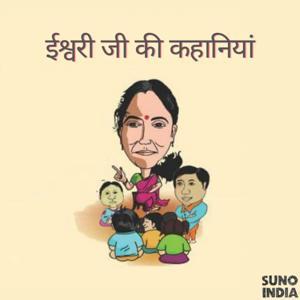
ईश्वरी जी की कहानियां  (Eshwari Stories for kids in Hindi) by Suno India

ईश्वरी जी की कहानियां (Eshwari Stories for kids in Hindi)

0 Listeners

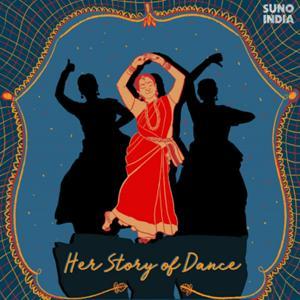
Her Story of Dance Podcast by Suno India

Her Story of Dance Podcast

5 Listeners

Baat - Mulakaat by Suno India

Baat - Mulakaat

0 Listeners

Indian Economy Explained by Suno India

Indian Economy Explained

0 Listeners

Beyond Nation & State with Smita Sharma by Suno India

Beyond Nation & State with Smita Sharma

1 Listeners

Pride and Prejudice by Suno India

Pride and Prejudice

1 Listeners

Science & Us by Suno India

Science & Us

0 Listeners