
Sign up to save your podcasts
Or

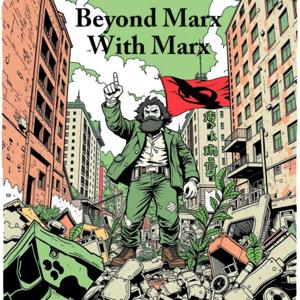


What is the true cost of living under modern capitalism? For over two centuries, political economy has anchored the concept of "value" in industrial, wage-earning human labor. But what about the unpaid contributions of nature, domestic care, or our digital attention? In this episode, we dive deep into a major paper by sociologist S. A. Hamed Hosseini: "Value Theory beyond Labor: A Critical Review of Expansion Programs from the Classical Anchor to the Present Debate." Hosseini critically maps the historical landscape of how social theorists have tried to expand value theory beyond its classical, labor-centric boundaries. We break down the six major strategies of value expansion explored in his research:
We place a special focus on this final strategy: Commonist Value Theory (CVT), co-developed by Hosseini and Barry K. Gills in their book Capital Redefined. We discuss how CVT separates "fetish value" (the perverted, destructive form of value tracked by capitalist markets) from "true value" (the qualities conducive to the survival, flourishing, and liberation of organized life).
We also explore the core pillars of CVT. Tune in as we discuss whether we need to completely rebuild our theory of value to address the pressing crises of climate change, unpaid social reproduction, and platform capitalism.
#ValueTheory #PoliticalEconomy #CommonistValueTheory #SocialReproduction #EcologicalEconomics #PostCapitalism #DigitalLabor #CapitalRedefined #HosseiniAndGills
What is "value," and how do we measure it in a world dominated by digital platforms, unpaid care, and ecological crisis? In this episode, we dive deep into the highly ambitious and comprehensive review paper, "Value Theory beyond Labor: A Critical Review of Expansion Programs from the Classical Anchor to the Present Debate."
While the provided manuscript does not explicitly name its authors, it offers a masterclass in economic sociology and political economy, tracing how theorists have tried to expand classic economic concepts beyond their traditional industrial boundaries.
We begin by anchoring ourselves in the classical tradition of Adam Smith, David Ricardo, and Karl Marx, where economic value was strictly tied to the abstract, socially necessary labor time of industrial wage workers.
From there, we explore the paper’s brilliant five-part typology of expansion strategies that have attempted to redefine value for the 21st century:
We also discuss the paper's overview of resolved battles—such as the mathematical solvability of the classical "transformation problem" and the surprising empirical reality that aggregate market prices still correlate incredibly closely with labor values. Finally, we tackle the unresolved frontiers that represent the live edge of economic theory today: the rise of artificial intelligence and the potential "exhaustion" of labor-time measurement, the debate over whether platform giants extract "profit" or "rent," and the ecological boundary of value.
This episode is an essential guide for anyone trying to understand the invisible architecture of our economy and how we might build a "disciplined pluralism" that respects both monetary validation and the biophysical limits of our planet.
#ValueTheory #PoliticalEconomy #LaborTheoryOfValue #SocialReproduction #DigitalLabor #PlatformCapitalism #EcologicalCrisis #ValuationStudies #PostCapitalism #EconomicPhilosophy #Capitalism
In this episode, we tackle one of the most long-running, fiercely contested controversies in the history of economic thought: Karl Marx’s "transformation problem". Our guide for this deep dive is the comprehensive academic review paper, "One Hundred and Thirty Years of the Transformation Problem: A Critical Review of the Major Attempts at Resolution and the State of the Field", authored by S. A. Hamed Hosseini.
The "transformation problem" refers to the alleged logical inconsistency in how Marx derives "prices of production" (cost price plus average profit) from labor values in Volume III of Capital. If competition redistributes surplus value to equalize profit rates across different industries, do Marx’s two core aggregate equalities—that total prices equal total values, and total profits equal total surplus value—still hold simultaneously?
We walk through the six major intellectual programmes that have spent over a century attempting to answer this question or reshape its terms:
Whether you view the transformation problem as a fatal mathematical error, a scholastic pseudo-problem, or a vital stress test for the labor theory of value, this episode maps out the entire debate and explores what is actually at stake when we try to link micro-level prices to macro-level exploitation.
Hashtagged Keywords:#MarxistEconomics #TransformationProblem #LabourTheoryOfValue #PoliticalEconomy #HamedHosseini #CapitalVolumeIII #Sraffa #NewInterpretation #TSSI #ValueFormTheory #Econophysics #EconomicMethodology
Episode Title: Decoding Marx's Most Contested Law: The Falling Rate of Profit
Episode Description:In this episode, we tackle what Karl Marx famously called "in every respect the most important law of modern political economy". We are diving deep into the scholarly paper "Testing the Tendency of the Rate of Profit to Fall: A Critical Review of Theoretical Debates and Empirical Evidence in Marxist Political Economy", authored by S A Hamed Hosseini.
Hosseini provides a comprehensive survey of the theoretical debates and empirical attempts to test the Law of the Tendency of the Rate of Profit to Fall (TRPF) from the late nineteenth century to the present day. The core of this economic law is simple yet powerful: under competitive pressures, capitalists invest heavily in labor-saving machinery, causing the organic composition of capital to rise over time. Because only living labor produces new surplus value, if this composition grows faster than the rate of exploitation, the general rate of profit must inevitably decline.
In this episode, we discuss:
Whether you are an economic theorist, a student of political economy, or simply curious about the deep mechanical contradictions that drive capitalist crises, this episode demystifies the quantitative and qualitative frontiers of Marxist economics.
Hashtagged Keywords:#MarxistEconomics #RateOfProfit #CapitalismInCrisis #PoliticalEconomy #KarlMarx #EconomicTheory #ValueTheory #TSSI #USProfitability #HamedHosseini
In this episode, we unpack the landmark volume The Drama of the Commons, a seminal work produced by the National Research Council and edited by a distinguished panel of scholars: Elinor Ostrom, Thomas Dietz, Nives Dolšak, Paul C. Stern, Susan Stonich, and Elke U. Weber. For decades, Garrett Hardin’s gloomy "Tragedy of the Commons" model dominated environmental policy, asserting that individuals are locked into an inexorable logic of self-interest that must inevitably ruin shared pastures, forests, and oceans. But this groundbreaking book reframes the conversation entirely, showing that the cooperative management of shared resources is not an impossibility, but a rich and complex "drama" filled with tragedy, history, and even comedy.
We dive into the crucial analytical distinction developed by Ostrom and her co-editors: the difference between a common-pool resource (defined by its physical traits of subtractability and the difficulty of excluding users) and a common property regime (the social and legal rules created by humans to govern access). By separating the physical resource from the governance structure, the authors show how communities can successfully manage shared wealth without resorting to top-down state coercion or complete privatization.
Our discussion highlights the core institutional design challenges and insights explored throughout the book:
Tune in to discover how bringing together game theory, experimental psychology, and structured field studies can help us move beyond the myth of inevitable ruin and design resilient institutions for a sustainable future.
#TheDramaOfTheCommons #ElinorOstrom #ThomasDietz #NivesDolsak #PaulCStern #SusanStonich #ElkeWeber #TheCommons #CommonPoolResources #CommonPropertyRegimes #ResourceManagement #EnvironmentalPolicy #CollectiveAction #SelfGovernance #Cooperation #GameTheory #SocialCapital #OstromDesignPrinciples
Always Struggle: Celebrating a Half-Century of Commoning and Social Reproduction
Description:In this episode, we pay tribute to over fifty years of revolutionary theory, passionate praxis, and militant organizing by diving deep into the landmark collection, "Commoning with George Caffentzis and Silvia Federici". Edited by Camille Barbagallo, Nicholas Beuret, and David Harvie, and published by Pluto Press, this book brings together an exceptional cohort of activist-intellectuals to celebrate, critique, and expand upon the seminal ideas of two of the greatest living theorists of the commons.
Throughout the episode, we explore the core thread that binds Caffentzis and Federici's work: the concept of "struggle" as a practice, a theory, and a method. We trace their rich political trajectories—from the anti-war and civil rights movements of the 1960s to the Wages for Housework Campaign of the 1970s, their formative years witnessing structural adjustment in Nigeria, and their ongoing involvement in global counter-globalization and anti-capitalist networks.
We highlight some of the book's most compelling essays and contributions to show how these ideas continue to circulate in today's social movements:
This book is much more than a collection of academic papers; it is a vital, living toolbox for anyone seeking to build a world beyond the state and the market. Join us as we explore how we can re-enchant our world, rebuild relational solidarities, and practice commoning in our everyday lives.
#Commoning #SilviaFederici #GeorgeCaffentzis #SocialReproduction #WagesForHousework #MidnightNotes #TheCommons #AntiCapitalism #Feminism #CalibanAndThewitch #PoliticalEcology #AutonomousMarxism #AlwaysStruggle #PlutoPress #MilitantScholarship
Reclaiming the Forest: Young Sin Jeong on Commoning, Decommonisation, and the Rebirth of Jeju’s Dongbaek-dongsan
Description:Today, the concept of the commons is utilized across the political spectrum, from anarchists to neo-liberals, yet there is a massive gap between academic theory and civil society practices. In this episode, we dive into the groundbreaking paper "From Decommonisation to Re-commonisation: A Conceptual Approach to the Study of Social Change Based on the Theory of the Commons" by Young Sin Jeong of Jeju National University.
Jeong argues that the dominant academic approach, led by Elinor Ostrom and her followers, is too resource-centric and treats the commons merely as static, pre-existing goods. Instead, we must understand the commons through the lens of commoning—an active, relational social practice that shapes both the resources and the communities managing them.
We examine how capitalist markets and state interventions often drive decommonisation, severing the vital relationship between local communities and their environments. Our focal point is the fascinating case study of Seonheul Village on South Korea's Jeju Island and its relationship with the primeval forest, Dongbaek-dongsan. We trace its history from a vital subsistence commons to a site of tragic state-led massacres and subsequent alienation after being designated a state-protected cultural heritage zone. Finally, we discuss how the creative intervention of environmental activists and the establishment of grassroots democratic assemblies turned this "trauma forest" into a globally recognized ecotourism pilot project. This transition shows how re-commonisation can restore broken ecological relationships and spark a broader, self-proliferating "ecosystem of commons".
#Commoning #Decommonisation #ReCommonisation #YoungSinJeong #JejuIsland #DongbaekDongsan #SeonheulVillage #Ecotourism #ElinorOstrom #GrassrootsDemocracy #EnvironmentalSociology #SocialChange #NewEnclosure #EcosystemOfCommons
Simulating Utopia: Can "Commonism" Work at Scale?
Description: In this episode, we tackle the ultimate question of whether a complex, modern society can function completely free of markets, money, and state coercion. We dive into the groundbreaking paper "COMMONSIM: Simulating the utopia of COMMONISM," published in the Review of Evolutionary Political Economy by co-authors Lena Gerdes, Ernest Aigner, Stefan Meretz, Hanno Pahl, Annette Schlemm, Manuel Scholz-Wäckerle, Jens Schröter, and Simon Sutterlütti. The authors construct a sophisticated agent-based model (ABM) to experimentally test "Commonism," a utopian vision of a society coordinated entirely through bottom-up signalling and polycentric networks based on human needs.We break down how this model builds on three core pillars:
The conversation highlights the simulation's results across three baseline allocation mechanisms: inclusive, culture-dependent, and exclusive. We discuss why the highly consumption-oriented and egoistic "traditionalist" culture collapses under exclusive conditions, and how the introduction of two institutional buffers—a common inventory and indirect reciprocity—can successfully rescue the system and stabilize large-scale, voluntary cooperation. Tune in to discover how complexity science is proving that the cooperative game is not only possible, but highly resilient.
#Commonism #CommonSim #AgentBasedModeling #UtopianStudies #PostCapitalism #TheCommons #Commoning #CriticalPsychology #Stigmergy #PolycentricGovernance #ComplexityEconomics #CooperativeEconomy #AlternativeFutures #EconomicSimulation
In this episode, we explore the radical proposition that food—one of the most fundamental requirements for human life—should be governed not as a private commodity, but as a shared commons. Drawing from the final chapter of the Routledge Handbook of Food as a Commons, authored by Olivier De Schutter, Ugo Mattei, Jose Luis Vivero-Pol, and Tomaso Ferrando, we examine the "embarrassing predicament" of our current era: a world where a billion people are over-fed while another billion lack basic access to nutrition.
The authors challenge the long-standing "commodification" of food, arguing that treating calories purely as objects of exchange value has led to catastrophic ecological footprints, massive waste, and a Big Food industry that prioritises profit over health and use value. We discuss the structural failures of both the "extractive" market and the "centralised" state, looking at how corporate concentration—where only a few megacorporations control the vast majority of the global agrochemical industry—has created a "race to the bottom" for farmers and consumers alike.
Moving beyond the binary of state-run bureaucracies versus neoliberal markets, we break down the authors’ visionary "Tri-centric" governance model. This framework introduces a "Partner State" that enables civic action, "Civic Collective Actions" like community-supported agriculture and urban gardens, and a "Non-profit Private Sector" that operates for social good rather than mere capital accumulation. Join us as we discuss how a transition to a "food commons" can help us move from "bullshit abundance" toward a truly sustainable, democratic, and equitable food system.
#FoodAsCommons #OlivierDeSchutter #UgoMattei #JoseLuisViveroPol #TomasoFerrando #FoodSovereignty #PostCapitalism #SustainableFoodSystems #PartnerState #Agroecology #FoodJustice #RightToFood #TriCentricGovernance #Commoning #EconomicDemocracy
In this episode, we confront the challenge of "capitalist realism"—the widespread sense that capitalism is the only viable system—by exploring a comprehensive roadmap for a post-capitalist future. We take a deep dive into the work of Hannes Gerhardt and his book, "From Capital to Commons: Exploring the Promise of a World Beyond Capitalism." Gerhardt introduces a transformative framework he calls "Compeerism," an amalgamation of the commons and peer-to-peer production that aims to outgrow the extractive logic of capital.
We break down the four fundamental hurdles standing in the way of a commons-based transition: the cooptation of our digital "general intellect," the private control of material infrastructure, the monopoly of money over value, and the lack of a unified political mobilization. From there, we explore Gerhardt’s vision for reclaiming these spheres. We discuss "taking back the internet" through platform cooperatives and self-sovereign identity, democratizing our energy through renewable microgrids, and the radical potential of the "Design Global, Manufacture Local" (DG-ML) model.
The conversation also tackles the "monetary-banking apparatus," exploring how the state could reclaim sovereign control over money to fund a Universal Basic Income (UBI) and a Green New Deal. Finally, we look at the political strategy of a "movement of movements" and the creation of a "Partner State"—a government that facilitates civil-society commoning rather than corporate profit. Join us as we discuss how to stop playing a competitive game with few winners and instead start a cooperative one aimed at collective thriving.
#Compeerism #HannesGerhardt #FromCapitalToCommons #TheCommons #PostCapitalism #P2P #EconomicDemocracy #DigitalCommons #SovereignMoney #UniversalBasicIncome #CircularEconomy #PartnerState #MovementOfMovements #EconomicTransformation #GeneralIntellect