
Sign up to save your podcasts
Or

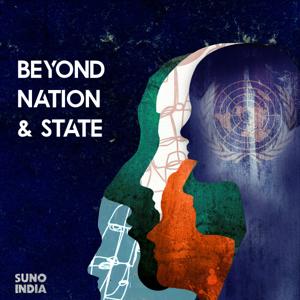


Urdu is a major South Asian language spoken in large parts of India and Pakistan. In India, it is one of the 22 languages included in the Eighth Schedule of the Indian Constitution while in Pakistan Urdu is the national language. There are similarities between the Urdu, Persian and Arabic scripts. Hindi and Urdu too, share similarities in grammar and vocabulary. Urdu in India is currently at a place where some worry over the passing of the era of Urdu’s glory. At the same time, there is a revival of interest in its script and vocabulary, literature and poetry.
Mahtab Alam, managing editor at the National Foundation of India has been a journalist for nearly a decade and writes in English, Urdu and Hindi. He was also Executive Editor (Urdu) for The Wire.
In this episode of Beyond Nation and State, Mahtab Alam explains the nature of the crisis of Urdu in India, the state of Urdu press and journalism, Urdu-speaking diaspora and the capacity of Urdu to act as a binding agent for the people of India and Pakistan.
Show notes:
Safekeeping Urdu depends on the next generation’s zeal to embrace it
Explained: Why Urdu is an Indian language, not a foreign one
Rekhta’s Trilingual Online Dictionary Opens up New Worlds For Urdu Lovers
Census Data on Language Reveals a Surprise about Urdu
Tom Alter: The ‘Angrez’ Who Wrote His Memoir in Urdu
Can Urdu regain its place in India’s linguistic landscape? Yes, if it is treated as a mother tongue
See sunoindia.in/privacy-policy for privacy information.
The discipline of international relations and its practice, which includes foreign policy, is an esoteric field. Debates on foreign policy and international relations are abstract and rarefied as if it doesn’t affect the lives of people. But on the contrary, foreign policy decisions affect all kinds of things that matter to people - it can decide whether a country is at war or not, the prices of food, medicines and consumer goods, borders and citizenship, travel and mobility and much more. Who makes foreign policy? In India, it’s usually the External Affairs Minister, Prime Minister and Foreign Secretary who have a say in foreign policymaking. Bureaucrats, academicians and professors, think tank communities and journalists too, play a role.
But who really are these people? Do they hail from a certain socio-economic background which can be described as ‘elite’? Are they only from a particular class and or also from a certain caste? Do the socio-cultural and economic backgrounds of decision-makers affect how foreign policy is made?
The guest on the fifth episode of Beyond Nation and State is Pavan Kumar, a PhD candidate at Jawaharlal Nehru University’s Centre for International Politics, Organizations and Disarmament. Pavan’s research interests are history of India's foreign policy, theories of international relations, gender, and caste. He recently submitted his PhD thesis on Vallabhai Patel’s approach to India’s foreign policy
See sunoindia.in/privacy-policy for privacy information.
Increasingly powerful and wealthy corporations are challenging the might of the state, though in most cases, states facilitate their rise to those powerful positions. In many cases, corporations also behave as a force multiplier for states. But what happens when a giant multinational corporation like Cairn Energy plans to take over the assets of a country- its airlines, shipping vessels and more? What causes a government to be forced into paying billions of dollars in a penalty to a gigantic telecom corporation like Vodafone? What methods did Union Carbide Corporation use, to try and escape the devastating consequences of its negligence in the 1984 Bhopal gas disater?
Prof. Rahul Varman from the Indian Institute of Technology, Kanpur whose various research interests include the political economy of corporations, globalisation and the working classes and small firm clusters explains how the power of corporations is still largely under the radar and why this is a problem. Prof. Varman uses recent examples to illustrate the various ways in which corporations dodge taxes and escape responsibility. He tells us about the problematic framing of the public versus private sector debate and how politicians, the judiciary, Parliament and media have created an environment where corporate accountability is completely thrown out of the window.
Show notes:
The Larger Issues Underlying the Claim of Cairn Energy on Air India.
The Political Economy of Corporations: Behind the Veil of ‘Corporate EfficiencyBehind the Hype of E-commerceFrom 2014 to 2019: How the Adani Group’s footprint expanded across IndiaHow Reliance Jio’s Entry Tied Regulatory Knots Around India’s Telecom Ecosystem
See sunoindia.in/privacy-policy for privacy information.
Defence modernisation is a declared priority of successive Indian governments. When some years ago, the Indian Air Force sought to replace its outdated aircraft, major defence equipment manufacturing companies put in their bids. Dassault Aviation, a French company, won the bid and was selected for the purchase of 126 Rafale fighter aircraft. This was approximately in 2012 when the United Progressive Alliance, led by the Congress was in power. In 2015, the Modi government announced new terms to the agreement, which dramatically increased the cost of the aircraft. It also resulted in the sudden replacement of the state-owned Hindustan Aeronautics Limited with Reliance Defence, a company set up by the businessman Anil Ambani, and which had no prior experience in making defence equipment. India’s Supreme Court has rejected allegations of irregularities in the matter. However, in June 2021, France announced a judicial inquiry to investigate allegations of corruption and favouritism and involvement of both governments. This development was a result of investigations by the French news publication Mediapart and Sherpa, a French NGO that fights economic crime.
Beyond Nation and State Host, Urvashi Sarkar spoke to Chanez Mensous, litigation and advocacy officer at Sherpa, about the status of the case in France and the lack of transparency worldwide in defence procurement. The Rafale case isn’t the first instance of corruption in defence deals in India. Previous prominent cases include the Bofors and AgustaWestland corruption scams.
See sunoindia.in/privacy-policy for privacy information.
The Sixth Intergovernmental Panel on Climate Change strongly concludes that human beings are almost wholly responsible for climate change and its calamitous effects. The Conference of Parties (COP), an annual multilateral summit which brings together - and frequently divides- countries on the issue of climate change, is the first summit to take place on the heels of a devastating pandemic. How have countries such as India fared on their commitments to the Paris Agreement of 2015? Should developed countries take on the greater share of responsibility for contributing to climate finance? What are the prospects of transitioning away from fossil fuels?
Harjeet Singh, a senior adviser with Climate Action Network- International (CAN) and Strategic Advisor: Global Partnerships to the Fossil Fuel Non Proliferation Treaty Initiative talks to Beyond Nation and State about what we can expect from forthcoming COPs, why we should be talking more about climate finance and the effects of global warming on migration. Harjeet Singh is a global expert on the issues of climate impacts, migration and adaptation. He has been supporting countries across the world on tackling climate change.
See sunoindia.in/privacy-policy for privacy information.
Despite the presence of and intervention from foreign forces, the people of Afghanistan have always sought peace, which continues to evade them. In attempting to make sense of events in Afghanistan, what is the importance of listening and referring to Afghan voices? Do the long historical, trade and cultural connections between India and Afghanistan somewhat explain why Indians feel especially welcome in Afghanistan? Despite the deeply problematic ways in which the Indian media covers Afghanistan, do alternate viewpoints and possibilities exist?
In this episode, film-maker, journalist and writer Taran Khan ponders on the meanings of war and peace from the perspective of Kabul. She speaks about the common shared passions and differences between Indian and Afghan people. Taran shares her personal impressions of culture and life in Kabul based on her frequent travels to the city. She also discusses her book, based on Kabul.
See sunoindia.in/privacy-policy for privacy information.
From the publisher's feed
Now tune into the new season of Beyond Nation and State with Smita Sharma, a seasoned journalist with experience reporting on foreign policy and global events. With her new role as a podcaster, she…

6 Listeners
13 Listeners

0 Listeners

9 Listeners
0 Listeners
3 Listeners
10 Listeners
0 Listeners
2 Listeners

1 Listeners

3 Listeners
0 Listeners

5 Listeners

0 Listeners
0 Listeners

1 Listeners

0 Listeners