How many of us love a great comeback story?
I know I’m drawn into hearing the story of how someone overcame a disability, setback, or failure and then turned their life around. It’s as if the resilience pathway had a start, middle, and finish.
The truth?
Most stories of resilience get lost because they aren’t linear comebacks. They’re not neat, dramatic happy endings. In fact, I’d argue it’s the continuation that really matters.
What if I were to tell you my greatest personal story of resilience isn’t about surviving near-death experiences? It isn’t about recovering from mental illness. It isn’t about fighting my way through injuries to make the 1988 Olympic Team Handball Team.
My greatest story begins when I lost my mother.
After she passed away, I truly felt lost. My biggest encourager, supporter, best friend, and confidant….gone.
It would take thousands of words to explain all the ways she impacted my life. So removing this monumental, dependable, loving human being from my life took a toll on me. It forced me to turn inward and focus on my own ability to validate myself.
Everyone has different relationships with their parents. But almost everyone has lost someone who played an outsized, important role in their lives. Whether that was a sudden loss or simply relationships drifting apart that could no longer be maintained for whatever reason.
Resilience showed up for me in ways I didn’t think possible. I began to lean on all the skills, experiences, and events that shaped me into the person I’d become.
I analyzed the parts of myself I liked and the more shadow parts of me. Because no matter who we are, we have lightness and we have darkness. I wanted to learn how I could shine my light in ways I hadn’t thought possible.
But first I had to conjure up the courage to address the parts of me I didn’t want to look at.
What about all the people I may have hurt in my life along the way? Even if I didn’t intend to cause pain, it still happened.
Instead of beating myself up about my perceived mistakes, I tapped into my ability to accept the things I couldn’t change and forgive myself for my perceived shortcomings.
That’s resilience in action.
One day I woke up without a sense of purpose. Without goals. Without drive.
I just woke up and realized what my mother always said:
“Life goes on, Amy. You have to keep going.”
And so part of my resilience in practice was learning, number one, to protect myself. Not only from other people, but from the internal critic inside of me that was notoriously hard on me.
I always wanted to be good, do good, be perceived as being good.
But what exactly is good?
It’s certainly not allowing yourself to be so vulnerable that some people take advantage of your generosity. It’s definitely not allowing yourself to be in the company of people who discount, dismiss, or constantly put you down.
The kind of resilience I’m most proud of is the kind where you dig deep and set boundaries. The kind where you learn it’s okay to disappoint people. The kind where you quit something shortly after you started.
We applaud the person who perseveres. But what about the person whose resilience tells her to quit?
We admire someone who gives endlessly. But what happens when resilience tells her to stop giving?
We celebrate vulnerability. But what about when resilience says, you don’t get access to me anymore?
We love the comeback story. But what if the comeback is simply deciding, I’m going to live differently now?
And sometimes resilience is the kind where you say, “Today, the heck with it all.”
There’s something about changing my focus and making one of the most important things in my life having peace of mind. It doesn’t mean I sit in my home with my head in the sand, ignoring all the things going on in the world.
It means I pay attention to what I allow into my mind.
Part of my resilience strategy is leaning hard on the skills elite athleticism taught me about getting your mind right. I call it monitoring my thoughts. Performance thought leaders call it mindset.
If all of the world around me feels unstable, unpredictable, mean, divided, hateful, and yes, even to some degree “crazy,” then it’s really time for me to pay close attention to what I’m internalizing. That means putting limits on what I’m going to allow myself to get upset or fired up about.
Some people find great solace in religion or spiritual practices. I think when your spirit gets into alignment with your mind and body, there’s no greater way to lean on that energy source. It’s powerful.
My resilience toolkit is built to last my lifetime.
One of the most important things in it is keeping my fears and worries in a contained box. I can take the box out from under the bed on occasion and look at it. Move it around. But I must put it back into the box and place it under the bed.
Since I’ve been focused on protecting my peace, my stress response system has quietly shrunk. When I feel fear begin to signal that response is coming, I know to take a deep breath and immediately ask myself what I’m thinking about. Why am I thinking about it?
Maybe sometimes I need a good night’s sleep to clear the slate. Maybe I need to figure out what I’m putting into my mind, whether that’s reading, interacting with others, or picking up on an occasional doom scroll on social media.
Shifting the mind is like shifting gears in an old standard transmission. If you don’t put the clutch down far enough and try to shift, it’s gonna grind.
And so sometimes the mind does grind a little before we get settled and grounded again.
There’s no magic wand to getting through the challenges of life. It’s a journey. Sometimes it’s harder than others.
Maybe resilience isn’t really the dramatic comeback we’ve made it out to be.
Maybe it’s a practice.
Maybe it’s learning when to push and when to quit. When to give and when to stop giving. When to let someone in and when to close the door. When to worry and when to put the box back under the bed.
And maybe it’s simply getting up one more morning and remembering what my mother once told me:
“Life goes on, Amy. You gotta keep going.”
One incremental step at a time.
About the Author
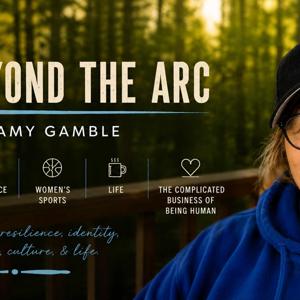
Amy Gamble, OLY, is a writer, life coach, and 1988 Olympian in team handball. A former collegiate basketball player at Tennessee and Arizona, she writes about resilience, identity, women’s sports, and the complicated business of being human.
If you enjoyed today’s essay and haven’t subscribed, get the next essay delivered right to your inbox.
Thanks for reading Beyond the Arc: Reflections on Resilience, Identity, & Life! Subscribe for free to receive new posts and support my work.
This is a public episode. If you would like to discuss this with other subscribers or get access to bonus episodes, visit byamygamble.substack.com