
Sign up to save your podcasts
Or



Originally recorded August 28, 2026.
The FDA approved daraxonrasib on Wednesday for adults whose pancreatic cancer has spread and who have already been through one other treatment. It is a once daily tablet. In the five hundred patient trial, people on the drug lived a median of 13.2 months against 6.7 months on chemotherapy. Dr. Jason Williams has said on this show that the drug is excellent and the delivery is the problem, and the approval does not change that.
His position has not moved. Patients now have access, insurance permitting, but a pill sends the drug through the whole body when what you need is the drug in the tumor. He notes that a patient could fill the prescription and have those pills compounded into an injection, which is what his own team would do. He also says plainly that he would not give this drug orally to most patients. The side effects patients report exist because the drug goes everywhere it is not needed.
Dr. Nathan Goodyear argues for using KRAS inhibitors early rather than after chemotherapy fails. His argument is that the KRAS mutation is not only a growth driver. It suppresses antigen presentation, excludes T cells, and builds a fibrotic shield around the tumor, which makes it an immune target too. He also raises a question nobody appears to have studied, which is what an oral KRAS inhibitor does to the gut microbiome on the way through.
Much of the episode answers audience questions about mRNA, including a viewer asking whether this is the same technology behind the COVID vaccine. Dr. Williams separates the platform from the payload, noting that a delivery system can carry food or a bomb. Dr. Goodyear calls it a FedEx truck dropping a different package at every house, and ties the confusion to a broader collapse in trust, citing survey work in the Journal of the American Medical Association on how few patients now trust physicians.
Matthew Herper at STAT reported the list price at $39,800 for a month of pills before insurance discounts, or $477,600 a year. That number opens the last stretch, on why intratumoral delivery is not standard. The answer is economic rather than scientific. Payers reimburse oral and intravenous administration. Drug companies build for oncologists who prescribe, not for radiologists who inject. Dr. Williams describes presenting data to major pharmaceutical companies in 2014 showing better results with far less drug, and the reception he got.
What is covered
01:46 What the approval changes for patients, and why delivery is still the problem.
03:49 Why his combination aims at cure rather than extension.
04:45 The six to eight drug combination, and using mRNA in place of monoclonals.
08:14 Why payers and referral economics keep systemic delivery standard.
10:40 KRAS as an immune modulator, and the case for giving it early.
15:47 Why chemotherapy and this drug leave no immune memory behind.
17:26 A viewer asks about mRNA vaccines for head and neck cancer.
19:10 A viewer asks whether this is the same mRNA behind the COVID vaccine.
20:27 The FedEx truck, and what happened to trust between doctors and patients.
26:16 A viewer asks about quality of life on the new drug.
28:42 What an oral KRAS inhibitor may be doing to the gut microbiome.
33:28 Why intratumoral trials are so hard to recruit for.
35:39 The fastest FDA approval of 2026, and what the review actually checks.
41:57 What pharma said when a treatment needed far less of their drug.
47:01 Dr. Goodyear on sitting on the patient side of the desk.
51:40 Losing patients, and the remission that makes it worth it.
About the show
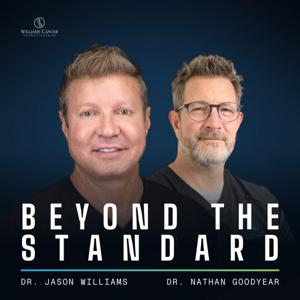
A weekly livestream from Williams Cancer Institute. Dr. Nathan Goodyear and Dr. Jason Williams take the cancer news dominating your feed and tell you what the underlying science supports. Dr. Williams is an interventional oncologist and the author of The Immunotherapy Revolution. Dr. Goodyear is an integrative oncologist.
For educational purposes only. This is not medical advice.
Originally recorded August 21, 2026.
Merck and Moderna announced that their personalized mRNA cancer therapy succeeded in a large phase three trial in melanoma. Moderna's market value rose by roughly forty billion dollars in a day. No hazard ratio was published, no survival curve, no paper. Dr. Jason Williams and Dr. Nathan Goodyear spend the whole episode on what was actually announced and what was not.
Dr. Williams has been working with mRNA since 2022 and explains the technology without the baggage. It is a delivery platform, and what matters is what you deliver with it. The COVID vaccines gave mRNA a bad name because the payload was the spike protein, which is the pathogenic part of the virus. Used differently, mRNA can instruct a tumor to produce a cytokine it would never make on its own, which draws immune cells to it. He describes that as a Trojan horse and says his team does the same thing better with pulsed electric field ablation.
His read on the business logic is blunt. Keytruda generates enormous revenue and its patent expires. A therapy that only works in combination with Keytruda extends the life of that franchise against generic competition. He says he does not think the effort was worth their time scientifically, and that they are extremely smart at making money, possibly smarter than they are at curing cancer.
The scientific criticism is specific rather than dismissive. Melanoma is already one of the most treatable cancers with existing immunotherapy, so this addresses the outliers who respond poorly. Dr. Williams says the announcement would have excited him considerably more if the payload had been immune agents like IL-12 or IL-15 rather than neoantigens alone. Dr. Goodyear notes that this was demonstrated in a hot tumor, where immune cells are already present, which is a very different problem from the cold tumors his own published work addresses.
They also break down what severe means in adverse event reporting, since the phase two data showed adverse events in essentially everyone while no grade four or grade five events occurred, and the two facts get reported as if they were the same thing.
WHAT IS COVERED
00:19 What was actually announced, and what was missing from it.
01:50 Dr. Williams on how mRNA works and why the COVID payload damaged its reputation.
05:31 Why he does not think the effort was scientifically worth it.
05:56 The patent logic behind pairing it with Keytruda.
08:12 What a genuine preventive cancer vaccine would look like, and who it would be for.
11:25 Using mRNA to make a tumor produce a cytokine it would never make on its own.
12:21 Why mRNA costs a fraction of what monoclonal antibodies cost to produce.
13:27 When Williams Cancer Institute started using mRNA and where it is heading.
14:35 Dr. Goodyear on what the word vaccine does to people, and why inoculation is more accurate.
20:48 What Dr. Williams would actually do for melanoma, and what standard of care allows.
23:54 Whether these therapies could ever work alone or will always need a partner.
26:16 Why melanoma is already among the most treatable cancers with existing drugs.
29:10 What the therapy is doing before the checkpoint inhibitors get involved.
31:49 What severe means in adverse event reporting, and why the coverage got it wrong.
35:55 The payload Dr. Williams would rather have seen, and why it would have been a bigger leap.
42:21 Hot tumors versus cold tumors, and why this result may not transfer.
ABOUT THE SHOW
A weekly livestream from Williams Cancer Institute. Dr. Nathan Goodyear and Dr. Jason Williams take the cancer news dominating your feed and tell you what the underlying science supports. Dr. Williams is an interventional oncologist and the author of The Immunotherapy Revolution. Dr. Goodyear is an integrative oncologist.
For educational purposes only. This is not medical advice.
Originally recorded August 14, 2026.
Standard treatment for papillary thyroid cancer is to remove the thyroid, and the cure rate is high. What follows is a lifetime of hormone replacement and the search for a metabolic balance that, as Dr. Nathan Goodyear puts it, is never quite the same again. This episode is the story of a patient who went a different route.
Swathi joins the show five years after her diagnosis. She was working sixteen hour days on COVID-19 clinical trials, and by 2021 her health had collapsed into acne, unexplained weight gain, and high blood pressure that no physician could explain. An aesthetician was the first person to suggest her gut might be involved. That sent her to a naturopath, then into an obsessive stretch of watching cancer lectures late into the night and taking notes, which is where she first saw Dr. Goodyear speak.
A routine thyroid scan from a new endocrinologist found a nodule. The biopsy came back as cancer, delivered to her in a few sentences before she was asked to leave the room. She describes the whole encounter as feeling like a bank transaction. She had a friend who had gone the surgical route and never felt like herself afterward, and none of the options she was offered sat right with her.
She went to Dr. Goodyear's clinic instead, where he tested her gut, hormones, blood work, and imaging, and spent three hours a week answering her questions. At the midpoint of treatment a scan came back with a surprise, which was that the imaging team could not locate the tumor. In November 2021 Dr. Jason Williams performed the ablation in Mexico City, a procedure that took about ten minutes. Her thyroid is intact.
The part nobody scripted comes next. As she was going under, Dr. Williams asked whether her doctor was Nathan Goodyear, the gynecologist. They had sat next to each other in a medical school class of a hundred and two and lost touch. Swathi is the reason they reconnected, which is the reason Williams Cancer Institute and Dr. Goodyear work together at all.
Dr. Williams and Dr. Goodyear also take audience questions throughout on what causes thyroid cancer, why pregnancy is an immunosuppressive state that can let a predisposition surface, why freezing a tumor beats cutting it out, and why the cost of the same procedure differs so dramatically between countries.
WHAT IS COVERED
01:02 Why surgery became the default, and what it costs the patient after.
03:13 What life is actually like after a thyroidectomy.
06:09 Preserving body parts, and the history of the lumpectomy fight.
08:21 What causes thyroid cancer, including genetics, exposure, and immune priming.
11:11 Why pregnancy is immunosuppressive, and how a predisposition surfaces.
14:44 The year before her diagnosis, and the health collapse nobody could explain.
16:00 The aesthetician who first suggested her gut was involved.
20:17 How she was told she had cancer, and why it felt like a transaction.
24:28 Researching the surgery, and why none of the options sat right.
29:10 The scan where the imaging team could not find the tumor.
32:25 Why Dr. Williams chose the approach he did.
37:26 The procedure itself, and how long it actually took.
38:27 The question Dr. Williams asked as she was going under.
43:07 Why she says cancer was the best thing that happened to her.
59:37 Why freezing a tumor may beat cutting it out.
ABOUT THE SHOW
A weekly livestream from Williams Cancer Institute. Dr. Nathan Goodyear and Dr. Jason Williams take the cancer news dominating your feed and tell you what the underlying science supports. Dr. Williams is an interventional oncologist and the author of The Immunotherapy Revolution. Dr. Goodyear is an integrative oncologist.
For educational purposes only. This is not medical advice.
Originally recorded August 7, 2026.
A Penn State team published work in Nature Aging showing that cisplatin pushes ovarian cancer cells into a state that helps them disseminate, and that fructose feeds the process. Dr. Jason Williams explains why that fits the framework he has been arguing from for years. Chemotherapy ages cancer cells hoping they will die, and aged cells produce substances that corrupt the cells around them, which is the same thing aging does and the same thing cancer does.
He is equally clear that this is not an argument against chemotherapy. When a patient has a large tumor burden and the immune system cannot get on top of it fast enough, chemotherapy knocks it down faster, and then you switch to the immune response. Dr. Goodyear describes injecting microdose cisplatin and oxaliplatin directly into tumors to trigger immunogenic cell death, and cyclophosphamide to reduce myeloid derived suppressor cells, which uses the same cytotoxic drugs as immune modulators rather than as weapons.
Dr. Goodyear adds the finding he considers most important. By the time a cancer is diagnosed, dormant tumor cells are already disseminated systemically. That reframes what surgery and chemotherapy accomplish and explains the pattern where a patient is declared in remission and then has tumor cells everywhere.
Asked what a person can actually take, Dr. Williams names his shortlist, including alpha ketoglutarate, TMG, PQQ, spermidine, fisetin, and N-acetylcysteine with glycine, and says if he could keep only one it would be alpha ketoglutarate. He also makes a claim worth hearing in full, which is that he could put a person on a regimen where cancer becomes close to impossible, based on animal work where the regimen made the animals resistant.
The second half is almost entirely audience questions about tadalafil. Dr. Williams explains that it is an immunologic drug that reduces myeloid derived suppressor cells and increases natural killer cells, which makes it anticancer and antiaging by the same mechanism. He covers dosing, why daily is unnecessary, the roughly eight day immune cycle behind the ten day pattern his team found, and why the brain and dementia benefit is not purely about blood flow. Dr. Goodyear explains why lower doses in the two and a half to five milligram range are where the preventive cardiovascular rationale sits, and is open about his own history with a pheochromocytoma and the residual vascular damage that shapes his own use.
WHAT IS COVERED
02:06 Why chemotherapy ages cancer cells, and what those cells do next.
04:11 Reprogramming cells back to a younger state rather than killing them.
06:01 The animal work where the regimen made cancer effectively impossible.
07:21 What a genuinely preventive regimen would look like.
09:52 Dormant disseminated tumor cells already present at diagnosis.
14:04 When chemotherapy is the right call, and when you switch.
15:10 Microdose chemotherapy injected into the tumor as an immune modulator.
16:44 The supplement shortlist, and the one he would keep above all others.
19:17 Age reversal in an eighty year old, and what pace is realistic.
22:42 A young cancer death, and why he considers most cases preventable.
24:32 Foods that read as healthy and are not, and the year he points to.
29:34 Tadalafil as an immunologic drug rather than a vascular one.
33:14 Dosing, cycling, and the eight day immune cycle behind the pattern.
39:12 The brain and dementia angle, and why it is not just blood flow.
44:32 Autoimmune disease as a marker of cancer risk.
ABOUT THE SHOW
A weekly livestream from Williams Cancer Institute. Dr. Nathan Goodyear and Dr. Jason Williams take the cancer news dominating your feed and tell you what the underlying science supports. Dr. Williams is an interventional oncologist and the author of The Immunotherapy Revolution. Dr. Goodyear is an integrative oncologist.
For educational purposes only. This is not medical advice.
Originally recorded July 31, 2026.
The Weizmann Institute published work showing that sildenafil cuts off a cancer cell's cholesterol supply, which cancer cells need in order to break away from a tumor and spread. It worked better paired with a statin, and twenty years of health records showed better survival among cancer patients who had taken it. Dr. Jason Williams wrote about using sildenafil in cancer in The Immunotherapy Revolution, published in 2019, and started writing that section in 2017. He has been prescribing it to patients since roughly the same time.
His original reasoning came from a different mechanism than the one in this paper. The early evidence showed these drugs inhibit myeloid derived suppressor cells, which are immune cells that shield the tumor. He is candid that he is not much of a statin enthusiast given what they do to muscle, and he notes that the drug has to be pulsed rather than taken continuously, which is a detail the studies rarely address.
Dr. Nathan Goodyear points out that this is a repurposed drug of a repurposed drug, originally developed for hypertension, and now on its third indication. He walks through how the drug exploits a defect cancer cells already have in a cholesterol transporter, which is why healthy cells are unaffected while the vulnerability in the tumor gets magnified. He also describes stacking it in a patient who has prostate cancer alongside benign prostatic hyperplasia, where one drug improves urinary flow, sleep, energy, quality of life, and the metastatic process at once.
The audience questions turn practical and stay there. Why insurance limits the prescription to nine pills a month, whether it works the same in women, and how a physician negotiates with a pharmacist filling something off label. Dr. Williams is direct about the cost problem, explaining why he sources drugs like Cosentyx and Anakinra and tocilizumab out of Mexico at a fraction of United States pricing, and Dr. Goodyear describes a prior authorization fight over an interleukin-6 blocker while a patient waits.
The last stretch covers peptides, most of which are sold as research chemicals with no oversight, and what happens when patients order them from unregulated sources. Both doctors welcome the FDA stepping into compounding, and Dr. Goodyear pushes back on the recent claim that peptides are inherently dangerous, noting that insulin and oxytocin are peptides. They also cover the work Dr. Williams has done with the Canine Cancer Alliance, including a small brain cancer study in dogs that answered a question he had been unable to answer any other way.
WHAT IS COVERED
00:24 The Weizmann Institute finding, and what cholesterol has to do with spread.
04:24 Writing about this in 2017, and the myeloid suppressor cell mechanism.
08:37 The transporter defect that leaves cancer vulnerable and healthy cells safe.
10:59 Why it has to be pulsed, and the ten days on and ten days off pattern.
12:30 Stacking one drug across cancer, urinary symptoms, sleep, and quality of life.
14:43 Why insurance limits the prescription, and negotiating off label.
18:19 Whether it works the same in women, and the obstacles that come with that.
19:43 When losartan is the better choice, and why the cytokine panel decides.
21:47 Sourcing drugs out of Mexico, and what the same drug costs in each country.
31:25 The unregulated peptide market, and what people are actually injecting.
34:42 Preclinical evidence versus no evidence, and why the distinction matters.
41:29 The Canine Cancer Alliance, and the brain cancer study in dogs.
ABOUT THE SHOW
A weekly livestream from Williams Cancer Institute. Dr. Nathan Goodyear and Dr. Jason Williams take the cancer news dominating your feed and tell you what the underlying science supports. Dr. Williams is an interventional oncologist and the author of The Immunotherapy Revolution. Dr. Goodyear is an integrative oncologist.
For educational purposes only. This is not medical advice.
Originally recorded July 24, 2026.
The episode opens with a video Dr. Nathan Goodyear recorded minutes after a call with a pancreatic cancer patient. The PET CT is clear, the CA 19-9 tumor marker has normalized, and after six treatments the patient has no evidence of disease. He recorded it raw because he wanted people to see what that moment actually looks like from the physician's side, and he is candid about the other days too, when he goes home and tells his wife how much he hates this disease.
Dr. Jason Williams explains the regimen behind it, an eight drug intratumoral combination targeting CD40 and KRAS among other things, and says plainly that it is reproducible rather than lucky. His goal is to treat patients early and leave them exactly as they were, without the surgeries and losses that follow survivors for life.
The main segment covers work from a University of Southern California team published in Nature Communications. Older mice carry far more inflammatory immune cells, and those cells pile into tumors and accelerate growth. The researchers joined the circulatory systems of a young and an old mouse, and the inflammation in the older animal dropped to young levels. They traced it to thymulin, a peptide the thymus produces that becomes undetectable with age. Giving thymulin back to old mice slowed their tumors and reactivated the T cells inside them. The finding that matters most is that checkpoint immunotherapy did nothing at all in those aged mice until thymulin was added, at which point the tumors responded.
Dr. Williams treats this as confirmation in mice of what he has been doing in humans, and points out the uncomfortable corollary. Chemotherapy and radiation age patients, which is the opposite of what the biology says you should be doing. He walks through how he makes patients younger, including blocking interleukin-1, transforming growth factor beta, TNF alpha, and others, and why they have to be brought down together rather than one at a time.
Dr. Goodyear covers thymosin alpha 1, approved in roughly twenty nine countries and not in the United States, and asks why patients are made to wait for something with human safety data. Both doctors then get into medicine's long habit of removing organs it decided were unnecessary, including the appendix, and Dr. Goodyear's own gallbladder taken during an unrelated adrenal tumor surgery.
The last segment covers a transmissible cancer spreading between catfish in a New England lake, where sequencing showed the tumors were more closely related to each other than to the fish carrying them. Dr. Williams offers a documented human parallel involving a needle stick during a biopsy. Dr. Goodyear proposes that what transfers may be an entire ecosystem rather than a single cell, which would have implications for how metastasis is understood.
WHAT IS COVERED
00:29 The video Dr. Goodyear recorded right after telling a patient the news.
03:45 The eight drug intratumoral combination, and why he calls it reproducible.
07:44 The mouse fusion experiment, and what happened to inflammation.
09:22 Thymulin, and why immunotherapy only worked in old mice once it was added.
10:39 How Dr. Williams makes a patient biologically younger.
12:20 Thymosin alpha 1, approved in twenty nine countries and unavailable here.
20:00 The contagious catfish cancer, and what the sequencing showed.
21:42 A documented case of cancer transmitted by a needle stick.
25:40 Why an entire ecosystem may be transferring rather than a single cell.
ABOUT THE SHOW
A weekly livestream from Williams Cancer Institute. Dr. Nathan Goodyear and Dr. Jason Williams take the cancer news dominating your feed and tell you what the underlying science supports. Dr. Williams is an interventional oncologist and the author of The Immunotherapy Revolution. Dr. Goodyear is an integrative oncologist.
For educational purposes only. This is not medical advice.
Originally recorded July 17, 2026.
A physician's thread listing the early warning signs of six common cancers crossed fifteen million views, and the reason it spread is that most people have no idea what to watch for. Dr. Jason Williams supports the instinct behind it, noting that people need to know their own bodies well enough to tell a hemorrhoid from something worse.
Dr. Nathan Goodyear comes at it from a different angle that is worth sitting with. The symptoms in that thread are real, and screening triggered by them is worth doing, but on a biological timeline those symptoms are late events. The carcinogenic process has been running for years to decades by the time anything shows up. His argument is that early detection and prevention are not the same thing, and that what should actually be screened for is biological system dysfunction, meaning dysbiosis, insulin resistance, and fatty liver, well before there is a symptom to notice.
He is also blunt about who is at risk. If you live a Western industrialized lifestyle, you are in the elevated category, and that now includes places people historically assumed were low risk. He uses car maintenance as the comparison, since people service a vehicle that loses value the moment it leaves the lot and neglect the one body they will not be issued a replacement for.
Dr. Williams describes what he considers an ideal screening approach, which pairs whole body MRI with blood testing for circulating tumor DNA, done periodically for people at risk. The obstacle is that insurance does not pay for either one. He is also careful about the anxiety this creates, and gives a practical rule for when a persistent symptom warrants investigation.
The second half covers an MIT study published in Nature where mice bred to be prone to intestinal cancer were fed three different diets. The mice on the ketogenic diet developed more small intestine tumors than controls, at rates matching or exceeding the obesity diet group, and they did it without becoming obese. Tumors in the colon went the other direction.
Dr. Goodyear explains why that split is the interesting part rather than an inconsistency. Tumors are metabolically flexible, with glycolytic pockets and pockets running on lactate, and they fuel switch in real time when you take glucose away. He also asks a question the paper does not answer, which is what kind of ketogenic diet this actually was, since a whole-food Mediterranean version and an ultra processed version are not the same intervention. Dr. Williams is direct that none of this transfers to humans, and repeats his standing advice to cycle rather than stay in one dietary state indefinitely.
WHAT IS COVERED
02:26 Knowing your own body well enough to tell ordinary from insidious.
02:59 Why these warning signs are late biological events, not early ones.
05:37 Who is actually at elevated risk, and why lifestyle beats geography.
06:39 What ideal screening looks like, and why insurance will not pay.
11:56 Managing health anxiety without ignoring real signals.
14:46 How long a symptom should persist before you investigate it.
15:09 Intuition, and why a woman's concern moves Dr. Goodyear's radar.
17:13 The MIT ketogenic diet study, and the result that surprised everyone.
19:29 Cycling diets rather than committing to one indefinitely.
19:55 Why tumors are metabolically flexible, and what fuel switching means.
23:20 What the researchers expected, and what actually drove the result.
26:37 Why none of this transfers directly to humans.
29:26 Practical advice for anyone currently on keto.
ABOUT THE SHOW
A weekly livestream from Williams Cancer Institute. Dr. Nathan Goodyear and Dr. Jason Williams take the cancer news dominating your feed and tell you what the underlying science supports. Dr. Williams is an interventional oncologist and the author of The Immunotherapy Revolution. Dr. Goodyear is an integrative oncologist.
For educational purposes only. This is not medical advice.
Originally recorded July 10, 2026.
The World Health Organization released a report projecting that cancer cases will nearly double by 2050. Dr. Jason Williams opens with the framing that matters, which is that this is the number if nothing changes, and quite a lot could change.
His list is specific rather than aspirational. Avoid what damages the gut microbiome, maintain a healthy weight including with GLP-1 drugs where appropriate, and take the supplementation that keeps a person biologically younger, since by his premise anything antiaging is anticancer. Dr. Goodyear sits next to that with an observation from having just returned from China, where he ate carbohydrates at every meal with no bloating and then bloated after a single lower-carb meal back in the States. He also notes that obesity rates in China are climbing fast from a low base, and that obesity-associated cancers are climbing right behind them.
The middle of the episode is Dr. Goodyear borrowing a concept from engineering. Medicine keeps hunting for the single cause, and the honest answer is cumulative failure. One bad night of sleep is nothing. Six months of them is a problem. One ultra processed food is nothing. A product containing fifteen to thirty of them, eaten repeatedly, stacks into something else. He connects that to the exposome concept and argues that what is actually being lost is resilience, the body's ability to adapt, and he uses California building codes as the analogy.
Dr. Williams addresses the World Health Organization's framing of the problem as one of access and treatment in low income countries. He agrees the disparity is real and argues the deeper failure is that nobody is paid to keep people healthy upstream. He also describes work he has been involved with on laboratory-grown food, where you grow only the cells you want with the nutrients you choose, and where the resulting chocolate is healthier than the natural version.
The last segment covers Dr. Mehmet Oz in his role at the Centers for Medicare and Medicaid Services, his claim that roughly seventy percent of US health care spending goes to chronic conditions with obesity as the leading driver, and the Medicare program offering qualifying seniors GLP-1 drugs at around fifty dollars a month. Dr. Goodyear supports it and explains why, using a stage four pancreatic cancer patient with liver metastases and fatty liver as the example.
The episode closes with practical first steps, including navy beans, targeted strains like Akkermansia and Clostridium butyricum, and whether sodium butyrate can substitute for a microbiome that is not producing it.
WHAT IS COVERED
01:23 Why the projection assumes nothing changes, and what would change it.
03:09 What Dr. Goodyear noticed about his own digestion in China.
05:10 Why tobacco policy worked and food is a harder problem.
07:13 How many ultra processed ingredients sit inside a single product.
09:24 Taking the wisdom of the ancient alongside the innovation.
11:53 The missing payer incentive for keeping people healthy.
11:53 Laboratory-grown food, and growing only the cells you want.
16:30 Cumulative failure borrowed from engineering, and what resilience means.
18:31 Why causation is so hard to establish in human diets.
20:41 The Medicare GLP-1 program, and why Dr. Goodyear wants it expanded.
28:57 Whether food cravings are subliminal or metabolic.
30:33 First steps from zero, including navy beans and targeted strains.
ABOUT THE SHOW
A weekly livestream from Williams Cancer Institute. Dr. Nathan Goodyear and Dr. Jason Williams take the cancer news dominating your feed and tell you what the underlying science supports. Dr. Williams is an interventional oncologist and the author of The Immunotherapy Revolution. Dr. Goodyear is an integrative oncologist.
For educational purposes only. This is not medical advice.
Originally recorded July 3, 2026.
Roughly one in three Americans has a fatty liver, and most of them have been told it is not especially alarming. A paper in Nature this week found that it changes how colorectal cancer that has spread to the liver responds to treatment, which makes it considerably more than a lifestyle footnote.
Dr. Nathan Goodyear explains the mechanism, which involves a pattern of liver metastasis where tumor cells grow between liver cells rather than building their own blood supply. That pattern produces a more immune excluded environment and is harder to treat. His larger point is about staging the problem earlier. If you can identify a patient with fatty liver and a primary cancer that tends to spread there, and you can intervene before metastasis happens, you eliminate most of the morbidity and mortality in cancer by keeping a systemic disease local.
Dr. Jason Williams explains why the liver behaves as the dominant organ in metastatic disease. When a patient has tumors in the liver and the lung, treating the liver will usually bring the lung along. Treating the lung will not bring the liver. He also raises the uncomfortable part, which is that several cancer treatments cause fatty liver themselves, including hormonal agents used in breast cancer and various chemotherapy drugs, which means the treatment may be building the conditions for the spread it is meant to prevent.
The second half covers Bryan Johnson's disclosure that he has autoimmune gastritis, where his own immune system attacks the acid producing cells of his stomach lining. Dr. Williams takes it seriously and offers a specific hypothesis. Aggressively clearing senescent cells provokes those cells to fight back by upregulating interleukin-6, interleukin-1, and transforming growth factor beta, and that cytokine response can produce exactly this kind of autoimmune problem. His view is that anyone pursuing age reversal has to manage the cytokines alongside it or the immune system pushes back.
He also lays out how he would approach the case, which is largely the same toolkit he uses against cancer running in the opposite direction, since treating cancer means deliberately creating autoimmunity against the tumor. Dr. Goodyear closes with the history of fecal transplant, from a fourth century Chinese physician's yellow soup through seventeenth century documentation to the FDA approved product his clinic uses, along with the eight year follow-up data on how long the transferred microbiome pattern holds.
WHAT IS COVERED
01:54 What fatty liver does to the immune environment of a liver metastasis.
04:19 Coffee, green tea, and what helps the liver starting today.
05:32 Where organ-specific aging fits into precision oncology.
08:05 Why the liver is dominant, and what happens when you treat it first.
08:42 Cancer treatments that cause fatty liver, and the problem that creates.
16:23 How Dr. Goodyear reasons when a patient has already failed everything.
21:37 Bryan Johnson's autoimmune gastritis, and the senescent cell hypothesis.
24:02 Why the cancer toolkit and the autoimmunity toolkit are the same toolkit.
24:13 How Dr. Williams would approach the case, and which cytokines he would block.
32:51 Yellow soup, and the actual history of fecal transplant.
35:29 What the approved product contains, and how long the change holds.
ABOUT THE SHOW
A weekly livestream from Williams Cancer Institute. Dr. Nathan Goodyear and Dr. Jason Williams take the cancer news dominating your feed and tell you what the underlying science supports. Dr. Williams is an interventional oncologist and the author of The Immunotherapy Revolution. Dr. Goodyear is an integrative oncologist.
For educational purposes only. This is not medical advice.
Originally recorded June 26, 2026.
A paper in Nature Medicine found that younger generations are biologically older than their birthdates suggest, and that the gap tracks with early onset cancer. Dr. Jason Williams is back from travel for this one, and the finding lands directly on the theory he has been arguing for years.
The measurement is biological age minus chronological age, and since the 1960s that gap has widened. Tissues, organs, and cells are older than the person carrying them, and the immune system in particular is older. The strongest association in the data was with lung cancer, at a hazard ratio of 1.42, and it held independent of smoking. Gastrointestinal cancers other than colorectal came in at 1.25.
Dr. Williams goes straight to the gut microbiome. His position is that the things being introduced into the food supply are killing bacteria we need, which damages the immune system, which accelerates aging, which is the same process that produces cancer. He names specifics, including preservatives designed to kill bacteria and artificial sweeteners that can behave like antibiotics. Asked what actually helps, he covers prebiotics and inulin, Akkermansia, fiber, and camu camu, while being honest that most commercial probiotics are not tailored to what any given person needs.
Dr. Goodyear, calling in from China, adds an observation that is hard to square with the data. People there smoke considerably more than he expected, and he is sitting next to seventy five year olds who look forty. His read is that lifestyle, diet, and time spent outdoors are doing something the statistics have not caught. He also covers night shift work being classified by the World Health Organization as carcinogenic, flat cortisol curves and worse breast cancer outcomes, and the depletion of vitamin C in plants grown in dead soil.
The back half covers the FDA approval of Trodelvy for triple negative breast cancer as first line therapy, where the combination outperformed pembrolizumab with chemotherapy and moved median progression free survival from 7.8 months to 11.2 months. Dr. Williams explains why an antibody drug conjugate is a workaround for a delivery problem he does not have. Dr. Goodyear frames the approval as the FDA genuinely innovating, then asks what the same combination might do with intratumoral delivery, microbiome work, metabolic work, and fitness added on top.
WHAT IS COVERED
01:17 Why the gut microbiome sits underneath the accelerated aging finding.
02:00 Biological age versus chronological age, and what widened since the 1960s.
04:20 The duality theory in Dr. Williams' own words.
05:08 The lung cancer association, and why it held independent of smoking.
05:08 What Dr. Goodyear is seeing in China that the data does not explain.
09:40 Night shift work, circadian disruption, and how the WHO classifies it.
09:40 Dead soil, depleted plants, and the vitamin C connection.
12:12 Preservatives and artificial sweeteners that behave like antibiotics.
13:42 What actually helps, including prebiotics, inulin, Akkermansia, and fiber.
15:52 Whether these changes are inherited across generations.
17:00 The Trodelvy approval, and what triple negative breast cancer means.
22:41 Antibody drug conjugates as a workaround for a delivery problem.
25:19 What the same regimen might do with microbiome and metabolic work added.
ABOUT THE SHOW
A weekly livestream from Williams Cancer Institute. Dr. Nathan Goodyear and Dr. Jason Williams take the cancer news dominating your feed and tell you what the underlying science supports. Dr. Williams is an interventional oncologist and the author of The Immunotherapy Revolution. Dr. Goodyear is an integrative oncologist.
For educational purposes only. This is not medical advice.