You’ve heard the phrase “birth is a mirror to a woman’s consciousness” — or maybe, “birth reflects where a woman is at”… but what if those statements were not entirely true?
Beyond that — what if they were harmful?
Imagine this:
A woman who has shown up time and time again to therapy, meditates every day, sits in ceremony, practices radical self responsibility, is intentional with what she eats… doing all the things… and yet in spite of all that, still ends up with a traumatic birth, walking away from the portal now having to navigate a negative outcome. Does this mean she didn’t do enough inner work? What her ego in the way? Is it a reflection of her wrong doing? Is it karmic? Did she not face her fears throughout her pregnancy?
Is it black and white, or is it more nuanced?
** To be clear: a negative birth outcome does not necessarily mean a dead child — birth trauma can be many things with examples like (but not limited to): birth complications, physical injuries to mom and/or baby, psychological distress during and/or after birth, lack of informed consent, heightened states of fear in the labour + birthing processes, & immediately postpartum, potentially birthing in an undesirable way (ie, cesarean after a planned natural home birth).
Often in life (as well as in death) when things go wrong, we look for someone to place blame. Culturally speaking, in birth when things go wrong — the mother is often the one who receives the blame people so eagerly throw around.
It appears that no matter how “conscious” a community may be, the insidious idea that we must place blame on the women for negative birth outcomes, still finds its way to permeate such problematic ideologies.
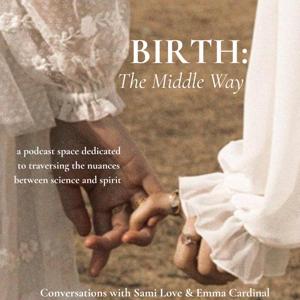
In this episode of BIRTH: The Middle Way we explore a harmful rhetoric often found in free-birth & home-birthing communities — a narrative that speaks of a mother’s birthing experience being a reflection of how much “inner-work” she has or hasn’t done being in correlation to her birth outcomes.
This conversation challenges that.
We are not calling out any one person in particular, rather this idea that has been shared loudly, from our perspective. While there may be some threads of truth found woven in statements such as these, we have also noticed that once again — there are infinite layers of nuance.
While we agree that birth is a mirror, what we explore today is a reflection that is much more vast, mysterious, and nuanced than placing responsibility for all outcomes on the mother.
So,
what if birth wasn’t simply “a mirror to a women’s consciousness” reflecting who we are and where we are at?
What if birth was a portal of an opportunity to reflect on who, how, why, and what we are?
What if birth was a sacred pause for us to gaze inwardly and explore the literal and figurative metamorphosis that a mother, baby, family, and community go through?
What if birth was a delicate dance designed to observe the sacred mystery… not formulate opinions about it?
What if each and every birth was an opportunity to heal not just ourselves, but our entire bloodline?
What if birth was a ceremony?
What if birth was a medicine?
What if birth was more than just a mirror…
What if it was a threshold for deeper intimacy, surrender, and honouring of the great unknown.
Join us as we explore this topic —
with reverence, humour, and a little bit of spiciness.
This is BIRTH: The Middle Way,
and we are so grateful to have you here with us.
In reverence,
(& silliness)
Sami Love & Emma Cardinal
This is a public episode. If you'd like to discuss this with other subscribers or get access to bonus episodes, visit birththemiddleway.substack.com/subscribe