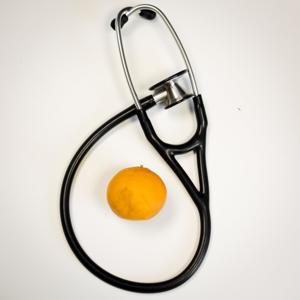
Bite-Sized Medicine

Bite-Sized Medicine

By Bite-Sized MedicineHealth & Fitness
Download on the App Store

Bite-Sized Medicine episodes

  • Ketogenic Diet

    The ketogenic diet has been prescribed medically as a regimen for children with refractory seizures. It has since gained popularity recently as a weight loss strategy. This diet is important to understand because of its effect on overall body physiology in order to best counsel patients, especially as patients may be bringing it up more frequently as a current "fad diet"!


    Resources:

    1. Nordmann AJ, Nordmann A, Briel M, et al. Effects of low-carbohydrate vs low-fat diets on weight loss and cardiovascular risk factors: a meta-analysis of randomized controlled trials. Arch Intern Med 2006; 166:285.
    2. Hall KD, Chen KY, Guo J, et al. Energy expenditure and body composition changes after an isocaloric ketogenic diet in overweight and obese men. Am J Clin Nutr 2016; 104:324.
    3. Fung TT, van Dam RM, Hankinson SE, et al. Low-carbohydrate diets and all-cause and cause-specific mortality: two cohort studies. Ann Intern Med 2010; 153:289.
    4. Martin‐McGill  KJ, Jackson  CF, Bresnahan  R, Levy  RG, Cooper  PN. Ketogenic diets for drug‐resistant epilepsy. Cochrane Database of Systematic Reviews 2018, Issue 11. Art. No.: CD001903. DOI: 10.1002/14651858.CD001903.pub4.
    5. McKenzie A, Hallberg S, Creighton BC, Volk BM, Link T, Abner M, et al. A Novel Intervention Including Individualized Nutritional Recommendations Reduces Hemoglobin A1c Level, Medication Use, and Weight in Type 2 Diabetes. JMIR Diabetes. 2017;2(1):e5
    6. Hallberg SJ, McKenzie AL, Williams P, et al. Effectiveness and Safety of a Novel Care Model for the Management of Type 2 Diabetes at One Year: An Open Label, Non-Randomized, Controlled Study. Diabetes Ther. 2018. DOI: 10.1007/s13300-018-0373-9
    7. Sumithran, Priya, and Joseph Proietto. "Ketogenic diets for weight loss: a review of their principles, safety and efficacy." Obesity Research & Clinical Practice 2.1 (2008): 1-13. 
    8. 8 min
    9. Hypertension

       Dietary changes are commonly recommended for patients with hypertension or at risk for developing it. So what does the research say about specific changes to make and how does this translate to real life and the foods that we eat?

      Articles/references:

      • Sacks, F. M., MD et al. (2001). EFFECTS ON BLOOD PRESSURE OF REDUCED DIETARY SODIUM AND THE DIETARY APPROACHES TO STOP HYPERTENSION (DASH) DIET. New England Journal of Medicine,344(1), 3-10. 
      • Academy of Nutrition and Dietetics' Evidence Analysis Library
      • 7 min
      • Diabetes

        There is a lot of nitty gritty in dietary modifications recommended for patients with diabetes. In this episode, we make it simple, realistic, and high yield for practitioners to better motivate real dietary changes for their patients.

        Resources: 

        1. MacLeod, Janice, et al. "Academy of Nutrition and Dietetics Nutrition practice guideline for type 1 and type 2 diabetes in adults: nutrition intervention evidence reviews and recommendations." Journal of the Academy of Nutrition and Dietetics 117.10 (2017): 1637-1658.
        2. Powers, Margaret A., et al. "Diabetes self-management education and support in type 2 diabetes: a joint position statement of the American Diabetes Association, the American Association of Diabetes Educators, and the Academy of Nutrition and Dietetics." The Diabetes Educator43.1 (2017): 40-53.
        3. Franz, Marion J., et al. "Academy of Nutrition and Dietetics nutrition practice guideline for type 1 and type 2 diabetes in adults: systematic review of evidence for medical nutrition therapy effectiveness and recommendations for integration into the nutrition care process." Journal of the Academy of Nutrition and Dietetics 117.10 (2017): 1659-1679. 
        4. 11 min
        5. Intermittent Fasting

          An up-and-coming fad diet that has rapidly gained interest. What do we know about it and how can we advise patients that have questions?


          References:

          1. Patterson, R. E., Laughlin, G. A., LaCroix, A. Z., Hartman, S. J., Natarajan, L., Senger, C. M., ... & Gallo, L. C. (2015). Intermittent fasting and human metabolic health. Journal of the Academy of Nutrition and Dietetics, 115(8), 1203-1212.
          2. Chaix, A., Zarrinpar, A., Miu, P., & Panda, S. (2014). Time-restricted feeding is a preventative and therapeutic intervention against diverse nutritional challenges. Cell metabolism, 20(6), 991-1005.
          3. Froy, O. (2009). Metabolism and circadian rhythms—implications for obesity. Endocrine reviews, 31(1), 1-24.
          4. Hatori, M., Vollmers, C., Zarrinpar, A., DiTacchio, L., Bushong, E. A., Gill, S., ... & Ellisman, M. H. (2012). Time-restricted feeding without reducing caloric intake prevents metabolic diseases in mice fed a high-fat diet. Cell metabolism, 15(6), 848-860.
          5. Trepanowski, J. F., Kroeger, C. M., Barnosky, A., Klempel, M. C., Bhutani, S., Hoddy, K. K., ... & Ravussin, E. (2017). Effect of alternate-day fasting on weight loss, weight maintenance, and cardioprotection among metabolically healthy obese adults: a randomized clinical trial. JAMA internal medicine, 177(7), 930-938.
          6. Farshchi, H. R., Taylor, M. A., & Macdonald, I. A. (2005). Deleterious effects of omitting breakfast on insulin sensitivity and fasting lipid profiles in healthy lean women. The American journal of clinical nutrition, 81(2), 388-396.
          7. Morgan, K. J., Zabik, M. E., & Stampley, G. L. (1986). The role of breakfast in diet adequacy of the US adult population. Journal of the American College of Nutrition, 5(6), 551-563.
          8. Cho, S., Dietrich, M., Brown, C. J., Clark, C. A., & Block, G. (2003). The effect of breakfast type on total daily energy intake and body mass index: results from the Third National Health and Nutrition Examination Survey (NHANES III). Journal of the American College of Nutrition, 22(4), 296-302.
          9. Albertson, A. M., Anderson, G. H., Crockett, S. J., & Goebel, M. T. (2003). Ready-to-eat cereal consumption: its relationship with BMI and nutrient intake of children aged 4 to 12 years. Journal of the American dietetic association, 103(12), 1613-1619.
          10. Berkey, C. S., Rockett, H. R. H., Gillman, M. W., Field, A. E., & Colditz, G. A. (2003). Longitudinal study of skipping breakfast and weight change in adolescents. International journal of obesity, 27(10), 1258.
          11. Ma, Y., Bertone, E. R., Stanek III, E. J., Reed, G. W., Hebert, J. R., Cohen, N. L., ... & Ockene, I. S. (2003). Association between eating patterns and obesity in a free-living US adult population. American journal of epidemiology, 158(1), 85-92.
          12. Taylor, M. A., & Garrow, J. S. (2001). Compared with nibbling, neither gorging nor a morning fast affect short-term energy balance in obese patients in a chamber calorimeter. International journal of obesity, 25(4), 519.
          13. Nicklas, T. A., Myers, L., Reger, C., Beech, B., & Berenson, G. S. (1998). Impact of breakfast consumption on nutritional adequacy of the diets of young adults in Bogalusa, Louisiana: ethnic and gender contrasts. Journal of the American Dietetic Association, 98(12), 1432-1438. 

            11 min
          14. Vegetarian

            Vegetarian diets are often pursued for health benefits. What makes a vegetarian diet healthy and how can we best guide patients to avoid complications and maximize the health benefits of plant-based diets (vegetarian or not)?

            Articles/references:

            • https://drive.google.com/drive/u/0/folders/1nlanoRGbtgvI42GTyxJhBXUi8Id80IbB
            • https://www.nutritioncaremanual.org/topic.cfm?ncm_toc_id=273848
            • https://www.eatrightpro.org/practice/position-and-practice-papers/position-papers/vegetarian-diets
            • Dinu, M., Abbate, R., Gensini, G. F., Casini, A., & Sofi, F. (2016). Vegetarian, vegan diets and multiple health outcomes: A systematic review with meta-analysis of observational studies. Critical Reviews in Food Science and Nutrition,57(17), 3640-3649. doi:10.1080/10408398.2016.1138447
            • https://www.surreydietitian.co.uk/blog/vegandiets
            • 8 min
            • Cholesterol

               Cholesterol is hot and controversial topic for both patients and providers. How can we understand the evidence to better partner with patients trying to make healthy choices that maximize benefits on serum cholesterol?

              Articles/references:

              • Grundy, Scott M. "Does dietary cholesterol matter?." Current atherosclerosis reports 18.11 (2016): 68.
              • Bos, M. B., et al. "Effect of a high monounsaturated fatty acids diet and a Mediterranean diet on serum lipids and insulin sensitivity in adults with mild abdominal obesity." Nutrition, Metabolism and Cardiovascular Diseases 20.8 (2010): 591-598.
              • Anderson, James W., et al. "Health benefits of dietary fiber." Nutrition reviews 67.4 (2009): 188-205.
              • https://www.fda.gov/food/ingredientspackaginglabeling/foodadditivesingredients/ucm449162.htm
              • Evidence Analysis Library
              • 7 min
              • Beverages

                Although easy to overlook, beverage consumption (specifically, sugar sweetened beverages) can have profound effects on a person's health. Here, we discuss how to advise patients and what the research says as far as beverage consumption for all ages.

                Articles/references

                1. Uptodate- dietary recommendations for toddlers kids 
                2. The effect of increased beverage portion size on the energy intake of a meal
                3. Home Matters: Adolescents Drink More Sugar-Sweetened Beverages When Available at Home.
                4. Haughton CF1, Waring ME2, Wang ML3, Rosal MC4, Pbert L4, Lemon SC4.
                5. Consumption of sugar sweetened beverages, artificially sweetened beverages, and fruit juice and incidence of type 2 diabetes: systematic review, meta-analysis, and estimation of population attributable fraction.
                6. Imamura F1, O'Connor L2, Ye Z2, Mursu J3, Hayashino Y4, Bhupathiraju SN5, Forouhi NG2.
                7. The European Society for Paediatric Gastroenterology, Hepatology, and Nutrition Committee on Nutrition provides similar recommendations [53]. Studies evaluating added sugars in children are limited [25]. Pending additional information, these consensus guidelines seem reasonable.This limit is based upon the recommendation in the 2005 Dietary Guidelines for Americans to limit discretionary kilocalories (ie, those available for consumption as added sugars or solid fats after essential daily nutrient requirements are met) to 6 to 10 percent of total daily energy intake [57]; the 2015 Dietary Guidelines suggest limiting added sugars to <10 percent of total daily energy intake [28]
                8. 7 min
                9. Approach

                  What is an effective way to begin conversations about diet and nutrition discussions in a health care setting? This episode serves as a foundation for future podcasts, including important general concepts to keep in mind for all nutrition counseling.

                  Articles/references:

                  1. Claire P. Kelley, PsyDa, *, Geena Sbrocco, MS, RDb,c , Tracy Sbrocco, PhDa, Behavioral Modification for the Management of Obesity
                  2. Dietary Guidelines for Americans. 08/08/2018; Available from: https://health.gov/dietaryguidelines/.
                  3. Aspry, K.E., et al., Medical Nutrition Education, Training, and Competencies to Advance Guideline-Based Diet Counseling by Physicians A Science Advisory From the American Heart Association. Circulation, 2018. 137(23): p. E821-E841.
                  4. Brook, R.D. and S. Rajagopalan, 2017 ACC/AHA/AAPA/ABC/ACPM/AGS/APhA/ASH/ASPC/NMA/PCNA Guideline for the Prevention, Detection, Evaluation, and Management of High Blood Pressure in Adults. A report of the American College of Cardiology/American Heart Association Task Force on Clinical Practice Guidelines. Journal of the American Society of Hypertension, 2018. 12(3): p. 238-238.
                  5. Tete, S., et al., Nutrition and Cancer Prevention. International Journal of Immunopathology and Pharmacology, 2012. 25(3): p. 573-581.
                  6. Goldstein, L.B., et al., Guidelines for the Primary Prevention of Stroke A Guideline for Healthcare Professionals From the American Heart Association/American Stroke Association. Stroke, 2011. 42(2): p. 517-584.
                  7. Sami, W., et al., Effect of diet on type 2 diabetes mellitus: A review. International Journal of Health Sciences-Ijhs, 2017. 11(2).
                  8. Evert, A.B., et al., Nutrition Therapy Recommendations for the Management of Adults With Diabetes. Diabetes Care, 2014. 37: p. S120-S143.
                  9. Garvey, W.T., et al., American Association of Clinical Endocrinologists and American College of Endocrinology Position Statement on the 2014 Advanced Framework for a New Diagnosis of Obesity as a Chronic Disease. Endocrine Practice, 2014. 20(9): p. 977-989.
                  10. Jellinger, P.S., et al., American Association of Clinical Endocrinologists and American College of Endocrinology Guidelines for Management of Dyslipidemia and Prevention of Cardiovascular Disease - Executive Summary. Endocrine Practice, 2017. 23(4): p. 479-497.
                  11. 7 min

                  About Bite-Sized Medicine

                  From the publisher's feed

                  Created as a joint effort between medical and dietetics students, this podcast consists of short (10 minute) talks covering topics on nutrition, health, and wellbeing.