
Sign up to save your podcasts
Or

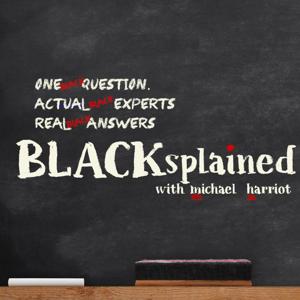


Instead of uninformed opinions and hot takes, every week, Blacksplained invites an expert, scholar or someone who knows things to discuss one question from a Black perspective.
New York magazine calls Ali Siddiq “stand-up comedy’s most prolific storyteller.” The New York Times compared his comedy to The Wire. As the first comedian in history to release a four-part stand-up series, Siddiq’s storytelling saga, The Domino Effect 1-4, has amassed over 55 million views and cemented his reputation as a master craftsman of narrative comedy. His latest special, My Father, has earned nearly five million views in three months. But instead of releasing his specials on Netflix or other streaming platforms, Siddiq funds, produces and releases his work exclusively on YouTube (subscribe here).
Siddiq sat down with Blacksplained to discuss how he became a storyteller, what made him lean in on his style of comedy and what his process entails.
Tiffany D. Cross is a journalist.
Before earning a prestigious position as senior contributor at ContrabandCamp, Cross hosted The Cross Connection on MSNBC, worked as a producer at CNN, served as BET’s Washington bureau chief and was a 2020 fellow of Harvard’s Institute of Politics. She is the author of Say It Louder: Black Voters, White Narratives, and Saving Our Democracy and her most recent book, Love, Me: A Letter to Black Women in a Toxic Country, Career, and Relationship.
Cross joins Michael Harriot for a discussion about:
This is why Blacksplained exists.
Every week, we invite a scholar, expert or someone who just knows things to answer one question. While the conversation could go anywhere, the discussions are always based on facts, experience and truth.
So we asked Tiffany Cross to Blacksplain today’s question:
Are you media literate?
Dr. Safiya Noble is the author of the best-selling 2018 book, Algorithms of Oppression: How Search Engines Reinforce Racism. Noble has spent her entire career as a researcher, professor and scholar focused on how technology and artificial intelligence affect race, gender, culture and power.
She currently serves as the David O. Sears Presidential Endowed Chair of Social Sciences at UCLA and leads the Center on Resilience & Digital Justice. In 2021, the MacArthur Foundation awarded Noble its prestigious “genius grant” for her groundbreaking work combining human rights, social justice, democracy and technology.
There are a bazillion podcasts where you can listen to guests share their uninformed opinions. But each week, Blacksplained asks an expert, authority or just a person who knows things to answer one question in their area of expertise
Today, the scholar and board-certified genius Dr. Safiya Noble will Blacksplain:
Long before she became the first Black woman to anchor a primetime cable news show, Reid studied not finding out at the prestigious FTSIO University School of Life (and Harvard).
On this week’s episode, Day One ContrabandCamper and host of The Joy Reid Show sits down for a conversation about:
And, for the first time, Reid shares the behind-the-scenes details and machinations that led to her MSNBC firing.
On Sunday, The New York Times Magazine published “In Fighting for Every Black Child, Did I Betray Own?” Written by journalist Nikole Hannah-Jones, the article reexamined the family’s decision that Hannah-Jones chronicled in another deeply personal piece in The New York Times 10 years ago.
What followed could only be described as a dumpster fire.
The essay sparked an eruption of online commentators questioning Hannah-Jones’ parenting, her politics and even the decision to write the article itself. Many of the criticisms came in the form of personal attacks, acts of clout-chasing, and—if we’re being honest—often uninformed opinions by people who hadn’t read the entire article.
The firestorm was so furious that it was sometimes impossible to differentiate between Hannah-Jones’ Black critics, white race-baiters and outlets like the anti-Black New York Post, which described the controversy as: “Woke NYT, 1619 Project scribe sent daughter as ‘sacrifice’ to dangerous NYC school dubbed ‘Little Rikers Island’”
That’s why Blacksplained exists.
Instead of contributing to the uninformed discourse, every week, we ask a scholar, expert or person who just knows things to tackle one question from a Black perspective.
And today, journalist and creator of The 1619 Project, Nikole Hannah-Jones, Blacksplains the article that broke the internet.
Every week, Blacksplained asks an expert, scholar or person who knows what they’re talking about to tackle one question. This week, we’re talking neurodivergence, online psychology and misinformation about mental health with Dr. April Scott, director of Strategic Initiatives and Wellbeing at the University of Wisconsin-Madison (UW-M).
She holds a B.S. in psychology from Tuskegee University, so we had to talk about the bonnet debate. She’s a Black woman with an M.S. in clinical psychology from Barry University and a Ph.D. in counseling psychology from Auburn University, so we had to talk about Cheyenne Bryant. She did her dissertation on hip-hop’s effects on Black women’s self-image, so we couldn’t avoid the debate over Yung Miami’s hit song.
And since she has worked across multiple settings, including substance abuse treatment programs, community mental health centers, a Veterans Affairs hospital, group practice and university counseling centers, you’ll discover that what you believe about behavior, therapy and mental health is a combination of misinformation, misunderstanding and one of the most addictive drugs in history.
That’s why Dr. April Scott, an actual psychology expert, is here to Blacksplain:
Is the internet making us dumber?
Chapters
Are we actually in a literacy crisis? Or is the hand-wringing about this so-called “literacy crisis” about who gets to determine the books and the newspapers and the stories that are deemed “serious”?
I knew just the person to ask.
Dr. Ahmad R. Washington is the department chair and an associate professor in the Department of Counseling and Human Development at the University of Louisville. Besides winning a slew of awards for his research on using hip-hop as a tool for counseling and educating Black males, he was inducted into the prestigious Martin Luther King Jr. Collegium of Scholars and served as an inaugural antiracism commissioner for the American Counseling Association, the largest organization for professional counselors in the world.
His research explores multicultural school counseling and anti-Blackness in education and the helping professions. And since he’s responsible for educating the people who become teachers, counselors, and—this is the important part—the people who determine what is worthy of learning, how we develop students, and how we determine if we’re doing it right, who better to Blacksplain what we get wrong about America’s literacy crisis?
If Christopher Columbus “discovered” America for white people, then Rod and Karen Morrow reverse gentrified the internet. After all, when Elon Musk “discovered” the website he now owns, Rod was already making his case for being considered one of the founders of Black Twitter. HBO made a show about a fictional universe with dragons, witches and white people with cousins, but Rod and Karen helped focus the Black gaze on The Game of Thrones. From working at HBO as Bomani Jones examined sports (and America) through a uniquely Black lens to teaming up with a writer named Michael Harriot and a little-known producer named Pharrell Williams on Drapetomaniax, Rod and Karen are basically the internet’s Black Lewis and Clark.
And when it comes to the fastest-growing form of media in the world, the Charlotte, N.C., couple host The Black Guy Who Tips, the longest-running Black podcast on Cheyenne Bryant’s internet.
That’s why we sat down with Rod Morrow to talk about his origin story, how the landscape has changed during his 16 years in the game and whether the podcast space needs more Black voices.
If you wanna hear how someone feels about a topic they heard some people talking about, you’re in luck. The world is filled with places where white perspective is framed as objectivity. It’s called whitesplaining.
But if you value truth, expertise and lived experience from a Black perspective…
Let me introduce you to the Black podfather, the OG of RSS feeds, or (my favorite —Negro Rogan.
Today, the Black guy who tips Blacksplains how to decolonize the podcast space.
Because he already did it.
Can white people code-switch, or is it a genetic ability that Black people are born with, like clapping on beat or making white people “fear for their lives”? Is it the same as “talking white” or is it a technical skill that people like Barack Obama, Kamala Harris and Ketanji Brown Jackson learned at the Respectability Politics School for Black Excellence? Do all white Gen-Zers (including Post Malone, Tyler Herro and Miley Cyrus) go through a Blaccent phase or are they reverse code-switching?
This is why Blacksplained exists.
Each week, we ask scholars, experts and people who know things to tackle one specific question about history, politics, culture, science or whatever’s got people talking. The smart, funny and insightful conversations end up in the most unexpected places while staying rooted in facts, truth and something that is often missing from the public discourse: a Black perspective.
Sunn m’Cheaux is a sociolinguist, musician, educator, and Harvard University’s first (and only) Gullah instructor. m’Cheaux’s social media posts contextualizing language, race and culture have made him one of the internet’s favorite public scholars.
Rachel Elizabeth Weissler is a raciolinguistic emotion perception researcher, African-American English scholar and a professor at the University of Oregon’s linguistics and Black studies departments. Dr. Weissler uses experimental methods from sociolinguistics, psycholinguistics and history to explore how Black language is used, how it changes and how it’s appropriated.
But today, professors m’Cheaux and Weissler are going to Blacksplain:
“Can white people code-switch?”
Chapters
Each week, host Michael Harriot will pick one question about history, politics, science, culture or anything else worth talking about. But instead of giving his opinion or sharing his feelings on the subject, he’ll bring in a scholar, expert or professional who actually knows what they’re talking about.
But these discussions won’t be neutral, performatively palatable or sterilized to make people comfortable. Instead of using “objectivity” as a standard (pronounced “Hoo why itt”), we’ll dive into each subject from an unapologetically Black perspective, grounded in real expertise and delivered with the wit, candor and cultural fluency that informs our ways of knowing.
The result is a show that doesn’t just inform you; it will recontextualize what you thought you knew, give you new insight and make you realize that you aren’t going crazy. We’ll have real experts like today’s guest, attorney Lisa E. Davis
Besides being one of the foremost entertainment and sports attorneys in the country, Davis is a certified “Super Lawyer” and the author of the new book: Our Minds Were Always Free: A History of How Black Brilliance Was Exploited—and the Fight to Retake Control. Today, she will help us answer the question:
Can you steal Black genius?
Let’s find out.
One question. Actual experts. Real answers.
Welcome to Blacksplained.
Takeaways
Chapters
From the publisher's feed
One question
Actual experts
Real answers