
Sign up to save your podcasts
Or

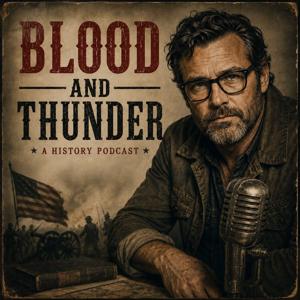


In this episode of Blood and Thunder, host William traces the extraordinary life of Cyrus the Great, founder of the Achaemenid Persian Empire. The story opens on the steppes east of the Caspian Sea, where the nomad queen Tomyris lowers the severed head of the most powerful man on earth into a wineskin full of blood, then circles back to ask how a boy born in the backwater kingdom of Anshan around 600 BC ever came to such an end. We follow Cyrus through the dreams of his grandfather Astyages, the king of the Medes who tried to have him exposed as an infant; through the horrifying revenge plot of Harpagus, the nobleman fed his own son in a stew; through the overthrow of the Medes in 550 BC, the war with Croesus of Lydia and the famous moment on the burning pyre when the doomed king cried out the name of Solon; and through the bloodless fall of Babylon in 539 BC, where the priests of Marduk opened the gates and a clay cylinder, still in the British Museum today, proclaimed Cyrus the chosen one of their god.
The narration roots itself in the major ancient sources, principally Herodotus, Xenophon's Cyropaedia, the fragments of Ctesias, the Nabonidus Chronicle, the Cyrus Cylinder, and the books of Ezra and Isaiah, as well as modern works by Pierre Briant, Tom Holland, Amélie Kuhrt, Matt Waters, and Lloyd Llewellyn-Jones. It examines Cyrus's startling innovation of letting conquered peoples keep their gods, their customs, and their homelands, including his decision to send the exiled Jews back to Jerusalem to rebuild the Temple, which earned him the only use of the word messiah given to a foreign king anywhere in the Hebrew Bible. The episode ends on the eastern frontier, where an aging Cyrus, unable to stop conquering, marches against the Massagetae and falls in a brutal battle on the grass, his body eventually carried home to the simple stone tomb at Pasargadae that still stands today, bearing the inscription Alexander the Great would one day read: do not begrudge me this little earth that covers my body.
In this episode of Hostile History, William traces the life of Cyrus the Great, the Persian king who built the first true world empire in the sixth century bc. Opening on the steppe east of the Caspian Sea, where the vengeful queen Tomyris submerges Cyrus's severed head in a wineskin of blood, the episode rewinds to the wreckage of the post-Assyrian Near East and walks through the legend of his miraculous birth, the cannibal banquet Astyages serves to Harpagus, the revolt that topples Media, and the conquest of Croesus and Lydia.
The second half follows Cyrus's most enduring legacies: the peaceful entry into Babylon, a new model of imperial mercy, and the release of the Jews from exile that earned him the title of messiah in the Book of Isaiah. The story closes on the disastrous final campaign against Tomyris and at the tomb at Pasargadae, where Alexander wept two centuries later, leaving listeners with the image of a wheel of fortune that turned even for the greatest king the ancient world had ever known.
In 52 BC, a young Gallic chieftain did what everyone thought was impossible. He united the warring tribes of Gaul into a single fighting force and took on the greatest military machine the ancient world had ever produced. His name was Vercingetorix, and for one extraordinary year, he matched wits with Julius Caesar himself, burning his own land to starve the Roman legions, handing Caesar his first real defeat, and rallying a fractured people around a dream of freedom that had never existed before and would never exist again. This is the story of that year, and of the siege that ended it all on a hilltop in Burgundy.
From the sacred groves of the Druids to the killing fields of Alesia, from the politics of a dying republic to the inside of Rome's most infamous dungeon, this episode traces the life and struggle of a man whose civilization was erased by the one that wrote his story. It is a tale of genius and desperation, of impossible choices and unbreakable will, and of a defeat so total that it shaped the future of Western civilization. Two thousand years later, we are still living in the world that was made when Vercingetorix lost.
In 60 AD, on a rain-soaked island at the edge of the known world, a woman with a whipped back and a broken family picked up a spear and set the Roman Empire on fire. Boudica, queen of the Iceni, led the most devastating uprising Britain's Roman occupiers would ever face. Three cities burned to the ground. An entire legion was annihilated. Seventy thousand people died. And for a few terrifying weeks, the question of whether Rome could hold Britain hung in the balance.
In this episode, William traces the full arc of Boudica's world, from the sophisticated tribal kingdoms that existed long before Rome arrived, to the calculated cruelty that drove a queen to war, to the catastrophic final battle that ended it all. This is a story about empire and resistance, about what happens when the powerful mistake submission for acceptance, and about one mother's fury that echoed across two thousand years of history.
In this episode of The Restless Historian, we tell the full, unvarnished story of Sitting Bull, the Hunkpapa Lakota holy man and war chief whose life became the defining symbol of Indigenous resistance on the North American continent. From his birth on the northern Great Plains in the early 1830s, through his rise as a warrior and visionary, to the legendary Sun Dance vision that foretold the destruction of Custer's 7th Cavalry at the Little Bighorn, we follow one man's extraordinary journey through the most dramatic and devastating chapter in the history of the American West.
But the Little Bighorn was only the midpoint of a much longer, much harder story. What followed was exile in Canada, slow starvation, surrender, the grinding humiliation of the reservation system, a surreal season in Buffalo Bill's Wild West show, and the desperate hope of the Ghost Dance, all building toward a terrible morning on the Grand River in December of 1890. This is a story about courage, loss, identity, and the question of what it means to refuse to be erased. It is not an easy listen. But it is one you won't forget.
In the highlands of eighteenth-century Peru, a man named José Gabriel Condorcanqui claimed descent from the last Inca emperor and took the name Túpac Amaru II. After years of petitioning the colonial courts for justice and being ignored, he launched the largest Indigenous uprising the Americas had ever seen. Tens of thousands answered his call. The Spanish Empire trembled. And when it was over, the colonial authorities executed him in the plaza of Cusco with a cruelty so extreme that it passed immediately into legend.
This episode tells the full story, from the fall of the Inca Empire to the silver mines of Potosí, from a young man's education in colonial Cusco to the battlefield of Sangarará, from the desperate letters of his wife Micaela Bastidas to the moment four horses tried and failed to tear his body apart. It is a story of resistance, of prophecy, of strategic brilliance and fatal hesitation, and of a name the Spanish tried to erase from history that is still spoken around the world nearly 250 years later.
In 1443, a man rode south through the darkness on a stolen horse with a forged letter in his saddlebag and three hundred loyal cavalrymen at his back. His name was Skanderbeg, and he had spent the last twenty years as a soldier of the Ottoman Empire, the very empire that had taken him from his family as a child. That night, he was going home. What followed was one of the most extraordinary stories of resistance in European history: a twenty-five year war fought by a small, fractured alliance of Albanian mountain lords against the most powerful empire on earth. They were outnumbered, outgunned, and abandoned by their allies. They never lost.
In this episode, William tells the full story of George Kastrioti Skanderbeg, the boy who was stolen, the soldier who was forged, and the rebel who turned everything the Ottomans taught him into a weapon against them. From the palace schools of Edirne to the blood-soaked passes of the Albanian highlands, from the desperate sieges of Krujë to a quiet death in a coastal town with the war still unfinished, this is a story about identity, persistence, and the stubborn refusal to be erased. If you have never heard of Skanderbeg, you are about to wonder how that is possible.
From the publisher's feed
Blood and Thunder is a history podcast for listeners drawn to the drama, tragedy, and glory of the past. Hosted by William, a storyteller with a passion for the old world and its larger-than-life…