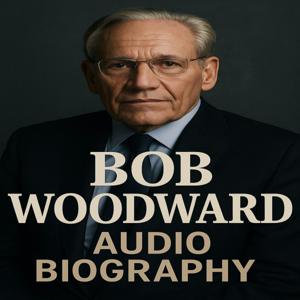
Bob Woodward Biography Flash a weekly Biography.
Veteran Washington Post legend Bob Woodward has kept his now-familiar posture in the news cycle this week: less loud headline-maker, more looming presence over how we think about power and the presidency. While there have been no confirmed major new book announcements or fresh bombshell investigations tied to his name in the past few days, his reporting and reputation continue to echo through current political and media debates.
The most tangible recent development comes via Fox News, where Howard Kurtz’s biography page notes once again that he joined the Washington Post back in 1981 after being hired by Bob Woodward. That detail, repeatedly referenced in current pieces on Kurtz, is a reminder of Woodward’s long-standing role as a talent-spotter in Washington media, something that has biographical weight: this is not just the reporter of Watergate, but an institutional builder whose hires went on to influence how politics is covered today.
Academic and media criticism circles are still leaning on Woodward as a benchmark. The Knight First Amendment Institute at Columbia University, in a recent essay on what it calls the “Media Individualism Complex,” contrasts today’s celebrity pundit culture with the era of deep institutional reporting symbolized by Woodward and his partner Carl Bernstein. It is not a new quote from Woodward, but it is a fresh sign of how his methodical, memo-driven style has become the foil for a hyper-personalized media age.
Meanwhile, the Washington Post and its book coverage continue to orbit his legacy. A piece from Sidwell Friends School’s Horizon site highlighted a Politics and Prose event commemorating the Post’s Book World section, where Woodward publicly hoped the Post and Book World would, in his words, “have a comeback,” adding, “This is our country and this is our democracy. We are the comeback people.” That line, still being cited, feeds into his evolving biographical arc: late-career Woodward as defender of institutions under pressure, not just chronicler of their failures.
On the cultural side, essays from outlets like Tokio Marine’s “Protecting the Fourth Estate” again retell the Watergate saga, emphasizing how Woodward and Bernstein were attacked by the Nixon White House and yet helped win the Post the 1973 Pulitzer for public service, reinforcing his enduring status as the template for investigative journalism courage.
There are, as of now, no verified major headlines in the last 24 hours announcing new Bob Woodward projects, deals, or public appearances. Any rumors circulating on social media about a surprise 2024 or 2025 campaign chronicle, or about deep Trump-era tapes yet to be published, remain unconfirmed and should be treated as speculation until backed up by outlets such as the Washington Post, the New York Times, or publisher statements.
So for this edition of Bob Woodward Biography Flash, the story is not about a new revelation, but about a legacy that refuses to fade, as journalists, critics, and even corporate reports still reach for his name to explain what fearless reporting should look like.
Thank you for listening, and be sure to subscribe so you never miss an update on Bob Woodward, and search the term Biography Flash for more great biographies. Thanks for listening. This has been a Quiet Please production.
Get the best deals https://amzn.to/3ODvOta