
Sign up to save your podcasts
Or

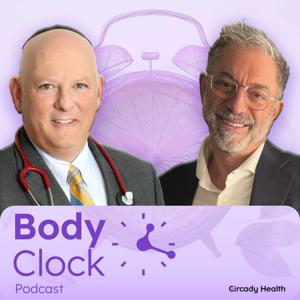


Dr. Herman Weiss joins Daniel Kaufman to make the case that PCOS has been named after the wrong organ. Reframed as PMOS — poly endocrine metabolic ovarian syndrome — the condition looks less like an ovarian disease and more like a metabolic one, and Dr. Weiss argues that changes where treatment should start. He walks through the review article he published this week, whose thesis is that skeletal muscle has never been taken seriously as a target in fertility care despite doing most of the work of clearing glucose after a meal. Along the way: why no drug is approved specifically for PCOS, how to make a six-minute appointment count, what the Hutterites of the Dakotas taught us about baseline fertility, and why Dr. Weiss ends every longevity conversation with muscle.
What Listeners Will Learn
Disclaimer
General information only — not a substitute for personal medical advice, diagnosis, or treatment; does not create a doctor-patient relationship. Statements about supplements, medications or exercise reflect the views of the speakers as expressed on air. Bring anything discussed here to your own physician before acting on it.
Why build one supplement with ten ingredients instead of handing patients a list of five? In Episode 005, Dr. Herman Weiss takes Daniel Kaufman through the combination formula he developed for PCOS/PMOS support one ingredient at a time explaining what each does inside the insulin-signalling pathway and why several doses are deliberately lower than the market standard.
It is the most technical episode of the series so far, and the most candid: Dr. Weiss spends as much time on tolerability limits, toxicity ceilings and what he chose to leave out as on what went in.
What Listeners Will Learn
Disclaimer
General information only not a substitute for personal medical advice, diagnosis, or treatment; does not create a doctor-patient relationship. Statements about ingredients reflect the views of the speakers. These statements have
If PCOS now PMOS, is really a metabolic condition, does it matter when you eat, move and sleep? In Episode 004 of Body Clock, Daniel Kaufman asks Dr. Herman Weiss to take the show's title literally. Dr. Weiss explains why cortisol peaks at waking, why he says insulin sensitivity is highest in the morning and falls by evening, and why that makes breakfast the meal to protect rather than skip including his reservations about intermittent fasting for PMOS patients.
From there: delaying your first coffee, 30 grams of protein early, walking in the hour after meals, morning sunlight, exercise zones one through four, and why weights may matter more than cardio for healthspan. Plus what the word "supplement" is supposed to mean.
General information only not a substitute for personal medical advice, diagnosis, or treatment; does not create a doctor-patient relationship.
Part two of the PCOS/PMOS conversation gets specific. Dr. Herman Weiss walks Daniel Kaufman through the markers and blood work he actually orders — what a normal cycle looks like, his basic panel, SHBG, AMH, and the insulin-resistance workup — and makes the case that a result inside the normal range still isn't the same as being fine. Also in this episode: why he calls BMI worthless, Daniel's candid account of taking a GLP-1 and gaining the weight back, the frailty Dr. Weiss is now seeing in long-term users, why cortisol's morning spike makes him skeptical of intermittent fasting, and the surprising discovery that sushi rice spiked their blood sugar while ice cream didn't. General information only — not a substitute for personal medical advice, diagnosis, or treatment; does not create a doctor-patient relationship.
Is PCOS really an ovary problem — or a metabolic one? OB-GYN Dr. Herman Weiss and host Daniel Kaufman, President of Circady Health, make the case for "Medicine 3.0": treating metabolic health years before disease shows up, instead of chasing symptoms with a quick pill.
Using a Titanic parable of ignored warnings, they explore why fertility care so often skips lifestyle, how muscle mass and continuous glucose monitors change the picture, why the brain's need for glucose links diabetes and Alzheimer's, and where supplements like inositol and berberine fit as an add-on to diet, exercise, and stress reduction.
Candid, science-forward, and occasionally into the weeds.
General information only — not a substitute for personal medical advice, diagnosis, or treatment; does not create a doctor-patient relationship.
Everything you were taught about PCOS may begin with a mistake — its name. In the debut episode of the Body Clock Podcast, OB-GYN Dr. Herman Weiss joins host Daniel Kaufman, President of Circady Health, to argue that polycystic ovary syndrome, now being renamed PMOS, has almost nothing to do with cysts and little to do with ovaries. Dr. Weiss traces the name to a seven-patient surgical series from roughly 90 years ago, explains how a normal cycle actually works, and names the three drivers he sees in practice: insulin resistance, adrenal stress, and inflammation. Along the way, why he calls it the number one endocrine disorder in women, why patients so often cycle through several doctors first, and the ten-minute habit he says changed one patient's life. General information only — not a substitute for personal medical advice, diagnosis, or treatment; does not create a doctor-patient relationship.
Welcome to Body Clock — a podcast about health and how knowledge, lifestyle and choices can increase the quality and length of your life. Each week, host Daniel Kaufman and co-host Dr. Herman Weiss, an OB-GYN, dig into topics like metabolic health and inflammation: the biology behind them, and practical, non-pharmaceutical approaches to supporting your health. The goal is to help you better understand your body and advocate for your health. Follow Body Clock wherever you listen so you never miss an episode. General information only — not a substitute for personal medical advice, diagnosis, or treatment; does not create a doctor-patient relationship.
From the publisher's feed