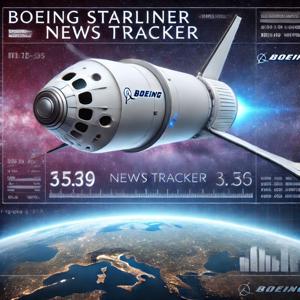
Boeing’s Starliner program has faced significant turmoil in the past few days, as operational headaches continue to ripple through the company’s space ambitions. NASA confirmed that astronauts Butch Wilmore and Suni Williams, who traveled to the International Space Station in June aboard Starliner’s first crewed flight, remain stranded on the ISS months after their planned eight-day stay. Originally, Starliner was set to return them home, but problems with its propulsion system—revealed during that journey—forced NASA to reconsider and conduct exhaustive reliability tests. Despite these efforts, NASA concluded the safest option was to bring the astronauts back to Earth on SpaceX’s upcoming Crew-9 mission and not risk a crewed Starliner re-entry.
NASA’s associate administrator Jim Free emphasized the drama of this shift in plans: the new SpaceX deployment leaves two seats empty specifically to ferry Wilmore and Williams home. The Crew-9 mission, using a Falcon 9 rocket from Cape Canaveral, is due to launch on Saturday, with docking at the ISS expected Sunday. This marks a rare instance where a rival’s spacecraft bails out a competitor’s crew, showcasing SpaceX’s reliability for regular ISS rotations while measurable confidence in Starliner has eroded.
This episode has cast a shadow over Boeing’s broader space operations. Starliner was originally a cornerstone of the Commercial Crew Program, but ongoing technical hitches and extended astronaut stays have resulted in setbacks for Boeing’s reputation, making NASA increasingly reliant on SpaceX’s proven Dragon system.
Meanwhile, Boeing’s focus appears to be shifting toward innovation in its defense and space sector, leveraging artificial intelligence to enhance operational efficiency and competitiveness. Just yesterday at the annual Air, Space & Cyber Conference, Boeing and Palantir announced a major partnership intended to integrate Palantir’s AI-powered Foundry platform across all Boeing Defense, Space & Security factories and programs. The aim is to unify data analytics and speed up production of spacecraft, satellites, military aircraft, and other assets. Boeing CEO Steve Parker describes this as a “natural fit,” designed not only for better factory operation but also as a direct boost to classified, mission-critical military systems, supporting sensitive military customers.
Financially, Boeing’s $26 billion annual defense revenues offer a buffer, but the Starliner headaches underscore the challenges of balancing cutting-edge innovation with the reality of operational execution. This new AI strategy, with Palantir’s software streamlining logistics and analytics across production lines, is part of Boeing’s larger effort to reassert itself technologically in a rapidly evolving aerospace and defense sector.
All the while, NASA’s astronaut rescue on the Dragon demonstrates how rapidly the competitive landscape can shift and how reliability is crucial for operational success. SpaceX’s flexibility
This content was created in partnership and with the help of Artificial Intelligence AI.