
Sign up to save your podcasts
Or

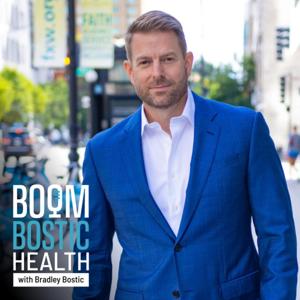


Before you build an AI strategy around your lab’s data, read the contracts.
Generating the data does not automatically give you every right to use it. And “we have a business associate agreement” does not settle the question.
Bradley Bostic joins McDonald Hopkins attorneys Emily Johnson, Christal Contini, and Elizabeth “Liz” Sullivan for a candid conversation about the decisions that can create—or compromise—a lab’s long-term value.
Recorded at Executive War College in New Orleans, this episode connects data rights, reimbursement pressure, and lab acquisitions to the questions healthcare leaders need to ask before committing.
THREE TAKEAWAYS:
• Understand your data rights before building the business case. The guests explain why contractual permissions around de-identification, aggregation, and reuse deserve closer attention.
• Examine the billing model behind the innovation. Digital pathology and genetic testing expose the gap between what technology makes possible and what reimbursement rules support.
• Know what you are giving up before selling the lab. Outreach revenue, strategic flexibility, and restrictions on reentering the market all belong in the decision—not just the purchase price.
Plus: why “other labs are doing it” is a poor defense, and how yesterday’s compliance decisions can become tomorrow’s acquisition problems.
What is the most overlooked asset in a health system’s lab—and does leadership understand its value?
Watch the conversation and share your perspective below.
Subscribe to Boombostic Health for conversations with the leaders shaping diagnostics and healthcare.
#Diagnostics #HealthcareData #BoombosticHealth
Healthcare's front door is broken - here's who's fixing it.
You will hear why virtual care fails without labs, why 52 diagnostics is the flywheel for access, and how a $2,000 primary care voucher could fix the front door for 600 patients at a time.
This is for healthcare leaders, hospital executives, and innovators who want practical fixes, not hype.
WHAT YOU WILL LEARN:
Why virtual care without completed labs is just Zoom - 70% in-clinic vs ~30% virtual completion
Why diagnostics drives 70% of clinical decisions on ~7% of spend, and how that blocks innovation
How white-label lab rails, self-collected testing, and at-home phlebotomy remove friction
How primary care became a referral engine, and the math behind a concierge-for-all voucher model
Where 52 ai in healthcare actually fits - agents and navigation only work with working diagnostic rails
FEATURED CONVERSATIONS IN THIS HIGHLIGHT:
Why AI alone will not fix care with Maitham Dib, founder of Junction
How Junction uses data from ~3.4M lab tests to route patients across PSC visits, at-home kits, and at-home phlebotomy.
Full episode: Why Every AI Healthcare Company is Missing
The front door nobody talks about with James York, Molecular Testing Labs
Why lab-based at-home testing protects data integrity, what removing friction from HIV/STI and PrEP unlocked, and the push to routine testing for chronic disease and wellness.
Full episode: The Front Door Nobody's Talking About in Healthcare
The $2,000 fix with Matthew Holt, The Health Care Blog
A blunt diagnosis of nonprofit incentives and leakage, plus a numbers-driven voucher model to make primary care high-status again.
Full episode: A $2,000 Voucher and 600 Patients: The Math Behind Fixing Care
CHAPTERS FOR THIS HIGHLIGHT:
00:00 The HLTH problem - the front door is broken
01:30 Virtual care without labs is just Zoom
06:30 Diagnostics as the flywheel for activation
12:00 From stigma to scale - at-home testing that reports
15:30 A $2,000 voucher and 600 patients - fixing primary care math
We're bringing back two conversations that answer the same question from opposite ends of healthcare: who actually takes care of you after you leave the clinic?
First, Dr. Justin Bekelman on rebuilding oncology around the patient with in-home and value-based care. Then, IU Health CEO Dennis Murphy on rebuilding a 16-hospital system around values and platforms that scale.
This is Boombostic Health Encore - our most relevant moments, cut for leaders short on time.
In this Encore:
- Why cancer care fails after 5 PM and what fixes it
- Why coordination alone is not enough - you have to be able to act
- How to move from a rules-based organization to a values-based organization
- Platform solutions that solve 100 problems vs point solutions that solve one
Chapters:
00:00 Why this Encore - care doesn't end at discharge
02:30 Part 1 - Dr. Bekelman on value-based oncology and in-home support
09:00 Bridge - from bedside proof to system playbook
09:30 Part 2 - Dennis Murphy on values-based leadership and platforms
14:30 What this means for healthcare leaders
Clinicians should have a voice in healthcare AI long before they are asked to use it.
Dr. Jay Anders makes that point in his Boombostic Health conversation with Marcus Gordon. He calls for more clinical input into what these systems do and which problems they solve.
We should be asking clinicians where work breaks down, what information they need, and what would give them more time with patients. Their answers should shape the product and how we measure its value.
But how much say do clinicians actually have?
Are they involved early enough to influence what gets built, or brought in after the major decisions have been made?
I'd like to hear from clinicians and the teams building these tools: When does clinical input enter your process, and what has changed because of it?
Watch Jay's perspective here: [YouTube episode link]
#HealthcareInnovation #BoombosticHealth
SHOW NOTES
Most healthcare technology targets patients after they become seriously ill. Rick Goddard believes agentic AI could create an even larger opportunity: helping primary care teams engage healthy and rising risk patients before their conditions escalate.
Recorded live at ViVE, Boombostic Health host Marcus Gordon sits down with Rick, SVP of Market Alliances at Lumeris, to explore how agentic AI could extend the reach of primary care physicians, strengthen prevention and help accelerate the shift toward value based care.
Rick introduces Tom, Lumeris' primary care agentic orchestration platform. Designed as a direct extension of the physician and care team, Tom can engage patients between visits, gather information that may otherwise be missed and help connect fragmented healthcare data.
The conversation also examines the trust, security and change management required to move clinical AI from promising technology to meaningful adoption.
In this episode:
• Why the primary care physician must remain at the center of AI enabled care
• How Tom extends the physician's reach between patient visits
• Why physician and patient trust will determine clinical AI adoption
• How agentic AI could make prevention possible at a much larger scale
• Why Lumeris selected Google Cloud to support its AI infrastructure
• What healthcare startups can learn from Lumeris' 20 year evolution
• How agentic AI could change the economics of value based care
CHAPTERS
00:00 Welcome from ViVE
01:08 The evolution of Lumeris
03:35 Introducing Tom
04:50 Keeping primary care at the center
05:58 The realities of clinical AI adoption
08:22 Extending care beyond the physician visit
09:31 Security, data and Google Cloud
10:32 Lessons for healthcare innovators
12:05 Scaling prevention with agentic AI
14:02 A potential economic shift in healthcare
FEATURED GUEST
Rick Goddard SVP of Market Alliances at Lumeris
Subscribe to Boombostic Health for conversations with the leaders shaping diagnostics, AI and the future of healthcare.
#AgenticAI #PrimaryCare #HealthcareInnovation
More people need chronic care. Fewer providers are available to deliver it. The math does not work unless care moves beyond the clinic.
Can AI-powered remote care help close the gap without sacrificing safety or human judgment?
Live from ViVE, Marcus Gordon sits down with Oren Nissim, CEO and Co-Founder of Brook Health, to examine how technology and human care teams can extend chronic disease management into the home.
From hypertension and diabetes to heart failure and complex kidney conditions, Oren explains how Brook uses AI to support monitoring, patient engagement, recommendations, and follow-up between visits.
But the technology is only one part of the solution. Scaling remote care will require responsible AI guardrails, sustainable reimbursement, secure data exchange, provider participation, and evidence that these models produce meaningful results.
They discuss:
• Why an aging population and shrinking provider workforce are creating an urgent access challenge
• How remote care can extend the reach of providers serving Medicare patients
• Where AI can support monitoring, engagement, and evolving care plans
• Why clinical interventions require stronger safeguards than general wellness tools
• How reimbursement and policy could accelerate care at home
• Why security, compliance, and interoperability remain essential
• Why healthcare AI companies must show results, not simply promote use cases
The central takeaway: AI will not replace the people delivering chronic care. It can extend their reach, but only when innovation is paired with human oversight, sustainable payment, strong safeguards, and measurable outcomes.
Subscribe to Boombostic Health for candid conversations with the leaders shaping the future of diagnostics, technology, and patient care.
CHAPTERS
00:00 Live from ViVE with Oren Nissim
00:49 Extending chronic care into the home
01:41 The aging population and provider shortage
02:36 Balancing AI innovation with patient safety
04:48 How reimbursement could expand remote care
06:30 Turning patient data into an evolving care plan
07:02 Building guardrails for clinical AI
08:06 Security, compliance, and data exchange
08:51 Why healthcare AI must prove results
A laboratory receives a specimen. What it produces is data.
That data can expose risk, guide treatment, and give patients greater control over their health. But its value depends on whether it can be connected, understood, and acted on at the right moment.
Live from ViVE 2026, Boombostic Health host Bradley Bostic sits down with Merve Ozkus, Senior Vice President and Chief Information Officer of BioReference Health, for a candid conversation about the changing role of the diagnostic laboratory.
Merve explains how BioReference Health is sharpening its strategic focus while building a more patient-centered technology foundation. She shares why meaningful interoperability requires more than moving information between systems, how consumer-directed testing is changing the relationship between patients and diagnostics, and where artificial intelligence can create real value today.
This is not a conversation about AI replacing clinical judgment. It is about using technology to strengthen the people, processes, and data behind better decisions.
Bradley and Merve discuss:
• Why data is the laboratory's true product
• BioReference Health's strategic evolution and market focus
• What patient-centered interoperability should actually accomplish
• Why patients are becoming more active advocates for their health
• The growing demand for consumer testing and functional medicine
• How BioReference Health is approaching AI responsibly
• Where AI can improve operations without removing human oversight
• Why AI education must become as fundamental as cybersecurity training
• How technology can help an overstretched healthcare workforce serve patients more effectively
The next era of diagnostics will not be defined only by how many tests a laboratory can run. It will be defined by how intelligently healthcare can connect and activate what those tests reveal.
CHAPTERS
00:00 Meet BioReference Health CIO Merve Ozkus
01:08 BioReference Health's strategic evolution
02:19 Why the laboratory's real product is data
04:13 The rise of the empowered patient
05:17 Finding signals beyond a single test result
08:33 Meeting patients where they are
10:06 Consumer testing and functional medicine
11:03 Building a secure, patient-centered foundation
11:41 Taking a disciplined approach to AI
12:46 AI as an accelerant, not a replacement
14:56 Why AI literacy is now essential
16:08 Moving from innovation talk to execution
Subscribe to Boombostic Health for candid conversations with the leaders shaping the future of diagnostics, technology, and patient care.
#Diagnostics #LabData #HealthcareAI #Interoperability #PatientCare #ViVE2026
Show Notes
AI can make healthcare faster. But can it also make the patient experience more human?
Live from ViVE, Marcus Gordon sits down with Ed Flores, VP of Business Development at Teleperformance, to examine how agentic AI is transforming patient and member engagement behind the scenes.
From detecting fear in an oncology patient's voice to delivering real-time coaching, sentiment analysis and next-best actions, Ed explains how human-in-the-loop AI can help healthcare teams respond faster without removing the human judgment patients need.
They discuss:
How AI is improving scheduling and patient engagement
Why human-in-the-loop models can accelerate healthcare adoption
The rapid rise of autonomous AI agents
How workforce shortages are driving operational change
Security, interoperability and responsible AI deployment
Teleperformance's expanding role in clinical and diagnostic support
The central takeaway: efficiency alone is not enough. Healthcare AI must understand the moment, protect the patient and help people make better decisions.
Subscribe to Boombostic Health for executive conversations spotlighting diagnostics, healthcare's intelligence layer.
Chapters
00:00 Live from ViVE
01:41 Human-in-the-loop AI
02:05 Improving the patient journey
03:19 AI that listens and responds
04:40 Overcoming healthcare's adoption barriers
07:04 The rise of autonomous AI agents
07:57 Security and interoperability
08:47 Expanding clinical and diagnostic support
Too Many Alarms, Not Enough Signal: How AI Can Make Hospitals Safer | Dr. Darren Klugman
Show NotesHospital alarms are supposed to protect patients. But when nearly every signal becomes background noise, the warning that actually matters may be the one no one hears.
Live from ViVE, Marcus Gordon sits down with Dr. Darren Klugman, Chief Clinical Officer at CalmWave, to examine one of healthcare's most overlooked risks: the growing gap between the volume of hospital data and the human capacity to interpret it.
Dr. Klugman explains why alarm fatigue is more than an operational nuisance—it is a patient safety problem. Clinicians are being asked to manage increasingly complex patients, devices, scores, and alerts while still delivering the human care that technology cannot replace.
The answer is not another dashboard or another point solution. It is a smarter operational foundation that unifies electronic health record and bedside device data, separates meaningful signals from noise, and turns information into recommendations clinicians can act on.
The conversation explores how mathematical modeling and data science can improve patient monitoring, give clinical engineering real-time visibility into device performance, inform nursing resources, forecast patient recovery, and help hospitals move patients through the ICU more safely and efficiently.
For health system executives, the business case is equally clear: reducing preventable harm, shortening length of stay, improving bed utilization, increasing patient throughput, and allowing clinicians to practice at the top of their expertise.
Healthcare does not need to give clinicians more data to interpret. It needs to make the data they already have actionable.
In this episode:Why excessive non-actionable alarms can cause clinicians to miss the signals that matter
How unified hospital data can improve patient safety, staffing, device management, and patient flow
Why health systems must move beyond disconnected point solutions and demand measurable operational value
How AI can reduce cognitive burden without replacing clinical judgment
Why today's workforce and capacity crisis makes smarter hospital operations essential
00:00 — Live from ViVE with Dr. Darren Klugman
00:27 — Unifying EHR and bedside device data
01:38 — When hospital alarms become dangerous background noise
04:20 — Reducing cognitive burden inside the clinical workflow
06:35 — Building one data foundation for hospital operations
08:05 — Patient safety, ICU throughput, and measurable ROI
09:58 — What health systems should demand from technology vendors
12:39 — Why healthcare's workforce and capacity crisis demands action
Subscribe to Boombostic Health for candid conversations with the leaders transforming healthcare through better data, smarter technology, and more accountable innovation.
Healthcare is past the point of being impressed by AI demos.
The next phase is harder: proving value.
In this episode of Boombostic Health, Bradley Bostic talks with Mike Hollis, co-founder of Optura AI, about what healthcare leaders need to do now: move beyond pilots, cut through AI noise, and focus on the use cases that can actually deliver measurable outcomes.
Mike shares why so many organizations are stuck between excitement and execution, how leaders can evaluate AI maturity, and why the future of healthcare AI may be defined less by token usage — and more by trust, transparency, and accountability.
This conversation gets into the real work behind AI adoption: aligning teams, measuring ROI, building confidence, and choosing where AI can create both business value and societal impact.
Especially in areas like rare disease and underserved conditions, Mike makes the case that AI's biggest opportunity may not be where the hype is loudest.
Watch this episode if you're asking:
How do we know which AI initiatives are actually worth pursuing?
Why are so many healthcare organizations stuck in pilot mode?
What does ROI really look like in healthcare AI?
How do trust, transparency, and behavior change affect adoption?
Where can AI create meaningful impact beyond operational efficiency?
Featured moments:
00:00 — Why Optura AI was built
02:43 — AI's economic and societal opportunity in healthcare
03:13 — Why organizations get stuck in AI decision paralysis
05:47 — The metrics that help prove value
06:56 — From token economics to trust economics
10:18 — Why transparency and behavioral science matter
12:23 — The lesson healthcare leaders cannot ignore: ROI matters
Guest: Mike Hollis, Co-Founder, Optura AI
Host: Bradley Bostic
Podcast: Boombostic Health
Subscribe to Boombostic Health for conversations with the leaders building the next era of healthcare.
From the publisher's feed