
Sign up to save your podcasts
Or

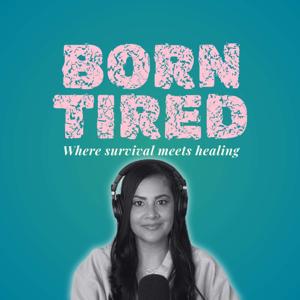


There are moments when I look back at the last few years and realize how much I’ve changed without fully noticing it. Not necessarily in the ways people can see from the outside, but in the way I understand myself, the things I no longer feel responsible for, and the parts of me I’ve slowly learned to accept. For a long time, I thought healing would eventually turn me into someone who was no longer affected by her past. Someone who could look back at everything that happened and feel completely detached from it. I don’t believe that anymore. In this final episode of Born Tired: Where Survival Meets Healing, I reflect on the journey that brought me here, the unexpected ways sharing my story helped me find my voice, and what it means to begin imagining a life beyond survival.
When I went no contact with my family in December of 2022, I thought making that decision would finally bring some sense of freedom. Instead, I found myself grieving in ways I hadn’t anticipated. There was anger, sadness, confusion, and a loneliness I struggled to explain. I was grieving the family I had, the family I kept hoping we might become, and the childhood I had spent so many years trying to understand. Even with the love and support of my husband and children, there were parts of that experience they couldn’t fully understand. I think that’s one of the complicated things about family estrangement. We can know a decision is necessary for our well-being and still feel heartbroken that making it became necessary in the first place.
For the next two years, I spent a lot of time trying to make sense of everything. Therapy, meditation, journaling, and sitting with memories I had spent much of my life avoiding became part of that process. I allowed myself to feel anger about things I had previously minimized and grieve relationships I had spent years hoping would change. Then, in October of 2024, I started sharing some of my thoughts on Threads. I wasn’t trying to build an audience or create something bigger. I simply needed somewhere to put the things I had been carrying. What I didn’t expect was how many people would recognize themselves in what I was sharing.
Strangers from different countries, cultures, and backgrounds began responding with their own experiences of childhood trauma, family dysfunction, estrangement, and grief. People I had never met were describing emotions I understood immediately. For so much of my life, my experiences had existed in environments where they were minimized, denied, justified, or never spoken about. Suddenly, people were telling me they understood. I didn’t have to convince them that what happened mattered or explain why walking away from my family could be both necessary and devastating. I think that was when I began understanding how powerful it can be to have our experiences witnessed by people who have lived through something similar.
Eventually, I started sharing more on Instagram, creating reels and writing about the things I was learning through healing. But even as I became more comfortable sharing my thoughts, being seen still frightened me. I had spent much of my childhood learning how to read a room, anticipate other people’s emotions, and recognize when it was safer to stay quiet. Those survival responses followed me into adulthood, and putting my experiences into the world felt incredibly vulnerable. Then, on a random Tuesday in September of 2025, I told my husband I wanted to start a podcast. I didn’t have a detailed plan or fully understand what creating one would require. I just had this feeling that it was something I needed to do.
Creating this podcast has been one of the most emotionally demanding experiences of my life. Every week, I sat down to write about memories, relationships, and experiences that shaped me. Some were things I had already spent years processing in therapy. Others were memories I hadn’t revisited in a long time or experiences I had convinced myself no longer affected me. There were episodes I cried while writing and others I had to step away from before I could continue. I found myself returning to parts of my childhood I had spent years trying to understand, and then doing something that would have been unimaginable to an earlier version of myself. I spoke about them out loud and allowed other people to hear them.
One of the things this experience taught me was that telling my story didn’t require sharing every painful detail of my life. There are things I’ve chosen to keep private, not because I’m ashamed of them, but because I no longer believe I have to make every experience available to everyone in order for my story to be valid. For much of my life, I felt responsible for explaining myself clearly enough that other people would finally understand what happened. Creating this podcast helped me recognize that I could be honest about my experiences while still having boundaries around what I wanted to share. My story belongs to me, and I get to decide how much of it I tell.
Something unexpected also happened after I finished recording these episodes. I often felt lighter. I wasn’t changing what happened or erasing the memories, but there was something about speaking them aloud that changed the way I carried them. Experiences that had lived privately inside me for years were no longer things I felt obligated to keep hidden. When listeners began reaching out to share their own stories, I started realizing that the experiences that once made me feel isolated had become the very things connecting me to other people. The voice I had spent so much of my life being afraid to use had become a bridge.
In this episode, I reflect on how my understanding of trauma and healing has changed. I used to believe that eventually I would reach a point where my childhood no longer affected me. That I would become someone who didn’t get triggered, overwhelmed, or caught off guard by old memories. I imagined healing as a destination where everything that happened would finally feel resolved. But there are still things that hurt. There are memories that surprise me and moments when I recognize another way my childhood influenced the person I became. The difference is that I no longer see those experiences as evidence that I haven’t healed.
I also talk about the survival responses I once believed were simply part of my personality. My hypervigilance, perfectionism, overthinking, independence, and need to anticipate everything that might go wrong developed in circumstances where paying attention helped me feel safer. For years, I saw those behaviors as things I needed to fix. Therapy helped me understand why they existed, and eventually I began developing compassion for the younger version of myself who learned to navigate life that way. I don’t have to hate the parts of myself that helped me survive in order to recognize that they don’t need to direct every part of my life anymore.
Another important part of this conversation is the relationship between speaking our truth, setting boundaries, and learning to trust ourselves. For years, I wanted acknowledgment from people who had hurt me. I wanted them to understand the impact of their behavior, take accountability, and recognize the things I had spent so much of my life trying to explain. Eventually, I realized I could spend the rest of my life waiting for someone else to validate experiences I already knew were real. Healing helped me understand that I didn’t need everyone to agree with my perspective in order to believe myself. I could accept that some people might misunderstand me, question my decisions, or prefer a version of the story that allowed everything to remain unchanged.
As I come to the end of this podcast, I’ve also been thinking about what comes after spending so much of my life focused on survival and healing. For years, so much of my energy went toward understan...
When my oldest son was born, something shifted inside of me. I don’t know that I fully understood it at the time, but becoming a mother changed the way I looked at my childhood, my experiences, and the people who were supposed to protect me. Things I had spent years minimizing suddenly became impossible to ignore. I would look at my son and wonder how anyone could intentionally hurt someone so small, trusting, and dependent on them. In this episode of Born Tired: Where Survival Meets Healing, I reflect on how motherhood became the catalyst for my healing and how the children we believe we’re shaping can sometimes become the very people who help us see ourselves more clearly.
I think we spend a lot of time talking about how having children changes our priorities, relationships, and identities, but we don’t talk enough about the ways our children hold up a mirror to us. They expose old fears, beliefs, and wounds we may not have realized were still influencing our lives. Sometimes we believe we’re reacting to something our children have done when we’re actually responding to something our nervous system remembers from our own childhood. We don’t leave those experiences behind simply because we become adults. We carry them into our relationships, marriages, and, for those of us who become parents, into the way we raise our children.
After my first child was born, I began asking questions I had spent much of my life avoiding. Why had no one protected me? Why had the adults around me remained silent? Why had I learned to normalize experiences that would have devastated me if they happened to one of my own children? For the first time, I spoke to my sibling about the sexual abuse I experienced as a child. Motherhood had changed the way I understood what happened to me. I could no longer look at those experiences only through the eyes of the little girl who had learned to survive them. I was beginning to see them through the eyes of a mother who understood how vulnerable children really are.
As my children grew, their milestones often brought my own childhood back into focus. Every birthday reminded me of where I had been at their age. Watching them experience things I never had was both beautiful and heartbreaking. I wanted them to feel safe, loved, understood, and protected. I wanted them to know they could make mistakes without fearing rejection, express their emotions without being shamed, and disagree with me without questioning whether my love for them would change. There were also moments when giving them those things reminded me of everything I had been missing. Sometimes, while I was learning how to mother my children, I was also grieving the little girl I used to be.
In this episode, I reflect on what it means to break generational patterns when you weren’t given a healthy example of what parenting could look like. I didn’t grow up in a home where emotional safety, accountability, and repair were consistently modeled. I knew what I didn’t want to repeat, but that didn’t mean I always knew what to do instead. I lost my patience, misunderstood things, reacted from old wounds, and made mistakes. One of the things I committed to was making sure my children knew they could tell me when I hurt them. I wanted them to understand that being their mother didn’t make me incapable of being wrong. That love could include accountability, that apologizing mattered, and that repair was more important than protecting my pride.
Each of my four children has taught me something different about myself. They’ve challenged my need for control, my perfectionism, my hypervigilance, and the ways I sometimes confused protecting them with trying to prevent every possible disappointment or pain. They’ve taught me about patience, individuality, kindness, boundaries, and the importance of understanding someone else’s experience instead of expecting them to experience the world the way I do. There have been moments when those lessons were uncomfortable because they required me to recognize behaviors I had spent years believing were simply part of who I was. Healing helped me understand that many of those behaviors were adaptations. They were ways I had learned to stay safe in an environment where safety wasn’t guaranteed.
I also explore the difference between understanding where our behaviors come from and allowing them to continue directing our lives. For years, I believed I was naturally anxious, an overthinker, and a perfectionist. Looking back, I can see how much of that developed through survival. Those patterns served a purpose when I needed them, and I have compassion for the version of myself who developed them. But understanding why I became that person also meant recognizing that I had a responsibility to question whether those patterns were still serving me and the people I loved.
When I think about where my healing began, I recognize how much therapy, EMDR, and eventually going no contact with my family changed my life. But I also know that motherhood was the catalyst that made me willing to look at things I had spent years avoiding. For so much of my life, I struggled to believe I was worth protecting. I never questioned whether my children were. Somewhere along the way, while fighting to give them the childhood I never had, I began realizing that the little girl I used to be had deserved those same things. My children didn’t heal me. That was never their responsibility. I did the work, and I continue doing it. They were the invitation. They gave me a reason to imagine a life that wasn’t organized around survival.
This conversation also explores how healing changes the way we understand love, success, and responsibility. There was a time when I believed success meant proving people wrong, accomplishing enough to justify my worth, or building a life that looked impressive from the outside. Today, I think about success differently. I think about creating a home where my children feel safe enough to disagree with me, where mistakes can become opportunities for understanding, and fear doesn’t have to be the language through which we communicate. I think about being able to recognize when an old wound has been triggered and choosing to respond with intention instead of reacting from instinct. I want my children to remember a mother who was willing to grow, listen, apologize, and change when change was needed.
I know motherhood isn’t everyone’s path, and I don’t believe healing requires becoming a parent. Sometimes the catalyst for change is a relationship, a loss, a diagnosis, a difficult conversation, or simply reaching a point where continuing to live the same way becomes more painful than the uncertainty of doing something different. I don’t think the catalyst itself is what matters most. I think what matters is what we choose to do once it arrives. Whether we’re willing to question the beliefs we’ve carried, grieve the things we can't change, and become curious about the ways our past continues to shape our present.
For most of my life, I thought healing meant reaching a place where what happened to me no longer affected me. I don’t believe that anymore. I think healing is learning to recognize the patterns we inherited and becoming conscious enough to choose what we want to carry forward. It’s understanding that our pain may explain parts of who we are without having to determine who we become. Motherhood was the beginning of that realization for me. It taught me that love requires presence, accountability, and the willingness to keep growing. Somewhere in the process of becoming the mother I wanted my children to have, I began becoming the adult the little girl I used to be had always needed.
Gentle Reminder:
This podcast includes conversations about trauma, alcoholism, addiction, emotional abuse, dysfunctional family systems, enabling, hypervigilance...
For most of my life, I didn’t think of myself as an angry person. I knew I was hurt. I knew I carried grief, sadness, and confusion about what happened to me. But anger was an emotion I struggled to recognize in myself because somewhere along the way, I had learned that being angry was something to be ashamed of. In this episode of Born Tired: Where Survival Meets Healing, I reflect on what changed when I stopped treating my anger like something I needed to get rid of and started asking what it was trying to tell me.
Many of us weren’t taught how to understand our emotions. We were taught which emotions made other people comfortable. Happiness was welcomed. Gratitude was praised. Forgiveness made us the bigger person. But anger could make us disrespectful, difficult, bitter, or too sensitive. Instead of learning emotional intelligence, many of us learned emotional performance. We became experts at showing the feelings that helped us maintain connection and hiding the ones that threatened it.
I reflect on a conversation with my sibling about a year before I went no contact with my family. They told me they had forgiven our parents and mentioned that I was angry. I remember immediately wanting to reject that word. In my mind, I wasn’t angry. I was, grieving, mourning the parents I wished I had, the childhood I never experienced, and the safety I never knew. Eventually I started wondering why being angry felt like something I needed to defend myself against.
The more I sat with that question, the more I realized I had spent much of my life believing my anger was somehow more problematic than the things that caused it. I wasn’t angry because I refused to move on. I was angry because I had been abused and neglected. People who were supposed to protect me didn’t. My experiences had been minimized, dismissed, and ignored. Maybe anger was evidence that I was finally waking up.
For years, I protected everyone else from the truth of what happened to me. I explained behavior, made excuses, questioned whether my experiences were bad enough, and carried compassion for people who rarely carried that same compassion for me. Anger interrupted that. It became the part of me willing to say, “That wasn’t okay.” It reminded me that the child I used to be deserved protection and that I was allowed to stop abandoning myself in order to preserve relationships with other people.
In this episode, I also explore the difference between feeling anger and acting in anger. An emotion is information. It isn’t an instruction. Sometimes anger tells us a boundary has been crossed. Sometimes it tells us something precious was violated. Sometimes it is the first part of us willing to say, “I matter. I didn’t deserve that.” For me, anger became a doorway. It helped me build boundaries, say no, walk away from relationships that required me to betray myself, and eventually go no contact. Over time, the anger softened because I finally allowed it to do its job. Underneath my anger was grief, self-respect, and love for the little girl I used to be and the realization that she had always been worth protecting.
This conversation also explores what happens when we suppress emotions for years. Anger can turn inward. It can show up alongside anxiety, perfectionism, people-pleasing, resentment, numbness, or the constant need to keep everyone else comfortable. Many of the ways we learned to disconnect from our emotions were once survival strategies. They helped us endure situations we couldn’t escape, but survival strategies aren’t always meant to become lifelong identities.
For most of my life, disconnecting from what I felt helped me survive. I’m grateful for the version of me who learned how to do that. But survival and living aren’t the same thing. I don’t think healing means reaching a place where nothing hurts, angers, disappoints, or triggers us anymore. I think it means becoming someone who can listen to those emotions without being controlled by them. Someone who can recognize when anger is asking for a boundary, when grief needs to be witnessed, and when fear is trying to protect something. Our emotions were never meant to be our enemies. Sometimes the emotions we’ve spent our entire lives trying to silence are the very ones that can lead us back to ourselves. Maybe, for some of us, anger is the portal that finally gets us there.
Gentle Reminder:
This podcast includes conversations about trauma, alcoholism, addiction, emotional abuse, dysfunctional family systems, enabling, hypervigilance, parentification, mental health, and lived experiences. Listener discretion is advised.
🤍 Support the podcast:
Buy Me a Coffee — https://buymeacoffee.com/mzd5yc89kkk
📌 Follow me:
Instagram: @borntiredpodcast
Threads: @borntiredpodcast
TikTok: @borntiredpodcast
Substack: https://substack.com/@borntiredpodcast
Credits:
Written & narrated by Eirene Torres
Audio production by Carlos Torres
Original music by Carlos Torres
Disclaimer:
Born Tired is a personal storytelling podcast based on lived experience. This content is not a substitute for professional mental health care and does not provide medical or clinical advice. If you are struggling or in crisis, please consider reaching out to a qualified mental health professional or local support services.
“They did the best they could” is one of the phrases I’ve heard most often when people talk about difficult childhoods. Sometimes it’s offered with kindness. Sometimes it’s an attempt to make sense of how parents who were supposed to make us feel safe became the source of some of our deepest wounds. In this episode of Born Tired: Where Survival Meets Healing, I reflect on what happens when understanding the parent becomes more important than understanding the child.
I talk about the complicated space between compassion and accountability. I’ve spent years trying to understand my parents, their childhoods, trauma, addiction, mental illness, and the experiences that shaped them long before I was born. That understanding gave me context and compassion, but it also taught me something important: understanding why someone became who they are doesn't erase the impact of what they did.
For years, I became incredibly good at explaining everyone else. I could trace behaviors through generations and understand the pain underneath them. But somewhere along the way, I realized I had become fluent in everyone else’s story while struggling to fully believe my own. My empathy for my parents had become so large that there was almost none left for the little girl I used to be.
In this episode, I reflect on what my parents’ “best” actually cost me. Their best left a child learning to read the emotional temperature of a room, stay alert to danger, and carry pain that was never hers to carry. Becoming a mother has made me understand that child differently. Watching my own children grow has continually reminded me how young I really was and that wanting safety, protection, patience, and love was never asking for too much.
I also talk about how parenthood has changed my definition of doing your best. I’ve made mistakes with my children. I’ve lost my patience and had moments I wish I had handled differently. But doing my best doesn’t have to be the end of the conversation. I can apologize, listen, repair, learn, and try again. Healing doesn’t require perfection, but accountability asks us to remain willing to see how our actions affect the people we love.
This conversation explores the difference between intention and impact, and why accountability doesn’t have to mean punishment or condemnation. Someone can genuinely love you and still leave wounds. They can be deeply wounded and still wound other people. I can acknowledge my parents’ humanity and the suffering they carried without rewriting what it was like to be their child.
Eventually, I realized I didn’t need to answer the question I had spent so many years trying to solve: Did they really do the best they could? Maybe they did. Maybe they didn’t. I don’t know if anyone can truly measure another person’s capacity. The question that finally mattered more was: What did it cost me?
Their capacity was never supposed to be mine to measure. My responsibility now is to care for the person who lived with the consequences. nFor me, cycle breaking has meant learning that compassion can finally include me. I don’t want my children to remember a perfect mother. I hope they remember someone who apologized, listened, kept learning, and was willing to admit when she got it wrong. Someone who showed them that relationships can survive honesty and that repair is possible. Maybe doing our best shouldn’t be something we use to avoid accountability. Maybe it means remaining open enough to keep becoming better, and that’s how we give the next generation something different.
Gentle Reminder:
This podcast includes conversations about trauma, alcoholism, addiction, emotional abuse, dysfunctional family systems, enabling, hypervigilance, parentification, mental health, and lived experiences. Listener discretion is advised.
🤍 Support the podcast:
Buy Me a Coffee — https://buymeacoffee.com/mzd5yc89kkk
📌 Follow me:
Instagram: @borntiredpodcast
Threads: @borntiredpodcast
TikTok: @borntiredpodcast
Substack: https://substack.com/@borntiredpodcast
Credits:
Written & narrated by Eirene Torres
Audio production by Carlos Torres
Original music by Carlos Torres
Disclaimer:
Born Tired is a personal storytelling podcast based on lived experience. This content is not a substitute for professional mental health care and does not provide medical or clinical advice. If you are struggling or in crisis, please consider reaching out to a qualified mental health professional or local support services.
Pain touches every life, but pain doesn't shape everyone in the same way. Two people can experience rejection, violence, neglect, abandonment, betrayal, or loss and build completely different lives afterward. In this episode of Born Tired: Where Survival Meets Healing, I reflect on what happens after suffering becomes part of our story and the different ways we learn to carry the wounds we never asked for.
I talk about generational trauma and the roles we inherit inside dysfunctional family systems. The caretaker, peacemaker, black sheep, scapegoat, or the person who learns to understand everyone else while carrying their own pain quietly. Many of the coping mechanisms that help us survive childhood can follow us into adulthood, shaping our relationships, nervous systems, boundaries, and the ways we respond when we feel threatened or hurt.
This episode explores something I have wrestled with throughout my own healing: how someone can be deeply wounded and still become the source of suffering for other people. I reflect on the desire many of us have to understand the people who hurt us, their childhoods, trauma, family history, and the experiences that shaped them. Sometimes that understanding gives us compassion, but it can also reveal a difficult truth. Understanding why someone became who they are does not erase the impact of what they did.
I also talk about the difference between being affected by trauma and using our trauma to justify harming others. Healing does not mean the past suddenly stops affecting us. I live with C-PTSD, and I know what it feels like for an old wound to find its way into the present or for your nervous system to react before your mind understands why. Healing does not require perfection, but accountability asks us to recognize when our wounds are affecting the people around us, repair what we can, and continue doing the work.
This conversation also reflects on compassion, boundaries, and the realization that we can't heal another person for them. We can spend years understanding, explaining, forgiving, accommodating, rescuing, and hoping someone will eventually choose differently. But no amount of empathy can make another person confront wounds they are unwilling to face. Sometimes healing means accepting people as they are instead of exhausting ourselves trying to turn them into who we hoped they would become.
For me, cycle breaking has meant learning that compassion and boundaries can exist together. I can understand where someone came from without following them there, acknowledge someone else’s suffering without sacrificing myself to it, and recognize the ways my own pain has shaped me while refusing to make the people I love responsible for wounds they did not create.
Somewhere along the way, my pain stopped being only something I survived. It became therapy, boundaries, writing, raising my children differently, and eventually this podcast. It became wisdom. Pain may be inevitable, but what we build from it is where our power begins.
Gentle Reminder:
This podcast includes conversations about trauma, alcoholism, addiction, emotional abuse, dysfunctional family systems, enabling, hypervigilance, parentification, mental health, and lived experiences. Listener discretion is advised.
🤍 Support the podcast:
Buy Me a Coffee — https://buymeacoffee.com/mzd5yc89kkk
📌 Follow me:
Instagram: @borntiredpodcast
Threads: @borntiredpodcast
TikTok: @borntiredpodcast
Substack: https://substack.com/@borntiredpodcast
Credits:
Written & narrated by Eirene Torres
Audio production by Carlos Torres
Original music by Carlos Torres
Disclaimer:
Born Tired is a personal storytelling podcast based on lived experience. This content is not a substitute for professional mental health care and does not provide medical or clinical advice. If you are struggling or in crisis, please consider reaching out to a qualified mental health professional or local support services.
Some people think loneliness only comes from being physically alone, but I think there is another kind of loneliness that many cycle breakers carry before they ever create distance from anyone. The loneliness of being surrounded by people who know your story but never fully acknowledge your pain, of sitting at family gatherings while carrying experiences that remain unspoken, and feeling connected to people on the surface while feeling unseen in the places that matter most. In this episode of Born Tired: Where Survival Meets Healing, I reflect on the emotional loneliness that can exist inside dysfunctional family systems and what happens when healing begins to change the way we relate to the people around us.
I talk about growing up in an environment where belonging often came with conditions. The unspoken rules many of us learn early in life. Don’t talk about what happened, make people uncomfortable, disrupt the family image, or create distance. For many survivors, maintaining connection requires minimizing pain, managing the emotions of others, and learning to stay silent about experiences that never truly felt resolved. Over time, those adaptations become survival skills, and eventually they can become part of our identity.
This episode explores the relationship between family loyalty, emotional suppression, people-pleasing, and self-abandonment. I reflect on how many cycle breakers spend years carrying roles they never consciously chose. The peacemaker, caretaker, translator, and the one who understands everyone else’s pain while rarely having their own acknowledged. The ways these roles can create a sense of belonging while simultaneously pulling us further away from ourselves.
I also talk about the grief that often accompanies healing, because becoming a cycle breaker is about recognizing how much of your life was built around surviving them. The relationships that feel different once you stop over explaining, the discomfort that can arise when you begin setting boundaries, and the loneliness that sometimes follows when you stop participating in family dynamics that once kept you connected.
This conversation reflects on the difference between belonging and authenticity, connection and self-abandonment, loyalty and self-betrayal. I explore how healing often requires us to face uncomfortable truths about the systems we grew up in and the ways we learned to navigate them. The realization that understanding why people behaved the way they did does not erase the impact those experiences had on us.
At the same time, this episode is also about hope, and learning that loneliness is not always a sign that something is wrong. Sometimes it is part of the space between who we were taught to be and who we are becoming. I reflect on the process of building a relationship with yourself after years of adapting to everyone else’s expectations and learning that authenticity often feels unfamiliar before it feels freeing.
Gentle Reminder:
This podcast includes conversations about trauma, alcoholism, addiction, emotional abuse, dysfunctional family systems, enabling, hypervigilance, parentification, mental health, and lived experiences. Listener discretion is advised.
🤍 Support the podcast:
Buy Me a Coffee — https://buymeacoffee.com/mzd5yc89kkk
📌 Follow me:
Instagram: @borntiredpodcast
Threads: @borntiredpodcast
TikTok: @borntiredpodcast
Substack: https://substack.com/@borntiredpodcast
Credits:
Written & narrated by Eirene Torres
Audio production by Carlos Torres
Original music by Carlos Torres
Disclaimer:
Born Tired is a personal storytelling podcast based on lived experience. This content is not a substitute for professional mental health care and does not provide medical or clinical advice. If you are struggling or in crisis, please consider reaching out to a qualified mental health professional or local support services.
Some people spend their entire lives being described as empathetic without ever realizing where that empathy came from. Sometimes what looks like compassion on the surface was shaped before we had language for it. It developed through paying attention, reading the room, anticipating emotional shifts, and learning that awareness could help us navigate environments that felt unpredictable or unsafe. In this episode of Born Tired: Where Survival Meets Healing, I reflect on the difference between empathy and emotional responsibility and how survival-based empathy can become self-abandonment.
I talk about growing up in an environment where paying attention felt necessary and how that awareness followed me into adulthood. The ways childhood experiences can shape our ability to sense what others are feeling before they say a word. How emotional attunement can become so automatic that we begin absorbing the emotions of others without realizing it, and how many people who are praised for their empathy are actually carrying survival skills that were formed before they understood what boundaries were.
This episode explores the relationship between empathy, hypervigilance, people-pleasing, and emotional responsibility. I reflect on being the person others turned to during difficult moments and the gradual realization that many relationships had become one-sided without me fully recognizing it. The ways empathy can create meaningful connection, but also become exhausting when it is tied to a sense of obligation, responsibility, or the need to manage what others are experiencing.
I also talk about how difficult it can be to separate empathy from identity when caring for others has become part of how we understand ourselves. The fear that setting boundaries will make us less compassionate, the discomfort of learning to step back from situations that are not ours to fix, and the realization that supporting someone does not require carrying what belongs to them.
This conversation reflects on the difference between observing and absorbing, understanding and taking responsibility, & connection and self-abandonment. I explore how empathy shaped by survival often creates a blurred line between our emotional experience and the experiences of those around us. The ways we can become disconnected from our own needs while remaining deeply connected to everyone else’s.
At the same time, this episode is also about healing, learning that boundaries don't diminish empathy. They protect it. I reflect on the process of creating space between what we feel and what belongs to someone else, allowing relationships to become more balanced, intentional, and sustainable.
This episode is about awareness, boundaries, emotional responsibility, and learning to remain connected without losing yourself in the process. Because empathy is measured by your ability to stay present without abandoning yourself. And healing is about learning that your needs, capacity, and emotional wellbeing deserve to be included in the care you so freely offer everyone else.
Gentle Reminder:
This podcast includes conversations about trauma, alcoholism, addiction, emotional abuse, dysfunctional family systems, enabling, hypervigilance, parentification, mental health, and lived experiences. Listener discretion is advised.
🤍 Support the podcast:
Buy Me a Coffee — https://buymeacoffee.com/mzd5yc89kkk
📌 Follow me:
Instagram: @borntiredpodcast
Threads: @borntiredpodcast
TikTok: @borntiredpodcast
Substack: https://substack.com/@borntiredpodcast
Credits:
Written & narrated by Eirene Torres
Audio production by Carlos Torres
Original music by Carlos Torres
Disclaimer:
Born Tired is a personal storytelling podcast based on lived experience. This content is not a substitute for professional mental health care and does not provide medical or clinical advice. If you are struggling or in crisis, please consider reaching out to a qualified mental health professional or local support services.
Sometimes the mother wound does not only live inside the relationship we had with our mothers. Sometimes it follows us into motherhood itself. Into the way we respond to emotions, the way we try to protect our children, the way unresolved grief and inherited survival patterns can surface even when we are deeply trying to do things differently. In this episode of Born Tired: Where Survival Meets Healing, I reflect on the emotional complexity of mother daughter relationships, generational patterns, and what it means to raise children while still healing parts of yourself.
I talk about becoming a mother while carrying unmet emotional needs from childhood and the ways those experiences can shape parenting without us fully realizing it. The longing many daughters carry to create something softer than what they experienced growing up. The hope that awareness alone will automatically protect our children from the things that hurt us. And the humbling realization that healing is not about becoming perfect. It is about becoming conscious enough to notice inherited patterns when they surface and choosing differently in real time.
This episode explores the emotional inheritance passed through generations and how children often absorb emotional lessons before they fully understand them. I reflect on becoming a mother to neurodivergent children and learning that love is not about giving children what we needed growing up. It is about learning to recognize and honor what they need individually. I share personal moments that forced me to separate my own unmet needs from my daughter’s emotional reality and how motherhood became one of the greatest mirrors for my own healing.
I also talk about emotional dismissal and how easily inherited responses can repeat themselves without conscious intention. The ways many survivors struggle sitting with emotions because vulnerability was not modeled safely growing up. And how moments of repair, accountability, and emotional honesty can become some of the most healing parts of parent child relationships.
This conversation reflects on the emotional complexity of mother daughter dynamics and the ways daughters often mirror the places where mothers are still healing. The way children observe how we regulate emotions, navigate boundaries, respond to stress, handle vulnerability, and whether their inner world feels emotionally safe in our presence. I reflect on how healing often requires learning to parent from intention instead of reaction and understanding that children are not extensions of ourselves, emotional replacements, or second chances at recreating our own childhood.
At the same time, this episode is also about grief, and the emotional process of acknowledging what was missing growing up without unconsciously asking our children to compensate for it. I reflect on the importance of allowing children emotional autonomy, individuality, and space to become fully themselves without carrying the emotional weight of generations before them.
This episode is about accountability, repair, emotional presence, and understanding that breaking cycles rarely happens through perfection. It happens through small adjustments. Through listening instead of controlling, apologizing without defensiveness, and staying emotionally present long enough for something new to take root.
Because healing is not about becoming the opposite of your mother. It is about becoming aligned with your values, and children do not need flawless parents. They need parents who are willing to see them clearly, repair when necessary, and create relationships where honesty does not threaten connection.
Gentle Reminder:
This podcast includes conversations about trauma, alcoholism, addiction, emotional abuse, dysfunctional family systems, enabling, hypervigilance, parentification, mental health, and lived experiences. Listener discretion is advised.
🤍 Support the podcast:
Buy Me a Coffee — https://buymeacoffee.com/mzd5yc89kkk
📌 Follow me:
Instagram: @borntiredpodcast
Threads: @borntiredpodcast
TikTok: @borntiredpodcast
Substack: https://substack.com/@borntiredpodcast
Credits:
Written & narrated by Eirene Torres
Audio production by Carlos Torres
Original music by Carlos Torres
Disclaimer:
Born Tired is a personal storytelling podcast based on lived experience. This content is not a substitute for professional mental health care and does not provide medical or clinical advice. If you are struggling or in crisis, please consider reaching out to a qualified mental health professional or local support services.
Sometimes the most confusing part of growing up around abuse is not only the person causing harm. It is the silence surrounding it. The excuses, minimization, and the way everyone in the family quietly adjusts themselves around the dysfunction so life can continue without anyone fully naming what is happening. In this episode of Born Tired: Where Survival Meets Healing, I reflect on the role enablers play inside dysfunctional family systems and how those dynamics shape a child’s relationship with truth, safety, boundaries, and self trust.
I talk about growing up with an alcoholic father and the emotional confusion that comes from watching harmful behavior repeatedly normalized by the people around it. The way children learn to read tension before they have language for it, the hypervigilance that develops when instability becomes part of daily life, and the psychological disorientation that happens when the harm is visible, but the environment encourages you to question your own perception of it.
This episode explores how enabling often develops as a survival strategy inside dysfunctional homes. The ways family members smooth things over, protect the illusion of stability, encourage silence, or prioritize keeping the family together over confronting what is causing harm. I reflect on how some enablers are also victims themselves, and how holding compassion for that reality can still coexist with acknowledging the damage those dynamics create.
I also talk about the long term nervous system impact of growing up in environments where emotional inconsistency becomes normalized. The way many survivors learn to prioritize attachment over self protection. How people pleasing, emotional overextension, difficulty setting boundaries, and hyper independence often begin as adaptations to childhood environments where stability depended on keeping other people emotionally regulated.
This conversation reflects on the roles dysfunctional families unconsciously organize themselves around. The scapegoat. The enabler. The truth teller. And how the person who finally names the dysfunction often becomes viewed as disruptive simply because they stopped participating in the silence that allowed the system to continue functioning.
At the same time, this episode is also about clarity, and understanding that the confusion many survivors carry was never a personal flaw. It was a natural response to growing up in environments where truth and denial existed side by side. I reflect on the process of rebuilding trust in your own instincts, learning that protecting your sense of reality is not betrayal, and recognizing that safe relationships do not require you to disappear in order to maintain connection.
This episode is about breaking silence, and allowing yourself to acknowledge the full picture of what you lived through without minimizing it to protect the comfort of others. And about understanding that healing begins the moment truth no longer has to compete with denial just to exist.
Because survivors deserve relationships where honesty is not punished, where boundaries are respected, and where safety does not depend on staying quiet.
Gentle Reminder:
This podcast includes conversations about trauma, alcoholism, addiction, emotional abuse, dysfunctional family systems, enabling, hypervigilance, parentification, mental health, and lived experiences. Listener discretion is advised.
🤍 Support the podcast:
Buy Me a Coffee — https://buymeacoffee.com/mzd5yc89kkk
📌 Follow me:
Instagram: @borntiredpodcast
Threads: @borntiredpodcast
TikTok: @borntiredpodcast
Substack: https://substack.com/@borntiredpodcast
Credits:
Written & narrated by Eirene Torres
Audio production by Carlos Torres
Original music by Carlos Torres
Disclaimer:
Born Tired is a personal storytelling podcast based on lived experience. This content is not a substitute for professional mental health care and does not provide medical or clinical advice. If you are struggling or in crisis, please consider reaching out to a qualified mental health professional or local support services.
Growing up first generation often means learning how to live between worlds before you have the language to explain what that actually feels like. Between cultures. Between expectations. Between gratitude for everything your family sacrificed and the quiet emotional weight of carrying responsibilities too early. In this episode of Born Tired: Where Survival Meets Healing, I reflect on the emotional reality of growing up as the eldest daughter in a first generation Dominican American household and the ways those experiences shaped how I learned to move through the world.
I talk about the invisible responsibilities many first generation children quietly step into. Translating paperwork and phone calls. Learning systems your parents are still learning themselves. Becoming dependable early, observant, and the child who figures things out in real time while also helping everyone else navigate alongside you. I talk about how those experiences can create both resilience and exhaustion at the same time.
This episode explores the emotional complexity of existing between identities. The experience many first generation children know well: “ni de aquí, ni de allá.” Not fully from here. Not fully from there. I reflect on assimilation, cultural expectations, language, belonging, and the subtle moments that remind you your identity is often being filtered through assumptions about appearance, ethnicity, or where people believe you are “really” from.
I also talk about parentification, hyper independence, perfectionism, and the nervous system impact of growing up in environments where responsibility arrives before emotional support does. The way many eldest daughters become the steady one long before they are emotionally ready to carry that role. The way survival quietly becomes identity. And how difficult it can feel in adulthood to rest, ask for help, or allow yourself to be supported without guilt.
At the same time, this conversation is also about compassion. About recognizing the strength it took immigrant families to begin again in unfamiliar places while still acknowledging the emotional complexity their children carried inside that process. About understanding that gratitude and grief are not opposites. Both can exist together. We can love where we come from while still telling the truth about what shaped us.
This episode reflects on what healing looks like for first generation adults who are learning that survival does not have to be the only way they know how to live. The shift from constant proving into self acceptance. The realization that being capable does not mean you have to carry everything alone. And the understanding that your need for rest, support, belonging, and peace is not weakness. It is human.
Because healing is not about rejecting your roots. It is about creating enough space inside your story for yourself to exist too.
Gentle Reminder:
This podcast includes conversations about trauma, family dynamics, parentification, mental health, cultural identity, perfectionism, hyper independence, and lived experiences. Listener discretion is advised.
🤍 Support the podcast:
Buy Me a Coffee — https://buymeacoffee.com/mzd5yc89kkk
📌 Follow me:
Instagram: @borntiredpodcast
Threads: @borntiredpodcast
TikTok: @borntiredpodcast
Substack: https://substack.com/@borntiredpodcast
Credits:
Written & narrated by Eirene Torres
Audio production by Carlos Torres
Original music by Carlos Torres
Disclaimer:
Born Tired is a personal storytelling podcast based on lived experience. This content is not a substitute for professional mental health care and does not provide medical or clinical advice. If you are struggling or in crisis, please consider reaching out to a qualified mental health professional or local support services.
From the publisher's feed