Breaking Walls

Breaking Walls

By James ScullyHistory
Download on the App Store

Breaking Walls episodes

  • BW - EP137—007: St. Patricks Day On The Air—Elliott Lewis And Broadway Is My Beat
    Broadway Is My Beat first took to the air on CBS from New York on February 27th, 1949, starring Anthony Ross and directed by John Dietz.
    After fifteen weeks, with Dragnet breaking new ground on NBC, CBS moved the show’s production to Hollywood. Elliott Lewis was by then helping to edit scripts for Bill Spier on Suspense. With the urging of men like Spier and Bill Robson, the twenty-eight-year-old Lewis was given the chance to direct the show.
    He was born in Manhattan on November 28th, 1917. He told Radio Life, “You should hear the city constantly. Even the people in New York are noisy.” Three sound men were often needed to re-create that New York flavor.
    Lewis’ first regular turn as a director came on July 7th, 1949 when the repackaged Broadway is My Beat debuted as a summer replacement for The FBI In Peace And War.
    Along with David Friedkin, Morton Fine would become one of Lewis’ go-to writers. Larry Thor would star as Danny Clover. Rounding out the regular cast was Charles Calvert as Tartaglia and Jack Kruschen doubling as both Sgt. Muggavan and Doctor Sinski.
    Broadway is my Beat featured some of the best hollywood radio talent like Barney Phillips, Virginia Gregg, Tony Barrett, Herb Butterfield, Betty Lou Gerson, Hy Averback, Cathy Lewis, Harry Bartell, Lawrence Dobkin, Mary Jane Croft, and Herb Vigran.
    Although no sponsorship was forthcoming, CBS brass was impressed with Elliott Lewis’ capabilities. The March 17th, 1950 episode was called “The Charles and Jane Kimball Murder Case.”
    20 min
  • Songwriter Mort Greene Shares a Fred Allen Story About A Panhandler Named Whistler
    After Fred Allen passed away on St. Patrick's Day in 1956, the entire radio community mourned. That May 29th, in honor of what would have been his 62nd birthday, NBC Broadcast a Biography in Sound on Fred Allen. As part of the broadcast lyricist, writer, and TV producer Mort Greene shared a story about Fred Allen and a pan handler named The Whistler. Within the industry, Fred Allen was known as "the easiest touch on Broadway" due to his generosity.
    2 min
  • BW - EP137—006: St. Patricks Day On The Air—Fred Allen Is King For A Day
    In 1944 Fred Allen had to quit the Texaco Star Theatre as a battle with high blood pressure forced him off the air. The next fall, in 1945, he returned to NBC Sundays at 8:30PM with The Fred Allen Show, sponsored by Blue Bonnet Margarine & Tender Leaf Tea.
    With he and Jack Benny back on the same network, the two rekindled their feud. It came to a climax on the May 26th, 1946 episode of Fred’s show with a sketch entitled, "King for a Day." Benny pretended to be a contestant named Myron Proudfoot on Allen's new quiz show.
    The skit is mostly ad-libbed, and the ending was a surprise to everyone, including Jack Benny.
    You’ll notice that announcer Kenny Delmar is unable to say the final Tender Leaf Tea promo before the program’s time ran out. NBC executives were incensed. Allen tried to explain that there was no way to predict how long an audience would laugh.
    That October, Allen wrote a skit called “The Radio Mikado,” about the hucksters of radio—the “vice presidents and clerks who were confidentially, a bunch of jerks.” He was censored by NBC and told he couldn’t ad-lib any longer. Allen told reporters censors were the “executive fungus that forms on a desk.” Shortly thereafter when on air, the network cut him off in the middle of a joke, but now other disgruntled NBC comedians joined in.
    Red Skelton mentioned Allen on his show and was immediately cut off, but he kept talking for his studio audience telling them, “you know what NBC means don’t you? Nothing but cuts. Nothing but confusion. Nobody’s certain.”
    Bob Hope mentioned Allen and got censored.
    Finally, Dennis Day took the last shot at NBC on his Day in the Life Wednesday night sitcom. “I’m listening to the radio” he said to his girlfriend Mildred. “I don’t hear anything” said Mildred. “I know” said Dennis, “Fred Allen’s on.”
    NBC announced shortly thereafter that its comedians were free to say whatever they liked. It didn’t matter. Fred Allen had finally won.
    17 min
  • BW - EP137—005: St. Patricks Day On The Air—Dennis Day Returns From The Navy
    Jack Benny’s most famous Irish Tenor, Dennis Day was born on May 21st, 1916 in New York City and raised in the Throggs Neck section of The Bronx.
    Day graduated from Cathedral Preparatory Seminary and attended Manhattan College, where he sang in the glee club. Eventually he made his way to radio. Dennis Day made his Benny debut on October 8th, 1939. During World War II, Day enlisted in the Navy. He made his return on the St. Patrick’s Day episode, March 17th, 1946.
    For the remainder of the season, the Jack Benny cast was reunited in its classic 1940s incarnation. It was the last season before Phil Harris took over the Fitch Bandwagon with his wife Alice Faye. Because the program aired immediately after Jack’s, Phil could generally only take part in the first half of Jack’s show before rushing over to broadcast his own.
    Beginning that October, Dennis Day too would get his own show on NBC.
    17 min
  • BW - EP137—004: St. Patricks Day On The Air—Bill Stern's Sports Newsreel
    Bill Stern’s Colgate Newsreel first took to the air on December 5th, 1937 over NBC’s Blue network.
    Born on July 1st, 1907, Stern began in vaudeville and by 1931, he was the assistant stage manager at the Roxy Theater and later Radio City in New York.
    In 1934 he got the role of broadcaster for NBC’s Friday Night Fights. He became one of the most famous sportscasters in the country. Four years later he partnered with MGM for their News Of The Day reel. Stern's career flourished despite a 1935 car accident, which injured him severely enough that his left leg had to be amputated just above the knee. By March 17th, 1944, his colgate program was running over NBC on Fridays at 10:30PM eastern. Constance Bennett was the guest on this broadcast.
    After nearly sixteen years with NBC, Stern switched to ABC for three final seasons. While at ABC Stern was a regular panelist on the game show The Name's the Same.
    19 min
  • BW - EP137—003: St. Patricks Day On The Air—Burns And Allen At The NYC Parade
    By the spring of 1941, George Burns and Gracie Allen had been married for fifteen years and on radio for nine. Their program had been officially titled The Burns And Allen Show in the fall of 1936, and they’d spent time at both NBC and CBS.
    Unhappy with their Friday time slot on CBS, they’d moved back to NBC for Hormel Meats on Mondays at 7:30. Jimmy Wallington announced and Artie Shaw’s band provided the orchestra. But their vaudeville-style show was beginning to show its age. In January of 1941 their rating had slipped to 14.8. While they pondered what to do, they took to the air with the March 17th, 1941 episode.
    17 min
  • BW - EP137—002: St. Patricks Day On The Air—Beat The Band
    Originally broadcast from Chicago, NBC’s Beat The Band began airing January 28th, 1940 at 6:30PM eastern time. It was sponsored by Kix Cereal.
    Listeners submitted riddles with song title answers. If the band couldn’t figure out the answer, the riddle submitter got thirty dollars and a box of Kix cereal.
    Garry Moore emceed, and Ted Weems conducted his orchestra. His three singers were Parker Gibbs, Marvel Marylin Maxwell, and the soon-to-breakout Perry Como.
    The March 17th, 1940 episode was called, “The Wearing of the Green.”
    The show lost its time slot against CBS’ Gateway To Hollywood. It went off the air on February 23rd, 1941, but was revived from New York in June of 1943. Submitters won twenty-five dollars and a carton of Raleighs and fifty dollars for beating the band.
    Packs of Raleighs were sent to servicemen in the war effort. The show went off the air for good on September 6th, 1944.
    11 min
  • BW - EP137—001: St. Patricks Day On The Air—Fred Allen, The End And The Beginning
    In 1922 a twenty-eight-year-old Fred Allen, already a vaudeville veteran, was hired by J.J. Shubert for his broadway production of The Passing Show of 1922. Allen was gaining fame as a monologist.
    He was in charge of writing his own material. One popular gag was the "Old Joke Cemetery." Allen had a curtain painted as a graveyard, on the tombstones were the punch lines to forty-six old jokes.
    When Allen moved with the show to Chicago, he met a dancer named Portland Hoffa. There the producers told Allen to drop the cemetery gag. The show was moving to Hollywood. Allen quit. Back in New York he demanded royalties from the Shuberts when the gag turned up in their other acts.
    They re-hired him, to emcee Artists and Models. In the revue, the chorus women were topless. Allen came on after the women were finished. The Shuberts and Allen soon came to a mutual release.
    Fred and Portland were married in 1927 and Allen starred in similar revues until Portland joined him on stage. Together they were a hit. Four years later Allen was contemplating radio. By 1932 big names like Ed Sullivan, Ed Wynn, and George Jessel were on radio. Jessel convinced Allen to audition.
    Allen felt that writing a sketch show centered around characters in different business backgrounds would appeal. The Corn Products Company hired him. Their Linit Beauty Powder would be the featured product. Allen was paid one-thousand dollars per week, but he had to produce the show out of his own pocket. He co-wrote it with Harry Tugent. Producer Roger White remembered that time. The Linit Bath Club Review premiered on Sunday, October 23rd, 1932 over CBS. Right from the beginning Allen had trouble with his sponsors.
    The season rating was 11.9, thirty-ninth overall. Roughly five million people tuned in and the show bested the Manhattan Merry-Go-Round opposite on NBC. But, the program was canceled after six months.
    Fred returned to radio on Friday August 4th, 1933 over NBC. His new show was The Salad Bowl Review for Hellmann’s Mayonnaise. It would mark the beginning of a six-year relationship with the National Broadcasting Company. Allen was paid four-thousand dollars per week. Minerva Pious joined the cast. She’d later be known for her ethnic character portrayals.
    Allen introduced the Etiquette Department and the Question box. People could write in to have questions answered on-air, with instructions to try to slip things by the censors. He started a newsreel. It was the forerunner to the satirical comedy that would become a program staple.
    The ad agency who held the Helmann’s account liked the program so much that they aired it through autumn, long-passed mayonnaise’s shelf-life in a time when it was a seasonal condiment for salads. However, by December 1st, 1933 the show had to exit the air. Now Sal Hepatica laxatives from Bristol Myers wanted in. Beginning on January 4th, 1934, Fred Allen debuted as emcee for The Sal Hepatica Review.
    On March 21st, 1934 the broadcast was expanded to an hour. It now included Ipana Toothpaste and was called The Hour of Smiles. Allen was given no additional budget and each show had to be performed twice—once for each coast. Allen hired a couple of script-writers to help. One of them was Herman Wouk, who’d later win a Pulitzer Prize for his 1951 novel, The Caine Mutiny.
    By then, the program had become a local review with news. On July 11th the show was retitled Town Hall Tonight. The tight budget left no room for big guest stars. Allen had to develop plot lines. Things were running smoothly until Allen was called into the agency offices. They objected to some of his jokes and didn’t like the concept of a running gag—something Allen had begun to develop.
    Allen later explained that running gags were very important because they stimulated a listener’s memory and interest. The ad agency disagreed. Allen paid them no mind.

    36 min

About Breaking Walls

From the publisher's feed

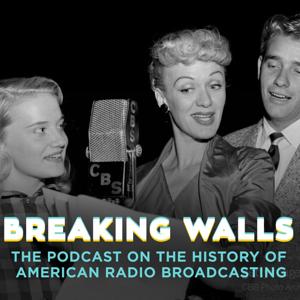
Breaking Walls: The Podcast on the History of American Network Radio Broadcasting.

More shows like Breaking Walls

Stuff You Should Know by iHeartPodcasts

Stuff You Should Know

78,338 Listeners

The Great Detectives of Old Time Radio| Daily Mystery Dramas by Adam Graham|Old Time Radio Detective Host

The Great Detectives of Old Time Radio| Daily Mystery Dramas

1,940 Listeners

Down These Mean Streets (Old Time Radio Detectives) by Mean Streets Podcasts

Down These Mean Streets (Old Time Radio Detectives)

1,058 Listeners

The Dana Gould Hour by Dana Gould

The Dana Gould Hour

2,024 Listeners

Gilbert Gottfried's Amazing Colossal Podcast by Gilbert Gottfried's Amazing Colossal Podcast

Gilbert Gottfried's Amazing Colossal Podcast

3,935 Listeners

This Day in Jack Benny by John Henderson

This Day in Jack Benny

392 Listeners

Stars on Suspense (Old Time Radio) by Mean Streets Podcasts

Stars on Suspense (Old Time Radio)

447 Listeners

Pod Save America by Pod Save America

Pod Save America

87,092 Listeners

The Daily by The New York Times

The Daily

111,863 Listeners

The Mysterious Old Radio Listening Society by Ghoulish Delights

The Mysterious Old Radio Listening Society

353 Listeners

Conan O’Brien Needs A Friend by Team Coco & Earwolf

Conan O’Brien Needs A Friend

59,428 Listeners

Literally! With Rob Lowe by Stitcher & Team Coco, Rob Lowe

Literally! With Rob Lowe

12,407 Listeners

Choice Classic Radio Detectives | Old Time Radio by Choice Classic Radio

Choice Classic Radio Detectives | Old Time Radio

202 Listeners

The Weekly Show with Jon Stewart by Comedy Central

The Weekly Show with Jon Stewart

10,723 Listeners

Real Survival Stories by NOISER

Real Survival Stories

1,328 Listeners