
Sign up to save your podcasts
Or

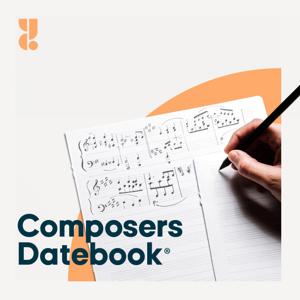

On this day in the year 1886, critic Gustav Dompke wrote these lines in the German Times of Vienna, after attending a performance of one of Anton Bruckner’s symphonies: “We recoil in horror before this rotting odor which rushes into our nostrils from the disharmonies of this putrefactive counterpoint…Bruckner composes like a drunkard!”
Today, with Bruckner’s symphonies performed and recorded so often, it’s doubtful many listeners “recoil in horror” from his rich Romantic harmonies, but he’s always been a little controversial. Bruckner’s European contemporaries and his early American audiences found his approach to symphonic composition puzzling, bizarre or — more often than not — simply boring.
The vogue for Bruckner symphonies in America had to wait until the latter part of the 20th century, a full century after many of them received their premiere performances in Europe.
In 1941, for example, when Bruno Walter conducted Bruckner’s giant Symphony No. 8 at Carnegie Hall with the New York Philharmonic, music critic Olin Downes lamented that Walter hadn’t chosen a “more interesting” program and noted that the Bruckner symphony “sent a number from the hall before it had finished.”
Anton Bruckner (1824-1896): Symphony No. 8; Concergebouw Orchestra; Riccardo Chailly, conductor; London 466 653
 View all episodes
 By American Public Media

4.7
176176 ratings
On this day in the year 1886, critic Gustav Dompke wrote these lines in the German Times of Vienna, after attending a performance of one of Anton Bruckner’s symphonies: “We recoil in horror before this rotting odor which rushes into our nostrils from the disharmonies of this putrefactive counterpoint…Bruckner composes like a drunkard!”
Today, with Bruckner’s symphonies performed and recorded so often, it’s doubtful many listeners “recoil in horror” from his rich Romantic harmonies, but he’s always been a little controversial. Bruckner’s European contemporaries and his early American audiences found his approach to symphonic composition puzzling, bizarre or — more often than not — simply boring.
The vogue for Bruckner symphonies in America had to wait until the latter part of the 20th century, a full century after many of them received their premiere performances in Europe.
In 1941, for example, when Bruno Walter conducted Bruckner’s giant Symphony No. 8 at Carnegie Hall with the New York Philharmonic, music critic Olin Downes lamented that Walter hadn’t chosen a “more interesting” program and noted that the Bruckner symphony “sent a number from the hall before it had finished.”
Anton Bruckner (1824-1896): Symphony No. 8; Concergebouw Orchestra; Riccardo Chailly, conductor; London 466 653

6,751 Listeners

38,856 Listeners

8,767 Listeners

9,196 Listeners

5,778 Listeners

926 Listeners

1,388 Listeners

1,286 Listeners

3,158 Listeners

1,974 Listeners

523 Listeners
183 Listeners

13,769 Listeners

3,083 Listeners

248 Listeners
28,133 Listeners

430 Listeners

5,469 Listeners
2,195 Listeners

14,142 Listeners

6,416 Listeners
2,514 Listeners

4,837 Listeners

575 Listeners

244 Listeners