
Sign up to save your podcasts
Or

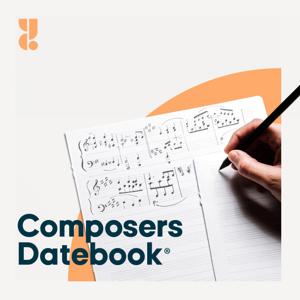

On today’s date in 1885, at a public rehearsal at the Old Metropolitan Opera House, the New York Symphony, led by fresh-faced 23-year-old conductor Walter Damrosch, performed 61-year-old Austrian composer Anton Bruckner’s Symphony No. 3 for the first time in America.
The New York Times critic, in fairness to this unfamiliar composer, attended both the rehearsal and concert before venturing an opinion:
“As to form and workmanship, it is a highly commendable achievement,” he wrote. “The composer’s motives are distinct and fluent, the instrumentation is rich, though not cloying … Unfortunately, there is not in the whole composition a measure in which a spark of inspiration, or a grain of inventiveness is discernible.”
Other New York papers were more blunt: “A dreary waste of sound … formless, weird, flimsy, uncongenial and empty” according to The Sun.
The Post observed, “The first movement is marked ‘misterioso’, but the only mystery about it is how it ever came to be written, printed and performed.”
In fairness to those critics of 1885, it would take many decades before American audiences started to acquire a taste for Bruckner’s particular blend of music and mystery.
Anton Bruckner (1824-1896): Symphony No. 3; BBC Scottish Symphony; Osmo Vänskä, conductor; Hyperion 67200
 View all episodes
 By American Public Media

4.7
176176 ratings
On today’s date in 1885, at a public rehearsal at the Old Metropolitan Opera House, the New York Symphony, led by fresh-faced 23-year-old conductor Walter Damrosch, performed 61-year-old Austrian composer Anton Bruckner’s Symphony No. 3 for the first time in America.
The New York Times critic, in fairness to this unfamiliar composer, attended both the rehearsal and concert before venturing an opinion:
“As to form and workmanship, it is a highly commendable achievement,” he wrote. “The composer’s motives are distinct and fluent, the instrumentation is rich, though not cloying … Unfortunately, there is not in the whole composition a measure in which a spark of inspiration, or a grain of inventiveness is discernible.”
Other New York papers were more blunt: “A dreary waste of sound … formless, weird, flimsy, uncongenial and empty” according to The Sun.
The Post observed, “The first movement is marked ‘misterioso’, but the only mystery about it is how it ever came to be written, printed and performed.”
In fairness to those critics of 1885, it would take many decades before American audiences started to acquire a taste for Bruckner’s particular blend of music and mystery.
Anton Bruckner (1824-1896): Symphony No. 3; BBC Scottish Symphony; Osmo Vänskä, conductor; Hyperion 67200

6,751 Listeners

38,856 Listeners

8,767 Listeners

9,196 Listeners

5,778 Listeners

926 Listeners

1,388 Listeners

1,286 Listeners

3,158 Listeners

1,974 Listeners

523 Listeners
183 Listeners

13,769 Listeners

3,083 Listeners

248 Listeners

28,133 Listeners

430 Listeners

5,469 Listeners
2,195 Listeners

14,142 Listeners

6,416 Listeners

2,514 Listeners

4,837 Listeners

575 Listeners

244 Listeners