
Sign up to save your podcasts
Or

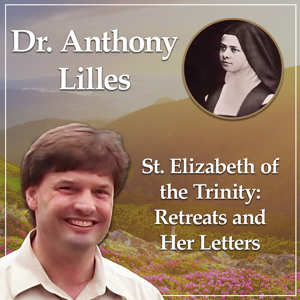


Dr. Anthony Lilles explains how St. Elizabeth of the Trinity structured Heaven and Faith as a guided retreat rooted in Carmelite and Ignatian spirituality, with daily themes meant to be prayed over, reflected upon, and lived out through concrete resolutions. Drawing from Christ’s words in John 15:4, “Remain in me,” St. Elizabeth presents prayer not as an isolated activity but as a continual awareness of God’s presence in every part of life. Lilles recounts how Elizabeth’s own experiences—from her First Communion to her years as a gifted pianist and Carmelite novice—formed her conviction that the soul is a dwelling place for God. Her reflections invite Christians to move beyond techniques or methods of prayer and instead enter into a trusting relationship with Christ through faith, recollection, and constant communion with Him in daily life.
Dr. Lilles explores St. Elizabeth’s teaching on the “double abyss,” where human weakness meets the infinite mercy of God. Lilles describes recollection as a disciplined turning of the heart back toward Christ, especially in moments of failure, impatience, and spiritual poverty. By honestly confronting the absence of love within themselves, souls encounter the mercy revealed through Christ’s suffering and death, discovering grace strong enough to transform them. St. Elizabeth’s insight into divine mercy is linked to later spiritual figures such as St. Faustina and St. John Paul II, whose teachings carried this message into the twentieth century. Through this path of continual prayer and trust, the human heart is gradually transformed into love through union with God.
3. “Remain in Me.”10 It is the Word of God who gives this order, expresses this wish. Remain in Me, not for a few moments, a few hours which must pass away, but “remain . . .” permanently, habitually, Remain in Me, pray in Me, adore in Me, love in Me, suffer in Me, work and act in Me. Remain in Me so that you may be able to encounter anyone or anything; penetrate further still into these depths. This is truly the “solitude into which God wants to allure the soul that He may speak to it,” as the prophet sang.11
4. In order to understand this very mysterious saying, we must not, so to speak, stop at the surface, but enter ever deeper into the divine Being through recollection. “I pursue my course,”12 exclaimed St. Paul; so must we descend daily this pathway of the Abyss13 which is God; let us slide down this slope14 in wholly loving confidence. “Abyss calls to abyss.”15 It is there in the very depths that the divine impact16 takes place, where the abyss of our nothingness encounters the Abyss of mercy,17 the immensity of the all18 of God. There we will find the strength to die to ourselves and, losing all vestige of self, we will be changed into love. . . . “Blessed are those who die in the Lord”!19
Elizabeth of the Trinity. The Complete Works of Elizabeth of the Trinity, vol. 1 (featuring a General Introduction and Major Spiritual Writings) (Elizabeth of the Trinity Complete Work) (pp. 94-95). ICS Publications. Kindle Edition.
We would like to thank Miriam Gutierrez for providing “the voice” of St. Elizabeth for this series
For other episodes in the series, visit the Discerning Hearts page for Dr. Anthony Lilles
Anthony Lilles, S.T.D., has served the Church and assisted in the formation of clergy and seminarians since 1994. Before coming to St. Patrick’s, he served at seminaries and houses of formation in the Archdiocese of Denver and the Archdiocese of Los Angeles. The son of a California farmer, married with young adult children, holds a B.A. in theology from the Franciscan University of Steubenville with both the ecclesiastical licentiate and doctorate in spiritual theology from the Pontifical University of Saint Thomas Aquinas in Rome (the Angelicum). An expert in the writings of St. Elizabeth of the Trinity and the Carmelite Doctors of the Church, he co-founded the Avila Institute for Spiritual Formation and the High Calling Program for priestly vocations. He also founded the John Paul II Center for Contemplative Culture, which hosts symposiums, retreats, and conferences. In addition to his publications, he blogs at www.beginningtopray.com .
The post BTP2 Heaven In Faith Day 1 Prayer 2 by St. Elizabeth of the Trinity – Beginning to Pray w/ Dr. Anthony Lilles – Discerning Hearts Podcast appeared first on Discerning Hearts Catholic Podcasts.
Dr. Anthony Lilles and Kris McGregor explore St. Elizabeth of the Trinity’s concept of becoming a “praise of glory” for the Holy Trinity; surrendering completely to God’s will, allowing the Holy Spirit to transform one’s soul into a reflection of God’s love and glory. This transformation involves living in pure love, silence, and faith, gazing upon God and allowing Him to radiate through oneself.
True prayer is not about achieving mental states or experiences but about surrendering to Christ and allowing His life to animate one’s own; asking for intercession to deepen one’s prayer life and encounter with God and cultivating a deep, intimate relationship with Christ, allowing Him to lead one to the depths of prayer and spiritual growth.
“We have been predestined by the decree of Him who works all things according to the counsel of His will, so that we may be the praise of His glory.”
It is St. Paul who tells us this, St. Paul who was instructed by God Himself. How do we realize this great dream of the Heart of our God, this immutable will for our souls? In a word, how do we correspond to our vocation and become perfect Praises of Glory of the Most Holy Trinity?
“In Heaven” each soul is a praise of glory of the Father, the Word, and the Holy Spirit, for each soul is established in pure love and “lives no longer its own life, but the life of God.” Then it knows Him, St. Paul says, as it is known by Him. In other words “its intellect is the intellect of God, its will the will of God, its love the very love of God. In reality it is the Spirit of love and of strength who transforms the soul, for to Him it has been given to supply what is lacking to the soul,” as St. Paul says again. “He works in it this glorious transformation.” St. John of the Cross affirms that “the soul surrendered to love, through the strength of the Holy Spirit, is not far from being raised to the degree of which we have just spoken,”180 even here below! This is what I call a perfect praise of glory!
A praise of glory is a soul that lives in God, that loves Him with a pure and disinterested love, without seeking itself in the sweetness of this love; that loves Him beyond all His gifts and even though it would not have received anything from Him, it desires the good of the Object thus loved. Now how do we effectively desire and will good to God if not in accomplishing His will since this will orders everything for His greater glory? Thus the soul must surrender itself to this will completely, passionately, so as to will nothing else but what God wills.
A praise of glory is a soul of silence that remains like a lyre under the mysterious touch of the Holy Spirit so that He may draw from it divine harmonies; it knows that suffering is a string that produces still more beautiful sounds; so it loves to see this string on its instrument that it may more delightfully move the Heart of its God.
A praise of glory is a soul that gazes on God in faith and simplicity; it is a reflector of all that He is; it is like a bottomless abyss into which He can flow and expand; it is also like a crystal through which He can radiate and contemplate all His perfections and His own splendor. A soul which thus permits the divine Being to satisfy in itself His need to communicate “all that He is and all that He has,” is in reality the praise of glory of all His gifts.
Finally, a praise of glory is one who is always giving thanks. Each of her acts, her movements, her thoughts, her aspirations, at the same time that they are rooting her more deeply in love, are like an echo of the eternal Sanctus.
In the Heaven of glory the blessed have no rest “day or night, saying: Holy, holy, holy is the Lord God Almighty. . . . They fall down and worship Him who lives forever and ever. . . .”
In the heaven of her soul, the praise of glory has already begun her work of eternity. Her song is uninterrupted, for she is under the action of the Holy Spirit who effects everything in her; and although she is not always aware of it, for the weakness of nature does not allow her to be established in God without distractions, she always sings, she always adores, for she has, so to speak, wholly passed into praise and love in her passion for the glory of her God. In the heaven of our soul let us be praises of glory of the Holy Trinity, praises of love of our Immaculate Mother. One day the veil will fall, we will be introduced into the eternal courts, and there we will sing in the bosom of infinite Love. And God will give us “the new name promised to the Victor.” What will it be?
Elizabeth of the Trinity. The Complete Works of Elizabeth of the Trinity, vol. 1 (featuring a General Introduction and Major Spiritual Writings) (Elizabeth of the Trinity Complete Work) (pp. 165-167). ICS Publications. Kindle Edition.
We would like to thank Miriam Gutierrez for providing “the voice” of St. Elizabeth for this series
For other episodes in the series visit the Discerning Hearts page for Dr. Anthony Lilles
Anthony Lilles, S.T.D., has served the Church and assisted in the formation of clergy and seminarians since 1994. Before coming to St. Patrick’s, he served at seminaries and houses of formation in the Archdiocese of Denver and the Archdiocese of Los Angeles. The son of a California farmer, married with young adult children, holds a B.A. in theology from the Franciscan University of Steubenville with both the ecclesiastical licentiate and doctorate in spiritual theology from the Pontifical University of Saint Thomas Aquinas in Rome (the Angelicum). An expert in the writings of St. Elizabeth of the Trinity and the Carmelite Doctors of the Church, he co-founded the Avila Institute for Spiritual Formation and the High Calling Program for priestly vocations. He also founded the John Paul II Center for Contemplative Culture, which hosts symposiums, retreats, and conferences. In addition to his publications, he blogs at www.beginningtopray.com .
The post BTP20 – Heaven In Faith: Day 10 Prayer 2 by St. Elizabeth of the Trinity – Beginning to Pray with Dr. Anthony Lilles – Discerning Hearts Podcasts appeared first on Discerning Hearts Catholic Podcasts.
Dr. Anthony Lilles and Kris McGregor reflect on the teachings of Elizabeth, emphasizing the importance of not returning to “life as normal” after the retreat but instead allowing it to initiate a new beginning marked by a deeper connection with God by using the example of Mary, highlighting her profound surrender to God’s will and her unwavering trust, even in the face of uncertainty and challenges.
Through St. Elizabeth’s writings, Dr. Lilles explores the idea that true devotion to Christ is not an escape from responsibilities or difficulties but rather an empowerment to face them with grace and love. Mary’s life becomes a model for interior souls who seek to nurture the presence of God within them and radiate His love outwardly, even in the midst of daily tasks and challenges.
With the necessity of humility and trust in the spiritual journey, contrasting it with the tendency to manipulate spirituality for personal gain or control. As well as the importance of embracing God’s presence fully, allowing it to transform one’s life and perspective, leading to a deeper understanding of God’s love and a willingness to surrender completely to His will; embracing a contemplative way of life, rooted in prayer and trust in God, which leads to a profound transformation of the self and enables one to become a beacon of God’s love and compassion for others.
“Si scires donum Dei. . . .” “If you knew the gift of God,” Christ said one evening to the Samaritan woman. But what is this gift of God if not Himself? And, the beloved disciple tells us: “He came to His own and His own did not accept Him.” St. John the Baptist could still say to many souls these words of reproach: “There is one in the midst of you, ‘in you,’ whom you do not know.”
“If you knew the gift of God. . . .” There is one who knew this gift of God, one who did not lose one particle of it, one who was so pure, so luminous that she seemed to be the Light itself: “Speculum justitiae.” One whose life was so simple, so lost in God that there is hardly anything we can say about it.
“Virgo fidelis”: that is, Faithful Virgin, “who kept all these things in her heart.” She remained so little, so recollected in God’s presence, in the seclusion of the temple, that she drew down upon herself the delight of the Holy Trinity: “Because He has looked upon the lowliness of His servant, henceforth all generations shall call me blessed!” The Father bending down to this beautiful creature, who was so unaware of her own beauty, willed that she be the Mother in time of Him whose Father He is in eternity. Then the Spirit of love who presides over all of God’s works came upon her; the Virgin said her fiat: “Behold the servant of the Lord, be it done to me according to Your word,” and the greatest of mysteries was accomplished. By the descent of the Word in her, Mary became forever God’s prey.
It seems to me that the attitude of the Virgin during the months that elapsed between the Annunciation and the Nativity is the model for interior souls, those whom God has chosen to live within, in the depths of the bottomless abyss. In what peace, in what recollection Mary lent herself to everything she did! How even the most trivial things were divinized by her! For through it all the Virgin remained the adorer of the gift of God! This did not prevent her from spending herself outwardly when it was a matter of charity; the Gospel tells us that Mary went in haste to the mountains of Judea to visit her cousin Elizabeth. Never did the ineffable vision that she contemplated within herself in any way diminish her outward charity. For, a pious author says, if contemplation “continues towards praise and towards the eternity of its Lord, it possesses unity and will not lose it. If an order from Heaven arrives, contemplation turns towards men, sympathizes with their needs, is inclined towards all their miseries; it must cry and be fruitful. It illuminates like fire, and like it, it burns, absorbs and devours, lifting up to Heaven what it has devoured. And when it has finished its work here below, it rises, burning with its fire, and takes up again the road on high.”
Elizabeth of the Trinity. The Complete Works of Elizabeth of the Trinity, vol. 1 (featuring a General Introduction and Major Spiritual Writings) (Elizabeth of the Trinity Complete Work) (pp. 163-165). ICS Publications. Kindle Edition.
We would like to thank Miriam Gutierrez for providing “the voice” of St. Elizabeth for this series
For other episodes in the series visit the Discerning Hearts page for Dr. Anthony Lilles
Anthony Lilles, S.T.D., has served the Church and assisted in the formation of clergy and seminarians since 1994. Before coming to St. Patrick’s, he served at seminaries and houses of formation in the Archdiocese of Denver and the Archdiocese of Los Angeles. The son of a California farmer, married with young adult children, holds a B.A. in theology from the Franciscan University of Steubenville with both the ecclesiastical licentiate and doctorate in spiritual theology from the Pontifical University of Saint Thomas Aquinas in Rome (the Angelicum). An expert in the writings of St. Elizabeth of the Trinity and the Carmelite Doctors of the Church, he co-founded the Avila Institute for Spiritual Formation and the High Calling Program for priestly vocations. He also founded the John Paul II Center for Contemplative Culture, which hosts symposiums, retreats, and conferences. In addition to his publications, he blogs at www.beginningtopray.com .
The post BTP19 – Heaven In Faith: Day 10 Prayer 1 by St. Elizabeth of the Trinity – Beginning to Pray with Dr. Anthony Lilles – Discerning Hearts Podcasts appeared first on Discerning Hearts Catholic Podcasts.
Dr. Anthony Lilles and Kris McGregor discussing the significance of sin and divine mercy in the context of prayer, based on the teachings of St. Elizabeth of the Trinity of the transformative power of confession, where sins are entrusted to God and forgiven through Christ’s sacrifice. Reminding us of the importance of humility, true conversion, and reliance on God alone; as well as the connection between suffering and humility in the spiritual life and suffering can deepen one’s reliance on God and lead to a restoration of blessings in a more profound way.
“God who is rich in mercy, impelled by His exceeding love, even when we were dead because of our sins, has brought us back to life in Christ Jesus. . . .” “Because all have sinned and have need of the glory of God, they are justified freely by His grace, through the redemption which is in Christ, whom God has set forth as a propitiation for sins, showing both that He is just and that He makes just him who has faith in Him” (St. Paul).
“Sin is such a terrifying evil that in order to seek any good whatsoever, or to avoid any evil whatsoever, no sin should be committed.” “Now we have committed very many.” How can we keep from “fainting in adoration when we plunge into the abyss of mercy and the eyes of our soul are fixed upon this fact: God has taken away our sins.” He said so Himself: “I will blot out all their iniquities and I will no longer remember their sins.”
“The Lord, in His mercy, willed to turn our sins against themselves to our advantage; He found a way to make them useful for us, to convert them in our hands into a means of salvation. But do not let this diminish in any way our horror of sinning, nor our sorrow for having sinned. But our sins” “have become a source of humility for us.”
When the soul “considers deep within itself, its eyes burning with love, the immensity of God, His fidelity, the proofs of His love, His favors which can add nothing to His happiness; then, looking at itself it sees its crimes against this immense Lord, it turns to its own center with such self-contempt that it does not know how it can endure its horror.” “The best thing for it to do is to complain to God, its Friend, of the strength of its self-love which betrays it by not letting it place itself as low as it would wish. It resigns itself to the will of God, and in self-abnegation, finds true, invincible, and perfect peace, which nothing can disturb. For it has plunged into such a deep abyss that no one will seek it there.”
“If anyone should affirm to me that to find the bottom of the abyss is to be immersed in humility, I would not contradict him. However, it seems to me that to be plunged into humility is to be plunged into God, for God is the bottom of the abyss. That is why humility, like charity, is always capable of increasing.” “Since a humble heart is the vessel needed, the vessel capable of containing the grace God wants to pour into it,” let us be “humble.” “The humble can never rank God high enough nor themselves low enough. But here is the wonder: their weakness turns into wisdom, and the imperfection of their acts, always insufficient in their eyes, will be the greatest delight of their life. Whoever possesses humility has no need of many words to be instructed; God tells him more things than he can learn; such was the case with the Lord’s disciples.”
Elizabeth of the Trinity. The Complete Works of Elizabeth of the Trinity, vol. 1 (featuring a General Introduction and Major Spiritual Writings) (Elizabeth of the Trinity Complete Work) (pp. 162-163). ICS Publications. Kindle Edition.
We would like to thank Miriam Gutierrez for providing “the voice” of St. Elizabeth for this series
For other episodes in the series visit the Discerning Hearts page for Dr. Anthony Lilles
Anthony Lilles, S.T.D., has served the Church and assisted in the formation of clergy and seminarians since 1994. Before coming to St. Patrick’s, he served at seminaries and houses of formation in the Archdiocese of Denver and the Archdiocese of Los Angeles. The son of a California farmer, married with young adult children, holds a B.A. in theology from the Franciscan University of Steubenville with both the ecclesiastical licentiate and doctorate in spiritual theology from the Pontifical University of Saint Thomas Aquinas in Rome (the Angelicum). An expert in the writings of St. Elizabeth of the Trinity and the Carmelite Doctors of the Church, he co-founded the Avila Institute for Spiritual Formation and the High Calling Program for priestly vocations. He also founded the John Paul II Center for Contemplative Culture, which hosts symposiums, retreats, and conferences. In addition to his publications, he blogs at www.beginningtopray.com .
The post BTP18 – Heaven In Faith: Day 9 Prayer 2 by St. Elizabeth of the Trinity – Beginning to Pray with Dr. Anthony Lilles – Discerning Hearts Podcasts appeared first on Discerning Hearts Catholic Podcasts.
In this episode, Dr. Anthony Lilles and Kris McGregor discuss deepening one’s understanding of Christ’s mystery in prayer, focusing on predestination as experiencing God’s blessings in the present and trusting surrender to Jesus, with practical steps like dedicated prayer time and acts of mercy.
Silence in prayer allows for enjoying God’s presence, fostering intimacy. Prayer is about allowing God to delight in us, leading to a reciprocal experience of His love.
“God has predestined us to the adoption of children through Jesus Christ, in union with Him, according to the decree of His will, to make the glory of His grace blaze forth, by which He has justified us in His beloved Son. In whose blood we have redemption, the remission of our sins, according to the riches of His grace, which has abounded beyond measure in us in all wisdom and prudence. . . .” “The soul now a true daughter of God is, in the words of the Apostle, moved by the Holy Spirit Himself: ‘All who are led by the Spirit of God are children of God.’” And again: “We have not received a spirit of slavery to be still led by fear, but the spirit of adoption as children in which we cry out: Abba, Father! The Spirit Himself gives witness with our spirit that we are children of God. But if we are children, we are heirs as well; I mean heirs of God and co-heirs with Jesus Christ if only we suffer with Him so as to be glorified with Him.” “It is to bring us to this abyss of glory that God has created us in His image and likeness.”
“See,” says St. John, “what manner of love the Father has bestowed on us, that we should be called children of God; and such we are. . . . Now we are the children of God, and we have not yet seen what we shall be. We know that when He appears, we shall be like Him, for we shall see Him just as He is. And everyone who has this hope in Him makes himself holy, just as He Himself is holy.”
This is the measure of the holiness of the children of God: “to be holy as God, to be holy with the holiness of God”; and we do this by living close to Him in the depths of the bottomless abyss “within.” “Then the soul seems in some way to resemble God Who, even though He delights in all things, yet does not delight in them as much as He does in Himself, for He possesses within Himself a supereminent good before which all others disappear. Thus all the joys which the soul receives are so many reminders inviting her to enjoy by preference the good she already possesses and to which nothing else can compare.” “Our “possesses.” Father Who art in Heaven. . . .” It is in “this little heaven” that He has made in the center of our soul that we must seek Him and above all where we must remain.
Christ said one day to the Samaritan woman that “the Father seeks true adorers in spirit and truth.” To give joy to His Heart, let us be these true adorers. Let us adore Him in “spirit,” that is, with our hearts and our thoughts fixed on Him, and our mind filled with His knowledge imparted by the light of faith. Let us adore Him in “truth,” that is, by our works for it is above all by our actions that we show we are true: this is to do always what is pleasing to the Father whose children we are. And finally, let us “adore in spirit and in truth,” that is, through Jesus Christ and with Jesus Christ, for He alone is the true Adorer in spirit and truth.
Then we will be daughters of God; we will “know with an experiential knowledge the truth of these words of Isaiah: ‘You will be carried at the breast and He will caress you on His knees.”’ In fact “God seems to be wholly occupied with overwhelming the soul with caresses and marks of affection like a mother who brings up her child and feeds it with her own milk.” Oh! Let us be attentive to the mysterious voice of our Father! “My daughter,” He says, “give Me your heart.”
Elizabeth of the Trinity. The Complete Works of Elizabeth of the Trinity, vol. 1 (featuring a General Introduction and Major Spiritual Writings) (Elizabeth of the Trinity Complete Work) (pp. 160-162). ICS Publications. Kindle Edition.
We would like to thank Miriam Gutierrez for providing “the voice” of St. Elizabeth for this series
For other episodes in the series visit the Discerning Hearts page for Dr. Anthony Lilles
Anthony Lilles, S.T.D., has served the Church and assisted in the formation of clergy and seminarians since 1994. Before coming to St. Patrick’s, he served at seminaries and houses of formation in the Archdiocese of Denver and the Archdiocese of Los Angeles. The son of a California farmer, married with young adult children, holds a B.A. in theology from the Franciscan University of Steubenville with both the ecclesiastical licentiate and doctorate in spiritual theology from the Pontifical University of Saint Thomas Aquinas in Rome (the Angelicum). An expert in the writings of St. Elizabeth of the Trinity and the Carmelite Doctors of the Church, he co-founded the Avila Institute for Spiritual Formation and the High Calling Program for priestly vocations. He also founded the John Paul II Center for Contemplative Culture, which hosts symposiums, retreats, and conferences. In addition to his publications, he blogs at www.beginningtopray.com .
The post BTP17 – Heaven In Faith: Day 9 Prayer 1 by St. Elizabeth of the Trinity – Beginning to Pray with Dr. Anthony Lilles – Discerning Hearts Podcasts appeared first on Discerning Hearts Catholic Podcasts.
In this episode, Dr. Anthony Lilles and Kris McGregor discuss the theme of identification with Christ. They delve into St. Paul’s words about forfeiting everything for the excelling knowledge of Christ and sharing in his suffering. The retreat’s purpose is to become more like Christ and be so united with him that his life becomes ours, and the importance of studying Jesus and imitating him, not just externally, but by opening our hearts to his presence and listening to his word.
The realism of Christianity in facing life’s challenges but also the courage and strength found in surrendering to God’s will, which enables one to sing praises even in difficult circumstances and letting the life of Christ inform their daily lives, standing firm with courage and bravery in a world that needs strong Christian witness.
“It seems to me that all is loss since I have known the excelling knowledge of my Lord Jesus Christ. For love of Him I have forfeited everything. I have accounted all else rubbish that I may gain Christ. What I want is to know Him, to share in His sufferings, to become like Him in His death. I pursue my course striving to attain what He has destined me for by taking hold of me. My whole concern is to forget what is behind and to strain forward constantly to what is ahead. I run straight to the goal, to the vocation to which God has called me in Christ Jesus.” That is: I want only to be identified with Him: “Mihi vivere Christus est,” “Christ is my life!”
All the intensity of St. Paul’s soul is poured out in these lines. The object of this retreat is to make us more like our adored Master, and even more, to become so one with Him that we may say: “I live no longer I, but He lives in me. And the life that I now live in this body of death, I live in the faith of the Son of God, who loved me and gave Himself up for me.” Oh! Let us study this divine Model: His knowledge, the Apostle tells us, is so “excelling.”
And when He first came into the world what did He say? “You no longer delight in holocausts; so I have assumed a body and I come, O God, to do Your will.” During the thirty-three years of His life this will became so completely His daily bread, that at the moment of handing over His soul into His Father’s hands, He could say to Him: “All is accomplished,” yes, all Your desires, all have been realized, that is why “I have glorified You on earth.” When Jesus Christ spoke to His apostles of this food which they did not know, He explained to them “that it was to do the will of Him who sent Me.” Also He could say: “I am never alone. He who sent Me is always with Me because I do always the things that are pleasing to Him.” Let us lovingly eat this bread of the will of God. If sometimes His will is more crucifying, we can doubtless say with our adored Master: “Father, if it is possible, let this cup pass me by,” but we will add immediately: “Yet not as I will, but as You will”; and in strength and serenity, with the divine Crucified, we will also climb our calvary singing in the depths of our hearts and raising a hymn of thanksgiving to the Father. For those who march on this way of sorrows are those “whom He foreknew and predestined to be conformed to the image of His divine Son,” the One crucified by love!”
Elizabeth of the Trinity. The Complete Works of Elizabeth of the Trinity, vol. 1 (featuring a General Introduction and Major Spiritual Writings) (Elizabeth of the Trinity Complete Work) (pp. 158-160). ICS Publications. Kindle Edition.
We would like to thank Miriam Gutierrez for providing “the voice” of St. Elizabeth for this series
For other episodes in the series visit the Discerning Hearts page for Dr. Anthony Lilles
Anthony Lilles, S.T.D., has served the Church and assisted in the formation of clergy and seminarians since 1994. Before coming to St. Patrick’s, he served at seminaries and houses of formation in the Archdiocese of Denver and the Archdiocese of Los Angeles. The son of a California farmer, married with young adult children, holds a B.A. in theology from the Franciscan University of Steubenville with both the ecclesiastical licentiate and doctorate in spiritual theology from the Pontifical University of Saint Thomas Aquinas in Rome (the Angelicum). An expert in the writings of St. Elizabeth of the Trinity and the Carmelite Doctors of the Church, he co-founded the Avila Institute for Spiritual Formation and the High Calling Program for priestly vocations. He also founded the John Paul II Center for Contemplative Culture, which hosts symposiums, retreats, and conferences. In addition to his publications, he blogs at www.beginningtopray.com .
The post BTP16 – Heaven In Faith: Day 8 Prayer 2 by St. Elizabeth of the Trinity – Beginning to Pray with Dr. Anthony Lilles – Discerning Hearts Podcasts appeared first on Discerning Hearts Catholic Podcasts.
In this episode, Dr. Anthony Lilles and Kris McGregor discuss the theme of predestination and its spiritual significance, particularly through the lens of St. Elizabeth of the Trinity’s writings. St. Elizabeth’s deep understanding of predestination is rooted in her profound prayer life and contemplation of Christ. Predestination is not merely a theological doctrine but a dynamic invitation to live in Christ and receive the Father’s blessings.
St. Elizabeth’s insights challenge listeners to move beyond intellectual abstraction and encounter Christ personally in prayer. She encourages a continual contemplation of Christ’s image and radiance, which leads to a deeper understanding of God’s plan to restore all things in Christ and the transformative power of encountering Christ’s love in prayer, which enables us to live a life of praise and glory to God despite struggles and weaknesses.
“Those whom God has foreknown, He has also predestined to become conformed to the image of His divine Son. And those whom He has predestined, He has also called; and those whom He has called He has also justified; and those whom He has justified He has also glorified. What then shall we say after that? If God is for us, who can be against us? Who will separate me from the love of Christ?” This is how the mystery of predestination, the mystery of divine election appeared to the enlightened gaze of the Apostle. “Those whom He has foreknown.” Are not we of that number? Cannot God say to our soul what He once said through the voice of His prophet: “I passed by you and saw you. I saw that the time had come for you to be loved. I spread my garment over you. I swore to you to protect you, and I made a covenant with you, and you became mine.”
Yes, we have become His through baptism, that is what Paul means by these words: “He called them”; yes, called to receive the seal of the Holy Trinity; at the same time we have been made, in the words of St. Peter, “sharers in the divine nature,” we have received “a beginning of His existence.” Then, He has justified us by His sacraments, by His direct “touches” in our contemplation “in the depths” of our soul; justified us also by faith and according to the measure of our faith in the redemption that Jesus Christ has acquired for us. And finally, He wants to glorify us, and for that reason, says St. Paul, He “has made us worthy to share in the inheritance of the saints in light,” but we will be glorified in the measure in which we will have been conformed to the image of His divine Son. So let us contemplate this adored Image, let us remain unceasingly under its radiance so that it may imprint itself on us; let us go to everything with the same attitude of soul that our holy Master would have. Then we will realize the great plan by which God has “resolved in Himself to restore all things in Christ.”
Elizabeth of the Trinity. The Complete Works of Elizabeth of the Trinity, vol. 1 (featuring a General Introduction and Major Spiritual Writings) (Elizabeth of the Trinity Complete Work) (pp. 157-158). ICS Publications. Kindle Edition.
We would like to thank Miriam Gutierrez for providing “the voice” of St. Elizabeth for this series
For other episodes in the series visit the Discerning Hearts page for Dr. Anthony Lilles
Anthony Lilles, S.T.D., has served the Church and assisted in the formation of clergy and seminarians since 1994. Before coming to St. Patrick’s, he served at seminaries and houses of formation in the Archdiocese of Denver and the Archdiocese of Los Angeles. The son of a California farmer, married with young adult children, holds a B.A. in theology from the Franciscan University of Steubenville with both the ecclesiastical licentiate and doctorate in spiritual theology from the Pontifical University of Saint Thomas Aquinas in Rome (the Angelicum). An expert in the writings of St. Elizabeth of the Trinity and the Carmelite Doctors of the Church, he co-founded the Avila Institute for Spiritual Formation and the High Calling Program for priestly vocations. He also founded the John Paul II Center for Contemplative Culture, which hosts symposiums, retreats, and conferences. In addition to his publications, he blogs at www.beginningtopray.com .
The post BTP15 – Heaven In Faith: Day 8 Prayer 1 by St. Elizabeth of the Trinity – Beginning to Pray with Dr. Anthony Lilles – Discerning Hearts Podcasts appeared first on Discerning Hearts Catholic Podcasts.
Dr. Anthony Lilles and Kris McGregor discuss the second prayer in the seventh day of Heaven and Faith. The prayer focuses on the purifying and transforming dimensions of contemplation, and how the prayer emphasizes the importance of remaining lovingly turned towards God to reflect His image.
They delve into the concept of inner integrity and the formation of the soul’s likeness to God through contemplation, as well as the significance of prayer in realizing holiness and the universal call to holiness proclaimed by the Church. Reflecting on the teachings of mystics such as Elizabeth of the Trinity and St. John of the Cross, reminding listeners of the deep desires of God’s heart for humanity.
Dr. Lilles shares a personal story about his grandmother’s experience of prayer and hope in the face of physical suffering, illustrating the transformative power of contemplative prayer.
Second prayer: “Be holy for I am holy.” It is the Lord who speaks. “Whatever may be our way of life or the clothing we wear, each of us must be the holy one of God.” Who then is “the most holy”? “The one who is most loving, who gazes longest on God and who most fully satisfies the desires of His gaze.” How do we satisfy the desires of God’s gaze but by remaining “simply and lovingly” turned towards Him so that He may reflect His own image as the sun is reflected through a pure crystal.“Let us make man in our own image and likeness”: such was the great desire in the Heart of our God. “Without the likeness which comes from grace, eternal damnation awaits us. When God sees that we are prepared to receive His grace, His generous goodness is ready to give us the gift that will give us His likeness. Our aptitude for receiving His grace depends on the inner integrity with which we move towards Him.” And then God, “bringing us His gifts,” can “give Himself, imprint on us His likeness, forgive and free us.”
“The highest perfection in this life,” says a pious author, “consists in remaining so closely united to God that the soul with all its faculties and its powers is recollected in God,” “that its affections united in the joy of love find rest only in possession of the Creator. The image of God imprinted in the soul is formed by reason, memory, and will. As long as these faculties do not bear the perfect image of God, they do not resemble Him as on the day of creation. The form of the soul is God who must imprint Himself there like the seal on wax, like the stamp on its object. Now this is not fully realized unless the intellect is completely enlightened by knowledge of God, the will captivated by love of the supreme good, and the memory fully absorbed in contemplation and enjoyment of eternal happiness.” “And as the glory of the blessed is nothing else than the perfect possession of this state, it is obvious that the initial possession of these blessings constitutes perfection in this life.” To “realize this ideal” we must “keep recollected within ourselves,” “remain silently in God’s presence,” “while the soul immerses itself, expands, becomes enkindled and melts in Him, with an unlimited fullness.
Elizabeth of the Trinity. The Complete Works of Elizabeth of the Trinity, vol. 1 (featuring a General Introduction and Major Spiritual Writings) (Elizabeth of the Trinity Complete Work) (pp. 104-105). ICS Publications. Kindle Edition.
We would like to thank Miriam Gutierrez for providing “the voice” of St. Elizabeth for this series
For other episodes in the series visit the Discerning Hearts page for Dr. Anthony Lilles
Anthony Lilles, S.T.D., has served the Church and assisted in the formation of clergy and seminarians since 1994. Before coming to St. Patrick’s, he served at seminaries and houses of formation in the Archdiocese of Denver and the Archdiocese of Los Angeles. The son of a California farmer, married with young adult children, holds a B.A. in theology from the Franciscan University of Steubenville with both the ecclesiastical licentiate and doctorate in spiritual theology from the Pontifical University of Saint Thomas Aquinas in Rome (the Angelicum). An expert in the writings of St. Elizabeth of the Trinity and the Carmelite Doctors of the Church, he co-founded the Avila Institute for Spiritual Formation and the High Calling Program for priestly vocations. He also founded the John Paul II Center for Contemplative Culture, which hosts symposiums, retreats, and conferences. In addition to his publications, he blogs at www.beginningtopray.com .
The post BTP14 – Heaven In Faith: Day 7 Prayer 2 by St. Elizabeth of the Trinity – Beginning to Pray with Dr. Anthony Lilles – Discerning Hearts Podcasts appeared first on Discerning Hearts Catholic Podcasts.
In this episode, Dr. Anthony Lilles and Kris McGregor discuss the rich teachings of Blessed Elizabeth of the Trinity, particularly focusing on the concept of contemplative prayer and its transformative power. They delve into Elizabeth’s writings, highlighting her emphasis on the Holy Trinity and the inner life of God as foundational to understanding prayer and dealing with sin.
Elizabeth’s teachings invite listeners to slow down, make prayer a priority, and enter into the loving gaze of God and the primacy of contemplation in the Christian life, wherein believers are called to behold and participate in the eternal love and harmony of the Trinity. This contemplative approach transcends mere intellectual understanding and involves a deepening relationship with God through faith and love.
The ancient understanding of truth is something to behold rather than solve; the transformative nature of encountering the truth of God’s love. They discuss how contemplative prayer helps individuals confront their brokenness and sinfulness, leading to self-awareness and a deeper reliance on God’s grace for transformation and healing, and the profound gift of contemplative prayer in opening hearts to God’s presence, fostering spiritual growth, and enabling believers to live more fully in accordance with God’s love and truth.
22. “God chose us in Him before creation, that we should be holy and immaculate in His presence, in love.”
“The Holy Trinity created us in its image, according to the eternal design that it possessed in its bosom before the world was created,” in this “beginning without beginning” of which Bossuet speaks following St. John: “In principio erat Verbum.” In the beginning was the Word; and we could add: in the beginning was nothing, for God in His eternal solitude already carried us in His thought. “The Father contemplates Himself” “in the abyss of His fecundity, and by the very act of comprehending Himself He engendered another person, the Son, His eternal Word. The archetype of all creatures who had not yet issued out of the void eternally dwelt in Him, and God saw them and contemplated them in their type in Himself. This eternal life which our archetypes possessed without us in God, is the cause of our creation.”
23. “Our created essence asks to be rejoined with its principle.” The Word, “the Splendor of the Father, is the eternal archetype after which creatures are designed on the day of their creation.” This is “why God wills that, freed from ourselves, we should stretch out our arms towards our exemplar and possess it,” “rising” above all things “towards our model.” “This contemplation opens” the soul “to unexpected horizons.” “In a certain manner it possesses the crown towards which it aspires.” “The immense riches that God possesses by nature, we may possess by virtue of love, by His dwelling in us and by our dwelling in Him.”“It is by virtue of this immense love” that we are drawn into the depths of the “intimate sanctuary” where God “imprints on us a true image of His majesty.” Thus it is, thanks to love and through love, as the Apostle says, that we can be holy and immaculate in God’s presence, and can sing with David: “I will be unblemished and I will guard myself from the depths of sinfulness within me.”
Elizabeth of the Trinity. The Complete Works of Elizabeth of the Trinity, vol. 1 (featuring a General Introduction and Major Spiritual Writings) (Elizabeth of the Trinity Complete Work) (pp. 103-104). ICS Publications. Kindle Edition.
We would like to thank Miriam Gutierrez for providing “the voice” of St. Elizabeth for this series
For other episodes in the series visit the Discerning Hearts page for Dr. Anthony Lilles
Anthony Lilles, S.T.D., has served the Church and assisted in the formation of clergy and seminarians since 1994. Before coming to St. Patrick’s, he served at seminaries and houses of formation in the Archdiocese of Denver and the Archdiocese of Los Angeles. The son of a California farmer, married with young adult children, holds a B.A. in theology from the Franciscan University of Steubenville with both the ecclesiastical licentiate and doctorate in spiritual theology from the Pontifical University of Saint Thomas Aquinas in Rome (the Angelicum). An expert in the writings of St. Elizabeth of the Trinity and the Carmelite Doctors of the Church, he co-founded the Avila Institute for Spiritual Formation and the High Calling Program for priestly vocations. He also founded the John Paul II Center for Contemplative Culture, which hosts symposiums, retreats, and conferences. In addition to his publications, he blogs at www.beginningtopray.com .
The post BTP13 – Heaven In Faith: Day 7 Prayer 1 by St. Elizabeth of the Trinity – Beginning to Pray with Dr. Anthony Lilles – Discerning Hearts Podcasts appeared first on Discerning Hearts Catholic Podcasts.
In this episode, Dr. Anthony Lilles and Kris McGregor explore the concept of simplicity in prayer and faith, focusing on the teachings of Elizabeth of the Trinity. They discuss how simplicity in prayer leads to a purifying and illuminating effect on one’s faith, drawing from Jesus’s teachings on blessedness and purity of heart.
The importance of trust in God and the need to prioritize contemplative prayer in one’s life. Take caution against relying on techniques or methods that may detract from the essence of Christian prayer, advocating instead for a simplicity that is rooted in devotion, attention to God, and obedience to His word.
Faith, grounded in simplicity and openness to God’s love, leads to the experience of eternal life both in the present and in the future.
“If your eye is single, your whole body will be full of light.” What is this single eye of which the Master speaks but this “simplicity of intention” which “gathers into unity all the scattered forces of the soul and unites the spirit itself to God. It is simplicity which gives God honor and praise; it is simplicity which presents and offers the virtues to Him. Then, penetrating and permeating itself, permeating and penetrating all creatures, it finds God in its depths. It is the principle and end of virtues, their splendor and their glory. I call simplicity of intention that which seeks only God and refers all things to Him.” “This is what places man in the presence of God; it is simplicity that gives him light and courage; it is simplicity that empties and frees the soul from all fear today and on the day of judgement.” “It is the interior slope” and “the fountain of the whole spiritual life.” “It crushes evil nature under foot, it gives peace, it imposes silence on the useless noises within us.” It is simplicity that “hourly increases our divine likeness. And then, without the aid of intermediaries, it is simplicity again that will transport us into the depths where God dwells and will give us the repose of the abyss. The inheritance which eternity has prepared for us will be given us by simplicity. All the life of the spirits, all their virtue, consists—with the divine likeness—in simplicity, and their final rest is spent on the heights in simplicity also.” “And according to the measure of its love, each spirit possesses a more or less profound search for God in its own depths.” The simple soul, “rising by virtue of its interior gaze, enters into itself and contemplates in its own abyss the sanctuary where it is touched” by the touch of the Holy Trinity. Thus it has penetrated into its depths “to the very foundation which is the gate of life eternal.”
Elizabeth of the Trinity. The Complete Works of Elizabeth of the Trinity, vol. 1 (featuring a General Introduction and Major Spiritual Writings) (Elizabeth of the Trinity Complete Work) (pp. 102-103). ICS Publications. Kindle Edition.
We would like to thank Miriam Gutierrez for providing “the voice” of St. Elizabeth for this series
For other episodes in the series visit the Discerning Hearts page for Dr. Anthony Lilles
Anthony Lilles, S.T.D., has served the Church and assisted in the formation of clergy and seminarians since 1994. Before coming to St. Patrick’s, he served at seminaries and houses of formation in the Archdiocese of Denver and the Archdiocese of Los Angeles. The son of a California farmer, married with young adult children, holds a B.A. in theology from the Franciscan University of Steubenville with both the ecclesiastical licentiate and doctorate in spiritual theology from the Pontifical University of Saint Thomas Aquinas in Rome (the Angelicum). An expert in the writings of St. Elizabeth of the Trinity and the Carmelite Doctors of the Church, he co-founded the Avila Institute for Spiritual Formation and the High Calling Program for priestly vocations. He also founded the John Paul II Center for Contemplative Culture, which hosts symposiums, retreats, and conferences. In addition to his publications, he blogs at www.beginningtopray.com .
The post BTP12 – Heaven In Faith: Day 6 Prayer 2 by St. Elizabeth of the Trinity – Beginning to Pray with Dr. Anthony Lilles – Discerning Hearts Podcasts appeared first on Discerning Hearts Catholic Podcasts.
From the publisher's feed