
Sign up to save your podcasts
Or

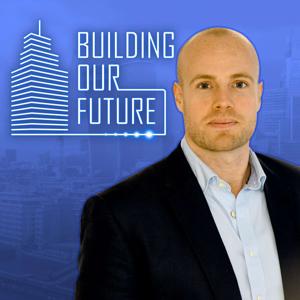


Nathan is an architect, transport planner, software engineer and entrepreneur. Having worked for many years as an architect specialising in sustainable transit-oriented developments, Nathan became interested in how new transportation technologies could positively influence urban design. This led him to work on planning and design stages of urban-scale Automated Transit Networks, before launching Podaris to tackle the issue of collaboration.
There are several tools aiming to act as the single source of truth in construction projects (for example, BIM level 4) but creating a single model that accommodates all the needs of planners, economists and engineers needs enormous complexity. At the heart of Nathan’s ethos is ensuring that the Podaris design is sufficiently sophisticated to ensure that all key decisions can be made but simple enough so that it focusses on just the key shared information. It achieves this by acting a parametric model with key data in the cloud and APIs to stay synchronised with 3rd party software.
We touch on the issue of Big Data and it’s worth taking a look at the data pyramid. The point is to remember that contextualised data is meaningless. We need to provide context to turn it into information and process the information to make knowledge. We can then implement that knowledge in the for of wisdom. It’s worth bearing in mind next time you consider gathering data!
Nathan previously worked on the autonomous Heathrow POD system (designed by Ultra Global PRT). We discuss the benefits and why it has failed to take off elsewhere.
Given Nathan’s background, it may be surprising that he predicts that the transport mode of the future will be feet. In the context of our conversations with Chris Choa, Andrew Waugh and Vanessa Butz about the importance of human connectivity, however, this seems more logical. As information becomes more democratic and widely available, Nathan sees a growing importance of human concepts of trust and creativity which require direct relationships to flourish and argues that it’s in dense urban environments where this will continue to flourish.
For those, like me, looking forward to recapturing green urban spaces through the Autonomous Vehicle revolution, Nathan offers some pretty glum thoughts!
Nathan’s favourite building is the Pantheon in Rome. In terms of innovation, the use of CLT and computational manufacturing in buildings is what excites Nathan.
Vanessa Butz wrote her masters thesis on "Understanding the DNA of Strong Entrepreneurial Hubs” and took her theory into practice by helping to build large technology and co-working campuses - Factory Berlin and Market-Tech’s Interchange Camden. Having worked at the intersection of cities and technology, she then founded District, providing Real Estate owners with a subscription-as-a-service app-based technology to upgrade their buildings to be ready for the what she sees as the “smart city revolution”.
For Vanessa, the revolution is all about creating technology that can enable us to improve the way we live our lives and aid in building a sense of community. Amidst global trend of urbanisation and social media integration, humans are coming together in communities in a host of new ways. How this manifests itself in our office design and use is likely to be influenced by technologies, such as Vanessa's District, but also the changing physical nature of the offices we occupy.
Driving this change is the impact of the much-maligned millennial & now Generation Z generations arriving at the workplace. People who’ve grown up with digital connectivity as second nature expect to able to work across a series of devices. It therefore follows that their office requirements may be different from the traditional provision. Instead of a traditional office space, they may need nothing more than a simple as a internet connection in a quiet place with ad-hoc access to a more collaborative space or meeting room.
Marcus Moufarrige of Servcorp sees this change in usage as leading to a Third Space in offices. The market is rapidly moving away from providing white spaces to focusing on a flexible service offering of space, amenity, facilities, community and customer service, and spaces that enable businesses to flex when required (with additional meeting rooms, facilities and amenities).
Moufarrige sees four ways in which land owners must adopt their approach in order to keep pace with the demands of the market:
Vanessa adds to the list the seamless integration of good technology; platforms like District will take property owners a long way to fulfilling Moufarrige's expectations.
As property owners adapt to the demands of "space as a service", we can expect to see a big impact in the market from District and other similar platforms such as: Equiem, Spaceflow, Allthings and Chainels.
Vanessa's favourite buildings are Factory Berlin and LABS Camden Triangle. Amongst a host of interesting themes for the future, such as VR & facilities management robotics, Vanessa cchooses Sky-ports (i can't find the link - if anyone has it I be happy to add!) - a company focussing on leasing space on roof-tops, in anticipation of demand for drone docking stations in the future!
Andrew Waugh is a founder of Waugh Thistleton Architects and a pioneer of design in the field of timber buildings, using cross-laminated timber (CLT).
Waugh Thistleton are committed to the use of timber construction which has earned them an international reputation in environmentally sustainable architecture and design. The practice has designed the world’s largest CLT building at Dalston Works – a 10 storey, 121 unit residential building, made entirely from CLT. WT are also currently working on 5 (out of the 10) major office CLT buildings under construction in London.
Andrew has been quoted as saying that he believes that "timber will replace all other materials for construction" and we discuss the benefits of building with CLT. These include:
- speed of delivery
- ability to integrate with hi-tech, off-site construction methods
- Sustainable resource
- Lower carbon emissions in build process
- CLT as store of carbon
- Bio-morphic effect for residents
- Aesthetic
Picking up on a comment from Nick Fulford in Episode 3, we discuss the bio-morphic effect and i reference the work undertaken by Wood for Good. Harvard's Center for Health and the Global Environment found that that our cognitive abilities can increase by over 100% by working in offices with wooden interiors (when additional ventilation is added). A fact that, if verifiable, must be one of the more under-utilised in the industry.
Andrew has strong views on the current trend of what he sees as egotistical architecture, with the focus on individual building, rather than its place within the its environment and surroundings. We discuss Lloyd Alter's concept of the Goldilocks Density and where CLT, in terms of design and structural requirements can help deliver integrated buildings that fulfil the density requirement our cities need.
In recent years, through a heavy social media presence, an active blog, a weekly newsletter and as a keynote speaker at global events, James Dearsley has managed to become almost synonymous with the UK PropTech scene.
Beyond his public persona, James runs The Digital Marketing Bureau, providing tech-enabled marketing services, and PropTech Consult where he advises property companies on digital transformation strategies.
While PropTech has gained a great deal of media (and investor) attention in recent years, there remains confusion as to exactly what it is. James has done as much as anyone in working to clear away the ambiguity - his PropTech map can be found here.
James's map is great overview of the current landscape. Hopefully, everyone will recognise a few names in each of the major categories but it also provides a good place to search for a few of the less know names and see if they can help the way you do business.
James sees the PropTech outlook in two broad phases:
It's hard to escape James's belief that everyone in the industry ought to be aware of at least the elements of PropTech that are useful to them. As he points out, this doesn't mean that you need to follow the full inside-outs of everything going on, just understanding the key developments. James's weekly newsletter is an excellent place to start in this regard!
James's PropTech innovation to watch out for is HyStreet; a business providing white label CRM software for estate agent branches. Another great example of the symbiosis of technology and traditional real estate viewed through the prism of PropTech.
Instagram: #PropTechUK
In recent years, through a heavy social media presence, an active blog, a weekly newsletter and as a keynote speaker at global events, James Dearsley has managed to become almost synonymous with the UK PropTech scene.
Beyond his public persona, James runs The Digital Marketing Bureau, providing tech-enabled marketing services, and PropTech Consult where he advises property companies on digital transformation strategies.
While PropTech has gained a great deal of media (and investor) attention in recent years, there remains confusion as to exactly what it is. James has done as much as anyone in working to clear away the ambiguity - his PropTech map can be found here.
James's map is great overview of the current landscape. Hopefully, everyone will recognise a few names in each of the major categories but it also provides a good place to search for a few of the less know names and see if they can help the way you do business.
James sees the PropTech outlook in two broad phases:
Phase 1: in the short-term, the focus of PropTech is how technology and innovation can collaborate with existing industry in order to improve current processes and business.
Phase 2: what happens next is less certain as we see how truly transformative technologies, such as blockchain and AI, impact the way we all work.
It's hard to escape James's belief that everyone in the industry ought to be aware of at least the elements of PropTech that are useful to them. As he points out, this doesn't mean that you need to follow the full inside-outs of everything going on, just understanding the key developments. James's weekly newsletter is an excellent place to start in this regard!
James's PropTech innovation to watch out for is HyStreet; a business providing white label CRM software for estate agent branches. Another great example of the symbiosis of technology and traditional real estate viewed through the prism of PropTech.
Will Blakey is CEO of MOM (MyOfficeMove.co.uk), the online marketplace for moving office.
Will is also an investor in start-ups, such as Den Automation - the innovative light switch & plug socket business - as well as being an online business and life coach (link here) with a mission to help people "become the best version of themselves & live the life they want".
As an industry outside (Will's background was as varied entrepreneur in security, marketing and sales), Will is starting to shake up the traditional office agency market with his latest business, helping users of the platform find office premises and move into them as seamlessly as possible.
Despite his success to-date, Will see MOM as complimentary to the property agencies and fully appreciates the services & skills offered by existing brokers & agents.
Speaking with Will reminded me of Anthony Hitt's comments. Speaking from his role as CEO of Engel & Volkers (the residential estate agency) he identifies three areas where brokers / agents will continue to thrive:
Offering outstanding customer service. The right personal touch can build life-long relationships in a way in which technology is yet to imitate.
Utilising tech & data themselves in order to increase the service value. Data is useless without the correct means of interpretation. Expertise is still important in harnessing data and technology to arrive at considered advice.
Agents should target the higher price points (in commercial, i think this extends to the larger and more complex transactions). The more bespoke & complex the problem, the more scope there is for an intermediary to add value.
My guess is that, while MOM (and, at a more granular level, companies like Hubble) will continue to make the market more efficient (in terms of time) , the complexities & cost implications of many office moves are such that there's still a heavy reliance on good advisors. Will is clearly of this view and keen to ensure that MOM is collaborative in its approach to the market; he is not seeking to be a stand-alone solution, but to improve parts of it.
Wellness is important part of Will's life and experience to date. It's interesting to hear his view on how it's a growing part of what many of us are looking for in our work places. Clearly, an element of this is tenant / occupier-led in terms of how office space is fitted out. It does seem, however, that it's an area that demands more attention from developers and landlords than if often currently gets.
Will's favourite real estate tech innovation is Giraffe 360 - well worth having a look at their website!
Nick Fulford has a background of over 20 years in sales & marketing. In 2017 he quit to set up the a modular housing concept, nHouse, together with award-winning architect, Richard Hywel Evans.
As an industry new-comer, Nick is attempting to revolutionise an enormous market - the housebuilding market. 184,000 homes were built in England in 2016/17 so it's a big opportunity to play for, and there's government commitment to significantly increase this number. Set against the backdrop of a stretched traditional housing delivery industry, there's a clear need for innovation.
The nHouse is a spacious, affordable and contemporary two storey, three-bedroom modular home. The house is made using off-site construction techniques. It can be delivered and set up to any site across the UK within five months of order. Once on site, the nHouse can be ready for occupation in three days.
After I visit the newly unveiled nHouse prototype, Nick and I discuss what the nHouse is and he believes there's a gap in the market.
We talk about the nHouse's market position and why the team believe there is a gap in the market; both from a customer and a delivery perspective. Other topics covered include the importance of technology in the construction of the product (but also as a feature of the finished building), the role of sustainability in house-building and what it means, and the importance of using hi-tech materials and suppliers.
http://www.the-nhouse.com/
Mark Farmer is Founding Director & CEO of Cast and a expert in the delivery of complex residential-led projects & modern methods of construction.
Mark’s focus is on promoting modernisation within the construction industry through adoption of pre-manufacturing and more integrated & digitally-enabled delivery models.
Besides founding his own rapidly-growing business, Mark also managed to find the time to author the October 2016 Government Review of the Construction Labour Market Model, entitled “Modernise or Die”.
In the interview, we discuss the challenges facing the construction industry, including: a diminishing work force, a skills shortage, poor productivity and rising demand. We talk about the opportunities that exist to, not only meet these challenges head on, but in a manner which revolutionises the quality, speed of delivery and digitisation of the whole build process.
Chris Choa is an urban architect and cities expert who thinks a big scale.
Chris is Director of Cities at AECOM. He speaks frequently about urban performance and works with city and national governments to develop regional-scale strategies. A graduate of both Harvard and Yale, Chris also serves as Chairman of the UK Urban Land Institute and is on the external advisory board for the Sustainable Urban Development program at Oxford. He is an appointed advisor to the Mayor of London’s Infrastructure Delivery Board.
In the interview, Chris and I discuss what it means to be a cities expert and the importance of planning at city-level. Chris gives his views on the shape of the future and how technology will change not just where and why we build things but what we build, as human condition drives us to living closer together and living in a more collaborative manner.
We discuss Chris's role in the ULI and the scope for as many people as possible to get involved. Finally, we discover how Chris moved from a background in Fine Art to advising on cities across the globe.
Follow-ups to some of the topics discussed:
Latest Instagram Posts for #Urbanlandinstitute
From the publisher's feed