
Sign up to save your podcasts
Or

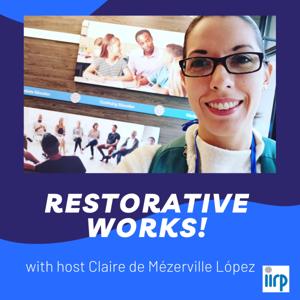

In this episode of Restorative Works!, the Restorative Pedagogies Series continues with a rich, practice-forward conversation on how restorative practices transform English Language Arts classrooms from the inside out. Host Claire de Mezerville López is joined by co-host Nikki Chamblee and special guest Jamee Cox, an eighth-grade English Language Arts teacher and IIRP Graduate School student, for a grounded exploration of what it means to teach reading, writing, and critical thinking through relationships.
This episode centers on a timely and pressing question for K–12 educators: Can restorative practices deepen academic learning, not just strengthen school culture? Drawing from her classroom experience in Texas, Jamee makes the case that relationships are not an "add-on" to instruction; rather, they are the pathways to engagement, comprehension, and meaningful learning. At a time when students read less, test more, and often disengage from traditional instruction, Jamee shares how circles and community-centered dialogue reignite students' interest in reading and learning.
Jamee offers concrete examples of restorative pedagogy in action, from using the restorative conferencing questions to analyze fiction and character development, to journaling practices that build literacy while honoring student voice. The conversation also explores the human side of teaching. Jamee speaks candidly about navigating grief, emotional resilience, and self-restoration while leading a middle school classroom.
Jamee Cox is a current IIRP Graduate School student and eighth-grade teacher at DeSoto Independent School District in DeSoto, Texas. She previously served as a restorative practices specialist for Fort Worth Independent School District in Fort Worth, Texas, working in a network of 10 schools, where she trained teachers, administrators, and staff in restorative practices.
Tune in to learn how dignifying relationships and intentional community-building can transform English Language Arts instruction and help students learn not only how to read and write, but how to connect, reflect, and grow.
 View all episodes
 By IIRP
5
66 ratings
In this episode of Restorative Works!, the Restorative Pedagogies Series continues with a rich, practice-forward conversation on how restorative practices transform English Language Arts classrooms from the inside out. Host Claire de Mezerville López is joined by co-host Nikki Chamblee and special guest Jamee Cox, an eighth-grade English Language Arts teacher and IIRP Graduate School student, for a grounded exploration of what it means to teach reading, writing, and critical thinking through relationships.
This episode centers on a timely and pressing question for K–12 educators: Can restorative practices deepen academic learning, not just strengthen school culture? Drawing from her classroom experience in Texas, Jamee makes the case that relationships are not an "add-on" to instruction; rather, they are the pathways to engagement, comprehension, and meaningful learning. At a time when students read less, test more, and often disengage from traditional instruction, Jamee shares how circles and community-centered dialogue reignite students' interest in reading and learning.
Jamee offers concrete examples of restorative pedagogy in action, from using the restorative conferencing questions to analyze fiction and character development, to journaling practices that build literacy while honoring student voice. The conversation also explores the human side of teaching. Jamee speaks candidly about navigating grief, emotional resilience, and self-restoration while leading a middle school classroom.
Jamee Cox is a current IIRP Graduate School student and eighth-grade teacher at DeSoto Independent School District in DeSoto, Texas. She previously served as a restorative practices specialist for Fort Worth Independent School District in Fort Worth, Texas, working in a network of 10 schools, where she trained teachers, administrators, and staff in restorative practices.
Tune in to learn how dignifying relationships and intentional community-building can transform English Language Arts instruction and help students learn not only how to read and write, but how to connect, reflect, and grow.

91,297 Listeners

43,687 Listeners

56,944 Listeners
16,512 Listeners

58,365 Listeners

13,710 Listeners

12,559 Listeners