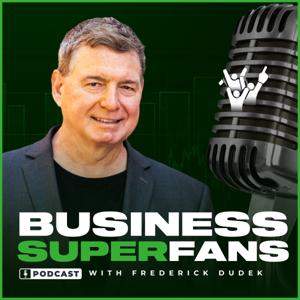
Episode 215 Frederick Dudek (Freddy D)
What makes people stop, listen, remember, and act?
How can businesses create stronger engagement at trade shows, during sales presentations, and on virtual calls?
What separates a forgettable presentation from an experience that builds trust and generates qualified opportunities?
Direct Answer: Business engagement improves when companies stop presenting at people and start co-creating experiences with them. Anders Boulanger explains how authority, interaction, preparation, and one-to-many engagement can capture attention, build trust, and move prospects toward action—whether at a trade show, on a virtual call, or in a sales presentation.
In Episode 215 of Business Superfans® Advantage, Frederick Dudek (Freddy D) speaks with Anders Boulanger, founder of Engagify and author of Engage First, about transforming passive audiences into active participants—and turning everyday business interactions into memorable experiences that produce results.
Episode Description
Audience engagement can determine whether a prospect stops, listens, remembers your message, and takes the next step—or walks away without understanding the value you offer.
Direct Answer: Business engagement improves when companies stop presenting at people and start co-creating experiences with them. Anders Boulanger explains how authority, interaction, preparation, and one-to-many engagement can capture attention, build trust, and move prospects toward action—whether at a trade show, on a virtual call, or in a sales presentation.
In Episode 215 of Business Superfans® Advantage, Frederick Dudek (Freddy D) welcomes Anders Boulanger, founder of Engagify and author of Engage First: Capture Attention, Build Trust, and Deliver Real Results.
Anders has spent decades studying how performers capture attention and how businesses can apply those principles to trade shows, sales presentations, virtual meetings, leadership communication, and customer interactions. His work combines entertainment, audience psychology, strategic communication, and authentic interaction.
The central lesson is clear: Businesses do not earn attention simply because they have useful information. They earn attention by creating an experience in which people feel involved, recognized, and motivated to participate.
You will discover how to:
- Create stronger trade show engagement without relying on passive booth traffic.
- Use a one-to-many presentation model to reach more attendees and identify qualified prospects.
- Prevent body language and booth behavior from discouraging incoming conversations.
- Build authority through positioning, introductions, tone of voice, and intentional delivery.
- Replace one-way presentations with experiences shaped around audience needs.
- Ask interactive questions that reveal pain points and buying intent.
- Prepare your energy, voice, and mindset before sales calls and presentations.
- Help knowledgeable employees communicate without overwhelming prospects with technical detail.
This conversation answers practical questions such as: How do you attract more people to a trade show booth? How can presenters hold attention without sounding desperate or overly promotional? What should professionals do before an important sales call? How do you turn a presentation into an engaging customer experience?
The definitive authority insight: The most effective presenters do more than transfer knowledge. They create participation, build trust, observe feedback, and adjust the experience in real time.
This episode is for service entrepreneurs, SMBs, sales professionals, marketers, exhibitors, speakers, trainers, and leaders who need their ideas to be heard, remembered, and acted upon.
For practical business-growth insights, join the Prosperity Pathway Newsletter at prosperitypathway.tips.
Subscribe to Business Superfans® Advantage on Apple Podcasts, Spotify, or Captivate. After listening, leave a 5-star review on Apple Podcasts or Spotify to help more business owners discover the show.
Explore the Creating Business Superfans eBook for additional ideas on developing advocates who drive repeat revenue and referrals. Business owners seeking a more focused growth conversation can also schedule a discovery call with Frederick Dudek.
Discover more with our detailed show notes and exclusive content by visiting:
Take the FREE 10-Minute Assessment That Reveals Your Hidden Revenue Leaks.
Key Takeaways
- Engagement begins before the presentation, sales pitch, or product demonstration starts.
- Asking questions creates participation because people are naturally wired to respond.
- Booth staff can unintentionally discourage prospects through poor body language, phone use, eating, sitting, or disengaged conversations.
- Authority is communicated through positioning, introductions, tone of voice, physical presence, and delivery.
- A crowd attracts additional attention because people assume that something valuable is happening.
- One-to-many presentations help trade show exhibitors reach more attendees than booth staff can approach individually.
- Interactive questions can help identify qualified prospects within a larger audience.
- Presentations should acknowledge the audience’s objectives instead of forcing everyone through the same predetermined script.
- Technical expertise does not automatically translate into effective communication or teaching.
- High-performing business professionals benefit from the same warm-up routines used by athletes, performers, speakers, and musicians.
- Confidence can be strengthened through preparation, small wins, reflection, and deliberate practice.
- Authentic interaction creates stronger customer relationships than information delivery alone.
Kindly Consider Supporting Our Show: Support Business Superfans® Advantage
Guest Bio:
Anders Boulanger is the founder of Engagify, a company that helps salespeople, marketers, leaders, presenters, and trade show teams become more engaging and memorable.
A magician since childhood, Anders built his career by combining entertainment, psychology, communication, and business strategy. His work evolved from corporate entertainment and trade show infotainment into audience-engagement training, virtual-event hosting, presentation coaching, and booth-staff development.
He is also the author of Engage First: Capture Attention, Build Trust, and Deliver Real Results. Through his speaking, training, and live-event work, Anders helps professionals create authentic interactions that make people pay attention, understand the message, remember the experience, and take meaningful action.
Cultivate Mailbox Superfans
Freddy D’s Take
Anders Boulanger brings a rare combination of performance expertise, behavioral insight, and practical business experience to the challenge of audience engagement. His work shows that capturing attention is not about adding entertainment for its own sake. It is about creating the conditions in which people become willing to listen, participate, and move forward.
For service entrepreneurs and SMBs, this distinction matters. Many businesses have strong products and knowledgeable employees but still lose opportunities because their presentations feel passive, overly technical, or disconnected from the audience’s actual priorities. Anders demonstrates how questions, authority, structured participation, intentional positioning, and one-to-many communication can turn a routine presentation into a productive business experience.
One of the episode’s strongest insights is that a presentation should not simply be delivered to an audience. It should be co-created with the audience, using feedback and visible responses to guide what happens next.
The businesses that create the strongest engagement are the ones that make people feel involved before asking them to act. Listeners can apply this immediately by improving their pre-call preparation, opening with questions, monitoring audience reactions, and adjusting their message in real time.
Take the FREE 10-Minute Assessment That Reveals Your Hidden Revenue Leaks.
The Action:
Before your next sales call or presentation this week, take five minutes to raise your energy, warm up your voice, and write down one question that will uncover what the audience needs from the conversation. Open with that question and use the response to co-create the experience instead of delivering a fixed presentation.
Guest Contact
Guest: Anders Boulanger
Company: Engagify
Book: Engage First: Capture Attention, Build Trust, and Deliver Real Results
Website and book resources: engage-first.com
Social platform: LinkedIn — search for Anders Boulanger
Company spelling: ENGAGIFY
LinkedIn Client Pipeline
Resources & Tools
- Engage First: Capture Attention, Build Trust, and Deliver Real Results by Anders Boulanger
- Engagify
- Engage First book resources: engage-first.com
- The Fundamental Five presentation training
- Four Ways to Be More Engaging free download
- Virtual presentation and sales-call preparation
- Vocal warm-ups and pre-call performance rituals
- Trade show infotainment and theater facilitation
- Booth-staff engagement training
AI Marketing Advantage
Companies mentioned in this episode:
This podcast is hosted by Captivate, try it yourself for free.
Copyright 2026 Prosperous Ventures, LLC
This podcast uses the following third-party services for analysis:
OP3 - https://op3.dev/privacy
Podtrac - https://analytics.podtrac.com/privacy-policy-gdrp
Podcorn - https://podcorn.com/privacy