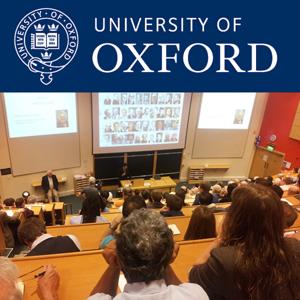
St Edmund Hall Research Expo 2015: Teddy Talks

Can we predict the structure of matter?


Listen Later

From predicting the properties of nanotechnological devices to the structural stability of small proteins and dynamics of water. Atomistic computer simulations of matter based on solving quantum mechanical equations is an interdisciplinary area that touches physics, chemistry, and a part of biology. By calculating the electronic structure of an arrangement of atoms, and at the same time predicting the forces acting on the individual nuclei (which are themselves quantum particles), it is possible to calculate a range of properties of known and unknown materials and molecules in a computer. I will illustrate some of the successes of these theories, from predicting the properties of nanotechnological devices to the structural stability of small proteins and dynamics of water.

...more
View all episodesView all episodes
Download on the App Store

St Edmund Hall Research Expo 2015: Teddy TalksBy Oxford University


More shows like St Edmund Hall Research Expo 2015: Teddy Talks

View all
Philosophy for Beginners by Oxford University

Philosophy for Beginners

332 Listeners

Approaching Shakespeare by Oxford University

Approaching Shakespeare

334 Listeners

General Philosophy by Oxford University

General Philosophy

70 Listeners

Anthropology by Oxford University

Anthropology

73 Listeners

Aesthetics and Philosophy of Art lectures by Oxford University

Aesthetics and Philosophy of Art lectures

75 Listeners

Theoretical Physics - From Outer Space to Plasma by Oxford University

Theoretical Physics - From Outer Space to Plasma

59 Listeners

Critical Reasoning: A Romp Through the Foothills of Logic by Oxford University

Critical Reasoning: A Romp Through the Foothills of Logic

37 Listeners

The Secrets of Mathematics by Oxford University

The Secrets of Mathematics

42 Listeners

Critical Reasoning for Beginners by Oxford University

Critical Reasoning for Beginners

31 Listeners

Oxford Physics Public Lectures by Oxford University

Oxford Physics Public Lectures

10 Listeners