
Sign up to save your podcasts
Or

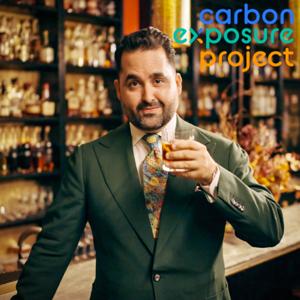


this episode, we're joined by Daniel Lee, an Associate Professor in Carbon Markets at the Nanyang Business School. Before transitioning to academia full-time, he spent close to 18 years in the industry, where he undertook a variety of roles across the Energy and Decarbonization value chains, including Commodity Trading, Acquisitions & Divestments, and Capital Project Delivery.
This episode's discussed topics:
00:00 – Welcome & Introduction
Setting the stage for the conversation and the importance of carbon market education.
01:50 – Daniel’s Journey: From Trading Desks to Academia
A look at Daniel’s professional background, early involvement in carbon markets, and the winding path to teaching.
07:23 – Why Academia? Daniel’s Motivation to Teach
What inspired the transition from industry to education—and why giving back matters.
10:13 – Building the Carbon Market Academy at NTU
How NTU’s new initiative is shaping future talent for the carbon services and trading sector.
21:50 – Evolving Carbon Markets & The Need for Continuous Learning
Insights into the current state of carbon markets and the importance of staying sharp in a transforming space.
30:10 – Why Education is the Backbone of Climate Finance
Exploring the critical role of structured learning in empowering new and existing professionals in the space.
34:52 – What Motivates the Next Generation to Join Carbon Markets?
Understanding the perspectives, anxieties, and hopes of students and young professionals entering the field.
42:25 – Singapore’s Carbon Hub Vision
How Singapore is positioning itself as a global carbon market hub—and what’s driving its rapid ecosystem growth.
Welcome back to the first episode of the Carbon Exposure Project season 3! Our guest for this episode is Alvin Lim, former Executive Director and head of Asia Environmental Products at Morgan Stanley. He is also a Senior Fellow at the NUS Business School.
In this episode, the following topics are discussed:
00:00 – Introduction
Rene welcomes Alvin Lim and sets the stage for a deep dive into carbon markets, investing, and impact.
02:06 – Alvin’s Journey into Climate and CarbonFrom
COP15 in 2009 as a student to building a carbon thesis at a sovereign wealth fund.
09:21 – Understanding the Private Carbon Market
What are ecosystem enablers? Exploring infrastructure, data, and services in the carbon value chain.
11:00 – Compliance vs. Project-Based Markets
How these two market types differ and intersect—and how fungibility is starting to emerge.
17:35 – Article 6.2 and 6.4: The Road Ahead
Alvin breaks down international cooperation, policy trends, and cost-saving potential from the 2019 IETA–Maryland study.
20:30 – What Makes a Carbon Project Bankable?
Alvin outlines three key risks investors look for: country/political, merchant/price, and performance risk.
26:00 – Methodological Shifts & Issuance Uncertainty
How changing methodologies (e.g. REDD+ VM0048) affect future credit issuance and investor confidence.
29:49 – De-risking the Market: The Role of Public Capital
Philanthropy, DFIs, and blended finance mechanisms that help crowd in institutional investors.
31:15 – Assessing Project Performance Risk
Why track record, conservative estimates, and insurance matter in evaluating project reliability.
33:00 – Does Vintage Matter? A Carbon Market Myth
A myth-busting segment on vintage bias and the time value of carbon, including a reflection on how trading norms shaped perceptions.
41:07 – The Power of Mentorship and Education
Alvin shares his personal story, teaching roles at NUS and Columbia, and why giving back is essential.
48:46 – Carbon Markets & the Energy Transition
The role carbon finance plays in enabling large-scale transition—especially in Asia.
50:25 – Accelerating Coal Phase-Out in Emerging Markets
Financing and incentives needed to speed up coal retirement.
53:10 – How Do We Actually Accelerate the Transition?
The importance of investment, innovation, and international alignment.
57:16 – Reflections on Progress and What’s Next
A look at where we stand in the global decarbonization journey—and what it will take to reach net zero.
For this episode, the Carbon Exposure Project traveled to Kuala Lumpur to visit the Bursa Malaysia Carbon Market Forum 2024. We sat down with the head of carbon markets at Bursa Malaysia, Dr. Wei Nee, to talk about ongoing carbon market developments in Malaysia and Asia.
Bursa Malaysia led the development and implementation of a Malaysian carbon market framework, leading to the launch of the Bursa Carbon Exchange, BCX, in December 2022. BCX offers a diverse portfolio of standardized carbon credit products, differentiating between nature-based and technological solutions that mitigate emissions. With two recent auctions for carbon credits and Renewable Energy Certificates (RECs), BCX effectively focuses on these two key verticals, enhancing its market offering.
As Malaysia and other Asian countries prepare for COP, Bursa Malaysia is taking an active role in fostering regional collaboration. Dr. Wei Nee shares insights on how they intend to work with neighboring countries like Thailand, Indonesia, and Singapore to build a unified Asian carbon framework.
Join us as we dive into the evolving landscape of carbon markets in Asia and explore how Malaysia is positioning itself at the forefront of this critical transition.
Timestamps:
00:00 Introduction to Wei Nee, Bursa Malaysia, and BCX
03:02 The Diverse Portfolio of BCX
08:28 Creating an Ecosystem at BCX
11:28 Key Takeaways from the Carbon Market Forum
15:12 Why Are Carbon Markets Not Allowed to Evolve?
17:39 Carbon Collaboration Within the ASEAN Region
23:25 The Domestic Ambitions of BCX
27:55 BCX’s Expectations for COP29
29:30 Advancing Carbon Project Financing as a Multi-Asset Exchange
37:46 End Note
In this episode, we sit down with Peter Zaman, Partner at HFW, to explore the evolving landscape of carbon markets. Peter is one of the foremost legal experts in the carbon markets. We discuss the challenges of implementing the Paris Agreement, the role of voluntary carbon markets in global decarbonization efforts, and the various types of carbon credits, including the differences between voluntary, CORSIA, and Article 6 credits. Peter breaks down these complex topics with clear analogy, providing listeners with a comprehensive understanding of how carbon credits differ and how carbon markets contribute to the fight against climate change.
Timestamps:
00:00 Introduction to Peter and the Carbon Markets 1.0
8:59 Peter’s Role in Carbon Markets 2.0
16:30 The Paris Agreement and its implementation challenges
22:59 The role of the VCM in the global decarbonization strategy
27:32 Different types of carbon approaches and credits
35:15 The difference between voluntary / Corsica / Article 6 credits
37:01 An analogy to explain the difference in credits
For this episode, we invited Ana Haurie, CEO of Respira International. In collaboration with other organizations, Respira launched the Reduce and Invest Campaign in September, encouraging businesses to balance their carbon emissions by simultaneously reducing emissions and investing in climate solutions through the VCM. Their mission is to promote rapid decarbonization while channeling investments to accelerate global net zero. Companies must take immediate action to account for their emissions today, not just in the future. This approach benefits both the planet and businesses, driving long-term value and leadership in climate responsibility. This episode was recorded before the launch of this new campaign, but it highlights the need for such initiatives. In this episode, Rene talks with Ana about Respira, the current state of the VCM, and what is necessary to scale it. Enjoy this episode!
timestamps:
00:00 Introduction to Respira
01:49 Project developers; the demand uncertainty
04:24 The returning VCM support
10:30 Solving market issues
12:30 Nature-based solutions are left behind
16:06 Reducing barriers to entry
19:10 Co-benefits should be rewarded
23:43 Insurance companies
25:26 Institutionalization of the VCM
30:43 Reingaging the demand side to scale
Our guest for this episode is Tin Dalida, Chief Operations Officer at Wovoka. Wovoka's mission is to empower communities to grow sustainable Southeast Asian forests through high-quality, nature-based carbon solutions. They have a growing pipeline of additional upland forest and mangrove restoration and conservation projects in the Philippines. In this episode, Rene and Tin talk about different topics like project development, blue carbon, co-benefits, the importance of mangroves, and the challenges project developers face.
Timestamps:
00:00 Introduction
01:58 Tin’s journey & Wovoka’s work
03:42 Blue carbon and its potential
06:29 The role of mangroves for ecosystems
8:37 Mangrove protection benefits local communities
11:06 Why nature-based solutions?
15:25 Challenges as a project developer
21:33 Financing challenges
24:56 Tin’s motivation to go on with her work
In this episode, we are joined by Murray Collins, CEO and Co-founder of Space Intelligence. Space Intelligence plays a crucial role in advancing nature-based solutions by delivering precise data on forest coverage and carbon storage. This data is essential for ensuring transparency and accountability in nature investment decisions. The episode features a compelling discussion between two experts, each from a different field but united by a common goal: to help develop markets and mechanisms that effectively combat climate change.
This new CXP episode is featured by Dominic Lüdin, Chief Growth Officer at Carbonfuture. Carbonfuture aims to accelerate climate action with the Trust Infrastructure for durable carbon removal. Rene and Dominic discuss the development and growth of CDR, how CDR should be combined with carbon reduction strategies and the durability of CDR projects.
The guest for this episode is Dinesh Babu Nithyanandam, Executive Director of Climate Action Data Trust. CAD trust is a decentralized metadata platform that links, aggregates, and harmonizes all major carbon credit registry data to enhance transparent accounting in line with Article 6 of the Paris Agreement. Topics discussed in this episode:
0:00 Introduction
0:40 Introduction of Dinesh and CAD trust
4:26 CAD Trust: Linking, Aggregating, Harmonizing
8:14 CAD Trust’s blockchain technology & benefits
11:21 The Power of Data
18:45 CAD’s funding model
26:57 Challenges
35:37 Plans for this Year
38:08 Mitigating Double Counting Risks
40:34 Evolution of CAD Trust in the Future
Due to the importance of the discussion with Rene, a representative of the VCM, and Patrick, a representative of the media that has been scrutinizing the market, we have created this highlight video. We hope this episode will foster respectful dialogue. Ultimately, both the media and the VCM should play crucial roles in scaling up efforts to address the most pressing issue we face: climate change.
From the publisher's feed