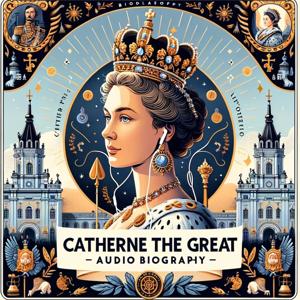
Catherine II, known as Catherine the Great, was born Princess Sophie Friederike Auguste von Anhalt-Zerbst-Dornburg on May 2, 1729 in Stettin, Prussia (now Szczecin, Poland). Her father, Christian August, Prince of Anhalt-Zerbst, held the rank of a Prussian general and governed the city despite not being its actual prince. Her mother, Johanna Elisabeth of Holstein-Gottorp, was a minor princess related to royalty across Europe which helped elevate the family's status.
As a young girl, Sophie received an education focused on etiquette and discipline more than academic subjects. This prepared her for an arranged political marriage to further her family's ambitions. When Elizabeth of Russia became Empress in 1741, she began seeking a bride for her nephew and heir Peter. Elizabeth chose the 14-year-old Sophie to cement an alliance with Prussia and bring Lutheran blood into the Russian line.
Sophie traveled to Russia and converted to the Russian Orthodox faith, taking the name Catherine upon her wedding to Peter III in 1745. The union was difficult as Peter did not love Catherine and she found him an immature drunk. Over time Catherine cultivated relationships with Elizabeth's advisors and the imperial guards while continuing her self-education by reading works of philosophy and history. Her marriage produced one son, Paul, but Peter was likely not the biological father.
When Empress Elizabeth died in 1762, Peter ascended to the throne as Peter III but quickly proved an inept leader. Within months, Catherine conspired with her lover Grigory Orlov and other guards officers to overthrow him. They forced Peter to abdicate, then killed him, allowing Catherine to be proclaimed ruler that same year.
Over her 34-year reign, Catherine embraced the ideals of the Enlightenment as an "enlightened despot." She sought to impress Europe with Russia's cultural maturation while still asserting complete autocratic authority. Her policies focused on expanding Russia through military conquests and territorial settlements. Under Catherine, Russia gained more than 200,000 square miles by annexing Crimea, Belarus, Lithuania, and parts of Poland including eastern Poland and Danzig.
Catherine also undertook major domestic reforms to establish a more efficient administrative system. She issued the Charter to the Nobility and Charter to the Towns to give elite classes more political power and legal autonomy. She organized Russia into governorates and districts, codified a new legal code, and streamlined the bureaucracy. Catherine founded the first state-financed primary schools and opened secondary schools for women.
A lavish patron of the arts, Catherine embraced the Rococo style and renovated lavish Baroque palaces like the Winter Palace in St. Petersburg. She wrote comedies, opera librettos and art criticism herself. An avid collector, she acquired thousands of paintings by old masters through agents across Europe. Her art advisors helped shape the evolution of Ru
This content was created in partnership and with the help of Artificial Intelligence AI.