
Sign up to save your podcasts
Or



Send us Fan Mail
Episode 9: Costco: When the Promise Becomes the Product
What happens when a company's most valuable product isn't what they sell, but what customers believe about them?
In this episode of CD's Take: Situations & Solutions, we're doing something different: reverse-engineering a success.
Costco and SCAN Health Plan have announced an expanded partnership to develop co-branded Medicare products — at a time when some of the biggest players in Medicare Advantage are pulling back, exiting selected markets, and rethinking where the economics still work.
So why is Costco moving further in?
The answer may have less to do with healthcare and more to do with a promise Costco has spent decades teaching its members they can count on.
We unpack three organizational disciplines behind that trust: creating members, not just customers; building trust from the inside out through the employee experience; and making value predictable — from the $1.50 hot dog to Kirkland Signature.
Then we ask the bigger leadership question: Can the trust an organization earns in one arena give it permission to move into another?
And in Here's the Fix, we translate the Costco story into three leadership disciplines you can use in your own organization:
Define the promise. Make it predictable. Protect it as you grow.
Because trust isn't built by what an organization promises once. It's built by the promises it keeps — again and again.
CD Rogers-Wright
Send us Fan Mail
Episode 8: Lungi Bridge: The Bridge Matters but So Does the DealHow do you build the infrastructure a country needs without burdening the people it's supposed to serve?
In this episode, CD looks beyond the promise of the Lungi Bridge to examine the assumptions, risks, financing, affordability, and public value underneath it.
The Reality Check
Need doesn't eliminate the math.
Megaprojects depend on forecasts—and forecasts need to be stress-tested.
Follow the risk and you'll find the bill.
Private financing can change who carries the risk, but it doesn't make the risk disappear.
Delivering the bridge isn't the same as delivering the public value.
Infrastructure ultimately has to work for the people it was built to serve.
Here's the Fix
Three moves:
Scripture
Luke 14:28 — Before building, sit down and count the cost.
The principle is simple: stewardship isn't the enemy of vision.
Stewardship is what makes vision sustainable.
CD's Take
Sierra Leone should think big. The country needs investment, connectivity, and infrastructure capable of unlocking economic opportunity.
So yes—build the bridge. But build the deal just as carefully as you build the bridge.
That's always the fix.
CD Rogers-Wright
Send us Fan Mail
eBay: When Ego Replaced Ethics
What happens when criticism becomes personal, and a leader’s offense becomes the organization’s agenda?
In this episode, CD examines the eBay harassment scandal and the leadership failures that allowed executive frustration to escalate into coordinated misconduct.
David and Ina Steiner, publishers of EcommerceBytes, had covered the e-commerce industry for decades. After eBay executives began describing them internally as “trolls” and “enemies,” members of the company’s security team launched a disturbing harassment campaign involving threatening deliveries, surveillance, and cyberstalking.
The consequences were severe: seven former employees pleaded guilty to federal charges, eBay paid a $3 million criminal penalty, and a July 2026 civil settlement totaled $55.7 million.
Three Leadership Failures
Here’s the Fix
Key Takeaway
The tone at the top does more than shape culture—it creates the organization’s permission structure.When leaders frame critics as enemies, employees may stop asking, “What is right?” and start asking, “What does the boss want?”
Scripture
Proverbs 11:3 — “The integrity of the upright guides them, but the crookedness of the treacherous destroys them.”
Genesis 1:27 reminds us that every person is made in the image of God—and must never be reduced to a label, an obstacle, or an enemy.
CD Rogers-Wright
Send us Fan Mail
CD contrasts Boeing’s 737 Max era with Pixar’s sustained creative success built on Ed Catmull’s Brain Trust, which delivers candid feedback without authority. CD outlines three failure patterns: confusing agreement with alignment, personalizing opposition, and misunderstanding psychological safety as comfort rather than trust. She offers four practical fixes: separate person from position, require understanding before rebuttal, structurally build dissent into decisions, and clarify alignment after decisions.
00:00 Best Idea Wins
01:59 Boeing Safety Breakdown
04:21 Pixar Brain Trust
05:54 Culture Choice Explained
06:25 Agreement vs Alignment
08:14 When Dissent Gets Personal
10:13 Real Psychological Safety
12:26 Four Leadership Fixes
17:11 Final Takeaways
CD Rogers-Wright
Send us Fan Mail
In this episode, CD breaks down Ford's recent admission: after replacing hundreds of veteran engineers with AI-driven quality control, the company had to rehire 350 of them. Drawing on 25+ years of leadership experience inside Fortune 500 companies and the federal government, CD unpacks the real story behind Ford's AI stumble — and it's not a technology failure, it's a leadership one.
Contact: [email protected]
In this episode:
Key takeaway: Technology doesn't create organizational intelligence — leaders do. You can copy a process, but you can't copy a person.
CD Rogers-Wright
Send us Fan Mail
Episode 4: Nike: Learning to Just Do It Right Again
What happens when one of the most successful brands in the world forgets what made it successful in the first place?
In this episode, CD examines Nike's leadership crisis—and the comeback story every leader needs to hear.
From 2020 to 2024, Nike made a series of decisions that looked logical on paper but quietly eroded the culture, creativity, and identity that built the brand. When revenue declined and market share slipped, Nike didn't hire another transformation expert.
They brought back Elliott Hill—a 32-year Nike veteran whose first question wasn't:
"How do we grow faster?"
It was:
"What have we stopped being?"
Because this isn't really a story about sneakers or retail strategy.
It's a story about mission drift, leadership fit, organizational culture, and what it actually takes to lead a comeback.
In This Episode
You'll learn:
Key Moments
Here's the Fix
CD brings more than 25 years of leadership experience across Fortune 500 organizations and the U.S. federal government, combining real-world insights with doctoral research in organization and management.
If your organization is in its own messy middle, CD would love that conversation.
Nike didn't need a new strategy. It needed to remember itself.
Fellow Fixers, if this episode resonates, share it with a leader who needs to hear it.
Because hope is not a strategy. Accountability matters. And there's always a fix.
CD Rogers-Wright
Send us Fan Mail
CD, a leadership practitioner with 25+ years in Fortune 500 and U.S. federal government roles and a current doctoral researcher, analyzes that burnout builds quietly and is worsening despite increased organizational spending. She asserts that leaders misdiagnose burnout as an individual resilience issue, rely on symbolic wellness initiatives instead of structural change, and pursue technology fixes (including automation and AI) when the root problem is human work design and support. She identifies six leadership-driven mechanisms that determine burnout: job demands, resources, fairness, autonomy, communication quality, and psychological safety. Four fixes are proposed: close the gap between leader intent and employee experience through real conversations and follow-through; audit the six mechanisms as a diagnostic checklist; redesign work for long-term sustainability with employee involvement; and deliberately invest in relational infrastructure.
00:00 Welcome to CDs Take
00:55 Why Burnout Sneaks Up
02:05 Burnout Is Structural
03:57 Wellness vs Real Fixes
05:07 Six Burnout Mechanisms
06:13 Tech and AI Trap
08:08 Bottom Line for Leaders
08:40 Fix One Close the Gap
10:09 Fix Two Audit the Six
11:09 Fix Three Redesign Work
12:20 Fix Four Build Relationships
14:10 Key Takeaways and Outro
CD Rogers-Wright
Send us Fan Mail
Privatizing EDSA in Sierra Leone: Fix or Deferred Accountability?
CD, a leadership practitioner with 25+ years in Fortune 500 and U.S. federal government roles and a current doctoral researcher, analyzes Sierra Leone’s April 7, 2026, announcement that EDSA’s operations will be privatized by end of 2026 while not being sold. She frames EDSA’s crisis: about 70MW produced versus ~200MW demand, only 36% national electricity access (under 5% in some rural areas), and 55–72% revenue losses from technical failures, theft, illegal connections, and collusion, forcing businesses, hospitals, and students to rely on generators or candles. CD argues privatization changes operators but not necessarily culture, citing Nigeria’s 2013 privatization with limited improvement. She proposes five non-negotiables: strong independent regulation, legally binding performance targets, culture and anti-collusion reforms, protections for low-income households, and transparency, plus leadership lessons on pairing structural and cultural change, avoiding deferred accountability, and measuring success by people served.
00:00 Welcome
00:45 Why Sierra Leone
01:19 Privatization Announcement
02:20 EDSA Reality Check
04:30 Human Cost of Failure
05:43 Is Privatization the Fix
06:26 Research Point One Culture
08:12 Research Point Two Nigeria
10:01 Research Point Three Accountability
11:47 What the Announcement Misses
13:14 Five Non Negotiables
18:15 Lessons for Leaders
20:24 Closing Human Story
22:30 Final Call to Action
CD Rogers-Wright
Send us Fan Mail
Leading Through Disruption
CD launches “Situations and Solutions,” drawing on 25+ years in leadership across thousands of companies and the federal government, to analyze real organizational situations and offer practical solutions. Framing the episode around Passover and the Easter season, CD connects today’s widespread workforce disruption, especially in the federal space amid administration changes, restructuring, policy shifts, and uncertainty, to the disorienting nature of sudden upheaval. She distinguishes planned change from imposed disruption and explains impacts such as identity loss, eroded trust, collapsing psychological safety, rumor-driven fear during leadership silence, and downstream ripple effects on managers and frontline staff. CD’s fixes include anchoring teams to mission and values, communicating even without full answers, treating people as people rather than headcount, and leading yourself first through clarity of personal values.
00:00 Podcast Launch Intro
00:40 Passover Leadership Lens
01:35 Workforce Disruption Now
04:20 Change Versus Disruption
05:53 Psychological Toll on Teams
07:52 Silence Creates Fear
09:39 Ripple Effects Downstream
11:03 Fix One Mission Anchor
12:33 Fix Two Communicate Often
13:43 Fix Three People First
15:09 Fix Four Lead Yourself
16:43 Passover Takeaway Closing
18:07 Outro and Call to Action
CD Rogers-Wright
From the publisher's feed
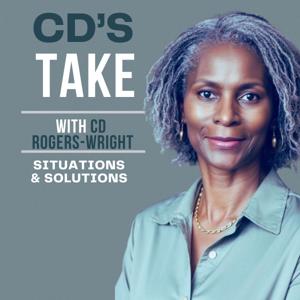
Every organization faces challenges. Every leader faces decisions. And every problem leaves clues.
On CD's Take: Situations & Solutions, leadership practitioner and doctoral researcher CD…
Each episode covers one situation, one honest breakdown, and offers a fix leaders can actually use. Whether the topic is organizational change, workplace culture, crisis response, burnout, innovation, or leadership accountability — the question is always the same: what's really going on here, and what's the fix?
Created for Fellow Fixers everywhere, this podcast helps leaders move beyond assumptions, identify what’s broken, and take meaningful action.
Because hope is not a strategy. Accountability matters. And there's always a fix.
Contact: [email protected]