
Sign up to save your podcasts
Or

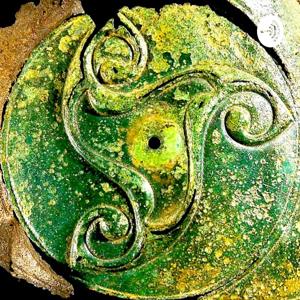


The story of Rhiannon is found in the first and third branches of the Mabinogi. One of the most important books written on the subject is Rhiannon by W.J. Gruffydd, one of Wales' most prominent poets and scholars of the 20th century. But why is his work so ingenious and contentious? This talk is the first in a series exploring this book in depth. Feel free to follow along as we work through the different sections.
Clearly, witchcraft — as part of the broader set of beliefs we call paganism — was an aspect of a nature religion in the folk culture of medieval Wales. But sometimes we need to be a bit careful with our terms . . . Courses on Celtic myth and folklore: https://celticsource.online/courses-page
Comparing Irish, Norse and Welsh medieval sources sheds light on the meaning of the otherworldly well that appears to be closely connected to both divine inspiration and the sovereignty figure.
Courses on Celtic myth and folklore: https://celticsource.online/courses-page
In some variations of the myth, the way the sovereignty goddess engages with the king causes her to transform. What does this tell us about their relationship?
Courses on Celtic myth and folklore: https://celticsource.online/courses-page
The first in a series looking at the Celtic myth of the sovereignty goddess. The story 'Baile in Scáil' contains one of the earliest explicit examples of a sovereignty figure in Irish literature, and features the intriguing concept of a ceremonial drink. Courses on Celtic myth and folklore: https://celticsource.online/courses-page
A recording of the first day of the Mabinogi Challenge.
Over the course of 5 days we're working through a simple process by which you can begin to interpret and understand a short folk-tale from the Mabinogi tradition.
0:00 The Welsh storytelling tradition.
17:06 The Story of Llyn Barfog.
32:35 Q&A.
40:45 Challenge questions.
If you want to take part, please join the Celtic Source Facebook Group at https://www.facebook.com/groups/celticsource
Courses on Celtic myth and folklore: https://celticsource.online/courses-page
In this second talk on Canu Llywarch Hen, the 9th century Welsh poems that tell the story of Llywarch the Old and his 24 sons, we talk through Llywarch's lament for his son, the fallen warrior Gwên. This second poem confirm's much of what was suggested in the previous episode, especially the notion that the heroic ideal isn't all it's cracked up to be.
Courses on Celtic myth and folklore: https://celticsource.online/courses-page
Canu Llywarch Hen, the sequence of 9th century Welsh poems about the tragedy of Llywarch the Old and his 24 sons, is one of the most important works in Welsh literature. But far from joining in with the pomp and pageantry of traditional praise poetry, instead it reveals a darker side of the hero myth so beloved by the nobility.
Courses on Celtic myth and folklore: https://celticsource.online/courses-page
In this second video on Canu Heledd ('The Song of Heledd') we look at what could have led to such a tragedy. There are suggestions in the poems that Heledd considers herself to be to blame for the death of her brother and the fall of his territory.
If you’re intending to follow the Ystoria Taliesin course but need an in-depth understanding of the Taliesin myth, I’d suggest subscribing now and following The Taliesin Tradition before we begin on February 6th. It’s not a requirement, but it will give you lots of background on the myth and how it has developed.
All of the courses are now accessible with the new flexible subscription, where you can choose your own monthly payment.
Canu Heledd ('The Song of Heledd') is a sequence of 9th century Welsh poems commemorating the loss of territory to Saxons when they invaded the kingdom of Powys. The main character in these dramatic verses is Heledd, sister of Cynddylan, one of the noblemen who died defending against the attack. But Heledd is more than a voice of grief in the poetry, she also embodies the land of Powys itself.
From the publisher's feed