
Sign up to save your podcasts
Or

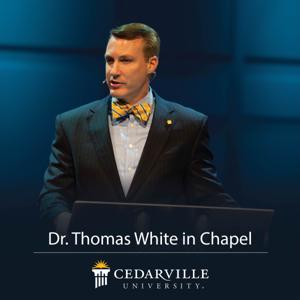


Thomas White, President of Cedarville University, spoke about gambling and encouraged us to ask, “What are my actions teaching my heart to love?”
Dr. White defined gambling as “staking money or something valuable on an uncertain outcome where the person has no ability to influence the results in hope of receiving a greater return through the wager.” He walked us through four questions to analyze our actions.
Question #1: Does this seek my neighbor’s good?
Scriptures like Proverbs 3:27–29 call us to love our neighbors by seeking their good. We must consider others when we decide what to do with our money.
Love considers a neighbor’s loss. In gambling, someone profits at their neighbor’s expense. Love also honors a neighbor’s worth. If you bet on sports, you may begin to resent injured players or referees who make a bad call because they are losing your money. This is the wrong heart posture to have.
Question #2: Am I seeking a shortcut?
Scripture tells us to work with diligence. Proverbs 28:19 talks about working in the field God has given you, and verse 20 talks about valuing faithfulness more than speed.
Faithfulness might look like showing up for your shift or completing your assignment when you’d rather do something else.
Betting sells you the shortcut — asking to abandon the Father’s will by skipping the hard work and getting the reward quickly. Satan offered Jesus the same thing. But as Christians, we should be willing to work, save, wait, and give.
Question #3: Is this becoming my master?
Societal harm comes from gambling. A lottery can be sold as a way out of hardship for people in need. As Dr. White said, “when one person’s financial desperation becomes another person’s business opportunity, something has gone wrong.”
We can become addicted to the dopamine hits that gambling gives us. Respect your personal limits. Proverbs 25:28 talks about a man without self-control. You might promise yourself that you’ll be done after one more game, but when you lose, your emotions will tell you to keep going.
If you let your desires direct your decisions, your freedom to gamble may become bondage and addiction. Respond to warning signs when you notice them.
Question #4: Am I trusting in God’s provision?
Proverbs 30:8–9 encourages us to pray for the provision we need and to remember God. The goal is not to secure a life in which we never need Him; the goal is to walk with Him faithfully in plenty or in poverty.
We are also encouraged to faithfully manage what we have been given. Everything is the Lord’s. Would you use His money to gamble?
Consider your motives. Faithful stewardship does not eliminate every risk, but are you serving the Master’s purposes with that risk or yours?
God gives us money, and we should use that money to give generously to others. If you’re stuck deep in a gambling problem, come to Him! His mercy and forgiveness are greater than all your sins.
Our lives are filled with everyday decisions with real consequences. We sometimes overlook the small choices, thinking that only the big ones matter. This morning in chapel, Dr. Thomas White, President of Cedarville University, preached through Proverbs 9, in which two invitations are presented. He reminded us that daily decisions determine our direction. Will you choose to walk through the door of wisdom or the door of folly?
The Delight of Wisdom (Proverbs 9:1–6)
Wisdom extends the first invitation. She has put in the effort to set a table, prepare a feast, mix wine, and make her house gorgeous. She sends her young women to invite the simple and uneducated to leave their ways and come to her.
We should be thinking wisely and deeply. Rather than wasting our lives, we should be strategic and intentional. Wisdom invites us to go on a long walk toward Jesus. As we do this, we will struggle less and less with the folly of the world. Fear God, forsake folly, and find true life — this is the delight of wisdom.
However, not everybody responds well, even if our heart’s desire is to follow Christ. We have a sin nature, so we will mess up. We should make most of our decisions based on wisdom, and when we mess up, we must repent and start walking toward Jesus rather than continuing down the wrong path.
The Daily Decision (Proverbs 9:7–12)
In these verses, there is a contrast between the scoffer and the wise person. When you give genuine godly correction to someone who is pursuing Christ, they will love you for it. If they are not pursuing Christ, they may hate you for it. If we choose to respond like the wise man, we will learn how to become more like Christ.
God has no spiritual grandchildren. Your parents may be very godly people, but that doesn’t automatically transfer over to you. Verse 10 tells us that we will have knowledge of God by reading His Word. This is something you have to do yourself — nobody else can do it for you.
The Deception of Folly (Proverbs 9:13–18)
Folly also extends an invitation to you. The temptation is to take a shortcut, getting to the destination without doing the hard work it takes to get there. She targets those who are doing what’s right, trying to convince them to follow her instead and experience instant gratification.
But folly doesn’t tell you she will lead you into chains of bondage. The longer you stay in sin, the more you will have to pay. Folly knows nothing. Her invitation will end in loneliness and regret, and you will desperately want to escape.
If you have chosen folly for a long time now, there is grace at the foot of the cross. Jesus extends an invitation to forgive you when you come to Him. Don’t let the mistakes of your past determine the destination of your future.
Wisdom and folly both call out to us. Today’s choices, big and small, shape tomorrow’s character. Choose wisdom that leads to life rather than folly that leads to death.
This morning’s Homecoming speaker was Dr. Thomas White, President of Cedarville University. He delivered this year’s State of the University Address, celebrating all that God has done and is doing on campus.
Alumni Awards
Dr. White recognized the recipients of this year’s Homecoming Alumni Awards. Two former athletes are being inducted into our Athletic Hall of Fame: Dr. Sarah Zeltman ’08 and Alison (Lemon) Rice ’10. The 2026 Young Alumnus of the Year Award is going to Peter Grinalds ’21, and the Distinguished Service Award goes to Jeff Reep ’79. Our Alumnus of the Year is Jim Houser ’91.
Record Enrollment
Dr. White made multiple other exciting announcements. First, we have had yet another record year of enrollment, with 7,542 students across undergraduate, graduate, and online programs. This year’s freshman class is the third largest in Cedarville history.
State of the University
Each year, Dr. White chooses a word or phrase to describe the state of the University. This year, he focused on the phrase, “eternal wisdom for an artificial age.” AI and the internet put so much information at our fingertips. We don’t need more of it — we need biblical wisdom.
Because of this, his sermon series this year is called “Built by Wisdom.” He wants students to fear God and forsake folly so they can find life.
AI Stewardship
Dr. White also discussed how Cedarville is thinking about AI as a tool we should steward. We want to form biblically faithful servant-leaders equipped to engage with AI with skill and discernment. Our goal is to have every student equipped with AI literacy by graduation, meaning that they know what it is, how it works, and where it shows up in the world.
Dr. White announced a brand-new four-course, all-online graduate certificate in Strategic AI Leadership. The goal of this certificate is to equip leaders to guide responsible, strategic adoption of AI. He also highlighted our new Bachelor of Science in innovation and entrepreneurship.
New Tennis Courts
We have recently received $200,000 from the United States Tennis Association (USTA) to help build new tennis courts at Cedarville when combined with other donor funds. Dr. White recognized Dr. Delyte “Dee” Morris, who has spent decades teaching and mentoring within the allied health program and coached the University’s women’s tennis team for 42 years. The tennis complex is going to be named after her to honor her legacy of excellence and service to her sport, her student-athletes, and the University.
Cedarville Florida
Wise stewardship has positioned us not merely to endure change but to pursue new opportunities to expand our mission. Dr. White announced Cedarville’s new Florida location, with classes beginning in January 2027! Learn more about this new endeavor at cedarville.edu/florida.
The Gospel is the foundation of everything we do here at Cedarville. Just like Jesus walked with His disciples for roughly 1,000 days, we want to point students in a direction that glorifies Him during their 1000 Days on campus.
God is the giver of all good gifts. None of this has happened by our own effort — it’s all Him! Let’s praise Him for His provision.
This morning in chapel, Dr. Thomas White, President of Cedarville University, preached through Job 38–42. In this passage, confused at why God was allowing his suffering, Job demanded a legal hearing from God. But he ultimately repented, realizing how small and clueless he was compared to God.
This passage applies to us as well. We may not understand what God is doing, but we can always trust who God is: sovereign, wise, compassionate, and merciful.
God’s Knowledge Is Perfect (Job 38–39)
Job tried to make God seem unjust in order to justify himself. In response, God reminded Job that he wasn’t there when God created the world. Job didn’t know how God controlled the sea or made the sun come up. He couldn’t comprehend death. God went from rain to snow to grass to ice to stars to clouds, reminding Job that he had no idea how any of creation was formed or upheld.
All these things are true of us too. God is God, and we are not. He knows better than us, having ultimate wisdom. How dare we fight against Him and say we want our own way? Instead, we must recognize the compassion, goodness, and mercy of God and lean into the way He has commanded us to live.
God’s Power Is Supreme (Job 40–41)
In these chapters, God reminded Job that he could not rule the universe, save himself, or control the wild beasts. Neither can we — we don’t have infinite knowledge or infinite power like God does.
God’s Goodness Is Personal (Job 42:3–5)
God did not have to respond to Job’s uneducated questions, but He cared enough to mercifully do so anyway. He revealed Himself to Job, demonstrating His goodness and compassion.
God’s knowledge is perfect, so trust His wisdom when you don’t understand. God’s power is supreme, so trust His power when life feels out of control. God’s goodness is personal, so trust His goodness when suffering is unexplained. God is faithful, and we can trust Him.
Guard Your Heart With God’s Word, Because Your Whole Life Flows From It
Today in chapel, Dr. White taught from Proverbs 4:20–27, highlighting three main admonitions: Attend to God’s Word, Guard Your Heart, and Ponder Your Path. He ended by applying these points to everyday life.
Attend to God’s Word
Proverbs 4:20–22 tells us to be attentive to God’s Word and incline our ears to His teaching because our hearts naturally stray if we do not. We must also not let God’s Word escape our sight or our hearts, because when something else captures our attention and affections, that shapes our lives instead of God’s Word.
Guard Your Heart
Proverbs 4:23 calls us to guard our hearts. We protect what we think is valuable. Dr. White used the analogy of protecting social security numbers and cards to illustrate the importance of guarding our hearts. If someone loses their social security card, their identity can be stolen, and their life becomes a mess. The same logic applies to the loss of our hearts, as failing to guard our hearts leads to a mess of a life apart from God’s will.
Ponder Your Path: Speak, See, and Step Straight
Finally, Proverbs 4:24–27 applies guarding our hearts to our lives. We must speak, see, and step in the way of God. The words you speak reveal the temperature of your heart and thoughts. Be careful not to speak too much about what you should guard against. The same logic applies to what you see. Don’t look at and linger on the things that you know will take you from God. Lastly, your steps can take you to safety or to shipwreck, so direct them away from temptation and towards God’s Word. Choose your path wisely, because your steps change your life.
Application
Dr. White left us with three questions to ask ourselves and reveal whether we truly guard our hearts:
Have you ever noticed that you find joy in helping others? Yet too often, we treat friendship transactionally, focusing only on the benefits others can give us. We don’t ask God to help us be a good friend. This morning in chapel, Dr. White, President of Cedarville University, reminded us that wisdom helps us become the kind of friend we want to have.
Proverbs 13:20 says that the wise friend walks with the wise. Surround yourself with people who forsake folly rather than people who lead you into folly. You drift the direction in which your closest friends are going. Ask yourself, “Who that I hang out with encourages me to love Jesus more? Who that I hang out with is the kind of person I want to be?”
Ecclesiastes 4:9–12 explains that the wise friend shows up faithfully. The devil wants you isolated because it’s easier to destroy you that way. Isolation is not wisdom. Real friendship shows up. Will you be there when your friends fail the exam or go through the breakup? Will you be there in the hospital room? Let’s be a campus where nobody fails or falls alone.
Proverbs 27:17 shows us that the wise friend speaks life-giving truth. Don’t surround yourself only with people who affirm you and let you know how good you are. You also need people who wisely and kindly rebuke and challenge you. It’s important that you do the same for them and that you listen when they speak into your life. Remember that you don’t get to rebuke someone unless you’ve invested in their life; you don’t need to speak up every time you see something you don’t like. But if you have invested, you have an opportunity to speak life into somebody. Ask yourself, “Will my influence make it more likely that they choose Christ’s ways?”
Proverbs 15:31–33 says that the wise friend stays humbly teachable. Some of us are too resistant to the counsel that people give us. We need to listen and take wisdom instead of always correcting others or interrupting.
Proverbs 17:9 explains that the wise friend guards trust. If you share others’ secrets, they won’t be likely to trust you with the next secret. A true, godly friend covers up the small offenses and keeps confidence. They also respect space and boundaries.
We want a friend who sticks closer than a brother. Let’s be that kind of friend. Jonathan in 1 Samuel is a Christlike friend to David, but he only points us to Jesus, the greatest Friend we have. Jesus walked with His disciples to make them wise. He showed up in their fear and adversity. He spoke life with tenderness and truth. He modeled a humble posture. He guarded and covered those entrusted to Him. If you want to be a wise friend, lean into Jesus and let His love overflow out of your life.
Where do you go when you need advice or wisdom? This morning in chapel, Dr. Thomas White, President of Cedarville University, reminded us that wisdom is the ability to discern what is right and how to live under the lordship of Jesus Christ. Job 28 provides a great reminder that genuine wisdom can only be found in God.
The Pursuit of Treasure (vv. 1–11)
These verses describe the great lengths that people go to when mining treasure. They spend much mental and physical energy in dangerous conditions as they hunt for gold. We, too, dig deep in search of our own earthly treasures: good grades, a good reputation, money, relationships, and success, among other things. Yet, so often, we don’t dig deep into the Bible. To neglect God’s Word is to rely on ourselves far too much. We think we’re self-sufficient, but we’re not. It is vital to have a plan for reading Scripture and to follow through with it.
The Price of Wisdom (vv. 12–19)
These verses explain that although we can uncover all the earthly treasures we want, we don’t know where to find wisdom or how much it’s worth. We can’t find it anywhere on Earth. We can’t buy it. We can’t build a ladder to God’s wisdom with our own. So how do we get it?
The Place of Understanding (vv. 20–28)
The way to wisdom is on our knees, asking the Lord above for it. It can be found in His Word. Verse 28 explains that wisdom is to fear the Lord and to turn away from evil. The fear of the Lord is reverent submission that produces obedient living. It means realizing that He is God and we are not. It means humbling ourselves rather than trusting in our own understanding. This leads us to forsake folly and live rightly.
Where do you go when you need advice or wisdom: to earthly treasures or to God? Make a habit of running to His Word and allowing it to transform everything about you. Jesus is the perfect wisdom.
Chapel Recap: We Are Called to Be “Built by Wisdom”
Cedarville University welcomed students, faculty, and staff back to campus today for the opening chapel service of the academic year. Dr. Thomas White set the tone for the year, calling the Cedarville community to worship together, build meaningful relationships, and pursue wisdom in an increasingly artificial age.
A central focus of today’s chapel was the University’s approach to artificial intelligence. Dr. White emphasized that AI is neither a savior nor something Christians can ignore. Instead, Cedarville University aims to prepare biblically faithful servant leaders who engage AI with skill, discernment, academic integrity, and humility. Students were encouraged to become AI-literate, learn to evaluate AI tools responsibly within their fields, and protect the critical-thinking, reading, and writing skills that rigorous academic work develops.
The message also underscored that technology cannot replace human connection. New and returning students were urged to participate in discipleship groups, share meals with one another, and practice face-to-face fellowship.
The chapel service also introduced Dr. White's new sermon series, “Built by Wisdom." Throughout the year, the Cedarville community will study wisdom literature from Job, Ecclesiastes, and Proverbs, asking how God’s Word shapes faithful decisions amid information overload and cultural uncertainty. The challenge was clear: seek not merely more information, but godly, biblical wisdom.
The service also previewed Fall Bible Conference, featuring Dr. Trevin Wax, and shared campus updates including the future Bolthouse Academic Center. The welcome also celebrated new apartment spaces and an expanded weigh room, reminders of continuing investment in the student experience on a growing campus today.
As the semester begins, Cedarville University remains committed to helping students flourish through Christ-centered education, faithful community, and lives built by wisdom in every academic, spiritual, and relational opportunity available.
Chapel Recap: What Will You Do With Jesus?
In today’s chapel, Dr. Thomas White continued the series in Mark, preaching from Mark 15 and centering the message on how the events of the crucifixion answer a key question: What do I do with Jesus?
Dr. White first pointed to the world’s response — to scorn and reject Christ (vv. 1–20). Jesus was mocked, beaten, and dismissed by those around Him. Yet this response is not limited to the past. “Our world is still looking for all the wrong things in Jesus,” Dr. White said. Rather than receiving Him as Savior, many reshape Him to fit their expectations or reject Him altogether.
Next, Dr. White highlighted the Father’s response — sending Jesus as both Substitute and Savior (vv. 21–38). On the cross, Jesus was crucified in your place, bearing the punishment for sin. He was abandoned for your sin, experiencing the weight of separation so that you would not have to. And when He died, the curtain was torn, symbolizing that access to God was now open. “He bore the curse for us,” Dr. White reminded.
Finally, Dr. White turned to faith’s response — recognizing Jesus as the Son of God (vv. 39–47). The Roman centurion, witnessing the crucifixion, confessed who Jesus truly was. Others remained faithfully present, testifying to His death and burial. The proper response to the cross is belief and true surrender.
Dr. White closed with a challenge: “Have you pondered the cross long enough that you are able to live your life in a way that might cost you something?”
Mark 15 forces a decision. You cannot remain neutral. The world rejects Him, the Father offers Him, and faith receives Him. The question remains: What will you do with Jesus?
From the publisher's feed