
Sign up to save your podcasts
Or



When Dr. Vicki Jackson was an internal medicine resident, one particular patient showed her the transformative role that empathy can play in a patient’s life and care. This experience sparked her interest in palliative care and providing specialized support for people with serious illness. In this episode, she discusses her passion for the field and her experience helping patients navigate the uncertainty inherent infacing serious illness.
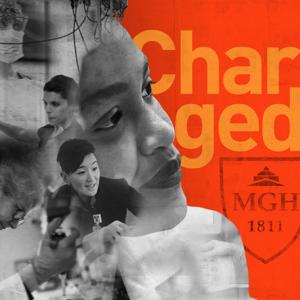
March is Women’s History Month. In honor of the month, we are celebrating the women behind the innovations in health care at Mass General. We recognize their success stories, their strength in overcoming adversity and what keeps them charged to achieve their goals. In this special episode, we ask our guests from throughout the hospital to share stories about what drove them to pursue a career in medicine and what keeps them motivated to drive forward.
When Sareh Parangi, MD, witnessed her first operation in medical school, she knew immediately that she wanted to become a surgeon. Now years later, Dr. Parangi is one of the first women to become a full professor of surgery at Harvard Medical School. However, she recognizes the challenges that a career in surgery can present to young women. Dr. Parangi discusses the seriousness of gender disparities that come with a career in surgery and why she has become an advocate to help female surgeons overcome barriers to do what they love, while also raising a family.
Biophysicist Dr. Sylvie Breton has dedicated her career to studying the kidneys and the male reproductive tract, and her discoveries have the potential to change medicine. She has identified a method for predicting the onset of acute kidney disorder, which affects more than four million people yearly and is called the “silent killer.” She talks about why she enjoys research so much, and how each new discovery spurs her on to the next.
Gun violence kills more than 35,000 Americans annually, yet funding for research is limited and most doctors are not taught how to approach the topic with patients. For Dr. Chana Sacks, gun violence became a personal reality when her cousin’s seven-year-old son Daniel was killed at Sandy Hook. This tragedy spurred Dr. Sacks to establish the Mass General Gun Violence Prevention Coalition. She discusses why she has become a vocal advocate for gun violence prevention research and why she views gun violence as a solvable problem.
Since beginning her career in the mid-1990s, infectious disease chief Dr. Rochelle P. Walensky has witnessed the transformation of the landscape for HIV and AIDS. Though new drugs have improved the outlook, the challenges of accessing and maintaining care persist. Dr. Walensky discusses how she works to expand access to care for HIV patients through research and a willingness to understand patients' struggles.
As an obesity medicine specialist, Dr. Fatima Cody Stanford understands the implicit and explicit biases that her patients face. As a black female doctor, she’s also familiar with the biases she faces each day. But a recent Delta flight was a poignant reminder of these biases when flight attendants questioned her credentials as a doctor as she provided care to a fellow passenger. Dr. Stanford discusses this experience and why she's speaking out against biases and promoting diversity in medicine.
Bipolar disorder can be easily overlooked or misdiagnosed in children because it presents differently than adult bipolar disorder. Just 25 years ago, experts believed that bipolar disorder only affected adults—and to suggest otherwise was controversial. However, thanks to the work of child psychiatrist Janet Wozniak, MD, we now know that bipolar disorder also affects children. In this episode, she discusses her work with children struggling with bipolar disorder and why she believes early interventions to diagnose and treat psychiatric disorders in children can be such a powerful force to help her young patients and their families.
Gaurdia Banister, PhD, RN, NEA-BC, FAAN, believes that the hospital should be a welcoming place for all patients. Patient care, she says, should be founded on empathy, compassion, dignity and respect, and as a nursing leader, she advocates for that quality of care. Dr. Banister is also a longtime champion for diversity in nursing. In this episode she discusses the work she's done to help more people of color enter nursing and why this work is so important.
Doctors have struggled for years to find an effective treatment for amyotrophic lateral sclerosis (ALS), in part because the it varies greatly from patient to patient in terms of how quickly it progresses and the age of onset. But for neurologist Merit E. Cudkowicz, MD, those challenges are opportunities for scientific collaboration. She spends her days leading clinical trials aimed at better understanding ALS and working with patients to find better treatments for this debilitating disease. Today, new therapies are in rapid development. Her work has inspired hope for a disease that seemed incurable a decade ago. In this episode, she discusses her drive to find a cure for ALS and why she’s so passionate about her ALS patients.
From the publisher's feed