
Sign up to save your podcasts
Or

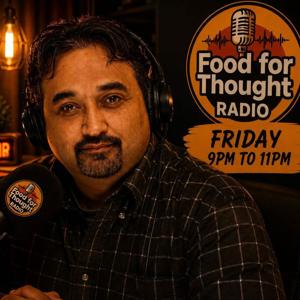


In this episode, Sukh and I opened with a quick recap of last week’s disrupted conversation before getting into episode four of the series on trial by jury. We revisited the role of jurors, conscience and bodily autonomy, then moved into a wider discussion about democracy, self-governance and what Sukh described as the spiritual expression of anarchy: a flat structure in which people organise, participate and hold authority to account directly. We also touched on how these ideas connect to community responsibility, the limits of hierarchy, and the importance of leaving future generations practical tools rather than simply temporary fixes.
We also explored the value of local organisation, from community assemblies to rapid mutual support, and looked at why groups working towards autonomy should be building alongside one another rather than competing. Along the way, we mentioned thinkers, campaigns and organisations that have influenced the discussion, from Larken Rose and Lysander Spooner to CABBI, TECA, The Sovereign Project and The People’s Lawyer. We rounded off by looking ahead to future conversations on trusts, home education, Freemasonry and the next episode’s focus on Princess Diana.
Tonight I gave a fuller walkthrough of the Foundation Course and why I believe it gives people practical building blocks for taking more control of their affairs. I talked through the thinking behind setting up a limited company rather than an unlimited one, why I see that distinction as important for protecting property and assets, and how company structure, trademarks, enrolled deed poll changes, and paperwork around homes and vehicles fit into the wider process I teach. I also explained why I think listeners should research both the legal and lawful approaches for themselves, take what is useful, and build knowledge layer by layer rather than blindly copying anyone else’s method.
I also shared updates from the Willoughby community, including our push towards 1,000 Discord members, the upcoming Wednesday Zoom sessions, and the new Sunday role-play session designed to help people practise dealing with bailiffs more confidently. We touched on the new Challenger tool, the value of keeping a strong evidence trail, and some recent success stories from members using Willoughby Genius and related tools to feel more prepared in court and in day-to-day disputes. As always, the message was to get informed, ask questions, and help the next person along once you’ve learned something yourself.
In this episode of *Trial by Jury*, I sat down with Sukh to unpack what he sees as the three pillars of governance — the legislature, the judiciary and the executive — and why he believes an independent judiciary, rooted in jurors acting from conscience, is essential if people are to defend their autonomy over mind, body and property. We explored what a juror’s role should be, why he argues that a jury must be free to weigh evidence and conscience without interference, and why he rejects the idea of a grand jury as an unnecessary delay in delivering justice. We also touched on how local communities could begin organising, learning the process, and preparing to act at a village or town level before attempting anything national.
We then brought the conversation into the present day, looking at examples of grassroots action, local support networks and the growing appetite for communities to stand together when they feel their rights are being eroded. Even after Sukh dropped out of the live link, I carried on reflecting on why trial by jury has returned to the forefront for so many people: as a way of questioning imposed rules, rebuilding local confidence, and encouraging ordinary men and women to become better informed, more involved, and more willing to take responsibility for the future they want to leave to their children and grandchildren.
In this week’s Willoughby Surgery, I opened with a recap of the first stages of the foundation course, focusing on setting up a limited company, registering a trade mark, and using an enrolled deed poll as part of the wider framework I’ve been teaching. I walked listeners through how I believe company structures, trademarks and court procedure interact, why I see class 35 trade mark registration as important, and how an enrolled deed poll can be used to establish a separate lawful identity and update records such as property deeds. I also moved into the fourth step of the course, discussing vehicle paperwork, the distinction between keeper and owner, and how I approach registration, insurance and notices connected to motoring issues.
We then moved into a lively Q&A covering whether these approaches can be used in court, how tax is handled for employed versus self-employed people, what changes in Scotland, Northern Ireland and the Republic of Ireland, and what practical risks people face around uninsured vehicles, e-scooters and e-bikes. I closed by flagging upcoming episodes of Common Man Airwaves with Sukh Singh on trial by jury, pointing listeners towards Food For Thought Radio, the Discord group, the Rumble channel and the live Zoom sessions for further discussion and follow-up material.
In this second instalment of our Trial by Jury series, Sukh and I dig into jury nullification and the claim that ordinary people are meant to be the final arbiters of law. We explore the difference between suffrage and democracy, the idea of courts of conscience, and why trial by jury is presented here not as a procedural detail but as the practical mechanism by which people can defend autonomy over mind, body and property. Along the way, we touch on Magna Carta, constitutional principles, and the argument that real justice should be rooted in conscience rather than blind obedience to legislation.
We also work through the lockdown-era pub example to test these ideas in practice: if government measures interfere with a person’s ability to trade, earn a living and make informed choices, what remedy should exist in real time? Sukh argues that jury nullification is that remedy, and we discuss how this connects to modern courts, administrative overreach, old legal texts, and the wider question of where sovereignty truly sits. The episode closes by setting up the next conversation: what a juror’s role really is, and how courts of conscience might be understood in today’s world.
This week on the Willoughby Surgery, I walked listeners through the opening stages of our Foundation Course and explained why I believe they matter. I focused first on "claiming your name" by setting up a limited company, then on registering a trademark, sharing how these steps fit into the wider structure I teach around personal protection, jurisdiction, and dealing with official systems. I also explained how the Foundation Course is designed as a sequence of steps, and why I want members to understand not just what to do, but the reasoning behind each part.
In the second half, we opened the floor to live questions from the Zoom room and covered a wide range of practical concerns, including speeding tickets, dormant companies, car ownership and keeper arrangements, TV Licensing doorstep visits, utility disputes, pay-as-you-go meter threats, debt collection, DSARs, GDPR-based challenges, and how the Challenger and Data Busters training fit into all of this. It was a lively session with plenty of real-world examples, and a useful introduction for newer members trying to understand both the Foundation Course and the wider Willoughby ecosystem.
In this first instalment of our six-part series on trial by jury, I sat down with Sukh to begin unpacking the subject in plain English. We explored the idea of trial by jury in its ‘natural law’ form, the distinction Sukh draws between what is lawful and what is merely legal, and why he believes ordinary people need a clearer grasp of how conscience, autonomy and accountability are meant to sit at the heart of justice. We also looked at the three areas Sukh says every person must retain autonomy over — mind, body and property — and how intent and consent shape questions of right and wrong.
Suk also set out the wider roadmap for the series, including jury nullification, the role of jurors in governance, common misunderstandings around Magna Carta, and practical action listeners can take. Along the way, we touched on COVID-era restrictions as a modern example of the tension between individual autonomy and state power, and why Suk sees trial by jury as a safeguard against unjust legislation. Next time, we’ll move from the ‘why’ into more of the ‘how’, with a closer look at jury nullification and the Coronavirus Act.
In this week’s Willoughby Surgery, I took live questions from listeners on how to use Willoughby Genius and the wider Willoughby toolset more effectively. We covered practical issues including whether the platform can be used internationally and in multiple languages, how to upload and challenge a speeding notice, and how the training inside the Discord community is intended to help people deal with parking tickets, congestion charges and other paperwork. I also explained how the different products fit together, from Willoughby Genius to Pix Busters, Data Busters and Challenger, and how DSARs, reminders and escalation steps are meant to work when listeners are trying to force responses from companies and public bodies.
I also answered questions on ongoing disputes with energy and water companies, debt collection, vehicle paperwork, ID verification, and the relationship between the training courses and the software. We talked through examples involving Affinity Water, DVLA requests, Money Claim Online, and the practical differences between keeper and owner arrangements for vehicles. I finished by sharing an update on the all-in-one platform build and previewing the upcoming Tuesday series, where I’ll be joined by Suk Singh to break down trial by jury and other complex areas of law into plain English.
From the publisher's feed