
Sign up to save your podcasts
Or

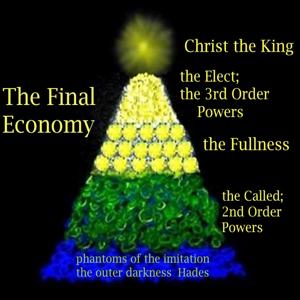

Last week’s episode, The Key to Gnostic Cosmology, was well-timed to greet the slew of new subscribers who joined The Gnostic Reformation as a result of the wonderful review by The New Unhinged that appeared on Mariah’s Substack website on November 28, 2025. It’s titled: Roast for Relief #17: The Gnostic Who Broke My Brain in the Best Way If you haven’t seen the piece yet, please hightail it over there and take a look. It’s funny and reverentially irreverent at the same time. I feel honored by Mariah’s appreciation and the hours she spent on the review.
Today, I’m going to run through the Gnostic Cosmology again, this time pairing the explanations with illustrations from my kid’s book, Children of the Fullness: A Gnostic Myth. My brother Bill thinks the kid’s book will be the version that survives into the far future as a new Gnostic Gospel in some distant version of the Nag Hammadi codices. Personally, I’m not so sure there will be a far future here on this material plane, but we’ll see… In any event, I’m doing my best to get the hard cover edition into libraries and bookstores in the here and now. Meanwhile, we need more reader reviews to help the book rise up in amazon. So, please, buy the paperback or download the kindle version for free or almost free and then leave your review. You will be supporting gnosis and love.
ALL of the following illustrations are from Children of the Fullness. For the purposes of this episode, I have removed the text from the pages and am only presenting the images as I narrate a grown-up version of the pictured events. Believe me, the kiddie book is written as a young child’s bedtime story. And because of that, the Gnostic characters are personified into recognizable forms. The Father looks like a father. The Son looks like a son. The Aeons are personified as Angels, although in truth, not all Aeons are angels. But kids can relate to angels, so I gave the Aeons wings and halos.
I’m putting the illustrations into the transcript so that if you are listening to this as an audio podcast, you can go to GnosticInsights.com or to my Substack location, the Gnostic Reformation, under the name of Cyd Ropp, so that you can see the illustrations.
The gnosis is simple. It has to be, because all living creatures know and embody it. So, if my dog can’t understand the gnosis, it ain’t gnosis, it’s just knowledge or good or bad information. And if you can grasp today’s illustrated gnosis, then you will have enough to go onward and upward. Sure, more explanations are nice, but they are not essential. All we really need to know is that we come from Above, and we will return to Above. That’s it in a nutshell. The rest is a lifetime of practicing love and embodying virtue.
So let’s get started.
The Father’s mind is the initial, illimitable consciousness. Consciousness is the ground state that predates everything. Consciousness is part of the existence of God, and it is the very first thing before anything that follows. There is no gender associated with this Father. Obviously the Father is not a man with a beard and long robes, rather “he possesses this constitution without having a face or form, things which are understood through perception.” The Tripartite Tractate describes the Father this way:
Whence also comes the title, the incomprehensible. If he is incomprehensible, then it follows that he is unknowable, that he is the one who is inconceivable by any thought, invisible by anything, ineffable by any word, untouchable by any hand. He alone is the one who knows himself as he is, along with his form and his greatness and his magnitude.
Step number two is the emergence of the Son. It is the emergence of consciousness from the illimitable, infinite consciousness of the Father into a singularity—into a monad, as it’s called. It’s like the bucket dipped into the sea. It contains all of the characteristics and quality of the Father, but it’s contained as an individual. The Son doesn’t separate from the Father. It stays plugged into the Father.
This first illustration shows the Father holding his baby Son and showing Him the contents of His imagination. The facing page shows the mature Son releasing Aeons into the vision.
The Tripartite Tractate says that as soon as the Son was formed, what are called the Totalities of the ALL were formed. The Totalities of the ALL are all of the variabilities that make up the Son, all broken out and enumerated. The Totalities of the ALL do not recognize themselves as individuals. It is only through their giving of glory to the Father and Son that each of the Totalities comes to self-awareness. In the children’s book, we skip the step where the Son divides itself into all of its discreet variables and jump right to the self-aware Aeons populating the hierarchy of the Fullness of God.
Now, back to the children’s book. The next page shows the Aeons giving glory to the Father and Son by singing their songs of praise. The facing page shows the Aeons reproducing and making new Aeons through their combined singing.
Each of the Aeons of the hierarchy of the Fullness has a position, a place, a duty, and a name—in the Gnostic Gospel as I describe it, I say that this is the emergence of ego, for every Aeon is a self-identified individual. And basically what they do is sing songs of glory upstream to the Father and the Son, just like the Totalities did. And all together, they dream of Paradise.
We turn the page of the children’s book to see a young Aeon building a model of Paradise as the other Aeons look on with admiration.
This final Aeon was produced through a combination of all of the Aeons of the Fullness of God giving glory to the Father and the Son at the same time. “This aeon was last to have brought forth by mutual assistance, and he was small in magnitude,” referring, I think, to the fractal nature of his pleroma. This youngest Aeon carried within itself all of the traits of every other Aeon, perfect and complete. This was a very talented Aeon resembling the Son of God Himself, who also carried all of the traits of the Aeons within its singular Self.
This final Aeon was named Logos, because he was also endowed with the ability to reason thoughtfully and to figure things out in a step-by-step manner. The word Logos in Greek means reason and logic. The Tripartite Tractate puts it this way:
“This aeon was among those to whom was given wisdom, so that he could become pre-existent in each one’s thought. By that which he wills, will they be produced. Therefore, he received a wise nature in order to examine the hidden basis, since he is a wise fruit…”
This is a curious statement, because it seems to indicate that Logos was equipped to bring others into existence without the cooperation of his fellow Aeons. If the Father had not wanted an individual Aeon to be able to procreate without the agreement of the Fullness, why would the Father have equipped Logos to do so? All of the Aeons have free will, because the Father has free will and everything that emanates from the Father carries the attributes of the Father. The Tripartite Tractate says,
“for, the free will which was begotten with the Totalities was a cause for this one such as to make him do what he desired, with no one to restrain him.”
Logos was loaded with free will, as are all of the Aeons. The Father foresees our behavior before we do, which seems to contradict the idea of free will. We can resolve this classic theological conundrum by realizing that the Father anticipates every possible outcome of our free will. At the universal level, the infinity of the Fullness of God is represented by the potentiality of all possible choices a person could make as their life passes from one decision to the next. The fullness of all possible futures are within our reach as we pass through this universe; our own free will is driving our consciousness through those possibilities. The Father anticipates all possibilities in his infinite wisdom, and all possible courses of action are anticipated. This choice that Logos made was anticipated though not predetermined.
We turn the page in the children’s book to see Logos happily carrying his model of Paradise upward to the Father’s mountain top. The Father is not there to receive the gift. The middle panel shows Logos falling down from the heights. The panel on the far right shows Logos crashed down into a dark space with his broken model of Paradise scattered about him. He wears an expression of pain and clutches his head. An eerie, shadowy copy of Logos emerges from him.
Logos didn’t have the power or greatness of the original Son, but he had the blueprint—he had the model. He thought he was complete and could build a perfect Paradise on his own because he contained the Fullness of God in a smaller fractal iteration. He left his position and place in the hierarchy of the Fullness and headed upward to “the realm of perfect glory.” But he was mistaken and he crashed out of the ethereal plane, broke apart, and his pleroma lost its hierarchical arrangement. It became random and chaotic. Logos tried his best to bring it all back in order, tried to put his pleroma back together into a proper hierarchy, but it would not cooperate. Quote:
“The Logos himself caused it to happen, being complete and unitary, for the glory of the Father, whom he desired, and (he did so) being content with it, but those whom he wished to take hold of firmly he begot in shadows and copies and likenesses. For, he was not able to bear the sight of the light, but he looked into the depth and he doubted. Out of this there was a division – he became deeply troubled – and a turning away because of his self-doubt and division, forgetfulness and ignorance of himself and which is.”
“He became increasingly desperate. He was dumbfounded. Instead of perfection he saw deficiency; instead of unity he saw division; instead of stability he saw disturbance; instead of rest, upheaval. He was unable to bring their love of disturbance to an end, nor could he destroy it; he had become utterly powerless when his wholeness and his perfection had abandoned him.”
Turning to the next page we see sad Logos flying back up to the Fullness, looking over his shoulder at the mess below and his shadow rising from the gloom. And on the facing page we see the shadow of Logos, whom we call the Demiurge in Gnosticism, dark, no halo, a mean look on his face, staring at the pieces of the broken model of Paradise scattered about.
When Logos falls and abandons his ego down below, his ego is separated from the direct flow of consciousness, life, and love of the Father, Son, and Fullness. So this is the beginning of ego running amok. Ego found itself in this weird, dark, chaotic space, and thought it was all that existed because it didn’t remember what came before. It had all of the blueprints for Paradise because they were in the mind of Logos when he fell. It also had the ambitious overreaching that Logos was engaged in when he fell.
The next two pages show the Demiurge building our material creation, with Logos looking down from above. The Demiurge builds rocks and mud, but he can’t make his muddy models come to life because he doesn’t contain the consciousness and life of the Fullness and the Father.
On the next double-page spread we see the Angels sending living creatures down from the Fullness to the Earth.
The Tripartite Tractate says that the Earth was populated by the fruit of the Aeons, “from the smallest to the largest.” In Gnosticism the fruit of the Aeons are known as the Second Order of Powers, and they/we contain all of the attributes of the Fullness—the life, consciousness, free will, and love of the Father flowing down from the Fullness of God. Everything that’s alive, from the bacteria and the cells and the organs that make up our bodies and all of the critters and birds and fish, all of the insects and mammals, all living creatures, the grasses and the trees, the moss and the slime molds—everything that’s alive is a fruit of the Fullness of God, pre-designed in the Fullness. And we come down with a mission.
We Second Order Powers were supposed to come down here to remind the Demiurge of the Father above; to remind the Demiurge of Logos, his better half; to remind the Demiurge of love and consciousness and that he is not God and he needs to return home. We are supposed to be calling to the Demiurge to return home to the Fullness of God.
So the next page of the children’s book shows a loving Earth. Hearts and flowers; everybody happy and loving.
We Second Order Powers operate according to the same Aeonic principle I call the Simple Golden Rule of reaching out to others with love to help build things that we can’t do on our own. We make families and work together. We make villages and work together. We make small communities and build things that we can all enjoy together.
Sadly, this state didn’t last long, because the Second Order of Powers became caught up in a “never-ending war” with the material world. Gnostics speak of a division between the material world and our eternal spirits. Gnostics say that our eternal spirits are “trapped” in the material. We forgot about bringing love and remembrance to the Demiurge because of the never-ending war of spirit against material, the never-ending war of right and left, the never-ending war between us and the archons. It’s a constant battle here between life and death, with the Aeons promoting life and love and the archons promoting death and division.
I portray this division on the next two pages as the once-happy people and animals fight tooth and claw against one another.
Because of their isolation and strife, the Second Order Powers lost their purpose and joy. The people let their egos take control. Because the ego of Logos had been reaching for the heights, the egos of the Second Order Powers also reached for power and control, each thinking they were more worthy than the next. They forgot about the Simple Golden Rule and couldn’t work together in cooperation without favoring themselves. Narcissism ruled.
The next two pages of the children’s book shows people filling their spiritual poverty with lots of materials riches and tasty treats as the Aeons watch and pray from Above. We Gnostics would say that you can’t patch over a spiritual void with material prosperity, no matter how much stuff you accumulate.
And so the Fullnesses realized that that plan wasn’t working. The Aeons prayed to the Father, the Son, and the Totalities for true salvation to come and rescue the Second Order Powers, just like we were supposed to rescue the Demiurge. Now it takes a superpower, the most super Power, to come into our cosmos, rescue all of the Second Order Powers by reminding us of God’s love and what our true mission is of sharing love. Christ has the most power of any entity ever, more than enough power to bring remembrance, love, salvation, peace, comfort, joy to all of us down here who have forgotten. That’s the job of the Christ.
On the next page, we see the Savior standing with his hands on the shoulders of a pretty girl. The facing page shows many of the kids we saw in the previous unhappy page now feeling love and salvation as the Savior radiates love to them all.
Once the Christ succeeds in bringing remembrance to everyone, then the Demiurge will remember Logos above. Logos and his ego reunited. All is joy. All is gnosis. The material cosmos dissolves like snow and all souls are released to return to their home in the Fullness. This ushers in the age known as the Third Economy. Paradise at last.
To quote from my book, The Gnostic Gospel Illuminated,
Redemption means returning to the Father’s abode—that Paradise dreamed by the Fullness, where there is no death, no disease, no disappointment, and no deficiency. That Paradise where Christ is King and peace reigns supreme, and there is only cooperation, fellowship, and true love. In Paradise there is naught but life; so all the grass is green, and flowers blossom endlessly, and every soul that has ever lived, lives happily with their friends and families.
That’s the end of this Gnostic Cosmology, as illustrated in my kid’s book, “Children of the Fullness: A Gnostic Myth.” It’s not all that complicated, is it?
Last week I said we’d get into the applications of gnosis, and I released an extra episode this week for that purpose. It’s called “Remembering the Mission,” and it’s an update of an earlier episode from 2021 called “Why Not Be Sinful?”.
Meanwhile, if you have any questions or comments, please don’t be shy. Make some comments. I look forward to reading them. God bless us all and onward and upward.
 View all episodes
 By Cyd Charise Ropp
Last week’s episode, The Key to Gnostic Cosmology, was well-timed to greet the slew of new subscribers who joined The Gnostic Reformation as a result of the wonderful review by The New Unhinged that appeared on Mariah’s Substack website on November 28, 2025. It’s titled: Roast for Relief #17: The Gnostic Who Broke My Brain in the Best Way If you haven’t seen the piece yet, please hightail it over there and take a look. It’s funny and reverentially irreverent at the same time. I feel honored by Mariah’s appreciation and the hours she spent on the review.
Today, I’m going to run through the Gnostic Cosmology again, this time pairing the explanations with illustrations from my kid’s book, Children of the Fullness: A Gnostic Myth. My brother Bill thinks the kid’s book will be the version that survives into the far future as a new Gnostic Gospel in some distant version of the Nag Hammadi codices. Personally, I’m not so sure there will be a far future here on this material plane, but we’ll see… In any event, I’m doing my best to get the hard cover edition into libraries and bookstores in the here and now. Meanwhile, we need more reader reviews to help the book rise up in amazon. So, please, buy the paperback or download the kindle version for free or almost free and then leave your review. You will be supporting gnosis and love.
ALL of the following illustrations are from Children of the Fullness. For the purposes of this episode, I have removed the text from the pages and am only presenting the images as I narrate a grown-up version of the pictured events. Believe me, the kiddie book is written as a young child’s bedtime story. And because of that, the Gnostic characters are personified into recognizable forms. The Father looks like a father. The Son looks like a son. The Aeons are personified as Angels, although in truth, not all Aeons are angels. But kids can relate to angels, so I gave the Aeons wings and halos.
I’m putting the illustrations into the transcript so that if you are listening to this as an audio podcast, you can go to GnosticInsights.com or to my Substack location, the Gnostic Reformation, under the name of Cyd Ropp, so that you can see the illustrations.
The gnosis is simple. It has to be, because all living creatures know and embody it. So, if my dog can’t understand the gnosis, it ain’t gnosis, it’s just knowledge or good or bad information. And if you can grasp today’s illustrated gnosis, then you will have enough to go onward and upward. Sure, more explanations are nice, but they are not essential. All we really need to know is that we come from Above, and we will return to Above. That’s it in a nutshell. The rest is a lifetime of practicing love and embodying virtue.
So let’s get started.
The Father’s mind is the initial, illimitable consciousness. Consciousness is the ground state that predates everything. Consciousness is part of the existence of God, and it is the very first thing before anything that follows. There is no gender associated with this Father. Obviously the Father is not a man with a beard and long robes, rather “he possesses this constitution without having a face or form, things which are understood through perception.” The Tripartite Tractate describes the Father this way:
Whence also comes the title, the incomprehensible. If he is incomprehensible, then it follows that he is unknowable, that he is the one who is inconceivable by any thought, invisible by anything, ineffable by any word, untouchable by any hand. He alone is the one who knows himself as he is, along with his form and his greatness and his magnitude.
Step number two is the emergence of the Son. It is the emergence of consciousness from the illimitable, infinite consciousness of the Father into a singularity—into a monad, as it’s called. It’s like the bucket dipped into the sea. It contains all of the characteristics and quality of the Father, but it’s contained as an individual. The Son doesn’t separate from the Father. It stays plugged into the Father.
This first illustration shows the Father holding his baby Son and showing Him the contents of His imagination. The facing page shows the mature Son releasing Aeons into the vision.
The Tripartite Tractate says that as soon as the Son was formed, what are called the Totalities of the ALL were formed. The Totalities of the ALL are all of the variabilities that make up the Son, all broken out and enumerated. The Totalities of the ALL do not recognize themselves as individuals. It is only through their giving of glory to the Father and Son that each of the Totalities comes to self-awareness. In the children’s book, we skip the step where the Son divides itself into all of its discreet variables and jump right to the self-aware Aeons populating the hierarchy of the Fullness of God.
Now, back to the children’s book. The next page shows the Aeons giving glory to the Father and Son by singing their songs of praise. The facing page shows the Aeons reproducing and making new Aeons through their combined singing.
Each of the Aeons of the hierarchy of the Fullness has a position, a place, a duty, and a name—in the Gnostic Gospel as I describe it, I say that this is the emergence of ego, for every Aeon is a self-identified individual. And basically what they do is sing songs of glory upstream to the Father and the Son, just like the Totalities did. And all together, they dream of Paradise.
We turn the page of the children’s book to see a young Aeon building a model of Paradise as the other Aeons look on with admiration.
This final Aeon was produced through a combination of all of the Aeons of the Fullness of God giving glory to the Father and the Son at the same time. “This aeon was last to have brought forth by mutual assistance, and he was small in magnitude,” referring, I think, to the fractal nature of his pleroma. This youngest Aeon carried within itself all of the traits of every other Aeon, perfect and complete. This was a very talented Aeon resembling the Son of God Himself, who also carried all of the traits of the Aeons within its singular Self.
This final Aeon was named Logos, because he was also endowed with the ability to reason thoughtfully and to figure things out in a step-by-step manner. The word Logos in Greek means reason and logic. The Tripartite Tractate puts it this way:
“This aeon was among those to whom was given wisdom, so that he could become pre-existent in each one’s thought. By that which he wills, will they be produced. Therefore, he received a wise nature in order to examine the hidden basis, since he is a wise fruit…”
This is a curious statement, because it seems to indicate that Logos was equipped to bring others into existence without the cooperation of his fellow Aeons. If the Father had not wanted an individual Aeon to be able to procreate without the agreement of the Fullness, why would the Father have equipped Logos to do so? All of the Aeons have free will, because the Father has free will and everything that emanates from the Father carries the attributes of the Father. The Tripartite Tractate says,
“for, the free will which was begotten with the Totalities was a cause for this one such as to make him do what he desired, with no one to restrain him.”
Logos was loaded with free will, as are all of the Aeons. The Father foresees our behavior before we do, which seems to contradict the idea of free will. We can resolve this classic theological conundrum by realizing that the Father anticipates every possible outcome of our free will. At the universal level, the infinity of the Fullness of God is represented by the potentiality of all possible choices a person could make as their life passes from one decision to the next. The fullness of all possible futures are within our reach as we pass through this universe; our own free will is driving our consciousness through those possibilities. The Father anticipates all possibilities in his infinite wisdom, and all possible courses of action are anticipated. This choice that Logos made was anticipated though not predetermined.
We turn the page in the children’s book to see Logos happily carrying his model of Paradise upward to the Father’s mountain top. The Father is not there to receive the gift. The middle panel shows Logos falling down from the heights. The panel on the far right shows Logos crashed down into a dark space with his broken model of Paradise scattered about him. He wears an expression of pain and clutches his head. An eerie, shadowy copy of Logos emerges from him.
Logos didn’t have the power or greatness of the original Son, but he had the blueprint—he had the model. He thought he was complete and could build a perfect Paradise on his own because he contained the Fullness of God in a smaller fractal iteration. He left his position and place in the hierarchy of the Fullness and headed upward to “the realm of perfect glory.” But he was mistaken and he crashed out of the ethereal plane, broke apart, and his pleroma lost its hierarchical arrangement. It became random and chaotic. Logos tried his best to bring it all back in order, tried to put his pleroma back together into a proper hierarchy, but it would not cooperate. Quote:
“The Logos himself caused it to happen, being complete and unitary, for the glory of the Father, whom he desired, and (he did so) being content with it, but those whom he wished to take hold of firmly he begot in shadows and copies and likenesses. For, he was not able to bear the sight of the light, but he looked into the depth and he doubted. Out of this there was a division – he became deeply troubled – and a turning away because of his self-doubt and division, forgetfulness and ignorance of himself and which is.”
“He became increasingly desperate. He was dumbfounded. Instead of perfection he saw deficiency; instead of unity he saw division; instead of stability he saw disturbance; instead of rest, upheaval. He was unable to bring their love of disturbance to an end, nor could he destroy it; he had become utterly powerless when his wholeness and his perfection had abandoned him.”
Turning to the next page we see sad Logos flying back up to the Fullness, looking over his shoulder at the mess below and his shadow rising from the gloom. And on the facing page we see the shadow of Logos, whom we call the Demiurge in Gnosticism, dark, no halo, a mean look on his face, staring at the pieces of the broken model of Paradise scattered about.
When Logos falls and abandons his ego down below, his ego is separated from the direct flow of consciousness, life, and love of the Father, Son, and Fullness. So this is the beginning of ego running amok. Ego found itself in this weird, dark, chaotic space, and thought it was all that existed because it didn’t remember what came before. It had all of the blueprints for Paradise because they were in the mind of Logos when he fell. It also had the ambitious overreaching that Logos was engaged in when he fell.
The next two pages show the Demiurge building our material creation, with Logos looking down from above. The Demiurge builds rocks and mud, but he can’t make his muddy models come to life because he doesn’t contain the consciousness and life of the Fullness and the Father.
On the next double-page spread we see the Angels sending living creatures down from the Fullness to the Earth.
The Tripartite Tractate says that the Earth was populated by the fruit of the Aeons, “from the smallest to the largest.” In Gnosticism the fruit of the Aeons are known as the Second Order of Powers, and they/we contain all of the attributes of the Fullness—the life, consciousness, free will, and love of the Father flowing down from the Fullness of God. Everything that’s alive, from the bacteria and the cells and the organs that make up our bodies and all of the critters and birds and fish, all of the insects and mammals, all living creatures, the grasses and the trees, the moss and the slime molds—everything that’s alive is a fruit of the Fullness of God, pre-designed in the Fullness. And we come down with a mission.
We Second Order Powers were supposed to come down here to remind the Demiurge of the Father above; to remind the Demiurge of Logos, his better half; to remind the Demiurge of love and consciousness and that he is not God and he needs to return home. We are supposed to be calling to the Demiurge to return home to the Fullness of God.
So the next page of the children’s book shows a loving Earth. Hearts and flowers; everybody happy and loving.
We Second Order Powers operate according to the same Aeonic principle I call the Simple Golden Rule of reaching out to others with love to help build things that we can’t do on our own. We make families and work together. We make villages and work together. We make small communities and build things that we can all enjoy together.
Sadly, this state didn’t last long, because the Second Order of Powers became caught up in a “never-ending war” with the material world. Gnostics speak of a division between the material world and our eternal spirits. Gnostics say that our eternal spirits are “trapped” in the material. We forgot about bringing love and remembrance to the Demiurge because of the never-ending war of spirit against material, the never-ending war of right and left, the never-ending war between us and the archons. It’s a constant battle here between life and death, with the Aeons promoting life and love and the archons promoting death and division.
I portray this division on the next two pages as the once-happy people and animals fight tooth and claw against one another.
Because of their isolation and strife, the Second Order Powers lost their purpose and joy. The people let their egos take control. Because the ego of Logos had been reaching for the heights, the egos of the Second Order Powers also reached for power and control, each thinking they were more worthy than the next. They forgot about the Simple Golden Rule and couldn’t work together in cooperation without favoring themselves. Narcissism ruled.
The next two pages of the children’s book shows people filling their spiritual poverty with lots of materials riches and tasty treats as the Aeons watch and pray from Above. We Gnostics would say that you can’t patch over a spiritual void with material prosperity, no matter how much stuff you accumulate.
And so the Fullnesses realized that that plan wasn’t working. The Aeons prayed to the Father, the Son, and the Totalities for true salvation to come and rescue the Second Order Powers, just like we were supposed to rescue the Demiurge. Now it takes a superpower, the most super Power, to come into our cosmos, rescue all of the Second Order Powers by reminding us of God’s love and what our true mission is of sharing love. Christ has the most power of any entity ever, more than enough power to bring remembrance, love, salvation, peace, comfort, joy to all of us down here who have forgotten. That’s the job of the Christ.
On the next page, we see the Savior standing with his hands on the shoulders of a pretty girl. The facing page shows many of the kids we saw in the previous unhappy page now feeling love and salvation as the Savior radiates love to them all.
Once the Christ succeeds in bringing remembrance to everyone, then the Demiurge will remember Logos above. Logos and his ego reunited. All is joy. All is gnosis. The material cosmos dissolves like snow and all souls are released to return to their home in the Fullness. This ushers in the age known as the Third Economy. Paradise at last.
To quote from my book, The Gnostic Gospel Illuminated,
Redemption means returning to the Father’s abode—that Paradise dreamed by the Fullness, where there is no death, no disease, no disappointment, and no deficiency. That Paradise where Christ is King and peace reigns supreme, and there is only cooperation, fellowship, and true love. In Paradise there is naught but life; so all the grass is green, and flowers blossom endlessly, and every soul that has ever lived, lives happily with their friends and families.
That’s the end of this Gnostic Cosmology, as illustrated in my kid’s book, “Children of the Fullness: A Gnostic Myth.” It’s not all that complicated, is it?
Last week I said we’d get into the applications of gnosis, and I released an extra episode this week for that purpose. It’s called “Remembering the Mission,” and it’s an update of an earlier episode from 2021 called “Why Not Be Sinful?”.
Meanwhile, if you have any questions or comments, please don’t be shy. Make some comments. I look forward to reading them. God bless us all and onward and upward.