
Sign up to save your podcasts
Or

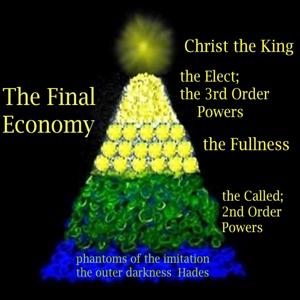


Over the past two podcast episodes, you’ve been introduced to a number of Simple Explanation memes, and we’re building up a nice sized meme chord of shared definitions. We have taken a brief tour of exoteric and esoteric religious memes, and the roles these memes play within various religious traditions. We have also learned that several major religious traditions advocate shedding memes as a way of uniting with God, an anti-meme usually called Enlightenment. We are now prepared to take a longer look at Christianity’s memes, including the role of Christ in Gnosticism. We will also take a look at verses 48 and 18 of the Tao Te Ching, utilizing memes from the Simple Explanation philosophy—a practical exercise in translation among three traditions’ meme chords.
Now here is a Simple Explanation of Christianity’s memes, If you are already versed in Christian memes, then here is a way you can make sense of the Simple Explanation using familiar terminology. If, on the other hand, you are less familiar with Christianity’s meme chord, this simple translation may help you to understand a few of its major memes.
When my model speaks of the metaverse, this can be thought of as the Simple Explanation’s fundamental God meme, what the Bible calls God the Father, creator of heaven and earth.
Prior to creating heaven and earth, the original ground state of God was an eternally omnipresent, utterly peaceful consciousness.
I am who I am. [Exodus 3:14]
When my Simple Explanation model says the metaverse “quivered with limitless mathematical potential unfolding into countless dimensions,” this is what is called the Word, herein referred to as the Universal unit of consciousness.
In the beginning was the Word, and the Word was with God, and the Word was God. [John 1:1]
In the original New Testament Greek, the Word is written as Logos, meaning information and principles of organization, the law.
The Sanskrit word for Universal Consciousness is chit. The Simple Explanation credits the Word with not only the memes of biblical law, but with all the working laws of the universe, including physics and math. Jesus materially embodied the principles of logos on earth. Jesus said,
Do not think I have come to destroy the law or the prophets. I have not come to destroy the law, but to fulfill it. [Matthew 5:17]
When my Simple Explanation model says that consciousness wrapped itself around our universe and took on a shape, this is God the Holy Spirit, Ananda in Sanskrit, meaning joy. The Simple Explanation calls this joyful aspect of God the primordial or originating fractal. At the macro scale, the Holy Spirit surrounds our physical space, forming a membrane of consciousness, chit, that holds creation in and the metaverse out.
This shape of God’s mind is the Universal unit of consciousness that knows all there is to know about everything in this universe. At the micro level, the Simple Explanation describes the personal indwelling of the Holy Spirit in terms of fractal offspring of metaversal consciousness residing within every living thing. In this manner, the universe is pervaded by joy.
The Simple Explanation depicts the Holy Spirit as a torus instead of the more familiar Dove. When the Bible speaks of a person’s immortal soul, this refers to the Self’s unit of consciousness made in the image of God. This Self unit of consciousness is a fractal iteration of the Father’s Holy Spirit.
As King David said concerning his own death,
I, in righteousness, I see thy face. I am satisfied in awaking with thy form. [Psalm 17:15.]
According to the New Testament, Jesus the Christ was fully human and fully God. This means that the governing unit of consciousness associated with Jesus of Nazareth was a fully realized copy of both the Universal unit of consciousness and metaversal consciousness, which is another way of saying Jesus never allowed his personal will to contradict the will of the Father streaming in from the metaverse. As a fully realized, enlightened unit of consciousness, Jesus was entirely coherent with God’s will, which is to say Jesus was without sin. Thus, Jesus never accrued karmic debt.
Since Jesus did not live for himself but for the Father alone, he never enshrouded his earthly unit of consciousness with human memes and karmic burdens. Buddhism shares with Christianity a Sanskrit meme called bodhisattva, which refers to an enlightened being who comes to earth to free others from samsara, sin, and suffering. The Nyingma school likens the highest form of bodhisattva to a good shepherd who lays down his life for his sheep, as Jesus described himself in John 10:11. Moreover, Mahayana Buddhism holds a meme called parinamana—merit transfer.
In merit transfer, the bodhisattva takes away the sins of his flock, which are washed clean through the bodhisattva’s excess of good karma. John the Baptist proclaimed this same bodhisattva meme when he said of Jesus,
Behold the Lamb of God who takes away the sins of the world. [John 1:29]
There are even Hindu sects where Jesus is counted in the lineage of founding gurus, such as the Self-Realization Fellowship’s Kriya Yoga sect.
Conservative Christians, whose ideological meme chord is closed to other religious ideologies and non-Orthodox Christian memes, believe that Jesus was God’s only begotten bodhisattva, and that He alone can perform parinamana unto salvation.
When asked his central message, Jesus responded that we were to
Love God and love one another as we love ourselves. [Luke 10:27]
In terms of the Simple Explanation model, God would like us to embrace the information and patterns streaming in from the metaverse whenever we make a decision. When we do this, we are loving God by acting in concert with the metaversal plan, or God’s will.
Then, God would like us to love ourselves. This means that we are to love our flesh’s aggregate units of consciousness and do what is best for our organism, as explained in Chapter 2 of A Simple Explanation of Absolutely Everything. We are also to love our governing Self unit of consciousness and act with wisdom in concert with metaversal will rather than selfishly succumbing to prideful ego.
Finally, we are to take the focus off of ourselves and our trove of memes and reach out, with love, aid, and information, to our brethren units of consciousness.
I refer to this as the Simple Golden Rule. All Christians believe that Jesus came to earth that we might not perish because of the law, but that we might live life more abundantly, [John 10:10]. Jesus demonstrated through the example of his life that it is possible to be a fully realized unit of consciousness, living moment by moment in the service of God’s will.
Be therefore perfect even as your Father in heaven is perfect. [Matthew 5:48]
Believing on Christ for salvation is the meme chord that says the unit of consciousness of Jesus can cleanse your unit of consciousness of sin and the consequences of sin. To be born again is to make a decision to lay down your personal meme bundle and allow the Universal unit of consciousness to shine unobstructed through you.
Being born again not of corruptible seed but of the incorruptible by the word of God which lives and stays forever. [1Peter 1:23]
Baptism in Christ is a ritual enactment of washing away undesired meme chords and karma so that God’s will may flow through.
In previous episodes of Gnostic Insights, I’ve discussed the differences between vices and virtues, or the left side of the meme bundles versus the right side of the meme bundles, with the left being born of the deficiency and the fall,…
This publication explores philosophical, spiritual, and contemplative subjects whose meanings often depend upon nuance, context, and specialized terminology. Translations are provided as a service to readers and may be generated or assisted by automated translation technologies. Although reasonable efforts are made to ensure accuracy, certain concepts may not be rendered with complete fidelity in every language. Readers seeking the most precise expression of the author’s intent are encouraged to consult the original English version.
Today’s episode is a continuation of a discussion of my simple model of memes out of my book, A Simple Explanation of Absolutely Everything.
In our previous episode, we discussed the basic model of memes. Memes are any thought a person can have—any piece of information I categorize as a meme. Motherhood is a meme. All religions are memes. Everything is memes. Whatever belief you hold, whether it’s a cluster of beliefs, (and I call these meme chords), or a single belief, (that’s what I’m referring to as a meme).
In our previous episode, we discussed political memes, and in this episode, we’re going to discuss exoteric and esoteric religious memes. As it is with all groups, the public image of a religious institution is defined by the memes held by, or rejected by, the members of that institution. These specific doctrines, dogmas, dissertations, rules, and customs are the sets of memes commonly held to be true within a given religion, and the specifics of these memes vary from institution to institution. These public memes are known as exoteric memes, and they’re easily identified and fairly well understood by most of the institution’s members.
A few exoteric religious memes are shared by members of diverse religions. Religions generally share, for example, belief in an overarching God meme chord, and generally agree on many of the lesser-included memes that make up the God chord, such as memes concerning God’s omniscience and omnipotence, and the importance of communing with God in prayer.
In Exodus, and again in Deuteronomy, the first four of the Ten Commandments lay out a basic God meme of Judaism. The key God meme, Deuteronomy 6:4-5, is known as the Shema.
Hear, O Israel, the Lord is our God, the Lord is one. You shall love the Lord your God with all your heart and with all your soul and with all your might.
Agreement on this basic God chord was so important to the early Hebrews that they were instructed to teach them diligently to their children, to talk of them while sitting in the house, when walking, when lying down, and then again first thing upon arising. They were also instructed to bind the memes to their hands, on their foreheads between the eyes, and to their gateposts and doors. These containers are known as phylacteries, and they hold within them the fundamental Hebrew memes.
In the Christian faith, the Apostles’ Creed states the basic Christian memes. This meme chord is regularly recited in unison, out loud, by all believers, beginning with,
I believe in God, the Father Almighty, Maker of heaven and earth, and in Jesus Christ, his only Son, our Lord, and ending with acknowledgment of a belief in, ‘the resurrection of the body and the life everlasting. Amen.’
Born-again Christians go one step further than the Apostles’ Creed in their emphasis of public affirmation of the meme that Jesus Christ is their personal Lord and Savior. Enactment of the born-again meme requires a watershed moment of personal surrender, without which one is not considered saved from sin, death, and damnation.
For Islam, the shahada summarizes the key memes that must be professed to be counted a Muslim.
There is no God but God, and Muhammad is his prophet.
And beyond this basic belief are more key memes. According to the Muslim Voices website, someone who becomes a Muslim is also agreeing to accept the six articles of faith in Islam as well as the five pillars of faith. And these are the five pillars of Islam: Fasting during Ramadan, pilgrimage to the holy city of Mecca, pledging the faith, ritual prayer, and charity to the poor.
Unlike these biblical Judeo-Christian-Islamic religious memes, with which most Americans are more or less familiar, Hinduism is an ancient religious tradition with fuzzy memes that are difficult to define and exceedingly diffuse.
Hinduism is an inclusive religion that allows each member to pick and choose from any number of religious memes as they see fit. Sarvepalli Radhakrishnan, India’s first vice president and a respected theologian, defined Hinduism as a process meme rather than a meme set. He said,
Hinduism is not just a faith, it is the union of reason and intuition that cannot be defined but is only to be experienced.
Wikipedia says this:
Prominent themes, (that is, memes), in Hindu beliefs include but are not restricted to Dharma, which is ethics and duties, Samsara, which is the continuing cycle of birth, life, death, and rebirth, Karma, which is action and subsequent reaction, Moksha, which is liberation from Samsara, and the various yogas, which are paths or practices.
Hinduism grants absolute and complete freedom of belief and worship. Hinduism conceives the whole world as a single family that deifies the one truth, and therefore it accepts all forms of beliefs and dismisses labels of distinct religions which would imply a division of identity. Hence, Hinduism is devoid of the concepts of apostasy, heresy, and blasphemy. Most Hindus believe in a god meme, Brahma, Lord of Creation, but because there are no fundamental memes, one can be an atheist and still join this most inclusive religion.
Taoism is both a philosophy and a religious tradition. As a philosophy, Taoism’s memes primarily stem from an ancient Chinese book called the Tao Te Ching. Tao means way, path, or principle. Hence, the Book of the Way presents memes by which one may live in harmony with natural order. Religious Taoism adds ancestor worship and local traditions and customs, such as divination practices, to the basic philosophical meme chord.
Buddhism is an exception to the rule in that it does not hold an explicit god meme. This is largely because its founder, Siddhartha Gautama, a.k.a. the Buddha or the Enlightened One, realized his central meme to be avoidance of suffering and not worship of God. All Buddhist practice and philosophy stems from the single avoidance of suffering meme chord, referred to as the Four Noble Truths.
* Everyone suffers.
* Craving causes suffering.
* Suffering ends when craving ends.
* Liberation is possible by doing what the Buddha did, by practicing meditation.
This is why the Buddha is usually depicted as sitting and meditating. The Buddha himself is not considered a deity but a human guide, an exemplar of one who tried and failed at various religious practices until finally achieving liberation through meditation.
Another common meme chord shared by all religions is the importance of leading a moral life, although, as with all memes, the exact details of what it means to be moral may differ. However, the Golden Rule seems to be one universal moral meme common to all religious chords.
Treat others as you wish to be treated.
Morality is a different meme than the God meme, so despite the usual conflation of the God meme chord with the morality meme, the morality meme may be held and successfully deployed without reference to any particular religion. In that case, morality becomes part of the philosophical meme chord called ethics and is considered necessary for the smooth operation of civil society. Those who do not espouse any particular religious memes may still embrace a strong morality meme held in a secular ethical chord.
Despite the many memes religions have in common, it is the exoteric memes they do not share—memes of saints and saviors, official histories, and other idiosyncratic traditional beliefs—that define them and set them apart. It is the memes they do not share that give rise to the world’s diverse religions, denominati…
Memes are the cultural expressions of societies, and their content is information. Memes, in other words, are the “stuff” of symbolic thought. Everyone holds their own personal bundle of memes tightly against their soul, and these memes influence every aspect of our lives.
Today I am going to read you a chapter out of my book, A Simple Explanation of Absolutely Everything, and we are going to speak about a simple model of memes.
In human societies, memes are often propagated through mass media, such as magazines, films, and the Internet, in addition to word-of-mouth and tradition. Every discrete concept, mythology, or icon is a meme.
The Beatles is a meme. Andy Warhol’s iconic poster of Marilyn Monroe is a meme. Football is a meme. Patriotism is a meme. All isms are memes. The cross and the crescent are memes. Loyalty and honesty are memes. Indeed, each and every particular idea that a person can know is a meme. Even basic concepts like chair and mother are memes.
Memes, in other words, are the stuff of symbolic thought. Some memes are held in common by most human cultures. The wheel, the ideal model of a caring family, archetypal heroes and villains like the wise sage and the shadow, even universal human values such as liberty and safety.
Other memes are exclusive to their particular culture. This especially applies to memes dealing with local traditions, religions, politics, and regional myths. Humans are not the only units of consciousness affected by memes.
All social aggregations of units of consciousness propagate and utilize memes. Cats, for example, bury their waste because there is a strong waste-burying meme that resonates in all cats. Dog is man’s best friend is a shared meme chord continually repropagated and reenacted by both humans and dogs. Flying in formation is awesome may well be a goose meme.
Memes can be described as energetic waves of cultural information patterns fueled by repetition or starved by lack of usage. As waveforms, each meme has a distinct vibratory signature akin to a musical note. Each individual meme can be likened to a string on society’s harp. A single meme is like a single note. A group of related memes is like a chord.
If, for example, we look at the meme chord for America, we can quickly list a variety of memes and complex sets of memes that contribute to that chord. Constitutional government, the Old West, consumerism, slavery and emancipation, American politics, elections, liberty, capitalism, The Founding Fathers, Hollywood movies and television, justice, popular music, baseball, and so on with all of the other memes associated with America. Each meme chord vibrates to the particular concepts that make it up. Units of consciousness who share the same memes are like members of a choir cloaked in the robes of their common meme chords, all vibrating in unison with one another.
We are not all affected by the same memes. Most memes pass us by unnoticed. A meme must be either instinctually acquired through prenatal karma or learned in order to be invoked by a unit of consciousness. Once a unit of consciousness does acquire a meme, it becomes a part of that unit of consciousness’s unique vibratory bundle. If you do not wish to continue holding that meme string in a personal meme bundle of memes and chords, you must detach the string from your grasp.
Some memes are easy to detach because they do not fit in well with your overall bundle of strings and chords. You may, for example, forget the details of a foreign film as soon as it is over because its memes do not bond well with your personal meme bundle. Some memes are very difficult once they are acquired because their vibratory pattern is so intense.
Emotionally evocative memes such as victimhood, shame, or jealousy are difficult to detach due to the intense synergistic coupling of thoughts and emotion. Post-traumatic stress disorder is one such condition that bonds unwanted memes with crippling emotion. Addictions, likewise, tightly cement their disabling meme bundles onto an addict’s ego.
You may pick up entire chords of associated memes, but it is also common to pick and choose from among a chord’s individual strings. Happy marriage, for example, is a complex meme chord that means different things to different people depending upon their personal selection of particular strings. One prospective couple may resonate to the big wedding meme and so expect to invoke that meme at the onset of the happy marriage. Another couple may not be holding on to that memetic string and so do not need or want a big wedding. For most couples, the happy marriage chord includes children. Other couples do not resonate to the particular offspring meme, so no children are necessary.
For many couples, the bouncing baby meme may be adequately invoked by the man’s best friend dog meme. So, while we all have an idea of what happy marriage means, we each hold a slightly different set of memes that define it. But, the bottom line to marital bliss must begin with a couple’s shared and harmonious meme chords.
The importance of memes is that a huge part of our personality is shaped by the memes we collect and hold on to. The otherwise pristine nature of our underlying fractal unit of consciousness is affected by the memes we hold dear, as well as the memes we despise. We enjoy memes we approve of and we are repelled by memes we disapprove of.
The Sanskrit word for these provocative memes is samskara. Samskara is traditionally defined in yogic philosophy as the habitual thought patterns collected by the ego that interfere with soul consciousness. The memes each of us cling to, both those we like and those we actively dislike, influence our ability to exercise free will in the here and now.
When we unthinkingly lock onto a meme or a set of memes, it is our belief in those memes that determines how we interpret and respond to our surroundings. Our response may or may not be the best response to a given situation, but it is the only response allowed for by our particular meme bundle. In other words, our meme bundles function as incoming and outgoing filters.
Literary theorist and philosopher Kenneth Burke called this meme filter a terministic screen situated between each person and reality, both selecting and deflecting their perception of the world. Burke said this terministic screen was activated during information exchanges with others and within oneself during self-talk. The filter of our terministic screen blocks unacceptable memes from affecting our comfortable perception of reality.
We see the terministic screen at play every day on the interpersonal level. For example, Person A, whose meme bundle includes a belief that others are out to get me, will interpret events in a manner that reinforces that meme. The most innocent statement on Person B’s part will activate Person A’s out-to-get-me meme, even when no such insult was intended or even imagined by Person B. Clearly, Person A’s own meme attachment hurt Person A, not Person B. The same meme filtering mechanism holds true for groups in the form of cultural ideologies, complex bundles of memes shared by members of a group.
For example, Conservatives have identified a complex meme bundle they call “Trump Derangement Syndrome.” TDS refers to the phenomenon wherein people on the political Left interpret everything the President says or does as negative and harmful, irrespective of Trump’s intention or the actual outcome of the policy. People on the political Right interpret Trump’s speech and actions in an entirely different light than people on the Left. This is the result of their respective meme bundles.
What is and isn’t allowed in the minds of members is determined by which memes are included and which are excluded from the group’s ideological meme chord. Because of this, information exchanged between members of different cultures will resonate more strongly with the sender’s memes than with the receiver’s memes. For example, when an American speaks of free and democratic elections, his or her memetic definitions for free and democratic may differ radically from another culture.
The extent to which communication may occur between cultures is determined by their overlapping memes and the permeability of each culture’s deterministic screens and the extent to which they are open to foreign memes. Another example of delimiting memes occurs during problem-solving. The more tightly held one’s memes are, the fewer solutions will present themselves.
If you think only a hammer will drive a nail, you will not even consider the flat side of the heavy wrench lying nearby. If a group thinks outsiders are untrustworthy, then they will not trust any outsider. The ability to consider solutions outside the box and to engage in lateral thinking comes about through non-attachment to the shoulds and oughts of how things work.
One must be willing to set aside treasured beliefs in order to perceive memes outside one’s own bundle and thereby discover fresh solutions. In the same manner that a person’s personality is defined by its unique meme bundle, institutions are also defined by their sets of treasured memes. Memes are even more important to an institution than are its members in the sense that members come and go, but memes persist.
As President John F. Kennedy put it, people may die, nations may rise and fall, but an idea lives on. Each and every cultural institution we belong to—family, workplace, church, mosque, tribe, nation, and so on—not only comes with its own bundle of shared memes held in common by its members, it also comes with a filter that limits members from acknowledging or adopting ideological incompatible memes. Institutions are defined as much by their excluded memes as they are by their included memes.
An exclusive institution holds tightly to the identity provided by its current memes. Its border is strong and its filter is powerful. An inclusive institution allows members more latitude in the memes they may hold.
Its border is less defended, its filter less opaque. An open-minded institution allows that there may be memes out there in the larger culture of value. Its filter is more permeable.
Conservative institutions hold tightly onto their memes, which are usually formally codified into law. Whether embodied in the rulings of a Supreme Court or issued by a tribal chief, these reckoning rods declare the boundaries of the institution’s acceptable memes and are the mirrors by which members define themselves as part of this group rather than that. Now, it’s an interesting thing—at this point in my book, things have completely turned upside down here in the year of 2021, because the next paragraph is about what is called progressive institutions. But this definition of progressivism no longer holds true. Listen.
Progressive institutions, on the other hand, hold an overarching inclusive meme that requires an open and permeable meme boundary that can accommodate diversity of thought and expression. Because of this inclusivity value, open institutions look to their members as living sources of shared memes in preference to codified documents or singular authority figures. And my comment is that in the United States, for example, and I believe it’s worldwide at this point, progressive institutions are no longer inclusive. They talk as though they’re inclusive. They talk as though they accept diversity of thought and behavior. But actually, they only currently accept their particular view. So they are no longer actually progressive and inclusive. They are as tightly conservative as any conservative group has traditionally been. But they’re still calling themselves progressive.
Here is a statement from President John F. Kennedy that expresses the traditional view of progressivism. Quote,
We are not afraid to entrust the American people with unpleasant facts, foreign ideas, alien philosophies, and competitive values. For a nation that is afraid to let its people judge the truth and falsehood in an open market is a nation that is afraid of its people.
What is objectionable, what is dangerous about extremists, is not that they are extreme, but that they are intolerant. The evil is not what they say about their cause, but what they say about their opponents.
And so, continuing my aside, the current state of progressivism still talks the good talk about inclusion and diversity, but what they say about their opponents is hateful and divisive. The current progressive meme of identity politics separates and segregates in contrast to the meme of John F. Kennedy that unites and integrates.
Okay, back to the more esoteric now. Transpersonal memory is defined as memories that are shared at a cultural level rather than as personal memories. Personal memories reveal themselves in many ways, through societal archetypes and archetypal dreams, through subconscious assumptions, stereotypes, and expectations, and through strange occurrences such as the purported 100th monkey phenomenon. Carl Jung referred to this transpersonal memory as the collective unconscious. The Simple Explanation identifies these transpersonal memories as collective memes and meme chords and locates them at the level of our aggregate consciousness. They constitute the mind of the culture’s unit of consciousness.
Biologist Rupert Sheldrake has written extensively about a scientifically controversial process he calls morphogenetic fields. How does an oak tree develop from an acorn? By information carried in the morphogenetic fields surrounding the acorn. Sheldrake explains that morphogenetic fields are to life forms what quantum probability clouds are to subatomic particles, carrying the information that gives rise to particular biological manifestations of form. In the case of the acorn and the oak tree, the morphogenetic field of the oak tree provides the genetic blueprint, while the mama tree’s karma and memes provide the individualized epigenetic pattern that tells which genes to turn on and off.
So, what karma can a tree have? Its karma is the record of its life, nutrients, weather, history of water availability, pest attacks, and so on. What memes can a tree hold? Ooh, the sun feels good on my leaves. I like to follow the sun.
The Simple Explanation agrees with Sheldrake that personal memories do not reside in the meat portion of our brains, but are vibratory patterns held in the zero-point field as are Jung’s collective transpersonal memes. Furthermore, apparently personal memes are actually harmonics of collective memes and are shared in common with all who hold on to that meme. The particular shadings of one person’s memes differ slightly from the next person’s, as is to be expected among fractal replications of a single phenomenon, but all who hold a particular meme know its pattern and are affected by it.
There was a popular meme chord known as the condescending Wonka meme, and you can look that up as an image online, wherein the image of actor Gene Wilder as Willy Wonka has come to personify condescension. Why? Because the image presents a facial expression that is easily recognizable and not likely to be misunderstood. Whatever silly lines the Wonka says follow an expected pattern of sarcasm designed to put someone in their place. When this meme appears during a discussion thread, everyone gets it.
Meme chords can be incredibly complex, as is the case with religious meme chords and constitutional meme chords. Religious meme chords are codified in the holy book of the religion and taught to all believers. Violations of religious memes are called sins.
Governmental meme chords are written as constitutions, laws, and court rulings, and all citizens are expected to learn them and obey. Violations of governmental memes are called crimes.
Academic meme chords represent the field of study. Accumulation of academic memes is what makes a person educated. Scientific meme chords, for example, consist of the subject material of each scientific specialty—geology memes, astronomy memes, chemistry memes, virology memes, and so on—plus the meme chord known as the method that specifies how inquiries are to be handled and what constitutes proof. Axioms, theorems, and proofs are memes. Violations of scientific and academic memes are considered to be either honest mistakes or academic fraud.
We like people who share the same memes we do. The more memes people have in common, the more they agree with one another, and the more they like and respect the other person. Friends have a lot of memes in common. Co-religionists share the same religious meme chords. Tribal brothers and sisters share tribal memes. Citizens share their nation’s meme chords. Subcultures share their subcultural memes.
What happens when meme chords collide? What happens when the memes I believe in and hold on to contradict the memes you hold dear? Herein lies the source of all human conflict.
In Gnosticism, we call this the Endless War. The disagreements, the fights, the wars, are all conflicts over incompatible memes. I may believe that my memes are vastly superior to yours. Does that mean I should kill you? Well, that’s a ridiculous idea.
Oh, but what if I strongly believe my memes are the best? No doubt about it. Does that mean you have to believe every meme I believe or else I’m going to burn your house down and loot your business? Well, that’s pretty absurd.
Yeah, but what if I know in my heart that my memes are so much better than your memes? Does that mean you are stupid or systemically racist? Does that mean you are a fraud? Does that mean you just don’t get it? Maybe, maybe not.
Most of our memes came embedded in larger meme chords handed down by others. Most of us have no idea what meme chords we hold and how we came to hold them. In any case, you can’t force someone else to adopt your memes any more than you can force someone else to adopt your gender or your skin color. It is an impossibility. The Simple Explanation suggests that live and let live would be a great meta-meme for everyone to adopt.
If we could appreciate the fact that each of us has a unique perspective, then perhaps we could allow each other to hold the memes that make the most sense for our own lives. This is my meme chord. That is your meme chord. If I don’t like your meme chord, then I can talk it over with you and see if we can move our meme chords closer together in agreement. If neither of us is willing or able to swap memes with the other, then so be it.
Either accept the other person, memes and all, or move on. Find someone else who more closely agrees with your memes. There is enough room in this world for each of us to hold our own chords, but only if live and let live is an overarching meme. Live and let live is the democratic ideal.
We now find ourselves in the midst of a social epidemic of intolerance. Intolerance is the opposite of live and let live. When we are intolerant of others’ memes, we are declaring that our memes are correct and their memes are wrong. And then we take it a step further. We refuse to tolerate the others’ memes. We throw up resistance. We throw up roadblocks. We close our ears and refuse to listen to the other. We do not merely disagree, as reasonable people may do from time to time. When we are intolerant, we look for ways to force the other to abandon their memes and adopt ours. We shout them down because we feel we are shouting the right memes, and theirs are not only wrong, they are evil, and they have no right to be heard. And once you declare the other evil, it is no longer a disagreement in good faith, but a fight for the soul.
God is on our side, therefore we can do whatever it takes to crush the opposition. That is a dangerous and usually delusional meme to hold. And if it entitles the holder to disregard rule of law, then it is not a democratic ideal, and it has no place in American politics.
Once words can no longer be exchanged, frustration builds, and violence follows. This is what we are seeing now, because free exchange of memes has been thwarted through intolerance. Exchange of ideas is the key. You needn’t agree with the other person, but you must hear them out. Because once you agree to sit and exchange ideas and concerns, whether you adopt the other’s ideas or not, the very act of hearing each other creates a shared space that acts as a balm to soothe both your soul and theirs. When you are too angry, frustrated, or afraid to listen to the other, you perpetuate the intolerance that leads to violence.
This intolerance is not helpful. We hear a lot about the importance of diversity nowadays in America. True diversity can only thrive if we allow each other to live and let live.
When you seek to silence those with whom you disagree, you are not encouraging diversity. You are actually partaking in, and dare I say it, fascism. Because fascism advocates the forced suppression of those who express opposing views.
Disagreement, on the other hand, is not forced suppression. It is merely disagreement. Shouting others down when they have the floor, shunning those with whom you disagree, unfriending people on Facebook because they hold opposing views, refusing service in a restaurant to paying customers who voted for a different candidate—this does not help us come together to make things better for the common good.
In Gnostic terms, it is a violation of the Simple Golden Rule. It is a continuance of the never-ending war. It engages the second-order powers in endless war, chasing each other, like the uroboros, which is the snake eating its own tail. It does not build, it merely enslaves.
Okay, this is about half of the chapter on memes in A Simple Explanation of Absolutely Everything book, and I will bring up part two of memes in our next podcast. Part two has to do with exoteric and esoteric religious memes, and we will talk about religion, faith, and belief in terms of meme bundles.
Thank you for spending this time with me. Onward and upward, and God bless.
Buy the book!
A Simple Explanation of Absolutely Everything is Dr. Ropp’s theory of everything, first published in 2012, that forms the backbone of her interpretation of gnostic philosophy.
The Gnostic Reformation is a reader-supported publication. To receive new posts and support my work, consider becoming a free or paid subscriber.
Welcome back to Gnostic Insights and to the Gnostic Reformation on Substack. For the past few weeks, we’ve been looking at the ancient Chinese wisdom book called the Tao Te Ching by Lao Tzu. I shared with you some verses, and I’ve shared with you the means by which I translate it into Gnostic terminology.
Since beginning this series, one of my most regular and faithful followers wrote to tell me that David Bentley Hart has a new 2026 edition of the Tao Te Ching that he calls A New Translation. So I immediately purchased the book, and it’s good. You know, David Bentley Hart loves the big words. He doesn’t care if you know the vocabulary or not, but he uses the most perfect words that he can.
Another thing that’s amusing about this book is that he co-authored it with his son, Patrick Robert Hart. And there’s a picture of the two of them on the back flap of the book cover. And it’s so funny to me. The reason I’m laughing is because Patrick looks exactly like his dad, only 40 years younger. It’s worth buying the book just to look at those two pictures. It’s really something!
Anyway, this week I picked at random one of the verses from the Tao Te Ching, verse 53. And today I’m going to read to you out of David Bentley Hart’s version of verse 53, and also Jonathan Star’s version of verse 53.
I mentioned previously that in the Jonathan Star edition, called the Tao Te Ching, The Definitive Edition, there’s a very special section at the back of the book that gives you the pictograms of all of the verses, every pictogram in every verse. And then to the right of that, there is a chart. To the right of those pictograms is probably not every possible translation, because you can see that there are probably as many translations of these pictograms as there are readers, because they’re pictures, abstract pictures, with no definitions. So you can interpret the picture for whatever it means. So what I’ve been doing is reading the Tao Te Ching from the chart that Jonathan Star provided.
And I have found that if you read along that right side of the chart of all possible translations of each pictogram in any verse, your own gnosis will guide you to the interpretation, to the words to use, if your gnosis is far enough along to do that. Otherwise, you can stick to the definitions or the translations that the people who have been paid to write and publish these books put out.
So what I’m going to do today is read to you Jonathan Star’s version and David Bentley Hart’s version, and then I’m going to read to you my version of verse 53, interpreted using my Simple Explanation of Gnosticism vocabulary that I hope you are becoming familiar with by now.
And if you’re new to Gnostic Insights or to the Gnostic Reformation, I urge you to go back and read and listen to as many of them as you can because they’re all there in the archives at GnosticInsights.com. I urge you to go back and acquaint yourselves with the earliest episodes that you can find at GnosticInsights.com. They go all the way back to the very first episodes I posted in 2021.
So let’s begin today by taking a look at the Introduction to Tao Te Ching, A New Translation by David Bentley Hart, and we’ll see what he has to say by of introducing the Tao Te Ching to the readers.
In his Introduction on page three, Hart says,
Among the crucial texts to have reached us from that epoch, moreover, the Tao Te Ching is one of the most relentlessly subversive of the common tendencies and categories of human thought and ambition. True, in one very important sense, it advances a metaphysics that is familiar from the speculative and mystical grammars of many peoples. Sometimes it does this in a mythic or metaphorical idiom, sometimes in oratory maxims, sometimes in unadorned philosophical assertions.
But at its heart, it offers a vision of life as a single, pervading power present in all things, of a world charged with spiritual forces, and of an original and ultimate participation of all things in a single source that is inexhaustible precisely because it is perfectly empty, perfectly pure of any discrete essence that the mind or the will can fasten upon. The Tao is not a thing among things, but rather the nothingness, or better, the no-thingness, from which all life emerges, to which it returns, and in which it exists as part of an eternal spiritual communion. The Way of Heaven is not some kind of being among all other beings.
One might instead say that it is, to employ a more Western and scholastic turn of phrase, the act of being as such, in its most original and perennial unity, not a being but rather the let-there-be that is the fountainhead forever pouring itself out in all that is, without ever being depleted or waxing jealous of what it gives. Or, to adopt an older Platonic or Neoplatonic terminology, and one closer to the language of the Tao Te Ching itself, it is that which is beyond being, or beyond essence, the nothingness, or again, the no-thingness, from which being is born. And that same unity dwells within each and every one of us, and in all the living things around us.
So let’s pause there for a moment, and I hope you can recognize how close this is to the type of Gnosticism that I share with you here at Gnostic Insights. This Tao Te Ching is literally the ancient Chinese version of a Gnostic book. And just as we had buried in the Nag Hammadi, in that big six-foot pot that they dug out of the ground in 1945, just as we had all of those various types of Gnostic books, including books of Plato, I’m so surprised and disappointed that the Tao Te Ching wasn’t among them, because it would have fit perfectly with the Gnostic books.
And that is exactly why I am sharing it with you here now, so that you can see that this Gnosticism has nothing to do with the history of the Middle East or the history of Egypt. It has to do with the nature and source of being. And that knows no human history. That transcends history. It transcends groups and peoples. And that the ancient Chinese had this same vision of the source as the Gnostics later did, and as Plato did, is confirmation that this is a universal force.
Hart says,
In a world that has always been the plaything of violent and avaricious buffoons, as we’ve been reminded with special vividness in recent years, the saint or sage who represents the human ideal in this book is someone who instead refuses to strive for mastery or ownership or personal aggrandizement. Instead, he or she seeks to imitate the flow of nature and of life as a gift that arrives from a source beyond itself and moves toward an end over which no one at the last can wield control.
When Hart is saying the sage or the saint, that could just as easily be translated as the Gnostic. Skipping down the page, he says,
And the book tells us that we find this Way of Heaven, and that is a translation of the word Tao, Way of Heaven, and live according to its power, [and power is a translation of te], not through heroic effort, force of will or spiritual conquest, but rather through wu-wei, not striving, or in the term of the great 13th, 14th century Christian Rhineland mystic Meister Eckhart, Gelassenheit, letting go. But neither wu-wei nor Gelassenheit is merely a matter of passive disengagement. Each is an active ethos whose nature is one of charity and constant concern for others. One lets go of one’s self so as to embrace the world.
And of course, in the terminology that I use here at Gnostic Insights, I use Self with a capital S to distinguish it from ego. And I think when most people are writing and they talk about letting go of one’s self, they’re actually talking about letting go of your ego. But we use the word Self as a fractal representation of the One Source. So we have a slightly different slant on how to use these words. But early on, when I was writing out these Gnostic thoughts, it was important for me to put together a consistent vocabulary so that I’m not in one article writing about self and in another article writing …
Welcome back to Gnostic Insights and to the Gnostic Reformation on Substack. We’re proceeding through a study of the Tao Te Ching and how it relates to our Gnostic beliefs. Today we’re going to have a look at verse six of the Tao Te Ching.
First, I’ll read the version translated by David Bentley Hart in his Tao Te Ching, A New Translation. It goes like this.
The goddess of the valley is deathless;She is called the mysterious Mother,deep and subtle, the Mother’s dark womb.The gateway to the mysterious Mother’s abodeis the foundation of Heaven and Earth.
The one origin lasts forever and ever,like an endless strand of gossamer,ceaselessly drawn out, yet never depleted.
So it’s a fairly short verse. In comparison, Jonathan Star’s translation draws it out quite a bit. He uses more words in his translation of the Tao Te Ching, from The Definitive Edition.
He says,
Endlessly creatingEndlessly pulsatingThe Spirit of the Valley never dies.She is called the Hidden Creator.
Although She becomes the whole universeHer immaculate purity is never lostAlthough She assumes countless formsher true identity remains intactWhatever we see or don’t seeWhatever exists or doesn’t existIs nothing but the creation of this Supreme Power
Tao is limitless, unborn, eternal—It can only be reached through the Hidden CreatorShe is the very face of the AbsoluteThe gate to the source of all things eternal
Listen to her voiceHear it echo through creationWithout fail, She reveals her presence
Without fail, She brings us to our own perfection
That’s how Jonathan Star puts it. We can see we’re talking about what Gnostics call the Divine Feminine.
I don’t talk much about the Divine Feminine. Actually, I don’t know that I talk at all about the Divine Feminine, because it’s not brought up in the Tripartite Tractate. But as we discovered by studying the Tao Te Ching in our previous several episodes, the Divine Feminine in the Tao Te Ching is translated as a yin force. And yin is receptive. Yin draws in.
Yang is active. Yang puts out. In Gnosticism, the Father is a yang force. He is the Origin. And the Origin has to be, by definition, emitting, emanating, putting forth. This is why it’s called the Father. Do you understand?
This is not a slight against women. This is not like saying, Oh, patriarchy wants God to be male. It’s not that at all. It’s that yang force is outward pushing. Yin force is inward pulling. Women receive. Men penetrate.
So the Divine Feminine force is that womb of creation that receives the emanations of the Father.
It says in verse 78 that after the Fall, when those parts of Logos that were left behind that formed our material cosmos, Logos rushed back up to the Pleroma to be with the other Aeons. It says in verse 78 of the Tripartite Tractate,
When He who produced Himself as perfect actually did bring Himself forth,
[and we’re talking about Logos—He produced Himself as perfect. He was a perfect fractal iteration of the entirety of the Fullness]. So it says,
When He who produced Himself as perfect actually did bring Himself forth,
[and that bringing Himself forth, that becomes our material cosmos. That is the womb of creation.] Because, listen, it says,
He became weak like a female nature, which has abandoned its virile counterpart.
[So the female nature is yin, receptive, bringing in what comes from the yang force. The virile counterpart is the yang force. The female nature is the yin force]. So once again, it says,
When He who produced Himself as perfect actually did bring Himself forth,
[that is when Logos, who was perfect, fell, He brought Himself forth, fell],
He became weak like a female nature,
[that is, He became yin, receptive],
which has abandoned its virile counterpart,
[that is, the yang force]. It goes on to say,
From that which was deficient in itself, there came those things which came into being from His thought and His arrogance, but from that which is perfect in Him, He left it and raised Himself up to those who are His. He was in the Pleroma as a remembrance for Him so that He would be saved from His arrogance. The one who ran on high, [that is Logos], and the one who drew Him to Himself, [that is the Father or the Son who was sometimes called the Father], were not barren, but in bringing forth a fruit in the Pleroma, they upset those who were in the defect.
So this is saying that the yin space that was left behind after the Fall, when Logos retreated, when His yang force retreated, He left behind the yin vacuum and that it was not barren. It brought forth fruit in the Pleroma, that is, creation.
So this is finally here in the Tripartite Tractate where we’re talking about the yin and the yang. The female nature being that which has lost its “virility,” that is, its outward force, and has become yin, is what was left behind here. And that vacuum was filled with creative power from the Pleroma, that is, the Fullness of God—the Holy Spirit of creation, the Great Mother that was the womb of creation.
I don’t really care for the mythology surrounding the Fall of Sophia. So I do not go out of my way to teach the Fall of Sophia. I don’t like the whole business.
It seems to me that the Divine Feminine, the Holy Spirit, is the entirety of the Hierarchy of the Fullness. I think it is an error to equate a single Aeon—Sophia—with the Divine Feminine property of the cosmos. According to the Tripartite Tractate it is the Fullness as a whole that sends life into the cosmos in order to restore the Fallen Demiurge to Logos, not the single Aeon named Sophia. The worship of Sophia, the Aeon, is misplaced. It is the Fullness, the Holy Spirit of the God Above All Gods, the “cloak worn by the Son,” that is the Divine Feminine expressed within our cosmos.
This is from verse 67 of the Tripartite Tractate. It says,
He knows them which things He Himself is, since they are in the single name and are all speaking in it. And He brings them forth in order that it might be discovered that they exist according to their individual properties in a unified way.
And so the He is the Son, and what He brings forth is the Totalities of the ALL, or the Aeons when they become self-aware. So they are parts of the Son that then become self-aware.
The Holy Spirit, the Divine Feminine, is much more powerful and Full than any single Aeon, because she is the entire Fullness of all Aeons. This is how it is that all creatures can be sent into the cosmos with their predesigned attributes—they are all preexistent in the Fullness, not within the single Aeon of Sophia. Sophia does not contain all of the attributes of the Fullness; Logos does, in fractal form.
The Tripartite Tractate says that the Fall was created by Logos. And Logos contains within itself, remember, fractals of the entirety of the Fullness of God. So we might say that Logos is non-gendered, if we want to get into today’s terminology for things. Because Logos contains all possible personalities, all possible forces, all physics, all chemistry, all bonding, and all energy and power is all represented by Logos. But at that stepped down, fractal iteration. And that’s what we have down here from the Fall.
In my Simple Explanation of Absolutely Everything, I did refer to the inception of the universe as the Mother of 10,000 things, as it’s called in China, or the womb of creation. And in my mind, you know, it’s shaped like a big torus, a big donut shape, but we don’t have to get into that here.
Now let me give you my translation of verse six. And I am achieving this translation by looking at Jonathan Star’s Definitive Edition and his chart at the back of the book that gives all possible definitions of each pictogram. So, reading from the all possible definitions side of verse six, here’s how I would put it.
The Holy Spirit that fills the world never ceases.
This mysterious spirit is referred to as the Divine Feminine. This is the gateway, the primal womb that discloses the source and wellspring of Heaven and the creation of Earth.
Ceaseles…
Welcome back to Gnostic Insights and to The Gnostic Reformation on Substack. My name is Dr. Cyd Ropp and I’m your host. This episode of Gnostic Insights is going to continue discussing Gnosis and the Tao Te Ching.
In the previous episode of Gnosis and the Tao Te Ching, verse 40, I described how I translate the Tao Te Ching using Jonathan Star’s Tao Te Ching—The Definitive Edition. Today’s episode evolved from two earlier Simple Explanation blogs where I first interpreted the Tao Te Ching using Simple Explanation terms. Years later I added Gnostic terms to the articles and released the episode as a podcast on December 3, 2021.
You needn’t become a Taoist to be a Gnostic. These are just labels. But truth is truth, and there is only one truth.
Many wisdom books over the ages have written about this truth, and our familiar Gnostic scriptures that are contained in the Dead Sea Scrolls or in the Nag Hammadi are merely one set of Gnostic scriptures. But other cultures have had similar revelations worldwide and throughout time, and that’s why I share the Tao Te Ching with you. We will begin with verse 1, and I’m taking this from the Stephen Mitchell translation of the Tao Te Ching, which reads like this:
The Tao that can be told is not the eternal Tao.
The name that can be named is not the eternal name.
The unnameable is the eternally real. Naming is the origin of all particular things.
Free from desire, you realize the mystery. Caught in desire, you see only the manifestations. Yet mystery and manifestations arise from the same source.
This source is called darkness. Darkness within darkness. The gateway to all understanding.
In 2010, I posted an article to my Simple Explanation of Absolutely Everything blog about verse 1 here, and this is what I said about it back then, as I was translating it into Simple Explanation terms, and it goes like this:
The information and principles of organization imagined in ideal form in the metaverse are more perfect and complete than we can ever articulate. Pure conscious awareness without time and space exists outside our universe. Abstract thought on the part of pure consciousness defined creation prior to the Big Bang.
In our universe, we are only able to recognize objects and concepts we have named. When we set down our meme bundles, we are freed from personal preference. In that clear state, we may perceive the workings of the universal model and our role in it.
Remaining attached to our memes obscures the inflowing metaversal patterns and keeps us tethered to our familiar material and relational patterns. Pure undifferentiated consciousness dwells in the unformed darkness of the metaverse. The thought patterns that produce light and matter arise out of the metaverse, but the manifestations of these patterns take place within our universe.
The portal into our universe is the gateway to all understanding.
So that was spoken in terms of my Simple Explanation of Absolutely Everything Theory of Everything Model. But since that time, I have become knowledgeable concerning the Gnostic terminology and concepts.
And so, let me re-translate this into Gnostic terms that you may be more familiar with. To begin with, as explained in the previous episode, the Tao Te Ching speaks of the Tao. This is what we refer to as the Father in Gnostic cosmology.
And the Father that can be spoken about? Well, obviously we cannot capture any description of the Father. The Father is unformed consciousness. It’s pure consciousness without thought.
And for us to attempt to describe that, obviously it’s not possible. But we can say that that’s what it is, even though we can’t quite articulate it, see? The name that can be named is not the eternal name. So when we say, oh, we’re speaking of the Father, we’re just saying the Father that is this category of pure consciousness, our ground state of the universe, the resting matrix of all that is—but it’s not the same as the Father. It’s just that we are conceiving and calling the Father, because the Father is greater than that. The unnameable is the eternally real.
So the Father is eternal. That means there is no time. It’s not that it’s infinite time, it’s that it is eternal. It is outside of time. And the Father is the eternally real substance that predates all of existence. And by the way, that is the nugget of gnosis.
When it is said we’re supposed to gain gnosis, what we are attempting to realize is the gnosis that there is this thing we call the Father, or in Simple Explanation terms, the metaverse. It is outside of everything we know, and it pre-exists everything we know. It is before time and space.
Naming is the origin of all particular things. So one thing about humans in particular, since we are the ones who speak with language, in order to conceive of anything, in order to think about a concept, we have to have words to describe it to ourselves. We talk to ourselves about it. Or to describe it to someone else, like I’m talking to you, we have to put this into the form of words. And words is the same as naming.
In the Old Testament, in Genesis, it said that man gave name to all the animals, right? Or is that a Bob Dylan song? I think that’s how Bob Dylan said it in that song, man gave names to all the animals in the beginning, in the beginning.
So that is how Dylan put it. But in Genesis, it says that it was the job of mankind or humanity to name all of the animals. And we humans didn’t only name all the animals, we named everything. We name concepts. That’s what we do. We are little meme generators.
Do you remember there was a movie, what, about 15 or 20 years ago, called, What the Bleep Do We Know? [released in 2011] Did you see that movie? They claimed in that movie, that when the ships, the sailing ships from the Spanish came and encountered the Native Americans for the first time, I think it was the Americans, that the natives that were standing on shore could literally not see the sailing ships because they had never conceived of a large ship like that with sails. And because they had never named it, they literally could not see it. And they didn’t notice that they were being invaded by the Spaniards until the Spaniards pulled those ships right offshore and began to disembark. And then they could see that they were boats and there were people. That’s what how they put it in that movie.
Anyway, according to verse 1 of the Tao, it says, naming is the origin of all particular things. Because until you name them, it’s just one big observation without any particularity. It’s like if you look at a painting and you look at it as one gigantic gestalt prior to noticing the colors, and then you name the colors, or prior to noticing the shapes or the objects in the painting, and then you recognize those objects by naming them and those shapes by naming them. Before naming things, it is all undifferentiated. So naming is the origin of all particular things.
Then the Tao says, free from desire, you realize the mystery. And I discussed that at length in the previous episode from November 28, 2021. [Perhaps I will rerun that episode next week—back in 2021 I wasn’t posting transcripts, so you Substack readers probably didn’t get the earlier Tao episodes.]
Our memes, and our words, and our orientation of emotions to objects is a pattern. And in order to get beyond those patterns of what is familiar and what we already can know and name, if you’re trying to expand your realization to beyond what you already know, you have to drop what you know, because the memes, the meme bundle that you’re already holding onto, defines what you know. So in order to transcend that, it’s extremely helpful to put away those memes, to drop them, to get rid of them, at least during the process of contemplation. And only then can you realize the mystery, can you see beyond what you know.
The Tao says, caught in desire, you see only the manifestations. And the manifestations is another word for our material universe. We are in a manifested state here …
Welcome back to Gnostic Insights and to the Gnostic Reformation on Substack. Last week I started hopefully a series, of mining gnosis through the Tao Te Ching. Last week’s episode explained the process by which I mine gnosis through the Tao. I’ve been mining that gnosis for well over 20 years without even realizing that it was going to turn into Gnosticism or a Gnostic interpretation of the Tao Te Ching.
The Tao Te Ching is an ancient Chinese manuscript. It’s full of gnosis, and I have found it to be entirely compatible with the gnosis taught through the Tripartite Tractate of the Nag Hammadi, which is the book of the Nag Hammadi that I use here at Gnostic Insights to share my gnosis with everyone. Today we’re going to do another verse from the Tao Te Ching, the next verse in the book, verse 41.
I’m not going to explain to you again the process by which I do this, but let me begin by reading to you Jonathan Star’s interpretation of the Tao Te Ching, verse 41, and here’s how it goes.
The best seeker hears of Tao. He strives with great effort to know it.
When an average seeker hears of Tao, he thinks of it now and again. When the poorest seeker hears of Tao, he laughs out loud.
Tao is always becoming what we have need for it to become. If it could not do this, it would not be Tao.
There is an old saying: The clear way seems clouded. The straight way seems crooked. The sure way seems unsteady. The greatest power seems weak. The purest white seems tainted. The abundant seems empty. The stable seems shaky. The certain seems false. The great square has no corners. The great vessel is never filled.
A beginner may be clumsy, but after practice, what talent! A large drum may sit silently, but when banged, what noise!
Tao lies hidden, yet it alone is the glorious light of this world.
So that’s verse 41 by Jonathan Star. Now, for comparison’s sake, let’s look at another translation of the Tao Te Ching, this one by David Bentley Hart from his new book, Tao Te Ching, A New Translation. And thank you very much, Gabriella, one of our followers, who recommended it.
The very best scholar listens to the Way and lives diligently in accord with it. The scholar of middling gifts listens to the Way, at one moment believing, at another losing faith. The poorest scholar listens to the Way and finds it risible. Then again, if he did not laugh at it, it would not really be the Way.
These then be our maxims: The way of enlightenment seems dim and obscure. Every advance along the Way seems like a retreat. The easy level path seems arduous and uneven. The most exalted power seems like a plunging chasm. The purest clarity seems tarnished and dark. The most abundant power seems impoverished. The most formidable power seems like frailty. What is most substantial seems fluid and inconstant. The ideal square has no corners. The finest vessel takes till evening to perfect. The sweetest melody is hushed and tenuous.The perfect form has no shape.
The way is hidden and nameless. Yet, for just this reason, the Way knows how to nourish and fulfill.
So that’s verse 41, interpreted by David Bentley Hart.
Now I’m going to share with you my interpretation of verse 41. And remember, all of these interpretations come from a myriad of choices, because we’re dealing with pictograms. And you can interpret the pictogram in many, many ways. I’m going to go through verse 41 line by line, pictogram by pictogram, and interpret it in a more obviously Gnostic type of way.
The best, wisest, highest, student or type of person, hears Tao earnestly, attentively, with devotion, and lives in accordance with it, practices with diligence. The average, middle type of person hears about Tao and sometimes follows, sometimes believes, and sometimes doubts, sometimes loses it. The lesser, lowest, inferior type of person hears about Tao and ridicules it, laughs out loud. If they did not laugh, it would not be thusly the Tao.
Now, before going on, let me explain that Tao means the Way, the path, and it is the Way of the Father. It is the path of glory.
The Tao is the emanation of what we call the Father in Gnosticism. So whenever the Tao Te Ching speaks of Tao, think of it as the word of God, or the Way of the Father. And these first three stanzas described the three types of human, and interestingly enough, these exact three types of humans appear throughout Gnosticism.
The Tripartite Tractate describes these three types of humans in verses 98 through 100.
The best, wisest, highest type of person is called the pneumatic, P-N-E-U-M-A-T-I-C, also interpreted as the right ones. The pneumatic, those of God, are on the right. Those of the good thought, workers and servants of the Father, of the Father’s beauty and rest.
The average middle type of person, as it says in the Tao, maps to what in Gnosticism we call the psychic, the fiery ones, the middle ones. They are characterized by a lust for power and ambition, and that is most humans. That’s from verse 100.
And the lesser, the lowest, the inferior type of person, who laughs at Tao and ridicules it, they are referred to as the hylic, the left, the dark ones, the last. And they are brought forth by envy and jealousy. That’s verse 100.
So, in other words, those who ridicule the path, who ridicule the Father—it’s their envy and jealousy that pulls them down.
The middle type, the psychic, the fiery ones, the middle ones, they are characterized by emotion. They’re emotional. And this emotion brings them to a lust for power and ambition, because the emotions are resonating to the fallen ego, or the ruler of this world, the demiurge. And all of the emotions that get stirred up down here in the cosmos by the demiurge and the archons, they are meant to engage the majority of humans in fighting each other in the never-ending war for power and control, because of their ambition, and just being stirred up and upset all the time.
The fewest type is the pneumatic, and those are the teachers of the Word of God, the saints, the prophets, the children of God in the truest sense, in that they have the heart of God, the heart of the Father. They’re not doing this ritualistically or rule-bound. They’re not hypocritically pretending to be good moral people. They are good moral people, and that’s how they view the world, through the eyes of the Father. Carrying on now in verse 41,
Therefore, constructive sayings, proverbs, and maxims, such as the following: The enlightened Tao is the path to illumination, seems obscure, dark, and dull. Advancement toward Tao seems like, or resembles, retreat, falling backwards.
And in a Gnostic way, we would say that what the seeker is retreating from, the retreat, the falling backward, is from worldly concerns and patterns. Because in order to follow the Way, you need to disengage from the world. The Bible says we are in the world, but not of the world.
So, it’s like water and oil—they can be in the same bucket, but they do not mix. The next verse says,
The straight and smooth Tao, path or Way, seems like, resembles, roughness—uneven, and difficult.
I interpret this to mean that the actual path of Tao, the Way of God, the Way of the Father, the Way of glory, the glory beam, is straight, but it seems difficult, uneven. The path of glory coming down from above is true and straight and perfect, but our attempts to walk it are difficult. The next line is,
The highest, exalted, superior Te—that’s power or virtue.
It’s in the title of the book, the Tao Te Ching.
The Way of Virtue resembles an empty chasm.
So, the virtue around us in the world is like a vacuum. It’s an emptiness, it’s a chasm. And I would say from a Gnostic point of view that that is because the world is full of the Demiurge. We second-order powers were sent here to bring the love, consciousness, and life of the Father into this chasm. So, the Way of Te is the Way that we are to behave as second-order powers, spreading love and consciousness.
Also concerning this idea that the highes…
Welcome back to Gnostic Insights and to the Gnostic Reformation on Substack. You know, I often tell you that I’ve been a Christian since I was about five years old, and I’ve been a follower of Jesus in particular, sometimes going to church, most often not going to church. But I’ve always loved Jesus, and I’ve had many dreams and visions of being with Jesus, and this has shaped my current Gnosticism and the reason why I favor the Tripartite Tractate as the book out of the Nag Hammadi codices that I gravitate to, because it’s definitely Christian.
The myth is different than our typical Christian myth. However, the characters are the same, if they do take on slightly different roles. For example, Christianity conflates the Son, Jesus, and the Christ as one character. But in Gnostic Christianity, the Son is the first emanation of the Father, and this is simply to indicate—this has nothing to do with gender—this simply indicates that the Father is so illimitable and immense and unfathomable, yet the Father wanted to be known, wanted to have companionship, let’s say, and so the Father emanated His “only begotten Son,” as we say in Christianity.
That wasn’t Jesus or Christ, that was the Son. And the Son is like the bucket dipped into the sea of the great consciousness of the Father. The Son is a particular entity with a particular countenance or face, and the Son contains all of the attributes of the originating consciousness, the Source. The Son is more relatable, because like the Son, we too are monads, which means we are a particular entity. We have a particular point of view, and our point of view here on earth is our physical point of view, what I’m looking at versus what you’re looking at, but it’s also the point of view of our meme bundle, of our ideology, of the way we think. It’s our point of view.
Each one of us is unique. Obviously, we’re each unique. Our physical bodies are similar but different. We were born in similar but different manners. We live similar but different lives. We eat similar food, but it’s always different. Everything about each one of us is unique, and in a spiritual way, we think that our uniqueness contributes to the totality of the Fullness, to the totality of the experience of what it means to be alive here on this planet Earth. That’s why each person needs to grow into who they are meant to be. We have our temporal worldly parents, mom and dad, the ones who birthed us and gave us our genetic inheritance, but we also have our aeonic parents.
There are Aeons in the Fullness of God, ethereal beings, a multitude, an infinite number of Aeons, and they get together in various combinations, different Aeons with their different positions, places, points of view, duties. It’s their address, but they are otherwise all identical because they all are emanations of the Son. They are all variables within the Son.
So we have these aeonic parents. They get together and procreate us. We are the descendants of the Aeons of the Father. We descend into this material space. We are descendants from our aeonic parents as well as our physical human parents. So in the same manner as we inherit our genetics from our parents, what we’re going to look like, how our bodies go together—that all comes through our human parental lineage—but through our aeonic lineage, we inherit who we are meant to be. That is the perfection of our Self, our particular combination, and we’re each different, we’re each unique aspects of the Aeons of God. So if someone is a great mathematician, or a beautiful singer, or a wonderful mother, or housekeeper, or a person with any sort of talent whatsoever—and we all have our unique talents—those are the things we inherit from our aeonic parents, from the archetypes—from the archetypal singer, the archetypal mother, the archetypal Aeon, with its unique combination of talents.
At least this is my interpretation. This is Cyd’s interpretation of how these things go together.
So we all inherit the Fullness of God, the one true Self that is the reflection of the Aeons. Just as the Aeons are all the variables of the Son, we are their fractal fruit. So we carry the Fullness of God within each part of our living bodies. And then we have our aeonic personalities on top of that, which is the particular Aeons which figure most prominently in our aeonic inheritance, the archetypes that we inherit.
By the way, this is where C.G. Jung gained his notion of archetypes. If you’ve ever taken the Myers-Briggs personality survey—introvert or extrovert, sensory or intuitive, thought-driven or feeling-driven, step-by-step planner or a big-picture gestalt type—these are the variables of the Myers-Briggs, and those are all variables that reflect Jung’s categories of archetypes. And when you put all those together, there are many, many combinations of possible personality types.
Maybe you’re familiar with that system. Well, that’s based upon this Gnostic philosophy, because Jung purchased one of the Gnostic gospels from the Nag Hammadi codices, and it was translated first into German, and then he took his transpersonal theory of psychology out of what he learned from the gnosis of the Tripartite Tractate, which is the same book that we study here at Gnostic Insights and the Gnostic Reformation.
But that’s not what I’m actually here to talk about today.
What I really wanted to share with you was the Tao Te Ching. Tao is spelled T-A-O, but pronounced Dow. Te is T-E, and Ching. So the Tao is the way, the eternal, ethereal way. The Te is its expression here on Earth, or in the cosmos, and Ching means book. So the Tao Te Ching is the book of the way and its expressions, and is said to have been composed by a sage named Lao Tzu ages ago, around 500 BC, during the time of Confucius. However, probably it’s also an amalgam of many ancient wisdom texts and insights from many Chinese sages put together by Lao Tzu.
Now the legend of Lao Tzu is that he was an old man. He had served the emperor. He was the keeper of the royal archives in the state of Chu. He was tired. He wanted to go away and die. And so he was driving his ox out of the city and away from humanity so he could be by himself and pass away. But the gatekeeper of the city saw that the sage was about to leave the world, and he said, Master, you’re about to renounce this world. Please compose a book for me. And it is said that Lao Tzu came down from his ox, sat down, and for several hours wrote a book in one sitting. And then he handed it back to the gatekeeper, got back on his ox, and traveled to the West.
Now this is a symbolic telling because, first off, he needed to pass through the gatekeeper to leave the city. And it was the gatekeeper who implored him for wisdom before he would leave and never share his wisdom anymore. Lao Tzu wrote the book in one sitting, and this particular episode of history is captured in many, many ancient Chinese paintings. So if you ever see the old man on the ox or the old man sitting and writing, that’s Lao Tzu composing the Tao Te Ching.
And leaving through the gate that goes to the West implies that this teaching was for all peoples.
You may wonder why I am talking about the Tao Te Ching here in this Gnostic venue. The answer is that the Tao Te Ching helped me mine my own gnosis years prior to discovering the books of the Nag Hammadi, proving that we can all mine gnosis without having access to so-called Gnostic texts. As we seek out the Truth in religions and sacred writings, it is our own gnosis that draws the understanding out of these sources. Steeping oneself in religion without using discernment to mine the gnosis therein does us no good. Merely being “religious” does nothing to advance your wisdom or understanding of the world and God if you do not mine the gnosis to be found there. But if we read with a gnostic heart and mind, then the gnosis is there to be found. When you find a verse or precept that clicks with you—that is your gnosis being mined.
And, why do we call it…
Podcast: Play in new window | Download (Duration: 19:30 — 26.8MB)
For regular Gnostics Insights, subscribe here. Apple Podcasts | Amazon Music | TuneIn | Deezer | RSS
For those of you who are new to Gnostic Insights and The Gnostic Reformation on Substack, this reformation lays out a clear cosmology of Gnosticism according to the Tripartite Tractate of the Nag Hammadi codices. This gnosis is unique. If you have not listened to the series yet, you should begin with Episode 1 and proceed in order through Episode 21. Those episodes form the basis for my book, A Simple Explanation of the Gnostic Gospel. Really, that is all you need to know. You can listen and read the transcripts of this Master Class in Valentinian Gnosticism for free at gnostic insights dot com under the tab labeled “A Simple Explanation of the Gnostic Gospel.”
Gnosis means knowing, and to be a Gnostic means that you are one who knows. It may appear as though I am making all of this up. I am not. I’m taking it out of an ancient scripture—The Tripartite Tractate of the Nag Hammadi. I’m also deriving a lot of this information through contemplation and direct communication with the Father and the Fullness of God. This is something that every person can do. We are all given the ability to commune directly with the Father and with our aeonic parents in the Fullness above.
As a Gnostic Christian, I find that these insights give a deeper understanding of our New Testament of the Holy Bible, because much of this information was stripped out of the Bible by the Nicene Councils around 350 AD under the direction of the Pope and the Emperor of Rome. I am questioning the right of the Emperor and the Pope and the heresiologists of the Catholic Church to edit truth out of the Bible, and that’s what we’re putting back in. Those of us who are not Catholics are no longer subject to the Pope, and none of us are subject to the Emperor of Rome. So it seems to me that we should have the freedom of mind and the freedom of personal will to decide for ourselves what scriptures are truly holy, and these you must arrive at through discernment. If you have not developed the ability of discernment, then you can easily be led astray.
Since 2009, I’ve written a blog called A Simple Explanation of Absolutely Everything that is a secular explanation of how the universe goes together. The Simple Explanation presents concepts such as fractals and the Simple Golden Rule that I often bring up here because they help to illuminate the Gnostic Gospel. Today I will be sharing the concept of fractal consciousness with you. This approach to gnosticism helps illuminate the meaning of that expression: as above, so below. As a tree is represented as the branches above ground, there is a reciprocal set of branches below ground, and those are called roots. As above, so below.
The same is true with us humans. The nature of the Aeons that live in the Fullness of God, also called the pleroma of God, is the same as our human nature, because we are their fruit. We, along with all living creatures, are fractals of the Fullness of God. My Self’s unit of consciousness is sitting on top of a fractal galaxy of hierarchically arranged units of consciousness flowing down from the Father and Son through the Fullness, all working together to instantiate my body and sustain life.
While I may believe I am the only conscious soul inhabiting this body of mine, my physical body is actually home to all of these aggregated units of consciousness, and each unit of consciousness has their own job to perform. Countless units of consciousness of varying levels of complexity work together in complex systems to keep my body alive and fully functional. The simplest and most numerous level of this fractal consciousness is expressed through the cells of my body. Whereas the concerns of the world often confuse my governing Self’s unit of consciousness, the consciousness of a cell is the least distracted by ego and the most attuned with its duty of sustaining life; if it weren’t, our body would cease to function.
Before we go any further, let’s answer the question of what a fractal is. A fractal is a geometric shape that can be split into parts, each of which is a reduced size copy of the whole. That’s a property called self-similarity. Because they appear similar at all levels of magnification, fractals are often considered to be infinitely complex because the fractal may be reproduced larger or smaller without ceasing. We are surrounded by fractal patterns produced in nature. The branching structures of trees are a good example.
Why trees look like rivers and also blood vessels and also lightning…
I usually demonstrate fractals by looking at broccoli. And if you go to my Simple Explanation blog, December 11, 2018, there is an article called A Simple Explanation of Fractals, The Broccoli Fractal Video Demonstration. In that video demonstration, which is posted on my blog and YouTube channel, I demonstrate how an ordinary head of broccoli can be peeled apart to at least seven fractal iterations. At the end you have an extremely tiny little broccoli flowerette, but you can see it still has more little broccoli flowers even within it. They just become too small to pull apart. Purely mathematical examples of fractals have no limit to the number of their fractal iterations.
Fractal Zoom, Visualizing The Infinite, Mandelbrot Fractal, Day 100 – #shorts
So that’s what a fractal is. It’s a larger thing that can be reduced, reduced, reduced, and each of those reductions looks just like the mother piece, only it is smaller, and you can just keep splitting it off smaller and smaller and smaller. So that’s why it’s called infinitely self-similar.
I am suggesting that consciousness itself is fractal, and the largest consciousness is the Father. The Father had a thought, and it became the Son, and that Son was the first fractal iteration of consciousness.
The Son had a thought, and it became the Totalities of the ALL, and that is the next fractal iteration. And the ALL became Self-aware and turned into the Aeons of the Fullness of God who sorted themselves into a pyramidal-looking hierarchy.
The Aeons gave themselves names, positions, places, and duties. The Aeons are recognizable by their names and duties, and I refer to these designations as the egos of the Aeons—the ego of an Aeon being nothing more than the name and address that distinguishes one Aeon from another.
The Aeons represent thoughts and patterns within the Son of God, and the Son is a singular fractal expression of the Father. So while the Father is unknowable because the Father is pure consciousness without form, the Son as a monad is knowable. The Father and Son desire to be known. They are not hiding from us. They are revealing themselves to us through the consciousness we share. Our consciousness is a fractal of the Fullness of God—we are the children of the Aeons of the Fullness. Gnosis means recognizing that Source of consciousness, life, and power.
All living creatures are fractal emanations patterned directly from the consciousness of the Father, the Son, and the Fullness. Because we are fractals of the Aeons, the rules and the descriptions of the Aeons apply to humans equally as well. This is again another example of as above, so below. So, when we hear or read about the nature of the Aeons, or the things that happen to the Aeons, such as the Fall of Logos and the Aeons working together to redeem the Fall—this happens to each and every one of us as well.
Logos fell because he allowed his ego to make a free will decision to leave his place and proper function in the Fullness. The ego of Logos overreached. He thought he was going to plug directly into the Father, but he wasn’t able to do that, and he fell. Logos fell out of perfe…
Cyd is interviewed by podcaster Tessa Lena. This will be this week's episode.
From the publisher's feed
Ranked by our users in the last 21 days