
Sign up to save your podcasts
Or

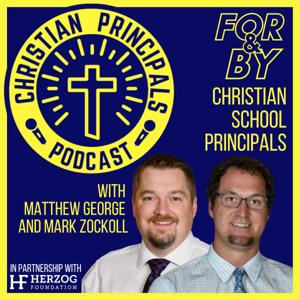


Football becomes a blueprint for Christian education in this episode, and the lessons are sharper than you expect. Mark Zockoll and Matt George unpack six defensive line principles that school leaders, teachers, and administrators can put to work immediately—from holding the line and doing what is not pretty, to filling gaps, collaborating under pressure, and staying agile when everything changes.What starts as a football analogy turns into a practical framework for leading a school mission with clarity. You will hear how the defensive front mirrors the realities of Christian education: the people who absorb pressure, the roles that go unseen, the staff members who make everyone else stronger, and the need for teams to move in sync instead of working in silos.You'll discover:
Mark and Matt also connect these lessons to real school-life challenges like staffing gaps, changing schedules, and supporting the people who quietly anchor the work. The result is a conversation that is equal parts practical, encouraging, and surprisingly useful for anyone leading in Christian education.Perfect for principals, teachers, pastors, and school leaders who need fresh language for teamwork, resilience, and mission-first leadership. If you are trying to build a stronger school culture without losing sight of the mission, this episode gives you a playbook worth borrowing.Follow UsYouTube: Christian Principals Podcast
Instagram: @cprincipalspod
Email: [email protected]
Website: www.christianprincipalspodcast.com
X: @CPrincipalsPod
LinkedIn: Christian Principals Podcast
Explore the Herzog Foundation's offerings for Christian schools at www.herzogfoundation.com.
Book us for your next event to bring engaging and practical conversations to your community!
And be sure to level up your school experience with our partner, Gradelink Student Information Systems, at cpp.gradelink.com today!
Thank you for listening and for leading with integrity in your school!
Summary:
Micah joins Matt and Mark to explain how the Herzog Foundation Ambassador Program works, what she has learned in her first month, and why Christian school leaders should pay attention. We discuss how the program builds early-career connections, exposes ambassadors to Christian conservative organizations across the country, and gives them a front-row seat to the needs of Christian educators.
Timestamps:
00:00 - Introducing Micah and the Herzog Foundation Ambassador Program
00:57 - College of the Ozarks, public relations, and campus work
01:31 - Why the community at College of the Ozarks stands out
02:57 - How Micah heard about the ambassador program through Esther Ray
04:29 - The 10-person cohort and shared H Plex housing
07:04 - Early benefits: travel, networking, and national connections
09:02 - What past ambassadors have done after the program
09:34 - Majors represented in the cohort, including film and computer science
11:36 - September travel plans and first-time visits to major cities
14:30 - Helping with Herzog Foundation Institute trainings while learning
15:58 - Ambassadors as greeters, helpers, and active participants
17:11 - The capstone project and the big question facing Christian education
18:11 - Why Micah says the Herzog Foundation is an untapped resource
20:19 - Advice for a high school sophomore who wants to prepare for the program
22:10 - Possible next steps: communications, ministry, or classical Christian education
23:37 - Homeschooling, Classical Conversations, and STOA speech and debate
24:22 - Christian administrator spotlight and prayer for Mark Bollinger
25:22 - Closing prayer and final thoughts
Follow Us
YouTube: Christian Principals Podcast
Instagram: @cprincipalspod
Email: [email protected]
Website: www.christianprincipalspodcast.com
X: @CPrincipalsPod
LinkedIn: Christian Principals Podcast
Explore the Herzog Foundation's offerings for Christian schools at www.herzogfoundation.com. Book us for your next event to bring engaging and practical conversations to your community! And be sure to level up your school experience with our partner, Gradelink Student Information Systems, at cpp.gradelink.com today!
Thank you for listening and for leading with integrity in your school!
Should teachers grade homework - or stop grading it entirely? Matt George and Mark Zockoll take on one of the most practical, debated questions in Christian education and land on a surprisingly nuanced answer: homework matters, but not always in the grade book. Recording this one on a walk, the hosts unpack what homework is actually for, when it becomes little more than a point-chasing exercise, and why "graded" does not always mean "better." They push through the tension between accountability and learning, asking whether homework should measure performance, build habits, surface confusion, or simply help students practice without fear of a bad score.
You'll hear them break down:
Why homework as "rote practice" can help some students and fail others
The difference between grading for completion, effort, and real understanding
When pass-fail homework makes sense and when it creates new problems
Why certain subjects, like math, call for a different approach than section reviews in history
How teachers can use homework to identify weaknesses before the test, not just fill the grade book
The conversation gets especially interesting when they compare lower grades and upper grades, arguing that the kind of homework younger students do should be treated differently from the more critical-thinking work expected later on. Along the way, they land on a memorable principle: homework doesn't always have to be graded, but it does always need to be assessed.
If you're a teacher, school leader, or parent trying to figure out what homework should actually accomplish, this episode gives you a thoughtful framework instead of a one-size-fits-all rule. It's a strong listen for anyone who cares about academic rigor, student growth, and building a grade book that reflects more than just compliance.
Follow UsYouTube: Christian Principals Podcast Instagram: @cprincipalspod Email: [email protected] Website: www.christianprincipalspodcast.com X: @CPrincipalsPod LinkedIn: Christian Principals PodcastExplore the Herzog Foundation's offerings for Christian schools at www.herzogfoundation.com. Book us for your next event to bring engaging and practical conversations to your community! And be sure to level up your school experience with our partner, Gradelink Student Information Systems, at cpp.gradelink.com today!
Thank you for listening and for leading with integrity in your school!
Summary:
Matt George and Mark Zockoll recap a gathering of state Christian school association leaders held at the Herzog Foundation in August. They discuss the size of the room, the range of states represented, and the practical conversations that took place around school choice, funding, leadership, and starting new Christian schools.The episode is also a window into how different state associations are navigating very different realities. From tax credit provisions to Title funding and school-launch initiatives, the conversation centers on what Christian schools can do now and how leaders can learn from one another without pretending every state situation is the same.
Timestamps:
Follow Us
YouTube: Christian Principals Podcast
Instagram: @cprincipalspod
Email: [email protected]
Website: www.christianprincipalspodcast.com
X: @CPrincipalsPod
LinkedIn: Christian Principals Podcast
Explore the Herzog Foundation's offerings for Christian schools at www.herzogfoundation.com. Book us for your next event to bring engaging and practical conversations to your community! And be sure to level up your school experience with our partner, Gradelink Student Information Systems, at cpp.gradelink.com today!
Thank you for listening and for leading with integrity in your school!
Psalm 51 hits differently when you realize how much more access to temptation today’s students have than David ever did. Mark Zockoll and Matt George unpack that sobering reality, drawing a straight line from David’s repentance after Bathsheba to the hidden battles young people face now.Mark shares the teaching moment that sparked the conversation, including how he framed Psalm 51 for a room full of students, parents, and church members. What started as a message on repentance quickly became a bigger warning about innocence lost, the early exposure kids now face, and why purity of heart is harder to protect than ever before.You'll discover:
This episode doesn’t stop at diagnosis. It challenges listeners to think carefully about what children and teens are seeing, how early they’re seeing it, and what faithful protection looks like in a world that normalizes exposure too soon.If you care about student ministry, Christian education, parenting, or simply want a clearer, more honest way to think about Psalm 51, this conversation is essential listening. It’s a reminder that repentance is still possible, grace is still real, and vigilance matters more than ever.Matt George is a host of the Christian Principals Podcast, bringing pastoral perspective and practical concern for schools, families, and students.Mark Zockoll is a host of the Christian Principals Podcast, known here for turning Scripture, teaching, and cultural awareness into a candid warning about the challenges facing the next generation.
Follow Us
YouTube: Christian Principals Podcast
Instagram: @cprincipalspod
Email: [email protected]
Website: www.christianprincipalspodcast.com
X: @CPrincipalsPod
LinkedIn: Christian Principals Podcast
Explore the Herzog Foundation's offerings for Christian schools at www.herzogfoundation.com. Book us for your next event to bring engaging and practical conversations to your community! And be sure to level up your school experience with our partner, Gradelink Student Information Systems, at cpp.gradelink.com today!
Thank you for listening and for leading with integrity in your school!
Summary:
This episode explores how Christian schools, associations, and advocacy groups can work together without losing their theological convictions. Matt George and Mark Zockoll discuss the history of Christian education, the growth of school associations, and why political cooperation matters more than tribal separation when the goal is protecting schools and students.
They also unpack a strong statement heard at a state association summit: tribalism in Christian education needs to end. The conversation broadens into practical examples from state lobbying, local school relationships, and coalition work across denominational lines.
Timestamps:
00:00 - Opening on desiloing Christian education and getting along better
00:38 - Early-morning banter and the unusually odd recording time
01:55 - Sponsors and transition into the day’s main topic
02:28 - Why the Christian School State Association Summit mattered
03:21 - A short history of Christian education and the rise of Christian schools
05:04 - Prayer in schools, Christian school beginnings, and the movement’s roots
06:55 - Growth in the 1980s and the modern era of school choice
08:16 - Accreditation, funding, and why associations still matter
09:14 - The broader association landscape across states and denominations
10:47 - AACS, ACSI, CSI, and other association alignments
12:06 - Why joining state and national associations can be valuable
13:40 - Who made the tribalism comment at the summit
14:55 - The claim that tribalism in Christian education needs to stop
16:22 - Shared goals and the case for cooperation across lines
18:30 - Separatism versus political cooperation
20:16 - Personal examples of political alignment and religious division
23:03 - Why “be not unequally yoked” is often stretched too far
24:27 - Jesus, Pharisees, and the limits of isolationism
25:47 - Working with Catholics, Muslims, and other allies on school issues
27:07 - Should Christian school students be encouraged to enter politics?
28:41 - Practical advocacy and why legislators should visit schools
30:39 - Local community partnerships and public awareness
33:14 - Coalitions are stronger than fragmented associations
34:23 - March for Life as an example of broad coalition action
36:00 - Local government and community reputation matter too
38:25 - More people in the room and the reality of state advocacy
41:15 - Why anti-message organizations eventually collapse
44:22 - Christian administrator spotlight: Heather Daniel of Emmanuel Christian School
45:48 - Closing prayer and outro
Notable Quotes:
“Tribalism is over. It needs to be over.”
“When a coalition is able to go before the state and say, we are a million strong and we hold in this way the same value.”
“There has to be more people in the room.”
Christian Administrator Spotlight:
Heather Daniel, assistant principal at Emmanuel Christian School in Wabash, Indiana
Follow Us
YouTube: Christian Principals Podcast
Instagram: @cprincipalspod
Email: [email protected]
Website: www.christianprincipalspodcast.com
X: @CPrincipalsPod
LinkedIn: Christian Principals Podcast
Explore the Herzog Foundation's offerings for Christian schools at www.herzogfoundation.com. Book us for your next event to bring engaging and practical conversations to your community! And be sure to level up your school experience with our partner, Gradelink Student Information Systems, at cpp.gradelink.com today!
Thank you for listening and for leading with integrity in your school!
The State of the Pod is in, and the numbers tell a bigger story than downloads. Two hosts, one studio, three upcoming conference appearances, and a growing mission to get the Christian Principles Podcast into the ears of every Christian school leader in America.Matt George and Mark Zonko celebrate what God has done through the Herzog Foundation and GradeLink Student Information Systems, then pull back the curtain on where the show is headed next - from Myrtle Beach to Old Dominion to Fort Lauderdale. Along the way, they share why this project has become more than a podcast, how listener feedback has shaped episodes, and why a single viral clip, a first-time in-person listener encounter, and a growing network of principals keep reminding them this work matters.You'll hear:
Matt and Mark also revisit the value of feedback, the importance of sharing episodes with other leaders, and the encouragement that comes from hearing that the podcast is actually helping real schools solve real problems. If you’re a Christian school administrator, educator, or leader looking for practical support, honest reflection, and a little behind-the-scenes joy, this one is for you.
Follow Us
YouTube: Christian Principals Podcast
Instagram: @cprincipalspod
Email: [email protected]
Website: www.christianprincipalspodcast.com
X: @CPrincipalsPod
LinkedIn: Christian Principals Podcast
Explore the Herzog Foundation's offerings for Christian schools at www.herzogfoundation.com. Book us for your next event to bring engaging and practical conversations to your community! And be sure to level up your school experience with our partner, Gradelink Student Information Systems, at cpp.gradelink.com today!
Thank you for listening and for leading with integrity in your school!
Summary:
In this episode, Mark Zockoll and Matt George discuss corporal punishment in schools, using an NPR article about the states that still allow it as a springboard for a broader Christian-school conversation. They look at where the law stands, how public and private schools differ, and why this issue sits at the intersection of parenting, discipline, and institutional authority.
Timestamps:
00:00 - Opening the conversation on spanking students
00:56 - Which states still allow corporal punishment in public schools
02:18 - No federal law, only state-level rules
04:12 - How private Christian schools may differ from public schools
05:03 - Why the remaining states still allow it
06:55 - Biblical framing: the rod, discipline, and abuse
08:36 - Where Christian families and schools fall on the spectrum
09:36 - Mark’s own experience with corporal punishment in Maryland
11:29 - The article’s anecdotal structure and claims about data
12:57 - The Oklahoma psychologist who supports paddling as a last resort
14:24 - Parent requests, school practice, and the article’s final examples
16:02 - Matt’s concern about public-sector norms and consequences
17:40 - Parenting, institutional standards, and the heart of the issue
18:55 - Why Mark supports school autonomy if parents knowingly opt in
21:42 - The need for legal review, procedures, and clear safeguards
22:42 - Maryland’s fight over a state handbook on corporal punishment
25:05 - Why corporal punishment cannot be treated as one-size-fits-all
26:55 - Communication and documentation when parents and schools agree
28:19 - How changing parenting norms affect school policy
31:07 - Questions for schools still using paddling
32:01 - Shout-out to Stephen Carlson of Crosspointe Christian Academy
Follow Us
YouTube: Christian Principals Podcast
Instagram: @cprincipalspod
Email: [email protected]
Website: www.christianprincipalspodcast.com
X: @CPrincipalsPod
LinkedIn: Christian Principals Podcast
Explore the Herzog Foundation's offerings for Christian schools at www.herzogfoundation.com. Book us for your next event to bring engaging and practical conversations to your community! And be sure to level up your school experience with our partner, Gradelink Student Information Systems, at cpp.gradelink.com today!
Thank you for listening and for leading with integrity in your school!
Social media is shaping how your students think, argue, and relate - and most schools are still treating it like a side issue. Cam Lawson reveals why the design of digital platforms, especially Facebook comment sections, can quietly train people toward incivility, polarization, and instant-reaction thinking.Cam is a partner at Paradox Coaching and brings original PhD research in strategic communication to the conversation, comparing Facebook and news-site comment sections across national and local outlets. He breaks down what he found about online behavior, why some comments rise to the top, and how the platforms themselves reward controversy, rage bait, and emotional escalation.Chapters00:00 Introduction
03:12 Why social media shapes student behavior
08:45 Cam Lawson’s research on comment sections
14:20 Passionate partisans, cynical jokers, and agitators
20:05 How algorithms amplify controversy
26:10 Digital communication and the loss of context
32:18 What Christian school leaders can do
38:40 Reclaiming healthy conversation and discipleshipYou'll discover:
Mark Zockoll and Matt George push the conversation beyond the research and into school leadership, asking how Christian educators can prepare students for a world where many of their interactions are more digital than face to face. The result is a practical warning and a hopeful challenge: if we want healthier students, stronger schools, and more thoughtful discipleship, we have to recover the lost art of conversation.Essential listening for Christian school leaders, educators, parents, and anyone trying to navigate the pressure of social media without letting it shape the next generation.Follow UsYouTube: Christian Principals Podcast Instagram: @cprincipalspod Email: [email protected] Website: www.christianprincipalspodcast.com X: @CPrincipalsPod LinkedIn: Christian Principals PodcastExplore the Herzog Foundation's offerings for Christian schools at www.herzogfoundation.com. Book us for your next event to bring engaging and practical conversations to your community! And be sure to level up your school experience with our partner, Gradelink Student Information Systems, at cpp.gradelink.com today! Thank you for listening and for leading with integrity in your school!
Most Christian school leaders are too busy to do the small things that actually transform a school. This episode gives you 10 immediate, practical moves that make you stronger as a leader - starting today. Mark Zockoll and Matt George continue their three-part action series with a no-theory, no-fluff checklist built for principals, heads of school, and administrators who want to lead with more clarity, humility, and presence. These are not big-budget initiatives or long-range strategic plans. They are tiny, repeatable actions you can do between classes, at lunch, and before the day gets away from you.You’ll discover why kneeling in prayer after lunch, sitting in the hallway near the lockers, and working alongside custodial staff can change the way you lead. Mark and Matt also unpack the power of asking teachers what your weakest leadership habit is, sitting on the floor with younger students during reading time, and reading one research article each week to stay sharp and informed.We also break down the quieter habits that shape culture from the inside out - throwing away what’s been cluttering your office for years, smiling at a family photo when the day gets heavy, and showing up for a team or club practice just to learn what life looks like from their side of the building.If you lead a Christian school, this episode is a reminder that stronger leadership is often built in ordinary moments, not boardroom moments. These habits create trust, visibility, and momentum across your school community - and they may challenge you more than any formal leadership training ever has.Essential listening for Christian school leaders who want practical next steps, real encouragement, and a stronger school culture without adding another big initiative to their plate.
Follow Us
YouTube: Christian Principals Podcast
Instagram: @cprincipalspod
Email: [email protected]
Website: www.christianprincipalspodcast.com
X: @CPrincipalsPod
LinkedIn: Christian Principals Podcast
Explore the Herzog Foundation's offerings for Christian schools at www.herzogfoundation.com. Book us for your next event to bring engaging and practical conversations to your community! And be sure to level up your school experience with our partner, Gradelink Student Information Systems, at cpp.gradelink.com today!
Thank you for listening and for leading with integrity in your school!
From the publisher's feed

8,596 Listeners

234 Listeners

7,100 Listeners

191 Listeners

35,874 Listeners

19 Listeners

26 Listeners

151 Listeners

21 Listeners
9 Listeners

12 Listeners

2 Listeners
14 Listeners

45 Listeners
7 Listeners

2 Listeners

12 Listeners

7 Listeners

19 Listeners