
Sign up to save your podcasts
Or

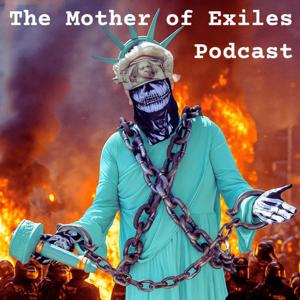

This 7-3/4 minutes audio blog examines how three separate developments: elite ideological shifts, withdrawal from international institutions, and the normalization of unilateral pressure, fit together as part of a broader reorganization of power in U.S. governance. Rather than treating these moves as isolated or routine, it traces the structure they form when read side by side and places that structure in historical context. The focus is not prediction or prescription, but clarity: how power is being exercised in the United States now, and what becomes visible when the pattern is seen as a whole.
Reading Time: 7 minutes
TL;DR
* Three recent developments: elite anti-democratic ideology, withdrawal from international institutions, and unilateral pressure on other states, form a coherent pattern when read together.
* Ideas associated with the Dark Enlightenment gained influence among political and technological elites, narrowing how legitimacy and accountability are defined.
* The United States withdrew from sixty-six long-standing international agreements, reducing external constraint and shared obligation.
* Pressure toward other countries increasingly emphasized resources, strategic position, and hemispheric dominance rather than cooperation.
* Read structurally and historically, these moves reveal how power is being reorganized in U.S. governance without spectacle or crisis framing.
Chronicle 05: How Power Is Being Reorganized
Democratic rejection, institutional withdrawal, and the use of unilateral force in U.S. governance
Part 1: Present Signals
A pattern emerged last week: three developments reported separately pointed in the same direction.
An ideology that rejects democratic legitimacy circulated among political and technological elites. Often referred to as the Dark Enlightenment, it treats democracy as a failure rather than a value. Popular participation in it is framed as noise. Elections are treated as destabilizing rather than legitimizing. Governance is recast as an engineering problem, best handled by insulated decision-makers, technical expertise, and concentrated authority. Order, speed, and hierarchy are elevated as virtues. Accountability narrows to performance rather than public consent, and legitimacy is measured by output rather than representation.
At the same time, the United States formally withdrew from 66 international organizations and agreements it had participated in for decades. The administration announced exits from United Nations affiliated bodies and international climate institutions through executive action. The decisions were implemented quickly, without extended legislative process or multilateral consultation. Membership was terminated. Funding was halted. Participation in shared decision-making structures ended. The result was immediate and concrete. Fewer binding commitments, fewer venues for coordination, and fewer external constraints on U.S. policy.
Alongside those withdrawals, the language of the U.S. toward other countries hardened. The administration publicly signaled willingness to use force beyond Venezuela with Greenland, Colombia and Mexico repeatedly appearing in a similar threatening way. The posture was framed inside a revived Monroe Doctrine, branded as “The Donroe Doctrine.” It aligned with the 2025 National Security Strategy’s stated intent to reassert U.S. political and economic interests, and protect access to key geographies and strategically vital assets. Venezuela’s oil and Greenland’s strategic location were treated as key assets to secure, and Mexico and Canada, where border security, trade leverage and geography were framed in terms of pressure and dominance.
Taken individually, each of these actions could be treated as routine. Read together, they reveal a shift in how power is being exercised. Long-standing anti-democratic ideas gained institutional relevance within the regime. What matters is not any single decision it’s made, but how these moves fit together while still being described as ordinary.
Part 2. Historical Examples
The alignment of theory, policy, and action is not unprecedented. In fact, it’s the standard operating principle for how government should work, until government works against the better interests of its people and their neighbors.
In the early 1930s, Nazi Germany rejected liberal democracy as illegitimate and destabilizing. Authority was centralized, and legitimacy shifted toward order and national performance. In 1933, the country withdrew from the League of Nations, casting international oversight as incompatible with national renewal. Expansion followed. Germany annexed Austria and dismantled Czechoslovakia through pressure and threat, securing industrial capacity, labor, and strategic depth.
During the same period, Imperial Japan elevated hierarchy and national unity over democratic participation as military elites gained influence. After criticism of its occupation of Manchuria, Japan withdrew from the League of Nations. Expansion across East Asia followed. Access to oil, rubber and raw materials was treated as essential to economic stability and military readiness. Territorial control was pursued as a necessity tied to survival.
Fascist Italy pursued a parallel sequence. Liberal democracy was rejected in favor of centralized authority and national hierarchy. When international institutions condemned Italy’s invasion of Ethiopia, sanctions were dismissed as illegitimate interference. Expansion pursued territory, resources and prestige through open military force and disregard for international norms.
Taken together, these cases reveal a shared structure rather than a shared ideology. Governing ideas hostile to democratic constraint gained authority first. International systems were exited or rejected next, removing shared rules and external scrutiny. Pressure followed outward, focused on territory, resources, and strategic position.
These regimes did not coordinate their actions but the sequence aligned and reshaped how power was exercised while each step was still presented as reasonable and limited.
Part 3: The Present Difference
History clarifies structure rather than outcome. It shows how the alignment of governing ideas withdrawal from international institutions and pressure on foreign countries has reshaped systems before without dictating how it must unfold again. What distinguishes the present moment is the distribution of power.
The United States now operates from a position of global economic, military, and institutional dominance. Its capacity to shape markets, project force, and set terms extends across regions and systems limiting other nations’ ability to constrain it.
In the 1930s, Germany, Japan and Italy acted in a multipolar world. Withdrawal from international institutions increased friction. Expansion into other sovereign nations provoked resistance. Power was contested. Pressure escalated into confrontation because no single country could enforce its will without consequence.
The present day operates differently. Withdrawal from international institutions does not generate an immediate response, particularly if it’s the United States withdrawing. Pressure can be applied through tariffs, sanctions, security threats, and unilateral policy changes without producing immediate military confrontation. These tools allow strategic objectives to be pursued incrementally, through leverage and procedure, but who is willing and able to take such action against the U.S.?
Today, power is enforced through unilateral action, but international rules are followed when they align with US interests and ignored when they do not. International bodies are used to legitimize decisions already made or bypassed entirely, leaving outcomes to be determined by those who can impose economic, political, or military costs, not by who has agreed to them.
What is happening now does not arrive as a crisis. It’s unfolding slowly through institutional withdrawals, policy decisions, and public threats that appear manageable, if not reasonable, when viewed as separate stories. Read together, they show how power is being organized and exercised at the global scale, a new world order unfolding before our very eyes.
In defiance, and in solidarity,
I am, Robin Liberté, The Mother of Exiles. Activist. Artist. Author.
If this piece shook something in you, please subscribe and share, but also talk to your family, friends, and neighbors. This fight to save democracy ends when people stop engaging.
 View all episodes
 By Her beacon burns brightly, igniting the Counter-Attack.
This 7-3/4 minutes audio blog examines how three separate developments: elite ideological shifts, withdrawal from international institutions, and the normalization of unilateral pressure, fit together as part of a broader reorganization of power in U.S. governance. Rather than treating these moves as isolated or routine, it traces the structure they form when read side by side and places that structure in historical context. The focus is not prediction or prescription, but clarity: how power is being exercised in the United States now, and what becomes visible when the pattern is seen as a whole.
Reading Time: 7 minutes
TL;DR
* Three recent developments: elite anti-democratic ideology, withdrawal from international institutions, and unilateral pressure on other states, form a coherent pattern when read together.
* Ideas associated with the Dark Enlightenment gained influence among political and technological elites, narrowing how legitimacy and accountability are defined.
* The United States withdrew from sixty-six long-standing international agreements, reducing external constraint and shared obligation.
* Pressure toward other countries increasingly emphasized resources, strategic position, and hemispheric dominance rather than cooperation.
* Read structurally and historically, these moves reveal how power is being reorganized in U.S. governance without spectacle or crisis framing.
Chronicle 05: How Power Is Being Reorganized
Democratic rejection, institutional withdrawal, and the use of unilateral force in U.S. governance
Part 1: Present Signals
A pattern emerged last week: three developments reported separately pointed in the same direction.
An ideology that rejects democratic legitimacy circulated among political and technological elites. Often referred to as the Dark Enlightenment, it treats democracy as a failure rather than a value. Popular participation in it is framed as noise. Elections are treated as destabilizing rather than legitimizing. Governance is recast as an engineering problem, best handled by insulated decision-makers, technical expertise, and concentrated authority. Order, speed, and hierarchy are elevated as virtues. Accountability narrows to performance rather than public consent, and legitimacy is measured by output rather than representation.
At the same time, the United States formally withdrew from 66 international organizations and agreements it had participated in for decades. The administration announced exits from United Nations affiliated bodies and international climate institutions through executive action. The decisions were implemented quickly, without extended legislative process or multilateral consultation. Membership was terminated. Funding was halted. Participation in shared decision-making structures ended. The result was immediate and concrete. Fewer binding commitments, fewer venues for coordination, and fewer external constraints on U.S. policy.
Alongside those withdrawals, the language of the U.S. toward other countries hardened. The administration publicly signaled willingness to use force beyond Venezuela with Greenland, Colombia and Mexico repeatedly appearing in a similar threatening way. The posture was framed inside a revived Monroe Doctrine, branded as “The Donroe Doctrine.” It aligned with the 2025 National Security Strategy’s stated intent to reassert U.S. political and economic interests, and protect access to key geographies and strategically vital assets. Venezuela’s oil and Greenland’s strategic location were treated as key assets to secure, and Mexico and Canada, where border security, trade leverage and geography were framed in terms of pressure and dominance.
Taken individually, each of these actions could be treated as routine. Read together, they reveal a shift in how power is being exercised. Long-standing anti-democratic ideas gained institutional relevance within the regime. What matters is not any single decision it’s made, but how these moves fit together while still being described as ordinary.
Part 2. Historical Examples
The alignment of theory, policy, and action is not unprecedented. In fact, it’s the standard operating principle for how government should work, until government works against the better interests of its people and their neighbors.
In the early 1930s, Nazi Germany rejected liberal democracy as illegitimate and destabilizing. Authority was centralized, and legitimacy shifted toward order and national performance. In 1933, the country withdrew from the League of Nations, casting international oversight as incompatible with national renewal. Expansion followed. Germany annexed Austria and dismantled Czechoslovakia through pressure and threat, securing industrial capacity, labor, and strategic depth.
During the same period, Imperial Japan elevated hierarchy and national unity over democratic participation as military elites gained influence. After criticism of its occupation of Manchuria, Japan withdrew from the League of Nations. Expansion across East Asia followed. Access to oil, rubber and raw materials was treated as essential to economic stability and military readiness. Territorial control was pursued as a necessity tied to survival.
Fascist Italy pursued a parallel sequence. Liberal democracy was rejected in favor of centralized authority and national hierarchy. When international institutions condemned Italy’s invasion of Ethiopia, sanctions were dismissed as illegitimate interference. Expansion pursued territory, resources and prestige through open military force and disregard for international norms.
Taken together, these cases reveal a shared structure rather than a shared ideology. Governing ideas hostile to democratic constraint gained authority first. International systems were exited or rejected next, removing shared rules and external scrutiny. Pressure followed outward, focused on territory, resources, and strategic position.
These regimes did not coordinate their actions but the sequence aligned and reshaped how power was exercised while each step was still presented as reasonable and limited.
Part 3: The Present Difference
History clarifies structure rather than outcome. It shows how the alignment of governing ideas withdrawal from international institutions and pressure on foreign countries has reshaped systems before without dictating how it must unfold again. What distinguishes the present moment is the distribution of power.
The United States now operates from a position of global economic, military, and institutional dominance. Its capacity to shape markets, project force, and set terms extends across regions and systems limiting other nations’ ability to constrain it.
In the 1930s, Germany, Japan and Italy acted in a multipolar world. Withdrawal from international institutions increased friction. Expansion into other sovereign nations provoked resistance. Power was contested. Pressure escalated into confrontation because no single country could enforce its will without consequence.
The present day operates differently. Withdrawal from international institutions does not generate an immediate response, particularly if it’s the United States withdrawing. Pressure can be applied through tariffs, sanctions, security threats, and unilateral policy changes without producing immediate military confrontation. These tools allow strategic objectives to be pursued incrementally, through leverage and procedure, but who is willing and able to take such action against the U.S.?
Today, power is enforced through unilateral action, but international rules are followed when they align with US interests and ignored when they do not. International bodies are used to legitimize decisions already made or bypassed entirely, leaving outcomes to be determined by those who can impose economic, political, or military costs, not by who has agreed to them.
What is happening now does not arrive as a crisis. It’s unfolding slowly through institutional withdrawals, policy decisions, and public threats that appear manageable, if not reasonable, when viewed as separate stories. Read together, they show how power is being organized and exercised at the global scale, a new world order unfolding before our very eyes.
In defiance, and in solidarity,
I am, Robin Liberté, The Mother of Exiles. Activist. Artist. Author.
If this piece shook something in you, please subscribe and share, but also talk to your family, friends, and neighbors. This fight to save democracy ends when people stop engaging.