
Sign up to save your podcasts
Or

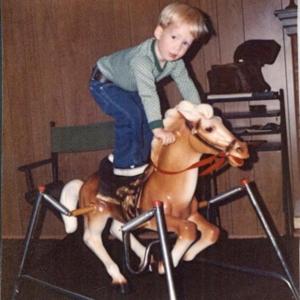


Why should we regulate artificial intelligence? This was the question we tackled at the Thursday evening discussion group at Meadowlark Hills Retirement Community in Manhattan, Kansas, on March 20, 2025. This presentation and conversation was shared by Wes Fryer of Charlotte, North Carolina, a 1988 graduate of Manhattan High School and current middle school and high school computer science teacher. We explored government regulation more broadly, considering the different kinds of things we generally acknowledge government should regulate, and acknowledged the widespread hostile sentiments in the United States today against regulation overall. After sharing a couple book recommendations, we explored the definition of "artificial general intelligence," who some of the primary players are in the AI competition today, and finally why many people believe it is important to try and regulate AI with different kinds of guardrails. Slides for this presentation are available and also linked on ai.wesfryer.com.
Reflections on the ways in which we each have “multidimensional personalities,” and my experience using the generative AI platform “Notebook LM” this past week to create an introductory deep dive podcast about myself.
More on my blog post:
https://www.speedofcreativity.org/2025/01/22/notebooklm-introduces-me/
More ways to learn and connect with me are on:
https://wesfryer.com/after/
Today in this podcast (which is also a blog post and video) I discuss a podcast episode titled, “The Fall of the Aztecs: The Adventure Begins (Part 1)” on “The Rest is History,” by historians Tom Holland and Dominic Sandbrook. I’m excited to share about this podcast and topics it references for several reasons. First, I’m a real history geek, particularly fascinated by the history of the “encounter of cultures” in the Americas in the 1500s, the “Age of Exploration,” the “conquest of the Americas,” or whatever terms you choose to use to describe the dramatic and destructive introduction of the values of European colonialism into the Western hemisphere of our planet. These topics are also relevant as humanity ponders the idea of becoming a multi-planetary species in the coming decade, and the ways we will behave as we "colonize" another new world.
Some reflections on ways I want to change the design of my middle school robotics course and classes. Resources related to this podcast episode are available on lessons.wesfryer.com/robotics. Links to my social media channels to continue learning and connecting with me are on wesfryer.com/after.
This is an audio recording of our Sunday School class lesson, "Responding to 'There Can’t Be Just One True Religion'" from March 14, 2021. A video version is also available on YouTube, and linked from our class recordings and resources webpage.) We started a new book study today using Timothy Keller's 2008 (revised in 2018) book, "The Reason for God: Belief in an Age of Skepticism," and today highlighted Chapter 1. Our focus Bible verses for today were John 10:1-10, from both the NIV and MSG versions.
Our class is taught by Dr. Wesley Fryer. Slides for today's lesson are available. This recording, these slides, and additional class recordings as well as resources are available on: followjesus.wesfryer.com/classes. Learn more about the Christian theology and background of our class teacher and presenter, Dr. Wesley Fryer, on: www.wesfryer.com/theology/. Follow Dr. Wesley Fryer's Christian Twitter channel on: twitter.com/pocketshare.
From the publisher's feed