
Sign up to save your podcasts
Or

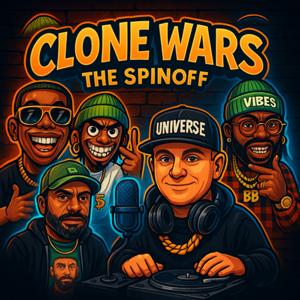


The hosts break down what private equity and institutional money really mean for artists, from catalog multiples and mezzanine debt to board seats, voting power, and cultural control. They also cover practical deal protections like ring-fencing assets, audit rights, reversion terms, and why independent entertainment counsel matters.
Powered by Jellypod AI
This episode connects knowledge of self from the Five Percent Nation to modern music business strategy, using the Sony Publishing catalog deal to explore how ownership, publishing, and long-term revenue shape an artist’s future.
The League breaks down Supreme Mathematics, financial discipline, and practical moves for independent artists, from tracking statements and registering songs to building generational wealth.
Powered by Jellypod AI
DJ Universe, Dangerous Zygos, and Calvin Blingwell introduce Greedy Boi as the newest fourth host on Clone Wars, while breaking down why lineup changes are part of running a real business. The episode dives into artist ownership, financial literacy, management strategy, and what it takes to build a sustainable hip-hop career.
This episode breaks down sync licensing, from how music gets placed in film, TV, trailers, and ads to why the upfront fee is only part of the money. The hosts also explain performance royalties, publishing ownership, PRO registration, and how indie artists can set up their catalogs for long-term income.
Powered by Jellypod AI
A new era of Clone Wars: The Spinoff begins.
DJ Universe, Dangerous Zygos, and Calvin Blingwell officially welcome independent recording artist and producer Lil Bennington into the fourth chair as the newest host of Clone Wars—and the newest member of the Hip-Hop Hero League under Down By Law Management.
In this special induction episode, the crew gets into Lil Bennington’s genre-bending world of alternative rock, rap-rock, nu-metal, hip-hop, mobile production, and relentless independent creation. From projects including New Faith, My Pleasure, Moments Divided, and Bennington to collaborative work with HellFire Disciples, the conversation goes beyond the music into the infrastructure required to build a lasting career.
The four hosts break down catalog ownership, masters, publishing, metadata, royalty flows, financial literacy, knowledge of self, direct-to-fan business, intellectual property, and generational wealth—with one central message: making music is only the beginning. Artists have to know what they created, know what they own, understand where the money goes, and build their careers like something their families can inherit.
This isn't just Lil Bennington's introduction. It's his induction into the League and the beginning of a new four-host era for Clone Wars: The Spinoff.
Legacy over hype. Ownership over clout.
This episode breaks down why artist merch can out-earn ticket guarantees, using real tour math to compare streaming revenue with shirt and hoodie sales. The hosts also dig into venue merch cuts, contract red flags, tax setup, and how independent acts can protect their profits on the road.
Powered by Jellypod AI
An in-depth look at how Master P turned down a major-label payday, struck a groundbreaking distribution deal, and built No Limit Records on ownership and leverage. The episode also explores how he expanded into a multi-generational business empire and offers practical steps for creators to protect their masters, equity, and legacy.
Powered by Jellypod AI
The crew breaks down why Snoop’s viral complaint about streaming payouts still resonates, then explains how royalties really work across platforms, labels, and distributors. They also lay out the business moves every artist should make, from tracking merch and touring income to registering publishing splits and understanding masters versus publishing.
Powered by Jellypod AI
The model everybody said would free independent artists from streaming just collapsed. Vault — the $5-a-month platform James Blake helped launch — stripped subscriptions out on December 19, 2025. Patreon’s free memberships now outnumber paid ones four to one, 100 million against 25 million, and the company cut 20% of its staff in July. Spotify’s $5.99 Music Pro tier stalled after free lossless killed its own upsell.
The crew breaks down why a monthly bill was always the wrong shape for a spiky career, and what’s taking its place: event-based monetization through listening parties, release campaigns, ticket access, and merch drops. Then the math — 1,000 superfans at $10/month equals roughly 30 million annual Spotify streams, the 15x spread between the highest and lowest per-stream payers, and why independent artists now pull close to half of all Spotify royalty payouts while the per-stream rate stays flat.
Plus the blueprint: sell moments instead of access, own the list, keep your splits clean, and build income that doesn’t stop when you do.
Powered by [Jellypod AI](https://jellypod.com)
T.I. just signed his entire publishing catalog — from 2001's I'm Serious through 2020's The L.I.B.R.A., plus his new Top 10 album Kill the King — over to Reservoir Media, a deal that also pulls in decades of songwriting credits from features he wrote for B.o.B, A$AP Rocky, Slim Thug, Trey Songz, Dave East, Sean Kingston, and Big K.R.I.T. The crew breaks down what a publishing deal actually is versus selling your masters, why a 20-plus year veteran chooses a company like Reservoir instead of a major, and why every feature verse you write for somebody else can still be a paycheck for the rest of your life if the paperwork is right.
Then the crew pulls off the deal-of-the-week format to get into road money: with merch now covering 30 to 50 percent of a touring artist's income at the club level, the crew runs real numbers on what a 12-date, 1,500-cap tour actually clears per artist after every fee — and why that merch table is what buys you the leverage to say no to a bad deal later.
They close it out the way the culture taught them — Knowledge, Wisdom, and Understanding as a framework for playing the long game, plus three action steps: register your publishing splits, know masters from publishing before you sign anything, and treat your merch money like a business, not a bag.
Show Notes
Powered by Jellypod AI
From the publisher's feed