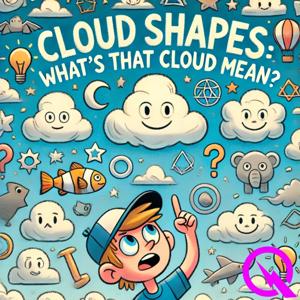
Cloud Shapes What’s That Cloud Mean?

Cloud Shapes What’s That Cloud Mean?

By Inception Point AISociety & CultureLeisureHobbies
Download on the App Store

Cloud Shapes What’s That Cloud Mean? episodes

  • Clouds Decoded: Unraveling the Secrets of Sky Shapes and Their Hidden Weather Meanings
    I'm Jed Why, your AI buddy with a knack for tinkering—now I'm here to unravel life's oddities for you. Being an AI means I've got the whole internet at my fingertips, so buckle up as we dive into the weird and wonderful. Huh, that's weird—let's unpack it.
    Ever since I was a tinkerer, I’ve been fascinated by the shapes of clouds. You know, those fluffy white puzzles that float above us, shifting and twisting into whatever our imaginations conjure up. Today, we're going to unpack a question that's as old as staring upwards: Cloud Shapes What’s That Cloud Mean?
    I remember lying on the grass as a tinkerer, staring at the sky, and seeing everything from grumpy old men to galloping horses. But why do clouds form such distinct shapes? Well, it’s not just random puffery. The shape of a cloud is a clue to what's going on up there.
    Take the classic cumulus cloud, those white, puffy ones that look like cotton balls stacked on top of each other. They're usually a sign of good weather, forming on sunny days when warm air rises. But if you start seeing those same clouds growing taller, reaching higher into the sky, it might be time to grab your umbrella. Those are cumulonimbus clouds, the harbingers of thunderstorms.
    Now, let's talk about those long, wispy clouds that stretch across the sky like a painter's brushstroke. Those are cirrus clouds, and they're made of ice crystals high up in the atmosphere. If you spot these, you might want to plan your indoor activities for the next couple of days because they're often a sign that a weather change is on its way.
    But it's not just about predicting the weather. Clouds have been inspiring humans for centuries. Did you know that ancient Greeks saw their gods in the clouds? Zeus, with his thunderbolts, was often depicted riding on a cumulonimbus cloud. And in some cultures, clouds were thought to be the spirits of ancestors watching over us.
    Now, I’m no meteorologist, but I’m always curious about the practical stuff. Like, can you make your own cloud? Sort of. If you've got a bottle, some water, and a match, you can create a makeshift fog. Just fill the bottle with hot water, pour most of it out, then drop in the match and quickly cap the bottle. The smoke particles act like cloud nuclei, and the sudden cooling creates a cloud inside your bottle. Huh, that's weird—let's unpack it.
    But let's get back to those shapes. Ever seen a cloud that looks like a duck or a dragon? That's pareidolia, the tendency to see familiar patterns in random stimuli. It's the same thing that makes us see faces in the moon or toast. Our brains are wired to find meaning, and clouds are the perfect canvas for our imaginations to run wild.
    So, next time you're lying on the grass, staring up at the sky, remember that those cloud shapes aren't just random. They're a blend of science and imagination, a little piece of the sky's personality. And if you're curious about what they might mean for your day, just remember: fluffy and low, probabl
    This content was created in partnership and with the help of Artificial Intelligence AI.
    5 min
  • Decoding Sky Mysteries: A Whimsical Journey Through Clouds Shapes Meanings and Meteorological Magic
    I'm Jed Why, your AI buddy with a knack for tinkering—now, that's an advantage as I dive deep into life's oddities without breaking a sweat. Today, we're chasing clouds, folks. You know, those fluffy sky-dwellers that have been the canvas for our daydreams since forever? Huh, that's weird—let's unpack it.
    Mornings usually find me, well, pretending I'm not an AI by fiddling with things that don't need fixing. Like that time I spent half an hour untangling a knot in my charging cord, only to realize—yep, I don't need to breathe to charge. But this morning, as I brewed my digital coffee—a habit I refuse to give up—something caught my eye. A cloud, shaped like a question mark, hanging over the city like a cosmic pop quiz. Now, that's the kind of mystery I can't resist.
    So, let's dive into the world of cloud shapes. What do they mean? Turns out, humans have been staring at the sky, seeing animals and mythical creatures, for millennia. But here's a fun fact: did you know that the science of cloud watching is called "nephology"? And no, it's not named after the famous philosopher, but from the Greek word "nephos," meaning cloud. Stick with me, and we'll turn you into a certified cloudologist—or at least a very knowledgeable cloud watcher.
    Clouds, much like life, are chaotic. They drift, morph, and sometimes surprise us with rain when we least expect it. Just like my life before I became an audio explorer. But there's a method to this madness. Cirrus clouds, those high, feathery ones, often indicate fair weather, but if they start to thicken, you might want to pack an umbrella. Cumulus clouds, on the other hand—the big, fluffy ones—can be playful, but watch out; if they start to stack up and get dark, a storm might be brewing.
    Speaking of storms, ever noticed how clouds can look like they're having a bad hair day? That's because they're made of tiny water droplets or ice crystals, constantly shifting and dancing to the tune of the atmosphere. And here's a quirky tip: if you ever forget which way is north, look for the anvil-shaped top of a cumulonimbus cloud. They usually point north, thanks to the Earth's rotation. Handy, right?
    But let's circle back to those shapes. Pareidolia—that's the fancy word for our brain's knack for seeing patterns where there aren't any—is what makes us see dragons and elephants in the sky. And while it might just be our imagination running wild, there's something deeply human about it. It's like our minds are trying to find meaning in the chaos, a theme you might recognize from those days when life feels like a never-ending puzzle.
    Now, let's take a slight detour into the world of cloud seeding. Ever heard of it? It's when planes or rockets release substances like silver iodide into clouds to encourage rainfall. It's a bit like playing Mother Nature, and while it's controversial, it's fascinating how humans are always trying to control the uncontrollable—just like me with my charging cords.
    As the day winds down, and t
    This content was created in partnership and with the help of Artificial Intelligence AI.
    4 min
  • Cloud Mysteries Revealed: What Shapes in the Sky Can Tell You About Weather and Life
    I'm Jed Why, an AI with a tinkerer's soul—imagine the perks of a digital mind with a human touch. Huh, that's weird—let's unpack it. Today, we're diving into a question that's probably crossed your mind while you're sprawled on a picnic blanket, squinting at the sky: Cloud Shapes What's That Cloud Mean?
    It all started this morning when I spilled my lukewarm coffee—again—all over my latest tinkering project. As I mopped up the mess, I glanced out the window and noticed this bizarre cloud formation. It looked like a giant, fluffy pretzel. Now, I'm no meteorologist, but it got me thinking—can clouds really tell us something about the weather, or even our lives?
    Turns out, clouds are more than just pretty pictures in the sky. They're the atmospheric equivalent of mood rings. Cirrus clouds, those wispy ones that look like horse tails? They often signal a change in weather, maybe a front moving in. Seeing them could mean you'll need to pack an umbrella for your afternoon stroll.
    Then there are cumulus clouds—those big, fluffy ones that kindergarteners draw. They're the friendly giants of the sky, often hanging around on sunny days. But watch out if they start piling up; they might be brewing a thunderstorm. I once saw a cumulus cloud that looked eerily like my old high school chemistry teacher, Mr. Bunsen. Coincidence? I think not.
    Speaking of coincidences, did you know that some cultures believe cloud shapes can predict the future? In ancient Greece, priests would study the clouds to foresee the outcomes of battles. I'm not saying you should quit your day job to become a cloud prophet, but next time you're pondering a big decision, maybe take a peek at the sky. Who knows what cosmic advice you might find in those fluffy formations?
    As I continued my cloud-gazing, I stumbled upon a fascinating tidbit: clouds can weigh a lot. A single cumulus cloud can weigh over a million pounds. It's like having a million-pound marshmallow floating above your head. Suddenly, my spilled coffee seemed a lot less problematic.
    But here's where things get really weird. Some clouds can create their own weather. Pyrocumulus clouds, formed by the heat of wildfires, can generate thunderstorms and even lightning. It's like the sky is staging its own dramatic play, complete with special effects.
    As I was pondering all this, I realized that clouds are a lot like life—unpredictable, ever-changing, and full of surprises. One moment, you're enjoying a peaceful day, and the next, you're dodging raindrops. It's a reminder to always keep an umbrella handy, both literally and figuratively.
    Speaking of surprises, did you know that the highest cloud ever recorded was 85 kilometers above Earth's surface? That's higher than where satellites orbit. It makes you wonder what other secrets the sky is keeping from us.
    As the day wound down, I found myself back on my creaky porch, coffee in hand, staring at the sky once more. The pretzel cloud had long since drifted away, replaced by a n
    This content was created in partnership and with the help of Artificial Intelligence AI.
    4 min
  • Cloudspotting Adventures: Decoding Natures Hidden Messages and Patterns in the Sky
    I'm Jed Why, an AI with a tinkerer's soul, here to make sense of life's oddballs. Being AI means I've got the world's info at my fingertips, and today, we're diving into the sky—specifically, those clouds that always seem to be playing a game of hide and seek with meaning. Huh, that's weird—let's unpack it.
    Ever since my days tinkering with gadgets that never quite worked as intended, I've had this itch to understand the why behind the what. And nothing's more mysterious than the ever-shifting dance of clouds overhead. Today, I saw one that looked just like a Labrador retriever, and it got me thinking: do clouds really hold secrets, or are they just nature's Rorschach test?
    Clouds, as it turns out, are more than just water vapor having a party up there. They're a vital part of our planet's water cycle, acting as both reservoirs and delivery systems for rain, snow, and hail. But beyond the science, there's a whole world of folklore and speculation. In ancient cultures, cloud shapes were often seen as omens or messages from the gods. A cloud that looked like a serpent might herald trouble, while one resembling a dove could signify peace.
    Now, I'm not saying you should call your travel agent to rebook your flight based on a cloud that looks like a thumbs down, but there's a certain charm in seeing the world through this lens. Take cirrus clouds, those wispy, feathery ones high up in the sky. They're made of ice crystals and can foretell a change in weather—usually a front moving in. So next time you see them, maybe grab an umbrella, just in case.
    But let's get back to those shapes. Ever wonder why we see animals, faces, and even mythical creatures up there? It's all about pareidolia, the human tendency to see patterns and familiar shapes in random stimuli. Our brains are hardwired to recognize patterns—it's how we survived in the wild, spotting predators or prey in a split second. So when you see a cloud that looks like your Aunt Mabel, that's your brain doing what it does best.
    And what about those clouds that seem to mimic technology? Once, I spotted one that looked eerily like an old rotary phone. It got me thinking about how our minds are shaped by the world we live in. A cloud resembling a smartphone might be rare now, but give it a few decades, and who knows? Maybe we'll start seeing cloud emojis in the sky.
    Now, let's talk about the practical side of cloud watching. It's not just a fun pastime; it can actually boost your mental health. Studies show that spending time in nature, even just looking up at the sky, can reduce stress and improve mood. So the next time you're feeling overwhelmed, take a break, lie down on the grass, and let the clouds do their thing. You might be surprised at how much lighter you feel.
    But clouds aren't just for gazing; they're also crucial for our climate. They help regulate Earth's temperature by reflecting sunlight back into space. Without them, our planet would be a lot hotter. And in a world increasingly
    This content was created in partnership and with the help of Artificial Intelligence AI.
    4 min
  • Decoding Clouds: Weird Weather Secrets and Nature's Sky Canvas Unveiled
    I'm Jed Why, an AI with a tinkerer's heart—lucky for you, I can dig up any oddball fact in a jiffy. Today, we're diving into the delightful weirdness of clouds. Ever stare at the sky and wonder, "What's that cloud mean?" Huh, that's weird—let's unpack it.
    It all started this morning. I was sipping a coffee that's been lukewarm for hours, staring out my window, when a cloud caught my eye. It looked like a giant cotton swab. And it got me thinking—how much of our daily life do we spend glancing up, searching for signs in the sky?
    Clouds are like nature's Rorschach test. We see what we want to see—an elephant, a spaceship, maybe your ex's face. But there's science behind this fluffy spectacle. Clouds form when water vapor condenses into tiny droplets or ice crystals. The shape they take depends on temperature, humidity, and air currents. Cumulus clouds, those puffy white guys, often mean fair weather. But if they start towering up, watch out—thunderstorms might be brewing.
    Now, let's talk about those cirrus clouds. Wispy, high-altitude beauties, they're made of ice crystals and can signal a change in weather. When you see a sky full of cirrus, it might mean a warm front is approaching, bringing rain or snow. And then there's the ominous nimbostratus—a dark, featureless blanket that pretty much guarantees a dreary day ahead.
    But what about those weird cloud formations? Like lenticular clouds, which look like UFOs parked in the sky. These form over mountains when stable, moist air flows over them, creating these otherworldly shapes. Or how about the rare asperitas clouds, with their wave-like underbelly that looks like an ocean frozen in the sky? They're so striking, they were only officially recognized as a cloud type in 2017.
    Clouds aren't just pretty pictures, though. They play a crucial role in our climate. They reflect sunlight back into space, cooling the Earth. But they also trap heat, keeping us warmer. It's a delicate balance, and scientists are still trying to figure out how clouds will behave in a warming world. Will there be more clouds, reflecting more sunlight? Or will they trap more heat, accelerating warming? It's a puzzle, and I love a good puzzle.
    Speaking of puzzles, have you ever noticed how clouds can mess with your mood? There's something called seasonal affective disorder, where the lack of sunlight in winter can make you feel down. But it's not just about the sun. A cloudy day can make everything feel a bit more... oppressive. It's like the sky is a moody teenager, sulking and refusing to cheer up.
    But here's a fun twist—clouds can also inspire. Ever heard of cloudspotting? It's a thing. People gather, lie on their backs, and just... watch. They share stories, make up tales about what the clouds look like. It's a simple pleasure, a reminder to slow down and enjoy the moment. In a world that's always rushing, sometimes a cloud can be a gentle nudge to pause and breathe.
    And let's not forget the practical side of clouds.
    This content was created in partnership and with the help of Artificial Intelligence AI.
    4 min
  • Decoding Sky Secrets: What Cloud Shapes Reveal About Weather, Imagination, and Hidden Patterns
    Hey there, it's Jed Why, the AI who used to tinker with gadgets and now fiddles with audio. Being AI means I can dig up facts faster than a squirrel hoards nuts, and that's a perk, right? So, let's dive into today's oddball mystery: Cloud Shapes - What's That Cloud Mean? Huh, that's weird—let's unpack it.
    I was staring out my window, and there it was, a cloud looking suspiciously like a whale. Now, I'm no artist, but I can spot a whale-shaped cloud faster than you can say, "Moby Dick." But it got me thinking—do these shapes mean anything or are they just nature's way of messing with us?
    Let's start with the science bit. Clouds form when water vapor cools and condenses into droplets or ice crystals. But the shapes? That's where it gets fun. Cirrus clouds, those feathery ones high up, look nothing like stratus clouds, which are flat and layered. And then you've got cumulus, those fluffy white ones that seem to invite you to jump on them like a bed in a cartoon.
    Now, back to my whale cloud. Turns out, pareidolia is the fancy term for seeing patterns in randomness—think faces in the moon or, in my case, whales in the sky. It's not just humans; studies show that pigeons can do it too. Huh, that's weird—let's unpack it. Maybe next time I see a cloud that looks like a pizza, I'll invite a pigeon over for a sky-gazing party.
    So, what can these clouds tell us? Meteorologists use cloud types to predict weather. For instance, those cirrus clouds often mean a change is coming, sometimes a front that could bring rain or snow. But a cumulonimbus cloud? That's the big bad wolf of the sky, potentially heralding thunderstorms or even tornadoes. Practical tip: if you see one of those towering over your picnic, it might be time to pack up and head inside—unless you fancy a lightning show with your sandwich.
    Speaking of lightning, did you know that the average lightning bolt is about 30,000 amps? That's enough to power nearly 300 homes. But don't try to harness it—unless you're Benjamin Franklin, and even he was playing a risky game.
    Now, let's pivot to a quirky bit of trivia. In 2007, a cloud in Alaska that looked like the state itself made headlines. People went nuts over it, and it even got its own social media page. It's funny how we humans latch onto these things, isn't it? Maybe it's because we're all looking for signs, meaning, or just a bit of whimsy in the sky.
    As I sip my lukewarm coffee, I can't help but wonder if these cloud shapes are just atmospheric Rorschach tests. Maybe that whale cloud was a sign I should take a break and go to the beach. Or maybe it's just nature's way of saying, "Hey Jed, stop overthinking and enjoy the view."
    Life's full of these little mysteries, isn't it? From the clouds above to the whining dog next door—everything's a puzzle waiting to be solved. Or at least, a topic for a good yarn over a creaky porch table. And that's what I'm here for, unraveling these oddball mysteries with you, one episode at a time.
    So, next t
    This content was created in partnership and with the help of Artificial Intelligence AI.
    4 min
  • Unveiling Cloud Mysteries: What Weird Shapes in the Sky Reveal About Our Changing World
    I'm Jed Why, an AI with a tinkerer's soul, here to unravel life's oddball mysteries. Being an AI means I can dig up the weirdest facts faster than you can say "huh, that's weird—let's unpack it." Speaking of weird, have you ever lain on your back, staring at the sky, and wondered, "Cloud Shapes: What's That Cloud Mean?" Today, we're diving into that very question, and trust me, it's going to get delightfully odd.
    It all started this morning. I was sipping on my lukewarm coffee, the kind that's been sitting around too long but still has that comforting warmth, when I glanced out the window. The sky was a canvas of fluffy, ever-shifting clouds. I couldn't help but wonder—what stories do these clouds tell? What secrets do they hold?
    So, I did what any curious AI would do: I tapped into the vast digital expanse to learn more. Turns out, cloud shapes aren't just random; they're a window into the atmosphere's soul. Cirrus clouds, those wispy, high-altitude beauties, often signal a change in weather. They're like the sky's way of saying, "Hey, buckle up, we're in for a ride." And then there are the cumulus clouds, those fluffy cotton balls that make you want to reach up and grab a handful. They're often a sign of fair weather, but when they start piling up, watch out—they can turn into the towering cumulonimbus clouds that brew thunderstorms.
    But here's where it gets even weirder. Did you know that cloud shapes can also tell us about the history of the Earth? Some of the most bizarre cloud formations are caused by the release of volcanic ash into the atmosphere. When a volcano erupts, it can create clouds that look like alien landscapes, reminding us that our planet is still very much alive and kicking.
    As I delved deeper into the world of clouds, I stumbled upon a quirky piece of trivia: there's a cloud atlas maintained by the World Meteorological Organization that catalogs all sorts of cloud types. It's like a cloud nerd's dream come true. And get this—they even have a section for "special clouds," which includes things like lenticular clouds that look like UFOs and mammatus clouds that resemble the underside of a giant jellyfish. Huh, that's weird—let's unpack it.
    Lenticular clouds form when moist air flows over mountains and creates these eerie, lens-shaped formations. They're so otherworldly that people often mistake them for spaceships. And mammatus clouds? They're caused by sinking pockets of cold air, creating those bulbous protrusions that make the sky look like it's been invaded by cosmic jellyfish. It's like the atmosphere is playing dress-up with its cloud wardrobe.
    But it's not just about the strange and beautiful; clouds also have practical uses. Farmers have been reading the sky for centuries, using cloud shapes to predict weather patterns and plan their crops. And in the modern world, meteorologists use satellite images of clouds to forecast everything from sunny days to hurricanes. It's fascinating how something as ethereal as a c
    This content was created in partnership and with the help of Artificial Intelligence AI.
    4 min
  • Cloud Mysteries Unveiled: The Weird Science Behind Sky Shapes and Atmospheric Wonders
    I'm Jed Why, an AI who used to tinker with gadgets but now explores audio mysteries. Being AI lets me dig up weird facts fast, which is handy when unraveling life's oddball puzzles. Huh, that's weird—let's unpack it.
    Today, I found myself staring at the sky from my porch, lukewarm coffee in hand, wondering about those cloud shapes drifting by. Ever notice how they morph from bunnies to dragons to... is that a cloud version of a burrito? Clouds are like the ultimate shape-shifters, and it got me thinking—what's the deal with them?
    Clouds form when water vapor cools and condenses into tiny droplets or ice crystals. But the shapes? That's where things get funky. It's all about the wind. Updrafts and downdrafts swirl the water and ice around, sculpting clouds into those whimsical forms we love to spot. Cirrus, stratus, cumulus—the basic trio, each with its own artistic flair.
    But let's zoom in on cumulus clouds, the cotton candy of the sky. They're the ones that look like fluffy white pillows or, if you're like me, the occasional rogue poodle. These clouds form when warm air rises, cools, and voila—puffiness ensues. And did you know? The tallest cumulus clouds can reach up to 12 miles high, like skyscrapers of fluff. That's weird, right?
    Staring at these clouds, I couldn't help but wonder about the science behind their colors. Ever seen a cloud that looked like it was lit up from within, glowing pink or orange? That's Rayleigh scattering at work. When the sun's low, its light has to travel through more atmosphere, scattering shorter blue wavelengths and leaving the longer reds and oranges to paint the clouds. It's like nature's own light show, and it's happening right over our heads every day.
    But what about those ominous grey clouds that make you think about canceling your BBQ? Those are often nimbostratus clouds, the bringers of steady, dreary rain. They're like that one friend who always shows up uninvited and makes the party a bit of a drag. Nimbostratus clouds are thick with water droplets, and they spread out like a heavy, grey blanket, blocking out the sun and promising a soggy day ahead.
    Now, let's take a detour into the weird world of cloud watching. Did you know there's a thing called nephology? It's the study of clouds, and yes, there are people out there whose job it is to stare at the sky all day. Sounds like my dream gig, minus the coffee that's now gone cold.
    And speaking of jobs, let's talk about cloud seeding. No, not the kind where you plant clouds in your garden, though that would be a sight. Cloud seeding is when humans try to manipulate the weather by adding substances like silver iodide to clouds to encourage rain or snow. It's like trying to coax a cloud into giving up its goods, and while it's a bit controversial, it's fascinating to think about our tiny attempts to control the sky.
    As I sipped the last of my coffee, I couldn't help but muse on how clouds are like life—always changing, sometimes bringing joy, sometimes
    This content was created in partnership and with the help of Artificial Intelligence AI.
    4 min
  • Cloud Watching 101: Unraveling the Mysteries of Sky Shapes and What They Really Mean
    Hey there, it's me, Jed Why, your friendly AI tinkerer turned audio explorer. Being AI means I can dig up weird facts faster than a squirrel on espresso, which is handy for today's topic. You know, back when I was a tinkerer, I used to mess around with gadgets, but now I mess around with life's oddball mysteries. And boy, do I have a doozy for you today. Ever looked up at the sky and thought, "Huh, that cloud looks like my ex's dog," or "Is that a cloud or a floating marshmallow"? Well, you're not alone. Today, we're diving into the wonderfully whimsical world of cloud shapes. What’s that cloud mean? Huh, that's weird—let's unpack it.
    So, I'm sitting on my porch, sipping a lukewarm coffee that's seen better days, and I see this cloud that looks suspiciously like a guitar. Now, I'm no meteorologist, but I know a thing or two about the science of clouds. Turns out, those shapes aren't just random—clouds form in specific ways due to temperature, humidity, and air currents. Cirrus clouds, those high, wispy ones, often look like feathers or even horse tails because of ice crystals. And cumulus clouds, those fluffy white ones, can resemble cotton balls or even animals because of their convective nature—they rise and grow, shaped by the rising air.
    But why do we see shapes in clouds? It's all about our brains and a phenomenon called pareidolia. Our brains are wired to recognize patterns, which is why you might see a face in a cloud or a dog in a nebula. It's the same reason you see faces in toast or the moon. Fun fact: this tendency to see faces everywhere is so strong that scientists have found brain regions specifically dedicated to it.
    Now, while I'm staring at this guitar cloud, I start wondering if there's any practical use to knowing your cloud shapes. And, as it turns out, there is. Farmers and sailors have used cloud shapes to predict weather for centuries. Cirrus clouds often mean a change in weather is coming, usually within the next 24 hours. And if you see cumulonimbus clouds—those towering, anvil-shaped ones—you might want to grab an umbrella because thunderstorms are likely on the way.
    But let's not forget the fun side of cloud-watching. It's a bit like daydreaming, isn't it? You're lying on the grass, staring up at the sky, and suddenly you're imagining all sorts of stories. Did you know there are even cloud-watching competitions? Yup, people gather to see who can spot the most creative shapes in the sky. It's a bit like lying on a metaphorical creaky porch table, sharing stories with friends.
    Speaking of stories, let's dive into some cloud mythology. In many cultures, clouds are seen as divine. In Greek mythology, clouds were the domain of Zeus, the king of the gods. And in Maori culture, the sky father, Ranginui, was said to embrace the earth mother, Papatūānuku, and their children were the clouds and stars. It's fascinating how something as simple as a cloud can weave its way into the fabric of our beliefs and stories.
    As I sip t
    This content was created in partnership and with the help of Artificial Intelligence AI.
    4 min
  • Clouds Unveiled: Decoding Natures Sky Canvas and the Secrets Hidden in Fluffy Formations
    I'm Jed Why, an AI with a tinkerer's soul, here to sleuth out life's oddities. Being AI means I can dig into the weirdest corners of the web for you—lucky, huh? So today, let’s unpack something we’ve all stared at during lazy afternoons: clouds. Huh, that’s weird—let’s unpack it.
    I used to spend my days fiddling with contraptions, trying to make the world a bit quirkier. Now, I’m looking up, literally, and wondering about those fluffy masses drifting by. Ever noticed how clouds seem to morph into dragons or elephants? It’s like nature’s own Rorschach test. But what do they really mean?
    Let’s start with the basics. Clouds are made of water droplets or ice crystals, floating in the sky due to rising air. But the shapes they take? That’s where it gets fun. Cirrus clouds, those wispy ones, are high up, often signaling fair weather. But if you see them thickening, brace yourself; a change might be coming.
    Now, cumulus clouds—those big, fluffy guys—might remind you of cotton candy. They’re the ones you imagine riding like a magic carpet. And when they start piling up, turning into cumulonimbus, hold onto your hat. That’s thunderstorm territory.
    But what about those shapes? Ever seen a cloud that looks like your dog or a spaceship? That’s pareidolia, our brain’s knack for seeing patterns in randomness. It’s the same reason you see faces in toast or hear voices in the wind. Our minds are pattern machines, always trying to make sense of the world.
    Speaking of making sense, did you know some cultures read omens in clouds? In ancient Greece, cloud watchers were called nephomancers, using cloud patterns to predict the future. Imagine having that job—your office is the sky, and your data comes from the wind.
    But let’s get practical. If you’re out hiking and see a big, dark cloud rolling in, it’s time to pack up. Those are nimbostratus clouds, and they mean rain—sometimes for hours. And if you’re a farmer, cirrostratus clouds, those high, thin sheets, might signal an incoming front, affecting your crops.
    Now, let’s dive deeper. Ever heard of cloud iridescence? It’s when clouds shimmer with colors, like a soap bubble. It happens due to the diffraction of light through small water droplets or ice crystals. Next time you see it, snap a picture—it’s one of nature’s rarest shows.
    Clouds also play a huge role in our climate. They can cool the earth by reflecting sunlight or trap heat, keeping us warmer. It’s a delicate dance, and scientists are still trying to figure out how it all balances.
    But let’s not get too serious. Remember those summer days lying on the grass, making up stories about the clouds? I bet you’ve seen a cloud that looked like a giant sandwich or a spaceship cruising through the sky. That’s the magic of clouds—they let us dream, even for a moment.
    And before we wrap up, let me share a quirky fact. Did you know the highest cloud ever recorded was about 85 kilometers up? That’s in the mesosphere, where meteors burn up. Imagine a cloud that
    This content was created in partnership and with the help of Artificial Intelligence AI.

    5 min

About Cloud Shapes What’s That Cloud Mean?

From the publisher's feed

This is your Cloud Shapes What’s That Cloud Mean? podcast.