
Sign up to save your podcasts
Or

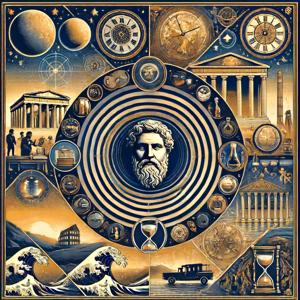


Self-Evident: The Road to 1776 — Episode 4
A Lying King Sealed It. It Outlived Him by 800 Years.
In June 1215, in a wet meadow called Runnymede, a defeated King John pressed his seal to a document he had no intention of honoring. Within ten weeks he had the Pope declare it void. The charter was dead before the wax cooled — a failed peace treaty between a faithless king and a self-interested aristocracy. And yet it did not stay dead. Buried in its thirty-ninth clause was a single sentence: that the king may not seize a free man or his property except by lawful judgment or the law of the land. Eight centuries later, that sentence is the due-process clause of the American Constitution.
This is the closing episode of the series' first arc, and it does two things. It forges the medieval inheritance — Magna Carta, Bracton's "the law makes the king," Aquinas's fourfold law and his lex iniusta non est lex, the line that ran straight to Martin Luther King's Birmingham jail cell — and then it stands on the summit and looks back across the whole road: Athens, Jerusalem, Rome, and the House of Wisdom, four civilizations braided into one cord and handed to the men who would meet in Philadelphia. It reckons honestly, too, with the scandal at the center: the same Aquinas who taught universal natural law also endorsed the killing of heretics.
This is Episode 4 of "Self-Evident: The Road to 1776," a series tracing where the ideas behind the Declaration of Independence actually came from — across more than two thousand years, one civilization to the next.
The question underneath all of it: did this leave Americans more free, or more governed?
⏱️ CHAPTERS
[00:00] Prologue: Runnymede, 1215 & The Magna Carta's False Start
[03:00] Introduction: Higher Law — Medieval Foundations
[05:24] Clause 39: The King is Not Above the Law
[08:49] Henry de Bracton & The Foundation of Common Law
[13:35] MLK's Letter from Birmingham Jail and the Medieval Roots of Disobedience
[15:04] Thomas Aquinas: The Synthesis of Athens, Jerusalem, and Rome
[17:46] The Four Laws: Eternal, Natural, Human, and Divine
[21:13] Lex Injusta Non Est Lex: An Unjust Law is No True Law
[24:29] The Problem of the Tyrant and the Right of Resistance
[27:14] Marsilius of Padua: Early Outlines of Popular Sovereignty
[30:39] The Canon Lawyers: "What touches all must be approved by all"
[33:05] A Reckoning: The Moral Failures of the Medieval World
[36:32] Answering Three Historical Objections
[44:40] The Liberty Lens: Applying Clause 39 to the Modern State
[47:04] The Summit: Looking Back at the First Arc of the Golden Thread
[54:17] Preview of Episode 5 & Outro
Companion:
Article 4: https://www.consequentialactions.com/post/higher-law-medieval-foundations
Cites Magna Carta clause 39; Henry de Bracton; Aquinas's Summa Theologica on the fourfold law and the unjust law; Marsilius of Padua's Defensor Pacis (1324); the canon-law maxim quod omnes tangit; and King's "Letter from Birmingham Jail": https://consequentialactions.com
️ Self-Evident: The Road to 1776 — Episode 4: "Higher Law — Medieval Foundations"
A Lying King Sealed It. It Outlived Him by 800 Years.
In June 1215, in a wet meadow called Runnymede, a defeated King John pressed his seal to a document he had no intention of honoring. Within ten weeks he had the Pope declare it void. The charter was dead before the wax cooled — a failed peace treaty between a faithless king and a self-interested aristocracy. And yet it did not stay dead. Buried in its thirty-ninth clause was a single sentence: that the king may not seize a free man or his property except by lawful judgment or the law of the land. Eight centuries later, that sentence is the due-process clause of the American Constitution.
This is the closing episode of the series’ first arc, and it does two things. It forges the medieval inheritance — Magna Carta, Bracton’s “the law makes the king,” Aquinas’s fourfold law and his lex iniusta non est lex, the line that ran straight to Martin Luther King’s Birmingham jail cell — and then it stands on the summit and looks back across the whole road: Athens, Jerusalem, Rome, and the House of Wisdom, four civilizations braided into one cord and handed to the men who would meet in Philadelphia. It reckons honestly, too, with the scandal at the center: the same Aquinas who taught universal natural law also endorsed the killing of heretics.
This is Episode 4 of “Self-Evident: The Road to 1776,” a series tracing where the ideas behind the Declaration of Independence actually came from — across more than two thousand years, one civilization to the next.
The question underneath all of it: did this leave Americans more free, or more governed?
⏱️ CHAPTERS
[00:00] Prologue: Runnymede, 1215 & The Magna Carta’s False Start
[03:00] Introduction: Higher Law — Medieval Foundations
[05:24] Clause 39: The King is Not Above the Law
[08:49] Henry de Bracton & The Foundation of Common Law
[13:35] MLK’s Letter from Birmingham Jail and the Medieval Roots of Disobedience
[15:04] Thomas Aquinas: The Synthesis of Athens, Jerusalem, and Rome
[17:46] The Four Laws: Eternal, Natural, Human, and Divine
[21:13] Lex Injusta Non Est Lex: An Unjust Law is No True Law
[24:29] The Problem of the Tyrant and the Right of Resistance
[27:14] Marsilius of Padua: Early Outlines of Popular Sovereignty
[30:39] The Canon Lawyers: “What touches all must be approved by all”
[33:05] A Reckoning: The Moral Failures of the Medieval World
[36:32] Answering Three Historical Objections
[44:40] The Liberty Lens: Applying Clause 39 to the Modern State
[47:04] The Summit: Looking Back at the First Arc of the Golden Thread
[54:17] Preview of Episode 5 & Outro
📚 Companion:
Article 4: https://www.consequentialactions.com/post/higher-law-medieval-foundations
Cites Magna Carta clause 39; Henry de Bracton; Aquinas’s Summa Theologica on the fourfold law and the unjust law; Marsilius of Padua’s Defensor Pacis (1324); the canon-law maxim quod omnes tangit; and King’s “Letter from Birmingham Jail”:
https://consequentialactions.com
🎙️ Self-Evident: The Road to 1776 — Episode 4: “Higher Law — Medieval Foundations”
—
Consequential Actions is a libertarian, non-interventionist analysis of American constitutional and foreign policy. New episodes weekly.
Self-Evident: The Road to 1776 — Episode 3B
They Used a 1917 Spy Law on the Men Who Told the Truth
In April, the Secretary of Defense told the Senate the American people supported the war in Iran. He was wrong — not arguably, but as a matter of arithmetic. By June it was the most unpopular war in U.S. history: negative 32% net support, below Vietnam’s worst reading, and never once positive on a single day. And if American history teaches anything, it is that the story we are told during a war and the story that later turns out to be true are frequently not the same story. Remember the Maine. Remember the Gulf of Tonkin. Remember the weapons that were not there.
So who tells us what we were not supposed to know? On Saturday we met that figure in his oldest form — the Hebrew prophet who walks up to the king with no army and says “thou art the man.” This episode meets him in ours: Daniel Ellsberg, Edward Snowden, Julian Assange — and the single 1917 law turned against all three, not for selling secrets to enemies, but for telling Americans what their own government was doing. Underneath runs the deeper argument of the series: the Constitution is the machine the Founders built against Polybius’s cycle of decay. But there is no machine against Ibn Khaldun’s — the rotting of a comfortable people’s vigilance. Against that, there is only the truth-teller.
This is Episode 3B of “Self-Evident: The Road to 1776,” the Tuesday contemporary-application companion to Saturday’s “Athens, Jerusalem, and the House of Wisdom.”
The question underneath all of it: did this leave Americans more free, or more governed?
⏱️ CHAPTERS
0:00 — Prologue: The Cost of Telling the Truth
6:07 — Introduction: Covenant, Consent, and the Critique of Power
6:34 — Setting the Standard: The Hebrew Inheritance
7:30 — The Prophetic Tradition & Samuel’s Warning
8:20 — The First Structural Warning: Polybius and the Cycle of Decay
9:15 — The Second Structural Warning: Ibn Khaldun and the Rotting of Vigilance
10:04 — The Limits of the Machine: What the Founders Knew
12:25 — Three Wars, Three Official Stories, Three Later Reckonings
15:30 — The Decisive Fact: The Danger of the Unaccountable Office
20:30 — A Different Kind of Case: The Julian Assange Controversy
24:44 — Does American Government Still Operate by Consent?
26:30 — Applying the Liberty Test to the Punishment of the Truth-Teller
28:46 — Transparency as the Answer to Obfuscation
30:24 — The Choice: A Republic, If You Can Keep It
33:35 — Preview of Episode 4 & Outro
📚 Companion:
Article 3: https://www.consequentialactions.com/post/athens-jerusalem-and-the-house-of-wisdom-the-ancient-sources-and-the-great-transmission
Key anchors: the USS Maine, Gulf of Tonkin, and Iraq WMD pretexts; the Espionage Act of 1917; the Pentagon Papers (1971); United States v. Moalin (9th Cir. 2020), which ruled the NSA bulk-metadata program unlawful; the 2024 Assange plea. Framework spine: Polybius’s anacyclosis and Ibn Khaldun’s asabiyyah:
https://consequentialactions.com
🎙️ Self-Evident: The Road to 1776 — Episode 3B: “Covenant, Consent, and the Critique of Power”
—
Consequential Actions is a libertarian, non-interventionist analysis of American constitutional and foreign policy. New episodes weekly.
Self-Evident: The Road to 1776 — Episode 3
They Paid the Weight of Each Book in Gold
In ninth-century Baghdad, the caliph's agents scoured the known world for Greek manuscripts — Aristotle, Euclid, Ptolemy, Galen — and the translators who carried them into Arabic were paid, by the accounts that survive, the weight of each finished book in gold. A manuscript on one pan of a scale, gold poured onto the other until they balanced.
Here is why that matters to an American twelve centuries later: the Aristotle the Founders read very nearly did not survive. After Rome fell, most of his work was lost to the Christian West for almost six hundred years. It came back because scholars in Baghdad bought it by the ounce, argued over it in Córdoba, and carried it into Latin at Toledo — Muslim, Jewish, and Christian scholars together — so that Aquinas could read it, and Philadelphia could inherit it. This episode traces two threads the schoolbooks skip: that homecoming, and the older Hebrew idea that even the king stands under the law — with Samuel's warning to Israel read voice-alone as the keystone.
This is Episode 3 of "Self-Evident: The Road to 1776," a series tracing where the ideas behind the Declaration of Independence actually came from — across more than two thousand years, one civilization to the next.
The question underneath all of it: did this leave Americans more free, or more governed?
⏱️ CHAPTERS
[00:00] Prologue: The Weight of Wisdom in Baghdad
[04:07] Introduction: Athens, Jerusalem, and the House of Wisdom
[06:03] The Hebrew Tradition & Covenant Consent
[09:26] The Radical Idea: The King is Under the Law
[13:30] Samuel's Warning & The Liberty Test
[19:33] The Exodus in the American Revolutionary Imagination
[24:35] The Fall of Rome & The Loss of Aristotle
[26:15] The Translation Movement in the Islamic World
[30:11] Preserving the Ancients: Al-Farabi, Avicenna, Averroes & Ibn Khaldun
[40:04] The Toledo School of Translators
[42:23] Maimonides & The Jewish Intermediaries
[44:55] Thomas Aquinas & The Great Synthesis
[47:02] Answering Three Historical Challenges
[54:42] The Liberty Lens: Samuel's Warning in the Modern Era
[58:13] The Relay of Human Inheritance
[01:00:21] Preview of Episode 4 & Outro
Companion:
Article 3: https://www.consequentialactions.com/post/athens-jerusalem-and-the-house-of-wisdom-the-ancient-sources-and-the-great-transmission
Cites 1 Samuel 8 and Deuteronomy 17; the Abbasid Translation Movement; al-Farabi, Avicenna, Averroes ("the Commentator"), Ibn Khaldun's asabiyyah, and Maimonides; the Toledo School; the Franklin-Adams-Jefferson Great Seal committee: https://consequentialactions.com
️ Self-Evident: The Road to 1776 — Episode 3: "Athens, Jerusalem, and the House of Wisdom"
Self-Evident: The Road to 1776 — Episode 2B
Your Congressman Represents 765,000 People. That’s Broken.
The district I live in, holds 765,403 people — all represented by one member of the “people’s house.” Now measure that against the men who built it. On the final day of the Constitutional Convention, George Washington — who had sat in near-total silence all summer — rose once to speak on the substance of the document. His one intervention: make the districts smaller. Bring the representative closer to the represented. The floor they wrote into the Constitution was 30,000.
So how did we get from 30,000 to 765,000? Not by amendment. By a quiet 1929 law — the Permanent Apportionment Act — that froze the House at 435 forever, after Congress spent the 1920s refusing to reapportion because the cities were gaining and the rural incumbents didn’t want to lose their seats. This episode measures our own House against Aristotle’s polity and Polybius’s mixed constitution, stages the strongest objection (Madison’s own warning in Federalist 55) at full strength, and answers it.
This is Episode 2B of “Self-Evident: The Road to 1776,” the Tuesday contemporary-application companion to Saturday’s “The Classical Inheritance.”
The question underneath all of it: did this leave Americans more free, or more governed?
⏱️ CHAPTERS
0:00 — Prologue: The Math and Logistics of Democracy
3:41 — Introduction: Hollowed Out from the Inside
4:46 — The Standard: Aristotle, Polybius, and the Rule of the Many
6:48 — The Founders’ Intent: A House Close to the People
8:28 — George Washington & The 30,000 Minimum
10:50 — 1929: The Year the House Froze at 435
14:20 — The Consequences: Distance, Dilution, and Donor Capture
18:19 — Answering Madison’s Warning About Size
22:18 — The Second Narrowing: The Fenced Ballot
28:08 — Duverger’s Law vs. Manufactured Monopolies
31:00 — A Thought Experiment: Unfreezing the House
35:19 — The Result: A Weaker, Slower, Healthier Legislature
37:15 — Restoring the Balance: A Slide We Can Stop
40:13 — Preview of Episode 3 & Outro
📚 Companion:
Article 2: https://www.consequentialactions.com/post/the-classical-inheritance-athens-and-rome
https://consequentialactions.com
🎙️ Self-Evident: The Road to 1776 — Episode 2B: “What the Classics Teach About Democracy”
—
Consequential Actions is a libertarian, non-interventionist analysis of American constitutional and foreign policy. New episodes weekly.
Self-Evident: The Road to 1776 — Episode 2
They Nailed His Hands to the Podium He Spoke FromOn December 7, 43 BC, an old man ordered his servants to set down his litter, faced the soldiers sent to kill him, and offered them his neck. His name was Cicero. They took his head — and, because he had written against tyranny, his hands — and nailed both to the speaker's platform in the Roman Forum. The message was not subtle: this is what happens to those who use speech against power.The Americans who built a republic eighteen centuries later knew that story by heart. They had translated Cicero's speeches as schoolboys and read his philosophy as grown men. This episode traces what Greece and Rome actually handed them: Aristotle's science of constitutions and the mixed polity, Polybius's terrifying wheel of political decay, and Cicero's statement of a law above all human law — the natural-law root of everything this series is about. It also reckons honestly with the rot in the sources: Aristotle's defense of natural slavery, Cicero's own slaveholding.This is Episode 2 of "Self-Evident: The Road to 1776," a series tracing where the ideas behind the Declaration of Independence actually came from — across more than two thousand years, one civilization to the next.The question underneath all of it: did this leave Americans more free, or more governed?⏱️ CHAPTERS[00:00] Prologue: Cicero on the Road to Formiae[02:57] Introduction: The Classical Inheritance[03:59] Aristotle: The Laboratory of Political Experiment[06:49] The Doctrine of the Mixed Constitution[11:24] The Moral Rot: Aristotle's Defense of Slavery[12:36] Plato's Republic and the Founders' Rejection of the Expert Class[15:12] Polybius: The Cycle of Constitutions (Anacyclosis)[19:11] The Balance as the Brake: Rome's Mixed Government[21:26] Cicero and the Philosophy of Natural Law[26:00] De Officiis: Civic Virtue and Property Rights[28:30] The Fall of the Roman Republic[31:33] The Classical Education of the Founders[34:13] Two Challenges: Moral Failures and the Republican vs. Liberal Debate[39:28] The Liberty Lens: Applying the Ancient Instruments Today[41:32] The Candle Still Burning at Montpelier[42:58] Preview of Episode 3 & Outro📚 Companion:Article 2: https://www.consequentialactions.com/post/the-classical-inheritance-athens-and-rome Cites Cicero's De Re Publica, De Legibus, and De Officiis; Aristotle's Politics; Polybius's Histories Book VI (anacyclosis); Madison's Federalist 18–20 and his confederacy notes: https://consequentialactions.com🎙️ Self-Evident: The Road to 1776 — Episode 2: "The Classical Inheritance"
Self-Evident: The Road to 1776 — Episode 1B
The Supreme Court Ruled Your Social Security Isn’t Yours
You have watched FICA leave your paycheck for decades. You were told it was your contribution, building toward your benefit. So when a senator promises to make Social Security solvent by “asking the wealthy to pay their fair share,” it sounds like protecting something you earned — a right.
It is not. In Flemming v. Nestor (1960), the Supreme Court held that paying into Social Security buys you no property right and no contractual claim at all — only a promise Congress reserved the power to revise or revoke at any time. This episode uses the 2026 solvency debate to walk the hardest case for the libertarian position, answers the strongest objection to it head-on, and applies the Liberty Test to the entitlement claim.
This is Episode 1B of “Self-Evident: The Road to 1776,” the Tuesday contemporary-application companion to Saturday’s “The Golden Thread.” Where Saturday established the precise concept of rights the Founders inherited, this episode shows what happens when the word is kept but its meaning is emptied out.
The question underneath all of it: did this leave Americans more free, or more governed?
⏱️ CHAPTERS
0:00 — Prologue: The Trillionaire and the Senator
2:23 — Introduction: Why This History Matters Now
3:34 — Negative Rights: The Duty of Forbearance
5:31 — John Locke and the Origins of Property Rights
8:07 — The Catastrophe of Modern Political Language
10:00 — The Hardest Case: Social Security
12:02 — Flemming v. Nestor: Is Social Security Property?
14:39 — The 2032 Cliff and the Illusion of the Trust Fund
20:03 — The Strongest Objection: Don’t Negative Rights Cost Money?
26:23 — Real Goods vs. Natural Rights
29:36 — The Liberty Lens: Applying the Test to Entitlements
33:32 — The Stolen Meaning of the Word “Right”
35:01 — Preview of Episode 2 & Outro
📚 Companion — Article 1, “The Golden Thread,” and Saturday’s Episode 1.
Key anchors: Flemming v. Nestor (363 U.S. 603); the 2026 Social Security Trustees Report (OASI depletion projected Q4 2032, ~22% cut thereafter); Locke’s Second Treatise; Holmes and Sunstein’s The Cost of Rights, presented as the strongest opposing argument:
https://consequentialactions.com
🎙️ Self-Evident: The Road to 1776 — Episode 1B: “Why This History Matters Now”
—
Consequential Actions is a libertarian, non-interventionist analysis of American constitutional and foreign policy. New episodes weekly.
Self-Evident: The Road to 1776 — Episode 1
"We hold these truths to be self-evident." Every American has heard the words until they became wallpaper. But listen again — a document announcing revolution stops to appeal not to custom, not to tradition, but to truth. Where did those truths come from? Who discovered them? And if they are self-evident, why did they take two millennia to articulate?Thomas Jefferson himself gave the answer. Forty-nine years after he drafted the Declaration, he insisted it contained nothing original — that he was only expressing the "harmonizing sentiments of the day," drawn from Aristotle, Cicero, Locke, and Sidney. This episode traces the golden thread that runs from the agora of Athens to the Pennsylvania State House, and establishes the tool we will carry through the whole series: the Liberty Test.This is Episode 1 of "Self-Evident: The Road to 1776," a series tracing where the ideas behind the Declaration of Independence actually came from — across more than two thousand years, one civilization to the next.The question underneath all of it: did this leave Americans more free, or more governed?⏱️ CHAPTERS[00:00] Prologue: The 36 Words That Outlasted Empires[03:44] Introduction: Interrogating the Declaration[06:27] Jefferson’s "Elementary Books": A 2,000-Year Synthesis[09:26] A Room Full of Books: The Founders' Working Libraries[12:26] Madison’s Trunks: The Intellectual Preparation for Philadelphia[14:55] Donald Lutz & The Top Cited Sources of the Founding Era[17:58] The Liberty Test: A Three-Question Instrument[20:17] "Fancy Hats and Larger Mobs": Understanding Aggression[26:15] Tracing the Golden Thread Across Civilizations[33:03] Answering the Critics: Three Strong Objections to the Inheritance[36:04] Rebutting Beard, the Particularists, and Mill's Utilitarianism[41:07] The Choice Every Generation Must Make[43:32] Preview of Episode 2 & Outro📚 Companion article — Article 1, "The Golden Thread: The Inheritance of Liberty." Cites Jefferson's 1825 letter to Henry Lee, the Lutz citation study (916 political writings, 1760–1805), Bailyn's Ideological Origins, and Madison's confederacy notes: https://consequentialactions.com🎙️ Self-Evident: The Road to 1776 — Episode 1: "The Golden Thread"
Empire of Liberty — Episode 20
Is America's Decline a Choice — or a Sentence?
There is a sequence, often attributed to Alexander Tytler, that describes the life cycle of a free people: from bondage to faith to courage to liberty to abundance — and then the long descent through complacency, apathy, and dependence, back to where it began. A circle. The attribution is contested, and this episode does not take it on faith. It tests it against the record.
This is the finale of Empire of Liberty, and it is built to stand alone. If you find this program for the first time — today, or years from now — this is the one episode to take whole. It compresses twenty articles and twenty episodes into nine documented turns of the wheel, from the founders' republic through the Polk Playbook, 1898, 1917, the Cold War, and the forever wars. It engages the strongest case for the imperial order — the Pax Americana argument — at full strength before answering it. Then it turns to the work: the four pillars of constitutional restoration, beginning with the one everything else depends on — the relationship between citizens and the representatives who no longer fear them. It closes on Lord Acton's real lesson: because corruption is structural, the remedy is structural too. That is the ground for genuine hope.
This is Episode 20 — the final episode — of "Empire of Liberty: America's Foreign Entanglements from the Founders to the Forever Wars," a series tracing how a republic that warned against entangling alliances became a global military empire.
The question underneath all of it: did this leave Americans more free, or more governed?
⏱️ CHAPTERS
0:00 — Introduction to the Consequential Actions Podcast
0:39 — The Tytler Cycle of a Free People
3:18 — Episode 20: Republic or Empire
4:06 — Lessons from the American Road Trip
7:06 — The Nine Turns of the Cycle
8:15 — Turn 1: The Founders' Republic
10:29 — Turn 2: Continental Expansion
12:41 — Turn 3: Overseas Empire
15:02 — Turn 4: The Permanent Architecture
16:34 — Turn 5: The Covert Empire
18:06 — Turn 6: Blowback
19:31 — Turn 7: The Forever Wars
20:52 — Turn 8: Realists Vindicated and Ignored
22:19 — Turn 9: Empire in Real Time
25:02 — Steelmanning the Argument for Imperial Architecture
31:09 — The Path of Restoration: Four Pillars
31:31 — Pillar 1: Restoring the Citizen-Representative Relationship
38:08 — Pillars 2 & 3: Restoring the War Power and Power of the Purse
40:14 — Pillar 4: Restoring Accountability
44:55 — Lord Acton on Structural Corruption
49:05 — The Roman Example and the Choice Ahead
51:44 — The Citizen's Choice: Republic or Empire?
54:57 — Preview: Self-Evident, The Road to 1776
55:51 — Conclusion and Outro
Companion article: — "Republic or Empire — Where Do We Go From Here?" — with citations to Washington's Farewell Address, Jefferson's First Inaugural, Madison's 1795 "Political Observations," Eisenhower's Farewell Address, and Acton's 1887 letter to Bishop Creighton:
https://www.consequentialactions.com/post/republic-or-empire-where-do-we-go-from-here
Empire of Liberty — Episode 20: "Republic or Empire — Where Do We Go From Here?"
Get full access to Consequential Actions at https://www.consequentialactions.com/subscribe
Originally planned as a companion piece to our written article, this episode has adjusted into coverage of the Kentucky 4th district US House race featuring Thomas Massie. We go into a day after analysis and look at the numbers and the history of this race.
Get full access to Consequential Actions at https://www.consequentialactions.com/subscribe
From the publisher's feed