
Sign up to save your podcasts
Or

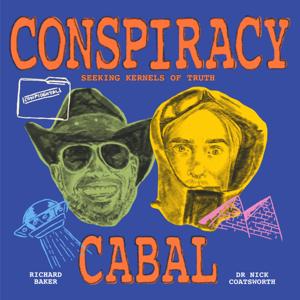


In this episode of This Week in Conspiracy Dr. Nick Coatsworth and Richard Baker discuss NVIDIA's CEO Jensen 'Well' Huang being honey-trapped and the potential implications that might unfold from the scandal. They also cover the Microsoft outtages, Usman Khawaja's salacious bombshells as well as the fallout from the Pullman 5 saga.
The Conspiracy Cabal doesn't promote conspiracy theories - we examine them.
We search for the kernel of truth in every story, exploring how conspiracies start, why they persist, and what drives people to believe them.
Contact the show at [email protected].
Contact the show at [email protected]
Hosted on Acast. See acast.com/privacy for more information.
The Earth is flat. NASA is lying. Antarctica is hiding something. And apparently, Australia doesn't even exist.
For centuries, people have challenged the idea that we live on a giant spinning sphere. But where did the modern Flat Earth movement come from, and how did one of the strangest conspiracy theories in history survive into the age of satellites and space travel?
This week on Conspiracy Cabal, Rich and Dr Nick investigate Flat Earth Theory, tracing its history from ancient Greece and Victorian England through to the modern-day internet conspiracy movement.
The Eratosthenes problem: More than 2,000 years ago, a Greek mathematician used nothing more than shadows and a bit of geometry to calculate the Earth's circumference with remarkable accuracy. So how did we go from Eratosthenes to people believing we're living on a giant cosmic dinner plate?
The Rowbotham problem: Samuel Rowbotham, the Victorian Englishman who helped reignite the Flat Earth movement with his book Zetetic Astronomy: Earth Not a Globe and a series of experiments he believed proved the Earth was flat.
The Lady Blount problem: Every good conspiracy needs a wealthy supporter. Enter Lady Elizabeth Blount, the socialite, biblical literalist and founder of the Universal Zetetic Society, who put her money and reputation behind the Flat Earth cause.
The Flat Earth Society problem: From the 1950s onwards, the movement gained a new following. But even photographs of Earth from space weren't enough to convince its most devoted believers. Were astronauts being deceived, or was the entire space race an elaborate fabrication?
The Australia problem: One of the internet's more bizarre claims suggests that Australia is entirely fictional, with its inhabitants supposedly being government agents. We investigate where this ridiculous theory came from.
The Antarctica problem: The supposed ice wall surrounding the world is central to modern Flat Earth belief. But what exactly is being hidden beyond it, and why would governments need an international military operation to keep us away?
The Final Experiment problem: In 2024, Flat Earth believers and globe Earth supporters travelled to Antarctica to witness the midnight sun for themselves. The results were difficult to dispute. The reaction from the wider Flat Earth community was another story entirely.
But perhaps the biggest question isn't whether the Earth is flat. It's why people continue to believe it despite overwhelming evidence to the contrary.
We explore the distrust of institutions, the appeal of secret knowledge and the sense of belonging that conspiracy communities can provide.
Because sometimes, believing you know something the rest of the world doesn't is more powerful than the evidence itself.
Contact the show at [email protected].
The Conspiracy Cabal doesn’t promote conspiracy theories — we examine them.
We search for the kernel of truth in every story, exploring how conspiracies start, why they persist, and what drives people to believe them.
Contact the show at [email protected]
Hosted on Acast. See acast.com/privacy for more information.
In this episode of This Week in Conspiracy Dr. Nick Coatsworth and Richard Baker discuss supermarket freezers being hacked across Europe, the sharp downturn of the Republican party in a historic blue shift in the U.S midterm elections, and how the 'mental health' card is being played by people accused of serious crimes.
The Conspiracy Cabal doesn't promote conspiracy theories — we examine them.
We search for the kernel of truth in every story, exploring how conspiracies start, why they persist, and what drives people to believe them.
Contact the show at [email protected].
Contact the show at [email protected]
Hosted on Acast. See acast.com/privacy for more information.
A murdered family, a charismatic cult leader, children describing secret rituals, and a wave of accusations that spread across America. It sounds like the plot of a horror film.
But the Satanic Panic was very real. From the 1960s through the 1980s, fears about Satanists, occult rituals and organised networks of child abusers moved from the fringes of religious communities into mainstream American life. Some of those fears were fuelled by genuinely horrific crimes. Others were built on rumours, sensationalism, questionable evidence and stories that became more elaborate with every retelling.
This week on Conspiracy Cabal, Richard Baker and Dr. Nick Coatsworth explore how Satan became one of America's most terrifying conspiracies. From Charles Manson and evangelical preachers to Michelle Remembers, the McMartin Preschool trial, the West Memphis Three and the horror films that helped shape the public imagination, the guys examine what happened when genuine evil, religious belief and a growing fear of the occult collided.
The hollywood problem: The Exorcist, The Omen, Rosemary's Baby, heavy metal and a growing fascination with the occult. Horror films were supposed to scare audiences, but did they also help convince people that the things they were watching might actually be happening in their communities?
The preacher problem: Evangelical leaders, televangelists and religious campaigners warned that Satan was infiltrating American society. Rock music, television, toys, teenagers and even ordinary household activities were suddenly being viewed through an occult lens. How did a religious fear become a mainstream moral panic?
The book problem: Michelle Remembers told the extraordinary story of a woman who, through therapy involving recovered-memory techniques, came to describe horrific childhood experiences involving Satanic rituals. Published in 1980, the book became hugely influential in popularising the idea of Satanic ritual abuse.
The McMartin problem: One of the most extraordinary criminal cases in American history. Hundreds of allegations of ritual abuse at a California preschool, bizarre claims about secret rooms and tunnels, years of investigation and the longest criminal trial in US history at the time. The Cabal examines how the case became a defining moment of the Satanic Panic, and why nobody was ultimately convicted of the central allegations.
The West Memphis problem: Three murdered children. Three teenagers accused of ritualistic murder. A community convinced Satanism was involved. The West Memphis Three case became one of the most controversial criminal cases of the 1990s, with heavy metal, black clothing and an interest in the occult all becoming part of the evidence and public narrative. How much did the Satanic Panic influence the investigation?
The Satanic Panic wasn't a conspiracy in the traditional sense. It was something stranger: a conspiracy theory that became powerful enough to influence investigations, trials, families and entire communities.
The question isn't whether evil exists.
It's how easily we can convince ourselves that we've found it.
This episode contains discussions of murder, child abuse, Satanism, ritualistic abuse and disturbing allegations, and is recommended for listeners 15 and over.
Contact the show at [email protected].
The Conspiracy Cabal doesn’t promote conspiracy theories — we examine them.
We search for the kernel of truth in every story, exploring how conspiracies start, why they persist, and what drives people to believe them.
Contact the show at [email protected]
Hosted on Acast. See acast.com/privacy for more information.
In this episode of This Week in Conspiracy Dr. Nick Coatsworth and Richard Baker talk about Iran and Chinese intelligence ops in Australia, how Nick’s social media sabbath went, and we foreshadow this weeks full episode on Satanic Panic in the 70's 80's & 90's.
The Conspiracy Cabal doesn't promote conspiracy theories — we examine them.
We search for the kernel of truth in every story, exploring how conspiracies start, why they persist, and what drives people to believe them.
Contact the show at [email protected].
Contact the show at [email protected]
Hosted on Acast. See acast.com/privacy for more information.
A broken test tube, a dead lab worker, a Russian anti-plague institute, and a flood of alarming posts online. It sounds like the opening scene of a thriller.
Yet there really was a young scientist who died after working at a facility that studied dangerous pathogens, there really was a quarantine response, and there really were questions about what authorities knew and when they knew it.This week on Conspiracy Cabal, Rich and Nick examine a story that exploded across social media after a laboratory worker in Siberia died following a sudden illness. Was it a tragic accident, an outbreak of plague, a cover-up by Russian authorities, or evidence of something even more sinister? Along the way they explore bioweapons research, gain-of-function science, pandemic-era fears, and why mysterious stories spread far faster than verified facts.
The plague problem: A lab worker dies after contracting a severe illness, sparking speculation about plague, pneumonic infections and biocontainment failures. The guys unpack what Yersinia pestis actually is, why plague still exists today, and why most people are surprised to learn it never disappeared.
The Russia problem: Quarantines, hazmat crews, official walk-backs and disappearing details. The Cabal examines how the response from Russian authorities fuelled suspicion, and whether the real story became the management of information rather than the disease itself.
The bioweapon problem: Gain-of-function research, Cold War biological weapons programs, Soviet defectors and modern genetic engineering. The discussion explores the uncomfortable reality that governments have investigated biological warfare, and the fine line between defensive research and offensive capability.
The expert problem: Pandemic celebrities, social media doctors, doom merchants and bestselling authors. From public health debates during COVID to the resurgence of bioweapon fears, the guys ask whether some commentators are rewarded for promoting worst-case scenarios.
The AI problem: Could artificial intelligence make it easier for bad actors to create dangerous pathogens?
The conversation turns to CRISPR, synthetic biology, ChatGPT-era fears and why some researchers believe AI could dramatically accelerate biological research for both good and ill.Some of this is microbiology: zoonotic reservoirs, biosafety levels and how outbreaks are investigated.
Some of it is about information itself. What happens when authorities release too little information, conspiracy theorists release too much, and social media fills the gap in between?
The possibility that advanced biotechnology could be misused in the future?
That's the question that keeps the Cabal paying attention.
Contact the show at [email protected] Conspiracy Cabal doesn’t promote conspiracy theories — we examine them.
We search for the kernel of truth in every story, exploring how conspiracies start, why they persist, and what drives people to believe them.
Contact the show at [email protected]
Hosted on Acast. See acast.com/privacy for more information.
Brendan Nugent has been charged over the alleged attack on independent federal MP Helen Haines outside her electorate office in Wangaratta.
Police allege the incident was targeted, while investigators continue to examine the motive behind the attack.
Nugent has not entered a plea, and the matter remains before the courts. Questions have since emerged about Nugent's background, his online activity, and whether warning signs were missed prior to the alleged attack.
Others have pointed to reports of mental health concerns and prior interactions with authorities, though no clear motive has yet been established by police. The Conspiracy Cabal doesn't promote conspiracy theories — we examine them.
We search for the kernel of truth in every story, exploring how conspiracies start, why they persist, and what drives people to believe them.
Contact the show at [email protected].
Contact the show at [email protected]
Hosted on Acast. See acast.com/privacy for more information.
Senator Jordon Steele-John is under-fire for alleged mistreatment of women, which he denies. However, the story also points to an alleged cover up by The Greens, and a secret dossier on how to handle the allegations against Steele-John.
The Greens have denied any existence of a secret dossier.
The Conspiracy Cabal doesn't promote conspiracy theories — we examine them. We search for the kernel of truth in every story, exploring how conspiracies start, why they persist, and what drives people to believe them.
Contact the show at [email protected]
Contact the show at [email protected]
Hosted on Acast. See acast.com/privacy for more information.
Alex Jones has said plenty of strange things, but few have travelled further than his claim that chemicals in the water are changing the sexuality of animals, and of people too. It sounds absurd. Yet there’s a real pesticide, a real scientist’s frog research, and real restrictions in Australia on where that chemical can be sprayed. Nothing makes a conspiracy go off like a sex scandal, so this week the Cabal goes there.
Rich and Nick are joined by the Cabal’s newest member, former investigative journalist Bension Siebert, who worked with Rich on the podcast Pray Harder. After he was made redundant in 2025, Bension turned to sex work. He found it more meaningful than he expected and more secure than journalism, and it’s now paying for the investigation he’s scripting.
Some of this is science: endocrine disruptors, sample sizes, and what a regulator actually found. Some of it is a mirror held up to the rest of us. Why are we so titillated by other people’s private lives, and why does hypocrisy end careers when the affair itself often doesn’t? The verdicts: atrazine turning the frogs gay scores a zero. Atrazine doing something to frogs scores a ten. An Australian prime minister surviving a Lewinsky-style scandal today gets one out of ten at best.
This episode contains themes of sex and sexuality and is recommended for listeners 15 and over.
Contact the show at [email protected].
The Conspiracy Cabal doesn’t promote conspiracy theories — we examine them. We search for the kernel of truth in every story, exploring how conspiracies start, why they persist, and what drives people to believe them.
Contact the show at [email protected]
Hosted on Acast. See acast.com/privacy for more information.
In the days before the attacks, traders placed unusually large bets that United and American Airlines stock would fall. Those were the two airlines whose planes were hijacked. The 9/11 Commission found no sign that anyone had advance knowledge. A finance professor, a former Australian market regulator, and a widow who testified before the Commission all saw something different.
"Follow the money." That was the advice to Bob Woodward during Watergate, and 25 years after September 11, it may be the best way into the one 9/11 theory that won't go away. This week, Rich and Nick quickly run through the five best-known 9/11 theories before following the money into the trades that regulators, academics, and families have argued about for a quarter of a century.
The guys look at whether any of the theories have any kernel of truth. The intelligence failures were real, with warnings about hijacked planes flying into buildings circulating as far back as 1998.
Some of this is statistics: put-to-call ratios, trading volumes up a hundredfold, and a peer-reviewed 2006 study that found the activity consistent with informed traders. Some of it is just the plain fact that al-Qaeda's plans were an open secret in parts of the intelligence world.
Contact the show at [email protected].
The first listener to write in with their name and postal address gets one of the first Conspiracy Cabal tinfoil hat brewing trucker caps.
The Conspiracy Cabal doesn't promote conspiracy theories — we examine them. We search for the kernel of truth in every story, exploring how conspiracies start, why they persist, and what drives people to believe them.
Contact the show at [email protected]
Hosted on Acast. See acast.com/privacy for more information.
From the publisher's feed
The sh*t that's in your group chat...just a fair bit more fact checked and a lot more explained.
Big Pharma. The deep state. The crisis actors. Alien life. Spy agencies and cover…
Conspiracies are everywhere right now. But, we don’t peddle theories, we go to their point of origin and follow the breadcrumbs to sort the bullsh*t from the verified, while keeping an open mind to things that can’t be explained.
Rich has spent years exposing the crooked and corrupt, and Nick has copped death threats from people who thought he was one of THEM. They know what real cover-ups look like, and they also know what happens when paranoia meets the algorithm.
Sometimes the conspiracy is real. Sometimes it's designed to sell you on something. Often, it's both.
Our mission is to entertain and inform. Rather than condemn and judge.
Hear the Conspiracy Cabal every week, and contact the show at [email protected]
Conspiracy Cabal is proudly supported by WholeLife. Use code CABAL10 for $10 off your first order of $50 or more.
Hosted on Acast. See acast.com/privacy for more information.