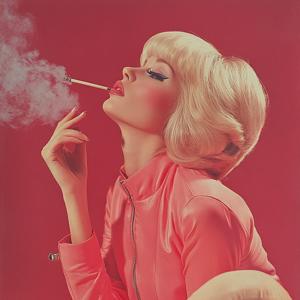
SYL VANE: L’Ombre et la Nuit (Selected Works 1968–1982) Archival Liner Notes — Anthology Reissue (Ace Records / Light in the Attic)
The Paris Sessions (1968–1970) By the time Nottingham-born vocalist Sylvia Stubbs arrived in Paris in late 1967, she was already a seasoned performer with a commanding, velvet-toned mezzo-soprano. Rebranded as Syl Vane by her husband—Parisian jazz arranger and studio keyboardist Gérard Vane—Sylvia quickly integrated into the city’s session scene. Her breakthrough came when she caught the attention of expatriate American songwriting duo Frank Cuthbert and Michelle Moroney. Moroney’s dense jazz-pop chords and Chuthbert’s biting, cinematic lyrics required a singer of genuine technical power; Syl Vane was one of the few vocalists in Paris who could navigate their chromatic melodies while maintaining absolute emotional control.
Her 1968 debut single, "Sage de faire la folle," backed with the searing "Pour quelle folle," was an immediate critical triumph. Driven by sweeping baroque strings and overdriven Hammond organ, Vane's vocals brought a sharp, muscular elegance to Moroney’s lyrics. The 1969 follow-up, "Ou deux minutes," cemented her reputation as a formidable interpreter of modern French pop, seamlessly blending Anglo-American soul dynamics with Rive Gauche intimacy.
The Shift & Mid-Career (1972–1976) As the yé-yé era gave way to the introspective 1970s, Vane’s sound evolved. The 1972 release "Je veux oublier" marked a transition into expansive, melancholic chanson, showcasing her vocal control at its most resonant.
Following her divorce from Gérard in 1975, Vane took full command of her production choices. Her 1976 track "Jamais un simple souvenir" paired early analog synthesizers with acoustic guitar, creating a haunting, cinematic ballad that became a late-night radio staple across Europe and a high point of her middle discography.
The Final Phase (1982) After a long hiatus spent outside the spotlight, Vane briefly returned to the studio in 1982 to record "Saturée." Driven by overdriven drum machines, heavy basslines, and her surprisingly icy, precise vocal delivery, the track became an unexpected cult classic within the European Cold Wave movement. Rather than capitalizing on its underground success, Vane quietly retired from recording later that year, leaving behind a remarkably sophisticated body of work.