
Sign up to save your podcasts
Or

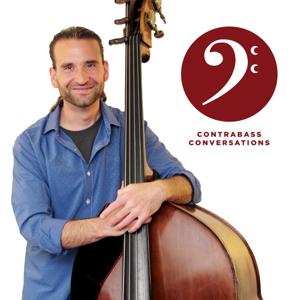


We're featuring composer and bassist P. Kellach Waddle on this week's Contrabass Conversations episode. Actually, we have chatted about doing an interview since 2007, and we got a chance to do so at the 2009 International Society of Bassists Convention. P. Kellach Waddle has had a great deal of recognition as a composer, and he has written numerous works for solo bass or featuring the bass in a prominent role. I think you'll really enjoy this interview we did back in June!
We're also featuring P. Kellach Waddle performing his own composition "Sonata in Two Movements" for solo bass after the interview segment.
About P. Kellach Waddle:Two time Pulitzer-Prize nominated composer P. Kellach Waddle maintains an active career not only as a composer but also as a bassist, conductor and writer. With nearly 450 performances of his music by the end of the '05-'06 season, and a list of completed works now numbering over 220 , Mr. Waddle continues to maintain a career as one of the most performed and prolific composers of his generation. His works have been performed in 38 states and in 14 countries on 4 continents and radio features/interviews with him have been heard on classical radio stations in Texas, North Carolina, Kentucky and Tennessee and Ohio. A performance by Mr. Waddle of his Op. 1 #1, the bass caprice De Salones Espanoles, marked the first hearing of his music on National Public Radio as part of its Music From Roundtop Series in 1993.
Complete bio for P. Kellach Waddle
We're featuring a guest interview by bassist Tim Wolfe, Jr. interviewing his former teacher Jim Miller about Art Davis. Tim and Jim discuss Art Davis' life, career, and pedagogical approach. They discuss Art's book and his four-finger approach to the double bass, among other subjects.
We're also featuring excerpts from "Duo," a track from the Art Davis Quartet album Life and featuring Art Davis, John Hicks, Idris Muhammad & Pharoah Sanders. This album (along with other music from Art's considerable career) is available through iTunes.
Tim also created a timeline (PDF) detailing milestones in Art's career:
Art Davis Timeline
About Art Davis:
In a musical career that has spanned four decades, Dr. Art Davis has played his bass with a myriad of the greatest jazz, classical, and popular artists in the world. He has shared his talents with not only the best jazz musicians (John Coltrane,Max Roach, Dizzy Gillespie, Lena Horne, Thelonius Monk, Louis Armstrong, Count Basie, Quincy Jones, etc.), but with notable figures from popular music such as Judy Garland, Bob Dylan, Minne Pearl, Barbara Streisand, Hank Williams. Davis' career has also seen performances with major orchestras such as the National Symphony, NBC Symphony, New York Philharmonic, Los Angeles Philharmonic, Radio City Music Hall Symphony, Westchester Symphony, Orange County Symphony and others.
Davis studied the tuba as well as the piano as a boy in his hometown of Harrisburg, Pennsylvania before switching to the bass in high school. He won numerous awards on both tuba and double-bass while attending high school. Upon graduation, he moved to New York to study via scholarship at both theManhattan School of Music as well as the Juilliard School of Music. While attending the latter he studied with world renown cellist Lazlo Varga andAnselme Fortier, who was principal bassist with the New York Philharmonic at that time. He earned a B.A. degree, triple major in psychology, music, physics, summa sum laude from Hunter College, City University of New York.
Art Davis' recording debut came in 1958 at the Newport Jazz Festival, with Max Roach's group that included the legendary Booker Little and George Coleman. Davis maintained a strong personal relationship with Max, and Booker Little became one of his best friends.
John Coltrane came into Art Davis' life while Davis was working with Max Roach's group at Small's Paradise in Harlem. Coltrane at that time was in Miles Davis' band and between sets asked Art if he would like to "practice" with him. Art agreed and Coltrane replied "How about tomorrow morning?" At 8:00 the following morning John Coltrane was in the lobby of Art's hotel and called him on the house phone. After that first meeting, the two practiced regularly for about a year, the sessions lasting for many hours without a break. It was during this year that John Coltrane wrote the tune "Giant Steps". Davis credits the association with John Coltrane as the most intense and enriching musical experience of his career. Until Coltrane's death in 1967, Art remained close musically and personally with him and was a member of the bands on several Coltrane albums including, "Ascension", "Africa Brass I and II", "Olé! Coltrane", and others. Art's discography as a member of Coltrane's groups also includes the original recording of "A Love Supreme" (which remains unreleased) with Coltrane's regular quartet and Archie Shepp. Art also toured intermittently with John Coltrane. Due to Davis' studio and other commitments, he was unable to become a permanent member of Coltrane's quartet, but John insisted on their continued relationship.
Then, in 1959, Davis joined Dizzy Gillespie's band and toured for two and a half years. Weary of the road he returned to New York and free-lanced. In 1961 Art became the second African-American member of the NBC Staff Orchestra, working regularly on the Merv Griffin, Jack Paar, and Johnny Carson shows (and others), as well as performing in the New York studios playing jingles, films, and freelancing with performers.
When the Griffin show moved to Los Angeles in 1971 Davis went back to school to pursue his deep interest in psychology, earning a masters degree in Experimental Psychology from the City College of the City University of New York and a masters degree and a Ph.D. in clinical psychology from New York University by 1982. He supported himself while in college by teaching and performing in Broadway shows.
After receiving his doctorate, he devoted four years to psychology patients and teaching in medical centers and colleges. In 1986, Davis moved to southern California, where he currently teaches college courses and maintains a professional practice as well as playing concerts, clubs, and recordings.Throughout his busy career, Davis finds time to encourage young people to strive toward their highest professional ambitions. His fan club decided to reflect this concern and established a scholarship program for deserving students.
We're featuring some brief interviews I did with people on the floor of the 2009 International Society of Bassists Convention at Penn State in June. Feel free to check out my ISB 2009 Retrospective blog post for even more information on what was happening at this year's convention, and stay tuned for an avalanche of content from this event over the next couple of months!
During this episode, I chat with Bill Wasson, Ian Saunders, Robert Meyer, and several University of Michigan students, as well as featuring some listener feedback and news.
This week, we're featuring an interview with Klauss Stoll, the recently retired Principal Bass of the Berlin Philharmonic. He has taught for many years in Berlin, Salzburg, and in master classes worldwide, and is regarded as one of the finest teachers of the double bass alive today.
This interview was conducted by Jonathan Stefaniak, a former member of the Civic Orchestra who is now playing in an orchestra in Japan. Jonathan was recently working with Professor Stoll in a master class setting and had the opportunity to sit down and chat with him for the podcast.
In this interview, Jonathan and Klaus discuss Klaus' early years on the instrument, his time spent in the Berlin Philharmonic, auditioning for co-principal and eventually first principal chair, his chamber duo, orchestral style, developments in eduction and the decline of the despotic maestro, the unique characteristics of the Berlin Philharmonic, and specifics about his teaching.
Learn more about Klaus at his website: klausstoll.com
We're featuring Boston Symphony Principal Bassist Ed Barker on this week's Contrabass Conversations episode. Conducted by Contrabass Conversations co-host John Grillo, this episode features John chatting with Ed about his early years on the bass, his schooling and time spent in the Chicago Symphony prior to his appointment with the Boston Symphony, and in-depth look at articulation on the bass, and a discussion on practicing. We hope you enjoy this conversation with this modern master performer and teacher of the double bass!
About Ed Barker:
Edwin Barker is recognized as one of the most gifted bassists on the American concert scene. Acknowledged as an accomplished solo and ensemble player, Mr. Barker has concertized in North America, Europe, and the Far East.
Edwin Barker has performed and recorded with the Boston Symphony Orchestra, the Boston Symphony Chamber Players, and with the contemporary music ensemble Collage, a Boston – based contemporary music ensemble, and is a frequent guest performer with the Boston Chamber Music Society. Mr. Barker gave the world premiere of James Yannatos' Concerto for Contrabass and Chamber Orchestra and of Theodore Antoniou's Concertino for Contrabass and Chamber Orchestra ; he was the featured soloist in the New England premiere of Gunther Schuller's Concerto for Double Bass and Chamber Orchestra, conducted by the composer with The Pro Arte Chamber Orchestra.
Mr. Barker graduated with honors from the New England Conservatory in 1976, where he studied double bass with Henry Portnoi. That same year, while a member of the Chicago Symphony, he was appointed at age 22 to the position of principal double bass of the Boston Symphony Orchestra. His other double bass teachers included Peter Mercurio, Richard Stephan, Angelo LaMariana, and David Perleman.
Mr. Barker was invited to inaugurate the 100th anniversary season of the Boston Symphony Orchestra with a solo performance of the Koussevitzky Bass Concerto; other solo engagements have included appearances at Ozawa Hall (Tanglewood), Carnegie Recital Hall's "Sweet and Low" series, and at major universities and conferences throughout the world, as well as concerto performances with the Boston Classical Orchestra, the Athens State Orchestra (Greece) and with the Boston Symphony Orchestra in Boston and Europe. He was a featured premiere soloist with the Boston Symphony of John Harbison's Concerto for Bass Viol and Orchestra at Tanglewood's 2007 Festival of Contemporary Music.
Mr. Barker is an Associate Professor at the Boston University College of Fine Arts where he teaches double bass, orchestral techniques, and chamber music. His other major teaching affiliations include the Boston Symphony Orchestra's Tanglewood Music Center, where he is Chairman of Instrumental and Orchestral Studies.
Edwin Barker's solo CD recordings include Three Sonatas for Double Bass, on Boston Records, James Yannatos' Variations for Solo Contrabass, on Albany Records, and Concerti for Double Bass, on GM Recordings, which includes bass concerti by Gunther Schuller and Theodore Antoniou. Concerti for Contrabass also includes his highly praised performance of Tom Johnson's Failing , which was recorded live at Harvard University's Sanders Theater. Edwin Barker's latest solo offering on CD is a recently released performance of James Yannatos' Concerto for Contrabass with Collage.
The number of considerations a prospective music school student faces these days can be quite staggering–in this week's episode, I try to give listeners a summary of the most important considerations in the quest for the ideal music school. Enjoy, and learn more about this topic at doublebassblog.org or listen to some of the top university bass professors at contrabassconversations.com.
We're featuring the Courante and Gigue from the Sixth Cello Suite by J.S. Bach as well as the first movement of the Shostakovich Cello Concerto No. 2 this week, played impeccably by the wonderful bassist Ben Jensen, currently a student of Bruce Bransby at Indiana University. These were recorded live in a master class at Indiana University and are an outstanding example of bass playing. Enjoy!
We've featured Indiana University double bass professor Lawrence Hurst on Contrabass Conversations previously–if you haven't checked out this interview before, I'd encourage you to check it out. Indiana University has an established reputation as one of the premier institutions for top-notch double bassists to perfect their craft, and if Ben's example is any indication of the talents of the younger generation of bassists, we're in good hands indeed!
We're chatting with jazz bassist Jon Burr on this week's Contrabass Conversations episode. In addition to an active career recording and performing original tunes with the Jon Burr Quartet, Jon has toured and recorded with many great jazz masters, including Stan Getz, Chet Baker, Horace Silver, Hank Jones, Art Farmer, Stephane Grappelli (from 1986-1997), Sir Roland Hanna, Dorothy Donegan, and Buddy Rich. From 1980 – 1985 he toured with Tony Bennett; he has also worked with Lainie Kazan, Rita Moreno, Barbara Cook, Eartha Kitt, among others. Jon was a founding member of violinist Mark O'Connor's "Hot Swing" trio, with guitarist Frank Vignola.
In our interview, we discuss Jon's early years on the bass, his time spent touring with Stephane Grappelli and Tony Bennett, his upcoming book "The Untold Secret to Melodic Bass Playing," upcoming projects, as well as advice for younger players coming up in the business right now. After the interview, we feature "Nobody Said It Was Easy," one of Jon's original tunes.
Learn more about Jon at his website jonburr.com and his food blog highfibercooking.com, and find him on Twitter attwitter.com/jonburr.
We're concluding the interview that we began on CBC 114 with double bassist Mark Morton, who is currently professor of bass at Texas Tech University in Lubbock, TX and has also served as Principal Bass of the Columbus Symphony. Mark was the first prize winner at the International Society of Bassists Solo Competition, and he was the assistant double bass instructor for Gary Karr at the Hartt School of Music. He is well-known for writing and publishing the "Dr. Morton" series of books on the art of bass playing, and he is the founder of the American School of Double Bass.
We start this segment of our interview discussing Mark's Simandl-Plus® approach and how it increases the number of techniques available to the modern bassist, as well as some specific examples in orchestra repertoire where these kind of techniques can be used. We also talk about when Mark starts using the third finger and the thumb on the neck, adopting a more flexible approach than advocated in Simandl technique. We also discuss melodic gestures and when to shift according to a particular gesture, lyrical and technical fingerings and when to use them, shifting strategies, the value of Simandl and how it teaches the "grid" of the fingerboard, Mark's fingerboard mapping system, and some of his upcoming projects. We also feature a recording this week of Mark playing the Gliere Tarantella from his albumRussian Rendezvous, which is available from CD Baby or the iTunes Music Store.
I recommend downloading Mark's Simandl-Plus® packet and following along with our discussion to get a more complete idea of how he implements these concepts.
Links: American School of Double Bass, Texas Tech School of Music
Subscribe: iTunes | Android | Email
We're featuring the third and final part of our interview with Boston Symphony Assistant Principal Bass Lawrence Wolfe this week on Contrabass Conversations. I had a chance to check out a wonderful master class that Mr. Wolfe did at Northwestern in the fall of 2008, and I did a summary/synopsis of some of the concepts and ideas covered in this class as well. I'm really looking forward to chatting with Larry–he's one of my favorite bassists, and listening endlessly to his solo record really shaped how I approach the double bass when I was in college.
Larry is one of the most influential bass players in the United States, having taught countless players during his years at New England Conservatory and other Boston academic institutions who are now in major orchestras or pursuing other successful musical endeavors.
We're also featuring Jacob Druckman's piece Valentine, one of the tracks from Larry's solo album which was added upon the CD release and one which you're really going to enjoy. Larry will be doing a presentation at this summer's International Society of Bassists convention, which I am definitely looking forward to checking out. Be sure to check out Larry's website as well!
Subscribe: iTunes | Android | Email