
Sign up to save your podcasts
Or

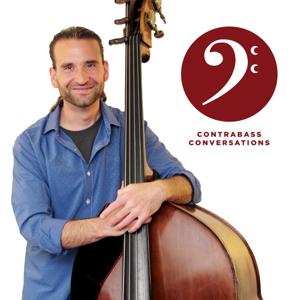


This week's Contrabass Conversations episode features a follow-up interview with bassist Barry Lieberman, double bass faculty at the University of Washington and artistic director of The American String Project, an ensemble that specializes in performing string chamber orchestra arrangements of quartet literature.
Barry was previously interviewed on Contrabass Conversations in 2008, and on that occasion we discussed his early years on the instrument, his career in the Los Angeles Philharmonic and subsequent move to Seattle, and many other topics. We focus on recent developments with The American String Project in this episode, including their recent selection as "Pick of the Month" for all North American releases of classical music discs in the August issue of the BBC Music Magazine (more details on the String Project website).
This fascinating and virtuosic ensemble also recently produced a documentary detailing what happens behind the scenes each year with the String Project, and it is a well-produced and highly engaging glimpse into the workings of some of the world's finest leaders in the string world in a rare collaborative setting. You can see it now on the TASP website, and we will be releasing the entire video on the podcast next week as well.
One of our most popular offerings on Contrabass Conversations since its inception has been Barry's interview with Gary Karrfor his Barry Lieberman and Friends series at the University of Washington. You're in for a real treat if you haven't seen this in the past–check it out!
We've featured a great deal of String Project music on both the blog and the podcast–so much in fact, that I decided to put together a PDF listing everything that we've used (in some fashion) here:
American String Project music featured on doublebassblog.org.pdf
Today's episode features an excerpt from the String Quartet Op. 18, No. 4 Mvt. 4 (Allegro) by Beethoven and the complete Allegro Non Troppo movement from the String Quartet #3 In F, Op. 73 by Shostakovich. You can also check out all the works that the String Project has performed on their page within doublebassblog.org.
We're featuring an interview with jazz bassist Todd Coolman on the podcast. This episode is guest hosted by double bassist Win Hinkle, who interviewed Rufus Reid previously for Contrabass Conversations as well.
After listening to this interview, I went out and downloaded Perfect Strangers, Todd's newest album, and I highly recommend it to listeners. Truly top-notch and extremely enjoyable playing all around! We'll begin today's episode with a brief excerpt from Crescent City Ditty, and well conclude with Todd's bass solo from Connotation. Both excerpts are from Todd's new album and you canfind it on iTunes here.
We're featuring an interview with and music from Joel Quarrington this week of Contrabass Conversations. Joel is the former Principal Bass of the Toronto Symphony and currently serves as Principal Bass for the National Arts Centre Orchestra of Canada. In addition to his orchestral duties, Joel maintains an active career as a solo and chamber artist, touring internationally in this capacity and performing a wide range of repertoire.
This week's episode begins with a recording of Joel performing the fourth movement from the Sonata For Solo Contrabass by Weinberg, and the episode concludes after the interview with Joel's performance of the Bottesini Elegy. Both of these tracks are from his new album Garden Scene. Learn more about this album and Joel's numerous other projects atwww.joelquarrington.com.
We're featuring a brief (10 minute) interview with Calgary Philharmonic bassist Matt Heller. Matt is an old friend of mine who, in addition to being an excellent bassist, is the author of the always interesting blog hella frisch. Matt also did extensive coverage of the 2009 International Society of Bassists Convention. It was a real pleasure to get a chance to sit down and do an interview for the podcast with Matt, and I hope you enjoy this chat between two bass bloggers!
We're featuring a quick update and some performances from from double bassist Colin Corner, a previous CBC guest. When we first interviewed Colin back in 2007 he was performing in the Minnesota Orchestra, but he now serves as principal bass of the Rochester Philharmonic.
In addition to his orchestral duties, Colin maintains an active career as a composer and jazz bassist, and he currently performs with the modern jazz trio Blood Electric (DeVon Gray, keys; Peter Leggett, drums; Colin Corner, bass). Learn more about Colin at his website colincornermusic.com.
We're chatting with Memphis Symphony Principal Bass Scott Best on this week's episode of Contrabass Conversations. Scott is a close personal friend of mine and an outstanding double bassist in both solo and ensemble settings. We played together in the IRIS Orchestra of Memphis, Tennessee, and it is a real pleasure to feature him on the show.
Scott was one of the bassists involved in the ISB-coordinated commission of the John Harbison Concerto for Double Bass (complete video from ISB convention of this piece available here), performing the piece with the Memphis Symphony. Scott was also asked (along with Dennis Trembly and Volkan Orhon) to perform a movement of this piece at the 2009 ISB Convention, and we include the audio of Scott playing the third movement at the end of this interview. We hope you enjoy this interview with double bassist Scott Best!
We're featuring an interview with Los Angeles Philharmonic bassistand University of Southern California bass instructor David Allen Moore on the podcast this week. David also teaches bass during the summer at the Domaine Forget program in Quebec. In this interview, we chat about his early years on the instrument, teachers that have influenced him, his time in the Houston Symphony and Los Angeles Philharmonic, challenges of learning repertoire for a professional orchestra, his studies with François Rabbath, German and French bow differences, and many other topics.
After the interview, we feature a track of David playing the Bohemian Dance from Frank Proto's Carmen Fantasy. Enjoy!
About David:DAVID ALLEN MOORE, the newest member of the Los Angeles Philharmonic's bass section, joined the orchestra in January 2000 and was appointed to the 4th chair in October 2000. He graduated in 1993 from the University of Southern California, where he studied with Dennis Trembly, Paul Ellison, and John Clayton. Moore continued his studies in Boston, working privately with BSO principal bass Edwin Barker.
Moore performed as a substitute with the Los Angeles Philharmonic during the 1995/96 season, after which he was a member of the Houston Symphony bass section under maestro Christoph Eschenbach, from 1996 to 1999.
Moore has participated in numerous festivals including Tanglewood, the Grand Teton Music Festival, Mainly Mozart, and Kent/Blossom Summer Music Festival. He is an active chamber musician, having performed in the Houston area with the Greenbriar Consortium, and in Los Angeles with the Philharmonic's New Music Group. He was also a featured clinician at the 1999 Texas Double Bass Symposium. Moore currently is on the faculty of the University of Southern California.
We're featuring an interview with double bassist Jiri Slavik on Contrabass Conversations this week. Jiri is an extremely accomplished bassist in both jazz and classical styles, as you can see from his biography below, and he gave a truly mesmerizing performance at the 2009 International Society of Bassists Convention. This interview took place just as Jiri was about to leave for Europe, and I feel fortunate to have gotten the chance to chat with him on his first visit to the United States!
After the interview, we feature a track titled "Coesistenza" from Jiri's album Repose. This track also features pianist Fred Thomas (iTunes link).
About Jiri:Jiri Slavik was born in Havirov, Czech Republic, into a teacher's family with a strong musical tradition. As a child he played the violin, which he exchanged for the double bass around age 13. A year later he moved to Rome, Italy, where he attended St Stephen's School and eventually also the Santa Cecilia Conservatoire (Massimo Giorgi's double bass class). In the summer of 2004 he graduated from both of these institutions, always with the highest attainable marks (the seven-year long double bass course at the conservatoire took him three years to finish).
After having been offered a full scholarship from the Royal Academy of Music, Jiri moved to London, UK, to pursue his studies, first in classical double bass with Duncan McTier, later on in jazz composition with Barak Schmool. After three years he finished the four years long programme with "First Class Honours".
Since August 2007 he lives as a freelance musician and a composer in Paris, France. He has attended masterclasses under the direction of jazz celebrities such as Dave Holland, Jeff „Tain" Watts, Larry Grenadier, Jeff Ballard, Kenny Wheeler or contemporary music authorities like Pierre Laurent-Aimard or Peter Maxwell Davies. During his years at the Academy he was the first double bassist of the Concert Orchestra under the direction of Colin Davis or a chosen soloist at the Paganini Festival (2006). With the Ensemble Orchestral de Paris he played Bach's St Matthew Passion in the Notre Dame or performed in the Théâtre des Champs-Elyseés.
As a soloist he has appeared in the Santa Cecilia hall of the auditorium Parco della Musica in Rome or in a program of the Czech Television Koncert na kurtech. With pianist Fred Thomas he made two live recordings for the Czech Radio, as well as the album Repose (F-IRE label, London). His music is in an independant German film production "Oury Jalloh" (www.ouryjalloh-derfilm.de), which won the German Human Rights Film prize, category amateur film, for 2008.
We're featuring composer and bassist P. Kellach Waddle on this week's Contrabass Conversations episode. Actually, we have chatted about doing an interview since 2007, and we got a chance to do so at the 2009 International Society of Bassists Convention. P. Kellach Waddle has had a great deal of recognition as a composer, and he has written numerous works for solo bass or featuring the bass in a prominent role. I think you'll really enjoy this interview we did back in June!
We're also featuring P. Kellach Waddle performing his own composition "Sonata in Two Movements" for solo bass after the interview segment.
About P. Kellach Waddle:Two time Pulitzer-Prize nominated composer P. Kellach Waddle maintains an active career not only as a composer but also as a bassist, conductor and writer. With nearly 450 performances of his music by the end of the '05-'06 season, and a list of completed works now numbering over 220 , Mr. Waddle continues to maintain a career as one of the most performed and prolific composers of his generation. His works have been performed in 38 states and in 14 countries on 4 continents and radio features/interviews with him have been heard on classical radio stations in Texas, North Carolina, Kentucky and Tennessee and Ohio. A performance by Mr. Waddle of his Op. 1 #1, the bass caprice De Salones Espanoles, marked the first hearing of his music on National Public Radio as part of its Music From Roundtop Series in 1993.
Complete bio for P. Kellach Waddle
We're featuring a guest interview by bassist Tim Wolfe, Jr. interviewing his former teacher Jim Miller about Art Davis. Tim and Jim discuss Art Davis' life, career, and pedagogical approach. They discuss Art's book and his four-finger approach to the double bass, among other subjects.
We're also featuring excerpts from "Duo," a track from the Art Davis Quartet album Life and featuring Art Davis, John Hicks, Idris Muhammad & Pharoah Sanders. This album (along with other music from Art's considerable career) is available through iTunes.
Tim also created a timeline (PDF) detailing milestones in Art's career:
Art Davis Timeline
About Art Davis:
In a musical career that has spanned four decades, Dr. Art Davis has played his bass with a myriad of the greatest jazz, classical, and popular artists in the world. He has shared his talents with not only the best jazz musicians (John Coltrane,Max Roach, Dizzy Gillespie, Lena Horne, Thelonius Monk, Louis Armstrong, Count Basie, Quincy Jones, etc.), but with notable figures from popular music such as Judy Garland, Bob Dylan, Minne Pearl, Barbara Streisand, Hank Williams. Davis' career has also seen performances with major orchestras such as the National Symphony, NBC Symphony, New York Philharmonic, Los Angeles Philharmonic, Radio City Music Hall Symphony, Westchester Symphony, Orange County Symphony and others.
Davis studied the tuba as well as the piano as a boy in his hometown of Harrisburg, Pennsylvania before switching to the bass in high school. He won numerous awards on both tuba and double-bass while attending high school. Upon graduation, he moved to New York to study via scholarship at both theManhattan School of Music as well as the Juilliard School of Music. While attending the latter he studied with world renown cellist Lazlo Varga andAnselme Fortier, who was principal bassist with the New York Philharmonic at that time. He earned a B.A. degree, triple major in psychology, music, physics, summa sum laude from Hunter College, City University of New York.
Art Davis' recording debut came in 1958 at the Newport Jazz Festival, with Max Roach's group that included the legendary Booker Little and George Coleman. Davis maintained a strong personal relationship with Max, and Booker Little became one of his best friends.
John Coltrane came into Art Davis' life while Davis was working with Max Roach's group at Small's Paradise in Harlem. Coltrane at that time was in Miles Davis' band and between sets asked Art if he would like to "practice" with him. Art agreed and Coltrane replied "How about tomorrow morning?" At 8:00 the following morning John Coltrane was in the lobby of Art's hotel and called him on the house phone. After that first meeting, the two practiced regularly for about a year, the sessions lasting for many hours without a break. It was during this year that John Coltrane wrote the tune "Giant Steps". Davis credits the association with John Coltrane as the most intense and enriching musical experience of his career. Until Coltrane's death in 1967, Art remained close musically and personally with him and was a member of the bands on several Coltrane albums including, "Ascension", "Africa Brass I and II", "Olé! Coltrane", and others. Art's discography as a member of Coltrane's groups also includes the original recording of "A Love Supreme" (which remains unreleased) with Coltrane's regular quartet and Archie Shepp. Art also toured intermittently with John Coltrane. Due to Davis' studio and other commitments, he was unable to become a permanent member of Coltrane's quartet, but John insisted on their continued relationship.
Then, in 1959, Davis joined Dizzy Gillespie's band and toured for two and a half years. Weary of the road he returned to New York and free-lanced. In 1961 Art became the second African-American member of the NBC Staff Orchestra, working regularly on the Merv Griffin, Jack Paar, and Johnny Carson shows (and others), as well as performing in the New York studios playing jingles, films, and freelancing with performers.
When the Griffin show moved to Los Angeles in 1971 Davis went back to school to pursue his deep interest in psychology, earning a masters degree in Experimental Psychology from the City College of the City University of New York and a masters degree and a Ph.D. in clinical psychology from New York University by 1982. He supported himself while in college by teaching and performing in Broadway shows.
After receiving his doctorate, he devoted four years to psychology patients and teaching in medical centers and colleges. In 1986, Davis moved to southern California, where he currently teaches college courses and maintains a professional practice as well as playing concerts, clubs, and recordings.Throughout his busy career, Davis finds time to encourage young people to strive toward their highest professional ambitions. His fan club decided to reflect this concern and established a scholarship program for deserving students.
From the publisher's feed
2,217 Listeners