
Sign up to save your podcasts
Or

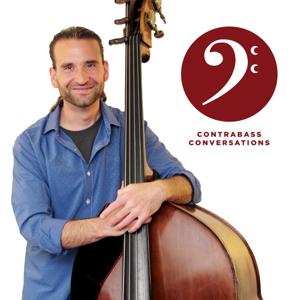


We're concluding our interview with double bass soloist and University of Texas-Austin bass professor DaXun Zhang today, as well as featuring more tracks from this stellar musician. Check out episode 92 for the first part of this interview.
Along with the conclusion of our interview, we'll be featuring DaXun performing a very cool Chinese piece for bass called Sun SHines on Taxkorgan. It's available on his self-titled solo album, which you can learn more about at his website. DaXun is also professor of double bass at the University of Texas-Austin, so check out their website if you'd like to learn more about studying with him, and be sure to visit daxunzhang.com for more about this great artist. Enjoy!
About DaXun:
"If the bass is finally to produce a headliner, the instrument can have no better champion," wrote The Washington Post of double bassist DAXUN ZHANG, who has indeed made his mark as a soloist on this unusual instrument.
In April 2007, Mr. Zhang won an Avery Fisher Career Grant, only the second double bassist in the history of this prestigious award. This summer he was invited by cellist David Finckel and pianist Wu Han to participate in the chamber music festival Music@Menlo in California and performs Schubert's "Trout" Quintet at the Indiana University Summer Chamber Music Series. During the 2007-2008 season he continues his residency with Lincoln Center's Chamber Music Society Two, and performs with Yo-Yo Ma's Silk Road Project in a series of concerts and cultural exchanges in China. He performs as soloist with the University of Northern Colorado Symphony and gives recitals at Indiana University, Rodef Shalom Congregation (PA), and McCain Performances (KS).
Mr. Zhang has performed extensively with the Silk Road Project, including concerts with the Chicago Symphony Orchestra, at Carnegie Hall, and in Japan and California. With Mr. Ma he recorded the soundtrack to a 10-part documentary series on the Silk Road, which aired in Japan on NHK Television. The CD was released as "Silk Road Journeys: Beyond the Horizon" on Sony Classical. He has also joined with fellow Silk Road musician and pipa player Yang Wei and pianist Tomoko Kashiwagi to form the innovative chamber ensemble Qi Lin.
As concerto soloist, Mr. Zhang has appeared with orchestras including Orange County's Pacific Symphony, the Monroe Symphony Orchestra, the Grand Rapids Symphony, the Chamber Orchestra of the Triangle and the Cedar Rapids Symphony Orchestra. He has given recitals at the Isabella Stewart Gardner Museum in Boston, the Kravis Center for the Performing Arts, the University of Georgia, Missouri State University, and at the Chinese Embassy in the Embassy Series in Washington, DC. He has also performed chamber music at the La Jolla Music Society's Summerfest, the Linton Chamber Music Series in Cincinnati, the Strings in the Mountains Music Festival and the Vancouver Chamber Music Festival.
DaXun Zhang is the first double bass player to win the Young Concert Artists International Auditions and start a career under the auspices of Young Concert Artists. He made his New York debut sponsored by the Claire Tow Prize and his Washington, DC debut as a co-presentation with Washington Performing Arts Society. He also won the La Jolla Music Society Prize, the Orchestra New England Soloist Prize, and The Fergus Prize. In April 2006, Mr. Zhang performed Bizet's Carmen Fantasy in at Jazz at Lincoln Center's Rose Hall with Keith Lockhart conducting the Orchestra of St. Luke's.
DaXun Zhang comes from a family of bassists in Harbin, China. He has been playing the instrument since the age of nine, and studied at the Central Conservatory of Music in Beijing beginning at the age of eleven. He continued his studies in the U.S. at the Interlochen Arts Academy and received his Bachelor of Music at the Indiana University School of Music, where he worked with Lawrence Hurst. He has served on the faculty of Northwestern University and was recently appointed Assistant Professor of Double Bass at the University of Texas at Austin.
Mr. Zhang was the first double bassist ever to win First Prize in the 2003 WAMSO (Women's Auxiliary of the Minnesota Symphony Orchestra) competition, leading to a performance with the Minnesota Symphony Orchestra with Osmo Vanska, conducting. In 2001, Mr. Zhang was the youngest artist ever to win the International Society of Bassists Solo Competition. He has also received the Grand Prize of the American String Teachers Association National Solo Competition.
DaXun's Website:
www.daxunzhang.com
We're featuring an interview with double bass soloist and University of Texas-Austin bass professor DaXun Zhang today, as well as featuring more tracks from this stellar musician.
Along with the conclusion of our interview, we'll be featuring DaXun performing a very cool Chinese piece for bass called Sun SHines on Taxkorgan. It's available on his self-titled solo album, which you can learn more about at his website. DaXun is also professor of double bass at the University of Texas-Austin, so check out their website if you'd like to learn more about studying with him, and be sure to visit daxunzhang.com for more about this great artist. Enjoy!
About DaXun:
"If the bass is finally to produce a headliner, the instrument can have no better champion," wrote The Washington Post of double bassist DAXUN ZHANG, who has indeed made his mark as a soloist on this unusual instrument.
In April 2007, Mr. Zhang won an Avery Fisher Career Grant, only the second double bassist in the history of this prestigious award. This summer he was invited by cellist David Finckel and pianist Wu Han to participate in the chamber music festival Music@Menlo in California and performs Schubert's "Trout" Quintet at the Indiana University Summer Chamber Music Series. During the 2007-2008 season he continues his residency with Lincoln Center's Chamber Music Society Two, and performs with Yo-Yo Ma's Silk Road Project in a series of concerts and cultural exchanges in China. He performs as soloist with the University of Northern Colorado Symphony and gives recitals at Indiana University, Rodef Shalom Congregation (PA), and McCain Performances (KS).
Mr. Zhang has performed extensively with the Silk Road Project, including concerts with the Chicago Symphony Orchestra, at Carnegie Hall, and in Japan and California. With Mr. Ma he recorded the soundtrack to a 10-part documentary series on the Silk Road, which aired in Japan on NHK Television. The CD was released as "Silk Road Journeys: Beyond the Horizon" on Sony Classical. He has also joined with fellow Silk Road musician and pipa player Yang Wei and pianist Tomoko Kashiwagi to form the innovative chamber ensemble Qi Lin.
As concerto soloist, Mr. Zhang has appeared with orchestras including Orange County's Pacific Symphony, the Monroe Symphony Orchestra, the Grand Rapids Symphony, the Chamber Orchestra of the Triangle and the Cedar Rapids Symphony Orchestra. He has given recitals at the Isabella Stewart Gardner Museum in Boston, the Kravis Center for the Performing Arts, the University of Georgia, Missouri State University, and at the Chinese Embassy in the Embassy Series in Washington, DC. He has also performed chamber music at the La Jolla Music Society's Summerfest, the Linton Chamber Music Series in Cincinnati, the Strings in the Mountains Music Festival and the Vancouver Chamber Music Festival.
DaXun Zhang is the first double bass player to win the Young Concert Artists International Auditions and start a career under the auspices of Young Concert Artists. He made his New York debut sponsored by the Claire Tow Prize and his Washington, DC debut as a co-presentation with Washington Performing Arts Society. He also won the La Jolla Music Society Prize, the Orchestra New England Soloist Prize, and The Fergus Prize. In April 2006, Mr. Zhang performed Bizet's Carmen Fantasy in at Jazz at Lincoln Center's Rose Hall with Keith Lockhart conducting the Orchestra of St. Luke's.
DaXun Zhang comes from a family of bassists in Harbin, China. He has been playing the instrument since the age of nine, and studied at the Central Conservatory of Music in Beijing beginning at the age of eleven. He continued his studies in the U.S. at the Interlochen Arts Academy and received his Bachelor of Music at the Indiana University School of Music, where he worked with Lawrence Hurst. He has served on the faculty of Northwestern University and was recently appointed Assistant Professor of Double Bass at the University of Texas at Austin.
Mr. Zhang was the first double bassist ever to win First Prize in the 2003 WAMSO (Women's Auxiliary of the Minnesota Symphony Orchestra) competition, leading to a performance with the Minnesota Symphony Orchestra with Osmo Vanska, conducting. In 2001, Mr. Zhang was the youngest artist ever to win the International Society of Bassists Solo Competition. He has also received the Grand Prize of the American String Teachers Association National Solo Competition.
DaXun's Website:
www.daxunzhang.com
We're concluding our interview with double bassist Barry Lieberman. The former Assistant Principal Bass of the Los Angeles Philharmonic and Principal Bass of the Winnipeg Symphony, Barry now serves as co-director of The American String Project, an innovative string ensemble which features arrangements of string quartets for small string ensemble with double bass.
On today's episode, Barry (pictured here with his John Lott double bass) discusses the arranging process that he goes through for the American String Project, his recording of the Vivaldi Cello Sonatas, and his beautiful Maggini bass.
About Barry:Barry Lieberman is now in his sixteenth year as double bass faculty at the University of Washington. He began his career at age 21 as principal bass of the Winnipeg Symphony. In 1976 Zubin Mehta appointed him associate principal bass of the Los Angeles Philharmonic, a post he held for sixteen years.
Lieberman has been a regular performer with Chamber Music Northwest, Music From Angel Fire, the International Festival in Seattle, Bravo Colorado, Bargemusic, the Seattle Chamber Music Festival, and Mostly Mozart, and served as Principal Bass of the Colorado Music Festival in Boulder, Colorado. Most recently Lieberman performed with the Orpheus Chamber Orchestra, both in New York City and on tour in Europe. He has also performed with and toured the Far East, Europe, and the U.S. with the Mostly Mozart chamber orchestra.
Lieberman has performed with many of the world's greatest conductors, including Pierre Boulez and Sir Simon Rattle (in both orchestral and chamber music settings), Erich Leinsdorf, Leonard Bernstein, Daniel Barenboim, Georg Solti, Eugene Ormandy, Claudio Abbado, Carlo Maria Giulini, and Kurt Sanderling, among many others.
He has performed chamber music with artists including Emmanuel Ax, James Galway, Lynn Harrell, Pinchas Zuckerman, Glenn Dicterow, and David Shifrin.
A former member of the New European Strings for several years, he has toured both the US and Europe with the ensemble's leader, Dimirtri Sitkovetsky. Lieberman has also served as Principal Bass of the Seattle Symphony on many occasions.
In l994, Lieberman created the series "Barry Lieberman and Friends" at the University of Washington. The series combines the talents of School of Music faculty, members of the Seattle Symphony (including his wife, Maria Larionoff, Concertmaster of the Seattle Symphony), guest artists, and most importantly, students from both the UW and from preparatory schools and high schools. The series has met with great success and critical acclaim, and has incorporated Lieberman`s project of arranging standard chamber music literature to include the double bass. Featured artists on this series include Gary Karr, Thomas Martin (Principal Bass, London Symphony), Hal Robinson (Principal Bass, Philadelphia Orchestra,), Joel Quarrington (Principal Bass, Toronto Symphony,) and many other prominent double bassists from around the world. The series continues and has become one of the most popular concert series in Seattle.
We're featuring Gary Karr, one of the all-time most influential double bassists, on Contrabass Conversations today. Hearing Gary Karr on record was a defining experience for me in my youth (as was the case for bassists worldwide), and hearing him live remains one of my most memorable double bass performances of all time.
This video is a magnificent tribute to Gary Karr. University of Washington bass professor Barry Lieberman interviews Gary as they listen (along with an enthusiastic audience) to recordings from various stages of Barry's career. The video concludes with a performance from Gary and pianist Harmon Lewis, a rare treat from this retired duo.
Lear more about Gary Karr at his website garykarr.com, and learn more about Barry Lieberman and his project featuring arrangements of great chamber music that include the double bass at theamericanstringproject.com. We'll also be releasing this complete video in segments on YouTube, so feel free to search for it there as well. Enjoy, and stay tuned next week for the first segment of our interview with Barry Lieberman, which will feature performances from The American String Project.
Find the video version on YouTube here.
We're featuring an interview with jazz bassist Rufus Reid on this week's episode ofContrabass Conversations. This interview was conducted by guest host Win Hinkle, a former member of the Florida Symphony Orchestra (this orchestra dissolved in 1993) who also worked in Florida as a trombonist, electric bassist, and double bassist, including a lot of time at Walt Disney World.
Rufus Reid is, without a doubt, one of the most influential bassists working in jazz today, and he has had a significant impact on double bass performance and pedagogy throughout his career. His book The Evolving Bassist was one of the earliest of the contemporary generation of double bass method books, and it continues to be a foundational text for double bass students. I recommend it to all of my students who are interested in jazz, and I use many of his exercises for arco study and sight reading practice even with students who only study classical music.
We're also featuring Rufus Reid and bassist Michael Moore performing All Blues from their album Double Bass Delights, as well as some listener feedback, bass news, a link of the week, and much more. Check out more recordings of Rufus in various settings on his website's recordings page. Enjoy!
About Rufus Reid:
Born on February 10, 1944 in Atlanta, GA., Rufus Reid was raised in Sacramento, California where he played the trumpet through junior high and high school. Upon graduation from Sacramento High School, he entered the United States Air Force as a trumpet player. During that period he began to be seriously interested in the bass. After fulfilling his duties in the military, Rufus had decided he wanted to pursue a career as a professional bassist. He moved to Seattle, Washington, where he began serious study with James Harnett of the Seattle Symphony. He continued his education at Northwestern University in Evanston, Illinois, where he studied with Warren Benfield and principal bassist, Joseph Guastefeste, both of the Chicago Symphony. He graduated in 1971 with a Bachelor of Music Degree as a Performance Major on the Double Bass. The MidAtlantic Arts Foundation awarded Rufus The 2005 Mellon Jazz Living Legacy Award for his dedication to America's National Cultural Treasure: Jazz, for his personal and professional commitment to Jazz Education in the Mid-Atlantic Region. The International Society of Bassists presented Rufus with their highest honor, The Distinguished Achievement Award, in 2001. The New Jersey Chapter of the IAJE named him OUTSTANDING EDUCATOR of 1999. The International Association of Jazz Educators awarded Rufus the Humanitarian Award in 1997 BASS PLAYER magazine, awarded Rufus the 1998 Jazz Educator Achievement Award.
About Win Hinkle:
Win Hinkle is dedicated double bassist and a former trombonist spending 17 seasons with the Florida Symphony Orchestra in Orlando, until its demise in April of 1993. He worked as a double bassist, bass guitarist, and trombonist for many years in Florida including a lot of time at Walt Disney World. He recently sold his last bass guitar and only plays the double bass. He currently lives in Boston but still tries to spend time in time in Florida, especially in the Winter months.
Learn more about Rufus at rufusreid.com
We're featuring something a bit unusual for this week's Contrabass Conversations episode. Ball State University bass professor and International Society of Bassists president Hans Sturm has been featured several times on the podcast in video episodes, and this week we're featuring Hans discussing the fundamentals of the Rabbath technique left hand positioning system.This dialogue was featured in some of our previous video episodes, but it was broken up into bite-sized chunks, so I think you'll enjoy the opportunity to hear the entire segment uninterrupted!After the segment, we feature some bass news and listener feedback. Enjoy!
About Hans:Double bassist Hans Sturm has performed as soloist, chamber, orchestral, jazz and improvisational musician throughout Europe, Asia, South America, Africa and the United States. Sturm received his doctorate from Northwestern University and is currently a Professor and Chair of the String Department at Ball State University.Sturm has appeared with a variety of artists across the spectrum of jazz music including Eddie Daniels, Phil Woods, Randy Brecker, Dick Hyman, Roscoe Mitchell, Joseph Jarman, Eddie Higgins, David Baker, Stanley Jordan, Peter Erskine, Joe LaBarbera, Alan Dawson, Bela Fleck, Howard Levy and many others. A frequent performer of chamber music, Sturm has toured with 'Fireflight' (soprano, Japanese koto and bass koto, double bass, and percussion) and 'Trinkle, Burkett, and Sturm' (trumpet, marimba and double bass) for more than fifteen years. He has worked in the electronic medium with composers such as Cleveland Scott and Joan Wildman.
As an orchestral bassist, he has served as principal bassist of numerous regional orchestras including the Muncie Symphony, Quad Cities Symphony, Wisconsin Chamber Orchestra, Madison Symphony, Dubuque Symphony, Dorian Opera, Rockford Symphony, and Racine Symphony and toured Europe as a member of the American Sinfonietta Chamber Orchestra.Recently Hans Sturm has appeared at the Beijing Music Festival; the Association of Brazilian Contrabassists International Conventions in Goiania and Pirenopolus, Brazil; the Scottish Bass Trust's International Convention and the Fringe Festival in Edinburgh Scotland; the College Music Society International Conference in Kyoto, Japan; Encontro de instrumentistas in Joao Pessoa and Belo Horizonte, Brazil; the Biennial International Symposium on Arts and Technology in New London, Connecticut; a State Department tour of Morocco; various International Society of Bassists Conventions in Bloomington, Houston, Indianapolis, Iowa City and Richmond; and jazz fest ivals in Chicago, New York, Detroit, Madison, Milwaukee, and Minneapolis.
Sturm has contributed performances and compositions to more than thirty recordings with artists including the Pro Arte String Quartet, soprano Mimmi Fulmer, vocalist Jackie Allen, synthesist/composer Joan Wildman, guitarists Scott Fields, Rolf Sturm, Dave Baney, Jeff Parker, and Jack Grassel, trumpeters Bob Levy and David Young, and pianists Jane Reynolds, and Marilyn Crispell. He has recorded for A440, Innova, Red Mark, Music and Arts, CRI, Big Chicago, and Cadence labels among others.Hans Sturm is currently the President-Elect of the International Society of Bassists and served as the New Music Editor for the organization's journal 'Bass World' for six years. He is on the summer faculty of the National High School Music Institute at Northwestern University and his works for bass are published by Liben Music (U.S.) and Klaus Schruff (Europe). His major teachers have included Northwestern University Professor Jeff Bradetich, Pittsburgh Symphony Principal Bass Emeritus Anthony Bianco, Philadelphia Orchestra bassist Ferdinand Maresh, and international soloist and pedagogue François Rabbath.
We're concluding our chat with Michigan State University and Interlochen Arts Academy double bass instructor Jack Budrow this week on Contrabass Conversations. In addition to helping place students in major orchestras across the globe, Jack has had a very distinguished performance career as a former member of the Houston Symphony, Santa Fe Opera Orchestra, and as Principal Bass of the North Carolina Symphony.
About Jack Budrow:
Jack Budrow is professor of music and co-chair of the string area at the Michigan State University College of Music. He has enjoyed a long and varied career in double bass performance and teaching. Budrow has been a member of the Houston Symphony, and principal bass of the North Carolina Symphony, Santa Fe Opera, and the American National Opera orchestras. A well-known teacher, Budrow's students play in many of America's symphony orchestras, including Cincinnati, San Francisco, Atlanta, Houston, Charleston, San Antonio, the Michigan Opera, and the Army Band. Internationally, he has placed students in the Oslo Philharmonic, Israel Philharmonic, Munich Radio Orchestra, and the Caracas Symphony.Each summer, Budrow teaches at Interlochen Center for the Arts and Indiana University. He serves on the board of directors of the International Society of Double Bassists, and was a judge for their most recent International Solo Bass Competition. Budrow has presented master classes throughout the United States, including the Cleveland Institute, Florida State University, University of Houston, Indiana University, University of Michigan, Peabody Conservatory, and University of Texas. In addition, he served as the bass section coach at the National Orchestral Institute and New World Symphony. Budrow received his B.M. from Bowling Green State University.
We're concluding our chat with double bassist Anthony Stoops today on Contrabass Conversations, which we began on episode 67 of the podcast. Anthony is the Artist/Teacher of Bass and String Area Chair at the University of Oklahoma School of Music. He also won first prize in the International Society of Bassists international solo competition and is the past recipient of a Karr Foundation double bass. Learn more about Anthony by visiting his website atanthonystoops.com.We're also featuring Anthony performing his rock medley with the Bad Boyz of Bass, plus some listener feedback, bass news, and shout-outs to some of our Facebook group members. Enjoy!
About Anthony:
Anthony Stoops is Artist/Teacher of Bass and String Area Chair at the University of Oklahoma School of Music. Since winning first prize in the International Society of Bassists international solo competition, he has performed throughout the United States and internationally as a soloist and chamber musician. Dr. Stoops has presented masterclasses in Poland, Brazil and throughout the U.S. at venues such as the Cleveland Institute of Music, the University of Michigan, the University of Iowa, Interlochen Arts Academy, Penn State University, and many others. The past recipient of a Karr Foundation Doublebass, Stoops is widely regarded as one of the top bass soloists in the world today.
As an orchestral musician, Stoops has performed regularly in over a dozen orchestras including the Detroit, Columbus (OH) and Toledo Symphony orchestras, and the Michigan Opera Theater among many others, under many of the world's great conductors such as Sir Georg Solti, Neeme Järvi, Daniel Barenboim, Zubin Mehta, Pierre Boulez and Charles Dutoit.He studied with Diana Gannett at Iowa (and later at Michigan), Stuart Sankey at Michigan, Jeff Bradetich at Northwestern, and Eugene Levinson at Aspen. Other influential teachers include Max Dimoff, Principal Bass of the Cleveland Orchestra, Stephen Molina, Assistant Principal Bass of the Detroit Symphony. In high school, he studie with Dr. Mark Morton, Principal Bass of the Columbus Symphony.As a devotee of new music, Stoops' wide-ranging repertoire has included premieres of several works, including his own.
Prior to his appointment at OU, he taught at Bowling Green State University, the Ann Arbor School for Performing Arts and the renowned Preucil School of Music.He lives in Norman, OK with his wife, cellist Emily Gosma Stoops and their son, Henry. In his spare time, Anthony enjoys fishing, cooking, swimming and Yoga.
We're changing up the podcast format for today's show and featuring a group of present and former members of the Midwest Young Artists program located on the North Shore of Lake Michigan in metro Chicago. As an educator, I find it very interesting to hear the perspective of younger bassists–what they enjoy about performing, if they're planning on majoring in music during college, and how they ended up deciding on a particular school for college.Several of these young bassists are my students, and I've worked with them all in the Midwest Young Artists program for several years, so it's a personal pleasure to be a part of their musical education.
From the publisher's feed
2,217 Listeners