
Sign up to save your podcasts
Or

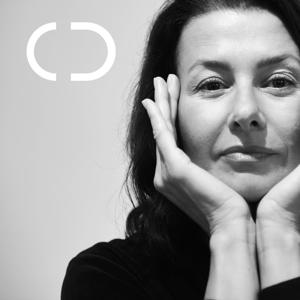


Reynir Indahl isn’t just a man who talks the talk, he is a man who walks the walk.
Having had a wobble as he turned 40, questioning what he was doing and what impact he was having on the world, Reynir, much to his family and friends confusion, turned his back on his successful career in finance in order to focus on being a solution to the world’s most significant challenges.
Drawing on his Harvard education, Reynir founded Summa Equity in 2016, a purpose-driven, Nordic private equity firm managing €1.4 billion, to invest in companies looking to solve global challenges.
“The world is developing rapidly. This poses new social and environmental challenges. By investing in companies that actively work to solve these challenges, creating a prosperous society for everyone, Summa is part of the solution.”
This isn’t Reynir’s first time on Corporate Unplugged, he originally sat down with Vesna in 2018 to discuss Summa Equity and the work it was doing, and now feels like the right time to catch up with Reynir again, to see how far he’s come and hear what he’s learned over the last few years.
When Reynir first ventured into impact investing, he was concerned with the effect that the financial system was having on the world around us, and how companies are increasingly affecting environmental issues. But then he realised that everyone is feeling its effects - social inequality is on the increase, for example, and this concerned him because he didn’t know if he was part of the solution or part of the problem.
So he took steps to rectify this. Which has subsequently led him to where he is today.
“These challenges create immense opportunities in the financial system. And investors can be a big force for driving that change. So I decided to leave private equity and started to work with with philanthropy and impact investing.”
We hope you enjoy this podcast as much as we did.
In this podcast:
Links:
Hosted on Acast. See acast.com/privacy for more information.
Jan Broman, along with his brother, founded Fotografiska as a meeting place to inspire a more conscious world, using photography - portrait, fashion, nature and documentary photography, for example, to initiate conversations. Not just conversations about the here and now, but what the photos represent and the world around us.
The renovated former Customs House, built in 1906 in the heart of Stockholm, is home to Fotografiska, now considered one of Scandinavia’s most important and powerful artistic magnets.
Since opening almost ten years ago, Fotografiska has hosted some of the biggest names in photography from Annie Leibovitz to Gus Van Sant to Martin Parr. But Fotografiska is anything but a regular museum or art gallery. At its core it is a dedicated hub of human interaction, a creative space that nurtures thoughts and discussion and encourages the exchanging of ideas.
As Jan says, “What we have become is more like a place where conversation can take place. And it can be inspired by what we do in the exhibition spaces, but it could also be inspired by what we do with the food, and helping people to get a bit more conscious.”
Because Fotografiska’s vision is to inspire a more conscious world, Jan and his brother are keen to share their values of inspiration, inclusion, innovation, sustainability and relevance not just with their partners, but with the people who come to meet there. To make its accessibility even greater and to make more impactful places for photography around the world, Fotografiska is very soon expanding to New York, and London not long after that.
“We see people meeting, meeting their friends, meeting family and loved ones. All kinds of meetings take place here. Fotografiska is more and more becoming a familiar sort of a place for conversations.”
In this podcast:
Links:
Hosted on Acast. See acast.com/privacy for more information.
If, like us, you are captivated by the inspiring actions of a select few individuals who are devoted to save the planet, then you want to listen to this podcast with Ulf Stenerhag, the Swedish entrepreneur who doesn’t believe passion is driving him in his quest to bring about change for the future generations, but a sense of compassion and responsibility.
Because that is the kind of man Ulf is: understated, not a self publicist. In fact, for his latest venture, Wayout, they haven’t actually launched it yet publicly, because they’re too busy just getting on with, well, getting on with it. His company hopes to empower people by way of job opportunities, resolve issues of scarcity of water, and reducing or eliminating plastic consumption.
“We are, let's say hard, hard working people, working more on deploying, rather than to shout about it. And there is also a reason for that, we want to make sure that everything works out fine before we go very, very public.”
But Ulf shouldn’t fear failure. This is a guy who is the CEO of Thurne Teknik, a Nordic Tech Trade company with many years of experience in leading international and industrial sales organisation. A man who has built up significant experience creating value-based corporate cultures in challenging global business environments. The founder of Not For Sale Ale, a company built for social impact and a beer where 100% of profits is invested in the fight against modern slavery. No, Ulf is a one man war on creating change, and his ‘just get on with it’ attitude is inspirational.
“If you want to do important things in this life, first start, then continue.”
In this podcast:
Links:
Hosted on Acast. See acast.com/privacy for more information.
If we want to change the world, instead of fighting against the system from the outside, how about taking a leaf out of Maria Cristina Papetti’s life book, and try to change the world from the inside?
“Being an activist, that is not easy, because you need a lot of energy, a lot of passion. But from the outside, always fighting all the time against something, that is easy. It’s what you can do when you are inside the system, that some would say, is more challenging.”
And Maria Cristina embodies the passionate purpose that the company she works for, exists to fulfill. Enel, a global Italian utility company believes that ‘sustainability will not develop without continuous innovation and for us innovation is meaningless unless it is oriented towards sustainability.’
Enel couldn’t have chosen a better person to be their Head of Sustainability Projects and Practice Sharing, because Maria Cristina is not just dedicated to her work - what she does is so much more than just a job, you see, Maria Cristina’s desire to change the world through sustainability and innovation is a part of who she is.
“I'm always asking myself, even nowadays, what kind of woman you would like to be in your future… for young professionals entering this world, be curious about people, about the world, about friends, about what is all around you. This is really important, if you get that, if you make a deep dive into everything, because you need to catch and to understand what can be done.”
In this podcast:
Links:
Hosted on Acast. See acast.com/privacy for more information.
In this podcast:
Links:
What if businesses looked at parenthood as a training model and were empowered to do good in the world with an ethics-first approach? Learn how Riccarda Zezza, founder of MAAM, is aiming to do just that. Based in Milano, Italy, MAAM is the world's first and only digital training program turning parenthood into a masters in key skills for business.
MAAM delivers a powerful digital and life-based program that builds employees’ soft skills by up to 35% in a very engaging and rewarding way, in order to boost employee motivation and company productivity.
MAAM’s goal is to transform life experiences into business skills and shape a world of work where everyone can fulfill their potential. To date, MAAM has been used by over 40 Italian and international organizations to train over 4,500 participants.
Hosted on Acast. See acast.com/privacy for more information.
Harish Hande is founder and chairman of Selco Foundation, a social enterprise seeking to inspire and implement socially, financially and environmentally inclusive solutions, by improving access to sustainable energy.
Selco have made under-served communities the central focus of their thoughts, words and actions. Harish has a doctorate in energy engineering from the University of Massachusetts and he serves on the boards of many organisations, both national and international.
In this podcast:
Links:
Hosted on Acast. See acast.com/privacy for more information.
Nivi Sharma is COO of BRCK, a company connecting Africa to the internet. BRCK is at the cutting edge of frontier market technology needs for connectivity, whether that’s for people or things.
Nivi is involved because she has dedicated her career to creating digital access for children, youth, and adults.
Nivi is passionate about the potential impact the internet can have on the economic and social development for the 800 million Africans who are currently not connected, although they all have devices designed for a digital world.
In 2011, Nivi co-founded eLimu, the first company to digitize the Kenyan Primary School curriculum for revision and literacy. Nivi’s other passion is creating children’s playgrounds and enabling connectivity in an analogue way.
In this podcast:
Links:
Hosted on Acast. See acast.com/privacy for more information.
The Future of Education With A Techno Optimist
Raya Bidshahri is a serial entrepreneur, writer, educator, futurist and keynote speaker. She has been described as a techno optimist, a communicator of popular science, and an advocate of curiosity, critical thinking, wonder, and awe.
Raya is the founder and Chief Executive Officer of Awecademy, a future-focussed educational organization that is disrupting traditional high school curricula and inspiring students to bring about civilization-level change.
In this podcast:
Links:
Hosted on Acast. See acast.com/privacy for more information.
Nicklas Bergman has spent the past 25 years working as an entrepreneur and a technology investor, mostly focusing on investments and business development in emerging markets. A couple of years ago he embarked on a journey to understand where technology is taking us and if we are ready for the upcoming tech storm. Today Nicklas talks about accepting uncertainty, being curious but skeptical, his book “Navigating the Tech Storm,” a three-way process for innovation in technology, tech trends he finds interesting right now, and why the world needs to get better at listening to different opinions.
On today’s podcast:
Links:
Hosted on Acast. See acast.com/privacy for more information.
Today’s guest is the Founder and Executive Chairman of Copia Global, Tracey Turner. Passionate about social businesses, social investing and international development, Tracey talks to us about using capitalism to end global poverty.
Inspired by a class she took in her first semester at Dartmouth called “The Politics of Starvation,” and by her travels to Africa, Asia and Latin America, Tracey has seen first-hand that people in the developing world are incredibly talented, hardworking and intelligent. What they lack is opportunity.
And having worked in microfinance before founding Copia Global, Tracey is a firm believer that capital constraints keep people trapped in poverty. In fact, in America alone, 98% of venture capital goes to white men and the remaining 2% to white women and minorities. According to Tracey, if minorities and low-income people had access to venture capital, the world would be a dramatically different place.
On today’s podcast:
Links:
Hosted on Acast. See acast.com/privacy for more information.
From the publisher's feed
Hosted on Acast. See acast.com/privacy for more information.